For an e-learning platform, delivering a strong learning experience starts before a learner even joins a course. Potential and existing learners may reach out with questions, request information, or need assistance at different stages of their journey.
For 10Percent Academy, managing these customer interactions across multiple communication channels required a more centralized approach.
The academy subscribed to ConnectGain Dashboard to bring customer conversations into one environment, organize how incoming inquiries are distributed among team members, and maintain clear control over what each employee can access.
The Challenge: Managing Conversations Across Multiple Channels
10Percent Academy is a premium e-learning platform focused on practical, expert-led education designed to help learners continuously develop their skills and accelerate their career growth.
As customer communication takes place across multiple connected channels, managing each channel independently can make the team’s workflow more fragmented.
Employees may need to move between different communication environments to monitor conversations, respond to inquiries, and determine who is responsible for each customer.
The academy needed a centralized communication workflow where conversations could be managed by the team without making each individual channel a separate operational workspace.
The Solution: ConnectGain Unified Inbox
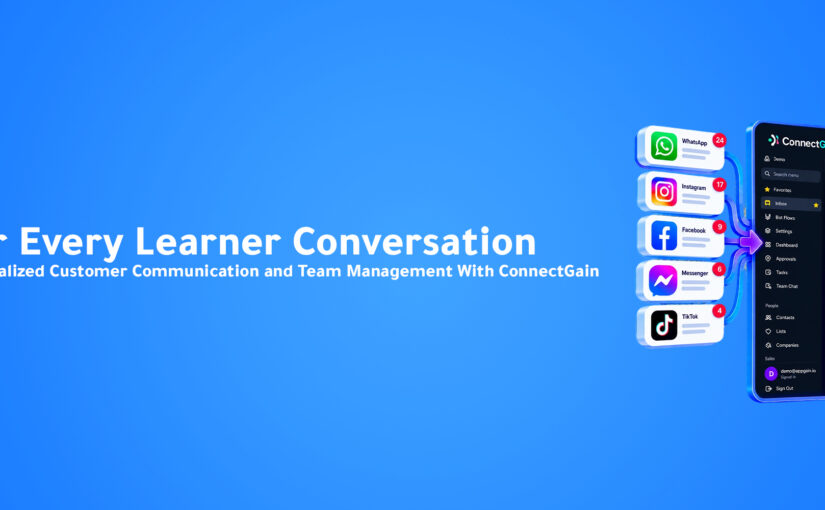
The core of the 10Percent Academy implementation is ConnectGain Inbox.
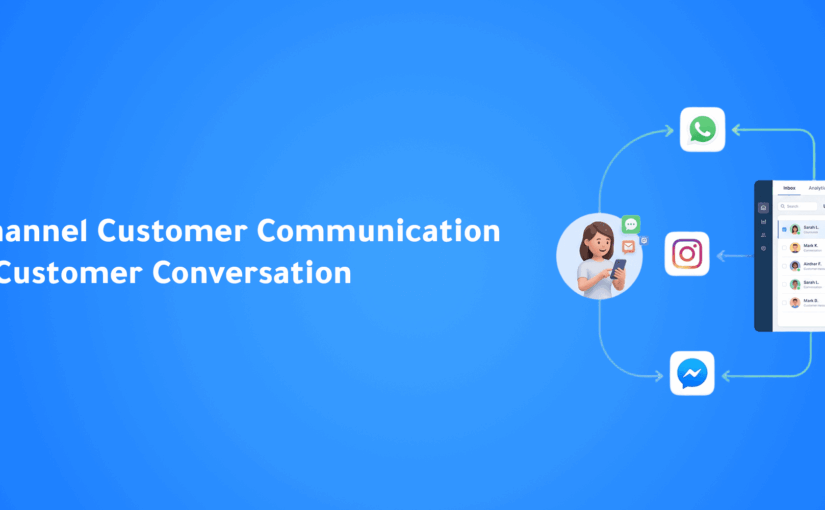
Conversations from multiple connected communication channels are received and managed through one Unified Inbox.
Instead of requiring the team to manage each channel separately, employees can work from a single interface where customer conversations are centralized.
The workflow becomes:
Multiple Communication Channels → ConnectGain Unified Inbox → Team Member → Customer Response
This gives the academy one operational environment for managing customer interactions across its connected channels.
Creating a Central Workspace for Customer Communication
A Unified Inbox is more than a place where messages appear.
It changes how the team approaches customer communication.
Instead of organizing work according to the channel where a customer happened to send a message, the academy can organize communication around the people responsible for handling those conversations.
This gives the team a centralized view of customer interactions and creates a more consistent workflow for managing incoming inquiries.
Automatic Conversation Distribution
Centralizing customer conversations solves one part of the challenge. The next step is determining who should handle each new inquiry.
10Percent Academy uses Automatic Conversation Distribution within ConnectGain.
Incoming conversations can be automatically distributed among team members who are currently online.
Instead of manually deciding who should handle every new customer conversation, ConnectGain helps route inquiries among available employees.
The process becomes:
New Customer Inquiry → Available Team Member Identified → Conversation Assigned → Customer Assisted
This creates clearer conversation ownership and helps organize the distribution of incoming communication across the team.
Reducing Manual Conversation Assignment
When a team manages multiple customer conversations, manually assigning every inquiry adds another operational step.
Someone needs to monitor incoming messages, identify available employees, and determine who should take responsibility for each conversation.
Automatic distribution helps simplify this process.
By assigning incoming conversations based on employee availability, 10Percent Academy can create a more structured communication workflow without relying entirely on manual coordination.
User Roles and Permissions
Centralizing customer conversations also requires clear access control.
10Percent Academy’s ConnectGain Dashboard includes an Admin role and multiple Agent users.
The Admin can define and manage permissions for individual Agents based on their responsibilities.
These permissions can include access to customer conversations within the Inbox, WhatsApp and other connected communication channels, customer Deals, and specific areas and functionalities within the ConnectGain Dashboard.
Giving Each Agent the Right Level of Access
Not every employee needs access to every part of a customer communication platform.
An Agent may need access to particular conversations or communication channels, while other areas of the CRM may not be relevant to their responsibilities.
With ConnectGain permissions, the Admin can control which parts of the platform each Agent can access.
This gives 10Percent Academy a way to maintain centralized customer communication while still keeping customer data and platform functionality appropriately controlled.
Connecting Conversations With Team Responsibility
The individual capabilities become more valuable when they work together as one workflow.
A customer can contact 10Percent Academy through a connected channel. The conversation enters the Unified Inbox. ConnectGain can distribute it to an available team member, and the employee can handle the inquiry according to the access permissions assigned to their account.
The workflow becomes:
Customer Message → Unified Inbox → Automatic Distribution → Authorized Agent → Customer Assistance
This creates a clearer connection between the incoming customer conversation and the team member responsible for handling it.
Building a More Organized Customer Communication Process
For an e-learning business, customer communication can support many stages of the learner relationship.
What matters operationally is ensuring those conversations have a clear place to go and a clear owner inside the team.
ConnectGain gives 10Percent Academy a centralized foundation for that process.
Instead of maintaining separate communication workflows around individual channels, the academy can bring customer interactions into one shared environment.
The Business Value
The 10Percent Academy implementation provides a more centralized structure for managing customer communication.
The academy gains one Unified Inbox for connected channels, automatic conversation distribution among available team members, and role-based permissions for Admins and Agents.
These capabilities help reduce fragmentation in the team’s communication workflow while providing management with greater control over platform access.
For employees, customer conversations can be managed from a central interface. For management, access can be defined according to each Agent’s responsibilities.
From Separate Channels to One Team Workflow
The biggest change is not simply putting messages into the same Inbox.
It is connecting incoming customer communication with team availability and employee responsibilities.
The model changes from:
Multiple Channels → Separate Management → Manual Coordination
to:
Connected Channels → Unified Inbox → Automatic Distribution → Controlled Agent Access
This provides a clearer operational structure for customer communication.
Conclusion
10Percent Academy needed a more organized way to manage customer conversations across connected communication channels while ensuring incoming inquiries could be distributed across its team.
With ConnectGain Unified Inbox, customer conversations can be managed through one centralized interface. Automatic Conversation Distribution helps route incoming inquiries among available employees, while Admin and Agent permissions provide control over who can access different channels, customer Deals, and platform functionality.
The result is a simpler model for managing customer communication:
One Inbox. Clearer ownership. Controlled access. A more organized team workflow.
For 10Percent Academy, ConnectGain creates a centralized communication environment that allows the team to focus more on the customer conversation and less on managing separate communication channels.
Ready to Centralize Your Customer Conversations?
With ConnectGain by Appgain, businesses can bring customer conversations from connected channels into one centralized workspace while making it easier to distribute inquiries across their teams and control employee access.
From a Unified Inbox and automatic conversation assignment to Admin and Agent permissions, ConnectGain helps teams create a more organized customer communication workflow.
Bring your conversations together. Give every inquiry an owner. Keep your team connected.
Contact Us
📞 WhatsApp: +20 111 998 5526
🌐 Website: appgain.io
📧 Email: He***@*****in.io
About Appgain
Appgain is an Agentic AI company helping businesses turn customer conversations into intelligent business workflows.
Through ConnectGain, organizations can connect AI with CRM, WhatsApp, voice, social messaging, customer data, and automation—helping teams move from customer conversations to real business actions.
ConnectGain by Appgain
AI That Works Where Your Business Works.