Introduction
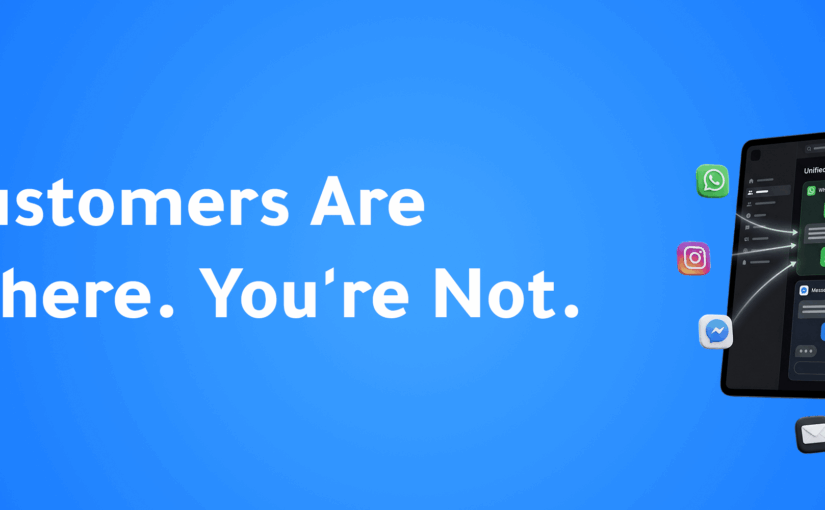
Your customers are everywhere.
They send WhatsApp messages in the morning, comment on Instagram in the afternoon, call during business hours, and send emails when they need formal communication.
Some customers prefer Telegram. Others use website chat widgets or Facebook Messenger.
The problem is not the number of channels.
The problem is managing them separately.
This creates fragmented customer experiences, missed conversations, delayed responses, and operational chaos.
That is why building a strong omnichannel communication strategy is now essential for MENA businesses.
This guide explains how to create a practical omnichannel communication strategy that improves customer experience, increases response speed, and supports business growth.
Why Omnichannel Is Harder in MENA
Most omnichannel guides are written for Western markets where email and phone are the primary channels.
In MENA, the channel priority is very different.
Primary Channels
These are the highest-volume and highest-priority channels:
- Phone calls
WhatsApp dominates customer communication across industries.
Phone calls remain critical for high-value deals and older customer segments.
Instagram is often the first contact point for younger buyers.
Secondary Channels
These still matter but serve different purposes:
- Facebook Messenger
- TikTok
- Telegram
Messenger remains strong in Egypt.
TikTok is growing fast for retail and F&B.
Telegram is preferred by privacy-focused users and specific business communities.
Formal and Transactional Channels
These include:
- SMS
Email supports invoices, contracts, and B2B communication.
SMS remains important for OTPs, reminders, and notifications.
Most global platforms still treat WhatsApp and Instagram as add-ons.
For MENA businesses, they should be the center of the strategy.
The Four Stages of Omnichannel Maturity
Not every business needs full automation from day one.
Understanding the maturity stages helps define your next move.
Stage 1 — Multi-Channel
Most MENA businesses are here today.
They use multiple channels, but each one is managed separately.
This creates disconnected customer experiences.
A customer who contacts you twice may need to repeat everything again.
Stage 2 — Centralized Inbox
All channels feed into one inbox.
Agents manage WhatsApp, Instagram, Messenger, and email from one place.
Customer history becomes visible across channels.
This improves efficiency significantly.
Stage 3 — Intelligent Routing
The system routes conversations automatically based on:
- Agent skills
- Customer priority
- Workload
- Urgency
- VIP status
This improves speed and service quality.
Stage 4 — AI-Powered Omnichannel
This is the transformation stage.
AI handles a large percentage of incoming messages automatically.
Customers describe what they need naturally.
The system responds using CRM data, knowledge base content, and automation rules.
Human agents focus only on complex or high-value interactions.
This is where real scalability begins.
Building Your Omnichannel Communication Strategy
Before building the system, start with a channel audit.
Step 1 — Volume Audit
Review the last 30 days.
Count incoming messages from every channel.
Identify which channels generate the highest volume.
This becomes your primary focus.
Step 2 — Quality Audit
Which channels bring the highest-value leads?
High volume does not always mean high quality.
For example:
Instagram may generate more inquiries, but WhatsApp often brings faster buyers.
Step 3 — Conversion Audit
Measure how each channel converts.
Track:
- First contact
- Qualified lead
- Closed deal
This helps you prioritize investment.
Step 4 — Abandonment Audit
How many messages go unanswered?
How many leads disappear because of delayed responses?
These are your fastest automation wins.
The Unified Inbox: The Foundation of Omnichannel
The first real investment should be a unified inbox.
This means all customer conversations appear in one place.
ConnectGain supports:
- WhatsApp (Lite + Cloud API)
- Facebook Messenger
- Instagram Direct Messages
- Telegram
- TikTok Messages
- SMS
- Web Push
- Website Chat Widget
Every customer profile includes full conversation history across all channels.
If someone messages on Instagram today and WhatsApp tomorrow, your team sees everything.
This matches ConnectGain’s unified conversations hub where every interaction becomes a single customer journey .
AI Automation Across All Channels
The real power of omnichannel appears when automation works everywhere.
One Bot Across Multiple Channels
The same chatbot flow works on:
- Messenger
- Telegram
- Website chat
Build once. Deploy everywhere.
One Knowledge Base for All Conversations
Your FAQ, pricing, and product information power responses across every channel.
This creates consistency and accuracy.
CRM Updates From Every Interaction
Whether the customer calls, messages, or emails, the CRM updates automatically.
This removes manual work and improves visibility.
Behavior-Based Follow-Ups
Follow-up should depend on customer behavior—not the channel.
A serious buyer should receive the same journey whether they contacted you by call or WhatsApp.
This reflects ConnectGain’s execution automation engine where workflows trigger actions based on intent, not platform .
Practical Implementation Roadmap
Month 1 — Connect Your Channels
Start with:
- WhatsApp Business API
- Instagram Business
- Facebook Messenger
- Email integration
Build the centralized inbox first.
Month 2 — Standardize Response Templates
Create approved templates for:
- Pricing requests
- Booking inquiries
- Support questions
- Follow-up responses
This improves speed and consistency.
Month 3 — Deploy First Automation Flows
Start with your top three inquiry types.
Deploy first on WhatsApp, then expand to Instagram and Messenger.
Month 4 — Connect CRM and Automation
When customers request quotes, create deals automatically.
When deal stages change, trigger follow-up sequences.
This turns conversations into sales pipelines.
Month 5 — Add AI Intelligence
Deploy RAG-based AI automation.
Train the system using:
- FAQs
- Product documents
- Service information
- Internal knowledge
Now the system becomes truly intelligent.
Month 6+ — Optimize With Data
Review:
- Response times
- Deflection rate
- Conversion by channel
- Customer satisfaction
Use real data to improve continuously.
The Metrics That Matter
Track the right KPIs:
- First Response Time
- Deflection Rate
- Cross-Channel Contact Rate
- Customer Satisfaction Score
- Conversion Rate by Channel
Without measurement, optimization is impossible.
Start Your Growth Journey
If your customers are everywhere, your business must be ready everywhere too.
A strong omnichannel communication strategy helps you:
- Respond faster
- Reduce missed leads
- Improve customer satisfaction
- Increase sales conversions
- Scale operations without chaos
Appgain helps businesses across MENA unify conversations, automate customer journeys, and build scalable growth systems.
Let’s build your success story.
WhatsApp: +20 111 9985526
Website: https://appgain.io
Email: He***@*****in.io
Conclusion
Customers do not think in channels.
They think in conversations.
Your business should do the same.
A strong omnichannel communication strategy is not about adding more channels.
It is about creating one connected customer experience across all of them.
That is how modern MENA businesses grow faster, serve better, and compete smarter.