Introduction
Customers have never had more choices than they do today.
Whether they’re shopping online, booking a service, or requesting a product demonstration, they can contact multiple businesses within minutes.
The first company to respond isn’t always the one with the lowest price or the biggest brand.
More often than not, it’s the one that wins the customer.
Response time has become one of the strongest competitive advantages a business can have.
Modern customers expect quick, personalized, and helpful communication. A delayed response doesn’t just create frustration—it gives competitors the opportunity to step in.
In this article, we’ll explore why response time matters more than ever, how slow communication impacts revenue, and how businesses can use AI, CRM, and automation to respond faster without sacrificing quality.
Today’s Customers Expect Immediate Responses
Customer expectations have changed dramatically.
People no longer expect businesses to reply “within 24 hours.”
Instead, they expect businesses to respond:
- Within minutes
- Across their preferred communication channel
- With accurate and personalized information
Whether the conversation starts on WhatsApp, Instagram, live chat, email, or a website, customers expect businesses to be available when they are.
A slow response often creates the impression that a business is disorganized—or simply doesn’t value the customer’s time.
Every Minute of Delay Creates Risk
Imagine a customer requesting a quotation through WhatsApp.
While waiting for your reply, they contact two competitors.
The first business responds within two minutes.
The second responds after fifteen minutes.
You reply three hours later.
Even if your product is better, you’ve already lost one of your biggest advantages: being part of the customer’s decision-making process.
Slow response times don’t just delay conversations.
They reduce the likelihood of winning new business.
Why Response Time Matters More Than Price
Many businesses believe customers always choose the cheapest option.
In reality, buying decisions are influenced by several factors, including:
- Trust
- Convenience
- Communication
- Availability
- Speed
A fast response signals professionalism and reliability.
It tells customers:
- We received your request.
- We value your time.
- We’re ready to help.
That first impression often shapes the entire customer relationship.
The Hidden Costs of Slow Responses
Slow response times affect far more than customer satisfaction.
They can lead to:
- Lost sales opportunities
- Lower conversion rates
- Poor customer experiences
- Higher customer acquisition costs
- Reduced customer loyalty
- Increased pressure on sales teams
What appears to be a simple delay can have a measurable impact on business growth.
Why Businesses Respond Slowly
Most businesses don’t intend to ignore customers.
Delays usually happen because of operational challenges.
Common causes include:
- Conversations spread across multiple platforms
- Manual lead assignment
- Limited business hours
- High message volumes
- Missed notifications
- Lack of customer history
- Repetitive administrative work
As communication channels increase, keeping up manually becomes increasingly difficult.
Fast Responses Build Customer Confidence
The first interaction with a customer often determines whether the conversation continues.
Quick responses create confidence because they demonstrate that the business is:
- Organized
- Available
- Responsive
- Customer-focused
Even when a complete answer isn’t immediately available, acknowledging the customer’s message quickly helps maintain engagement.
Speed Alone Isn’t Enough
Responding quickly is important.
Responding intelligently is even more important.
Customers don’t want instant but irrelevant replies.
They expect responses that are:
- Personalized
- Accurate
- Context-aware
- Helpful
The ideal customer experience combines speed with relevance.
How AI Improves Response Time
Artificial Intelligence enables businesses to respond immediately without overwhelming customer service teams.
AI can:
- Answer common questions instantly
- Identify customer intent
- Route conversations to the right department
- Collect customer information
- Qualify leads
- Recommend products or services
- Escalate complex requests to human agents
Instead of replacing employees, AI ensures customers never wait unnecessarily.
Why CRM Makes Fast Responses Possible
Speed depends on having the right information available.
Without a CRM, employees often waste time asking:
- What’s your name?
- Have we spoken before?
- Which product were you interested in?
A modern CRM provides instant access to:
- Customer profiles
- Conversation history
- Previous purchases
- Open opportunities
- Support cases
This allows teams to continue conversations without starting over.
How Automation Eliminates Delays
Many response delays occur after the initial conversation.
Businesses forget to:
- Send quotations
- Schedule follow-ups
- Assign leads
- Confirm appointments
- Update customer records
Workflow automation ensures these actions happen automatically.
Instead of relying on memory, businesses rely on consistent processes.
The Competitive Advantage of Omnichannel Communication
Customers move between channels throughout their journey.
A conversation may begin on Instagram, continue on WhatsApp, and end with a phone call.
Businesses that manage each channel separately often lose context.
An omnichannel platform allows teams to respond quickly while maintaining a complete view of the customer journey.
This creates a smoother and more professional customer experience.
Measuring Response Time
Improving response time starts with measuring it.
Businesses should track metrics such as:
- First response time
- Average response time
- Resolution time
- Lead response time
- Follow-up completion time
- Customer satisfaction
Monitoring these KPIs helps identify bottlenecks and opportunities for improvement.
Real-World Example
Imagine two companies selling the same product.
Company A
- Responds after four hours
- Manually assigns leads
- Stores customer information in spreadsheets
- Frequently misses follow-ups
Company B
- Responds within seconds using AI
- Automatically qualifies leads
- Stores customer history in a CRM
- Uses automation for follow-ups
- Provides personalized responses
Both companies offer similar products.
But Company B consistently creates a faster, smoother customer experience—making it more likely to win the sale.
How ConnectGain Helps Businesses Respond Faster
ConnectGain helps businesses reduce response times by combining AI, CRM, workflow automation, and omnichannel communication in one platform.
With ConnectGain, businesses can:
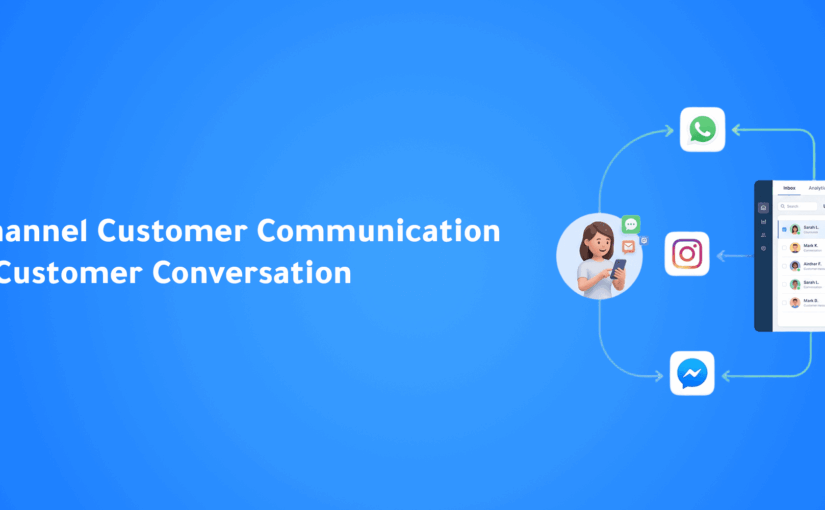
- Manage conversations from WhatsApp, Instagram, Messenger, websites, Email, SMS, Web Push, and App Push through one Unified Inbox
- Respond instantly using AI-powered assistants
- Automatically capture customer information in an integrated CRM
- Qualify leads based on customer intent
- Assign conversations to the right team members
- Automate follow-ups, reminders, and task creation
- Track response time and team performance through real-time dashboards
By connecting customer communication, AI, and automation, ConnectGain helps businesses deliver faster responses without sacrificing quality or personalization.
The Future of Customer Communication
As customer expectations continue to rise, response time will become an even more important competitive advantage.
Businesses that rely entirely on manual communication will struggle to keep pace with growing conversation volumes.
Organizations that combine AI, CRM, and automation will be able to respond instantly, personalize every interaction, and build stronger customer relationships.
The fastest business doesn’t always win.
The business that responds quickly with the right information does.
Conclusion
In today’s competitive market, response time is no longer just a customer service metric.
It’s a business growth strategy.
Fast, personalized, and consistent communication helps businesses build trust, improve customer satisfaction, and increase conversion rates.
By combining AI, CRM, workflow automation, and omnichannel communication, organizations can reduce delays, eliminate manual work, and create customer experiences that set them apart from the competition.
When every conversation matters, responding faster isn’t just an advantage—it’s a necessity.
Ready to Turn Fast Responses Into More Sales?
ConnectGain helps businesses respond faster, automate customer communication, and manage every interaction from one AI-powered platform. Connect WhatsApp, Instagram, Messenger, websites, Email, SMS, Web Push, and App Push while improving customer experience and accelerating business growth.
📞 WhatsApp: +20 111 998 5526
🌐 Website: https://appgain.io
📧 Email:He***@*****in.io