Why Manual Customer Responses Are No Longer Enough

Introduction

Customer expectations have evolved dramatically.

Not long ago, businesses could reply to customer inquiries within a few hours—or even the next business day—and still provide a satisfactory experience.

Today, that is no longer enough.

Modern customers expect immediate responses, personalized communication, and seamless interactions across every channel they use. Whether they contact a business through WhatsApp, Instagram, Facebook Messenger, email, or a website, they expect businesses to recognize them instantly and continue the conversation without asking them to repeat the same information.

Unfortunately, many organizations still rely heavily on manual customer responses.

While this approach may work for small businesses with a limited customer base, it quickly becomes inefficient as companies grow.

Artificial Intelligence (AI), CRM platforms, and workflow automation are transforming customer engagement by making communication faster, smarter, and far more scalable.

In this article, we’ll explore why manual customer management is no longer sufficient and how businesses can modernize customer communication using AI, automation, and CRM.


How Customer Expectations Have Changed

Today’s customers value convenience above all else.

They expect businesses to:

  • Respond instantly
  • Be available 24/7
  • Remember previous conversations
  • Personalize recommendations
  • Communicate across multiple channels
  • Resolve issues quickly

Every delayed response increases the likelihood that customers will contact a competitor instead.

Customer service has become one of the strongest competitive advantages in today’s digital marketplace.


Why Manual Customer Management No Longer Works

As customer conversations increase, manual communication becomes increasingly difficult to manage.

Businesses commonly experience:

  • Slow response times
  • Missed customer inquiries
  • Inconsistent communication
  • Forgotten follow-ups
  • Scattered customer information
  • Increased employee workload

These challenges directly affect customer satisfaction, employee productivity, and business growth.


Challenge #1: Customers No Longer Want to Wait

Speed has become one of the most important factors in customer engagement.

Customers contacting businesses through WhatsApp, Instagram, or website chat expect responses within minutes—not hours.

When communication depends entirely on employees, delays become unavoidable.

Employees may be:

  • Assisting other customers
  • Away from their desks
  • Working outside business hours
  • Managing conversations across multiple platforms

Every delayed response creates an opportunity for competitors to win the customer first.


Challenge #2: Manual Responses Don’t Scale

A customer service representative can only manage a limited number of conversations simultaneously.

As businesses grow, manual communication quickly becomes unsustainable.

Common consequences include:

  • Longer waiting times
  • Rising operational costs
  • Employee burnout
  • Declining service quality

Automation allows businesses to manage significantly higher conversation volumes without sacrificing customer experience.


Challenge #3: Human Errors Become More Frequent

Manual customer management increases the likelihood of mistakes.

Examples include:

  • Forgotten replies
  • Missed follow-up dates
  • Incorrect information
  • Wrong conversation assignments
  • Lost customer notes

Although these errors may appear minor, they can significantly damage customer trust and business performance.


Challenge #4: Customer Information Becomes Scattered

Customer conversations often occur across multiple platforms, including:

  • WhatsApp
  • Instagram
  • Facebook Messenger
  • Email
  • Phone Calls
  • Internal Notes

Without centralized systems, customer information becomes fragmented.

Employees struggle to understand previous conversations, forcing customers to repeat information repeatedly.


Challenge #5: Personalization Becomes Nearly Impossible

Modern customers expect businesses to know:

  • Who they are
  • What they purchased
  • Previous conversations
  • Support history
  • Product interests

Remembering this information manually for hundreds or thousands of customers is unrealistic.

Modern CRM systems combined with AI make personalized communication effortless.


Challenge #6: Follow-Ups Are Easily Forgotten

One of the biggest reasons businesses lose customers is inconsistent follow-up.

Without automation:

  • Tasks are forgotten
  • Proposals are delayed
  • Meetings aren’t confirmed
  • Sales opportunities disappear

Workflow automation ensures every customer receives timely follow-up communication.


How AI Is Transforming Customer Management

Artificial Intelligence helps businesses communicate faster while improving customer experiences.

AI can:

  • Answer common questions instantly
  • Understand customer intent
  • Qualify leads automatically
  • Route conversations intelligently
  • Analyze customer sentiment
  • Recommend the next best action

Rather than replacing employees, AI eliminates repetitive work so teams can focus on higher-value customer interactions.


Why Automation Matters

Workflow automation complements AI by automatically executing repetitive tasks.

Examples include:

  • Welcome messages
  • Appointment confirmations
  • Follow-up reminders
  • CRM updates
  • Task creation
  • Customer journey automation

Together, AI and automation deliver faster, more consistent customer engagement.


Why Every Business Needs a CRM

A modern CRM centralizes every customer interaction.

Instead of searching across multiple applications, employees can instantly access:

  • Customer information
  • Conversation history
  • Purchase records
  • Sales opportunities
  • Support requests
  • Follow-up activities

This enables faster responses and highly personalized customer experiences.


The Best Approach: AI + Humans

The goal isn’t to eliminate human interaction.

Instead, businesses should allow AI to handle repetitive communication while human teams focus on:

  • Empathy
  • Complex problem-solving
  • Negotiation
  • Relationship building
  • Strategic decision-making

This hybrid approach delivers the best customer experience.


How ConnectGain Helps Businesses Modernize Customer Management

ConnectGain helps businesses replace manual customer communication with intelligent, automated engagement.

With ConnectGain, organizations can:

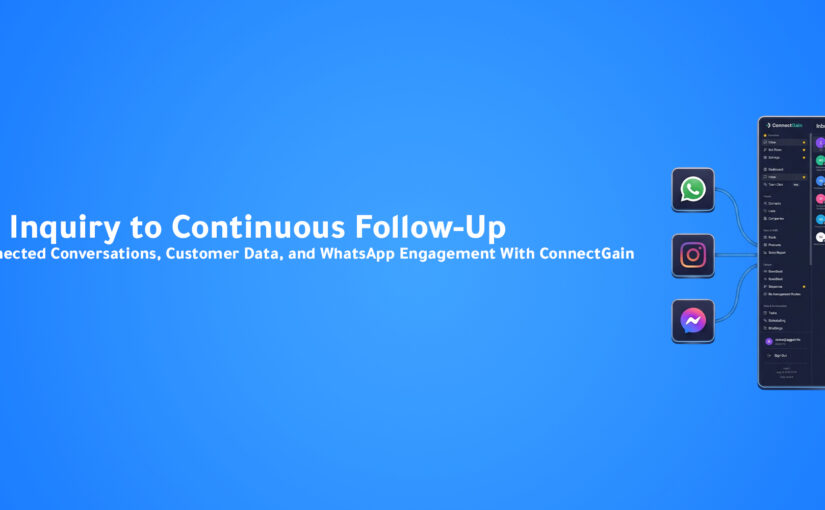
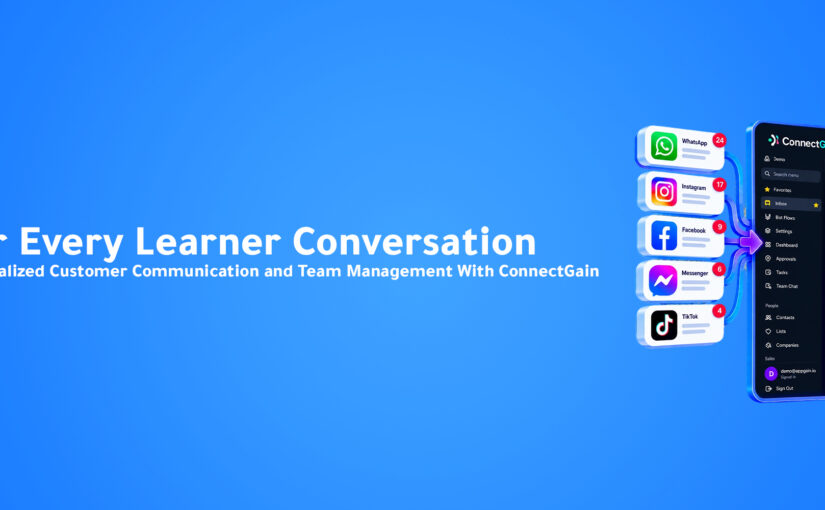
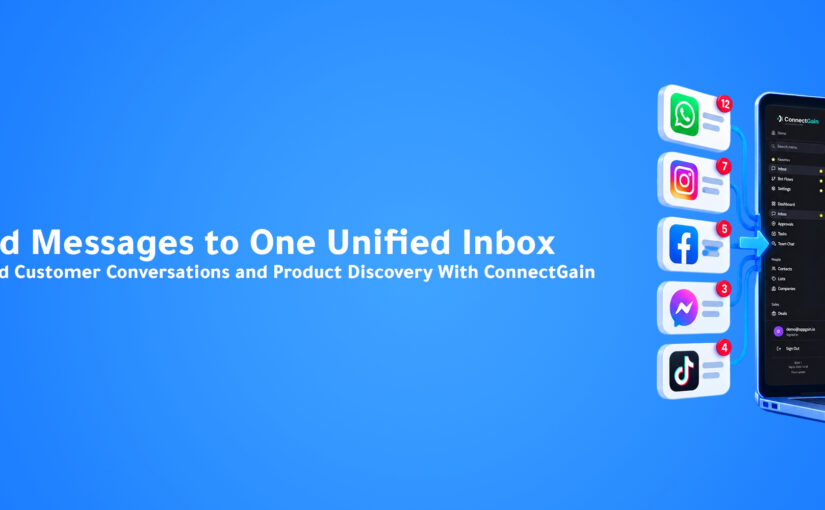
  • Manage WhatsApp, Instagram, Messenger, website chat, and email from one Unified Inbox
  • Centralize customer information through an integrated CRM
  • Deploy AI-powered customer assistants
  • Automate follow-ups and customer journeys
  • Automatically assign conversations to the right teams
  • Analyze customer interactions using AI insights
  • Monitor customer engagement through real-time dashboards

By combining AI, CRM, workflow automation, and omnichannel communication, ConnectGain enables businesses to respond faster, improve productivity, and deliver exceptional customer experiences at scale.


The Future of Customer Management

Manual customer communication will continue to exist—but it will no longer be the foundation of customer engagement.

The future belongs to businesses that combine:

  • Artificial Intelligence
  • CRM
  • Workflow Automation
  • Unified Communication
  • Conversation Intelligence

Organizations adopting these technologies today will be better equipped to serve more customers, respond faster, and scale efficiently.


Conclusion

Manual customer responses were once sufficient.

Today’s customers expect instant, personalized, and consistent communication across every touchpoint.

Businesses that continue relying solely on manual customer management risk falling behind competitors that have embraced AI, CRM, and workflow automation.

By modernizing customer communication, organizations can improve response times, increase productivity, strengthen customer relationships, and create experiences that drive long-term business growth.

ConnectGain empowers businesses to transform customer engagement through one AI-powered platform designed for the future of customer communication.


Ready to Move Beyond Manual Customer Management?

ConnectGain helps businesses automate customer conversations, centralize customer data, and manage engagement across WhatsApp, Instagram, Messenger, Websites, Email, SMS, Web Push, and App Push from one intelligent platform.

📞 WhatsApp: +20 111 9985526

🌐 Website: https://appgain.io

📧 Email: He***@*****in.io

Conversations Are the New Data: How Businesses Can Turn Customer

Introduction

For years, businesses have relied on traditional data such as purchase history, website analytics, CRM records, and customer demographics to make decisions.

While this information remains valuable, it only tells part of the story.

Today’s customers interact with businesses through WhatsApp, Instagram, Facebook Messenger, live chat, phone calls, emails, and other digital channels. Every question they ask, every complaint they share, every product they inquire about, and every conversation they have contains valuable business intelligence.

In today’s AI-powered world, conversations have become one of the most valuable business assets.

Organizations that can capture, analyze, and act on conversational data gain deeper customer insights, improve customer experiences, increase sales, and make smarter business decisions.

In this article, we’ll explore why conversations are becoming the new business data and how companies can use them to drive growth.


Why Conversations Matter More Than Ever

Modern customers expect businesses to understand them.

Every conversation reveals information about:

  • Customer needs
  • Buying intentions
  • Pain points
  • Product preferences
  • Service expectations
  • Customer satisfaction

Unlike traditional reports, conversations provide real-time insights directly from customers.

Instead of guessing what customers want, businesses can learn directly from every interaction.


Every Conversation Is Valuable Data

Many companies still view customer conversations simply as support requests.

In reality, every interaction generates business intelligence.

For example, conversations can reveal:

  • Frequently requested products
  • Common customer complaints
  • Pricing concerns
  • Feature requests
  • Sales opportunities
  • Competitive comparisons
  • Customer sentiment

When analyzed properly, these insights help businesses improve products, marketing campaigns, sales strategies, and customer service.


How AI Turns Conversations into Actionable Insights

Reading thousands of customer conversations manually is impossible.

Artificial Intelligence makes it possible to analyze conversations automatically and identify patterns in real time.

AI can:

  • Detect customer intent
  • Analyze customer sentiment
  • Identify buying signals
  • Recognize frequently asked questions
  • Discover recurring issues
  • Recommend next actions

Instead of collecting conversations, businesses begin learning from them.


Better Sales Through Conversation Intelligence

Sales conversations contain valuable information about customer behavior.

AI can identify:

  • Which leads are most likely to convert
  • Common objections during the sales process
  • Products customers ask about most
  • Reasons why deals are lost
  • Follow-up opportunities

Sales managers can use these insights to improve sales performance and coach their teams more effectively.


Improving Customer Support with Conversational Data

Customer service teams handle hundreds—or even thousands—of conversations every week.

By analyzing these interactions, businesses can identify:

  • The most common support issues
  • Average response times
  • Customer satisfaction trends
  • Repeated service problems
  • Knowledge gaps

These insights help organizations improve customer experiences while reducing support costs.


Understanding Customer Sentiment

Not every customer explicitly says they are happy or frustrated.

Artificial Intelligence can analyze conversation tone and language to identify emotional signals.

Sentiment analysis helps businesses:

  • Detect unhappy customers early
  • Prioritize urgent conversations
  • Improve service quality
  • Prevent customer churn

Understanding how customers feel is just as important as understanding what they say.


Personalizing Every Customer Journey

Conversation history allows businesses to deliver far more personalized experiences.

Instead of treating every interaction as new, businesses can remember:

  • Previous inquiries
  • Purchase history
  • Customer preferences
  • Support cases
  • Sales conversations

Personalized communication builds trust and increases customer loyalty.


Breaking Down Data Silos

One of the biggest challenges businesses face is fragmented customer information.

Conversations often exist across:

  • WhatsApp
  • Instagram
  • Facebook Messenger
  • Website chat
  • Email
  • Phone calls

When these channels operate independently, valuable insights remain hidden.

Centralizing customer conversations creates a complete customer profile that every department can access.


From Conversations to Better Business Decisions

Conversation analytics help leaders answer important questions such as:

  • What products do customers request most?
  • Why are customers leaving?
  • Which marketing campaigns generate the highest-quality leads?
  • Which sales representatives close the most deals?
  • Which customer issues occur most frequently?

Instead of relying on assumptions, businesses make decisions based on real customer conversations.


The Role of AI in the Future of Customer Data

Traditional business intelligence relied on structured data.

The future belongs to unstructured data—and conversations represent one of its richest sources.

Artificial Intelligence enables businesses to:

  • Analyze conversations in real time
  • Predict customer behavior
  • Recommend personalized actions
  • Automate customer engagement
  • Generate strategic business insights

Companies that embrace conversational intelligence will have a significant competitive advantage.


How ConnectGain Helps Businesses Unlock the Power of Customer Conversations

ConnectGain transforms everyday customer conversations into valuable business intelligence through one intelligent platform.

With ConnectGain, businesses can:

  • Capture customer conversations from WhatsApp, Instagram, Messenger, websites, email, and other channels
  • Manage every interaction through a Unified Inbox
  • Analyze conversations using AI-powered insights
  • Detect customer intent and buying signals
  • Automate follow-ups and customer journeys
  • Centralize customer data through an integrated CRM
  • Track engagement and performance using real-time dashboards

By combining AI, CRM, workflow automation, and omnichannel communication, ConnectGain helps businesses turn conversations into smarter decisions, stronger customer relationships, and sustainable business growth.


The Future Belongs to Businesses That Listen

Every customer conversation contains information that can improve products, services, marketing, and sales.

The businesses that succeed over the coming years won’t simply collect customer data—they’ll understand it.

By using Artificial Intelligence to analyze conversations, organizations can move from reactive customer service to proactive customer engagement.

Listening to customers is no longer enough.

The real advantage comes from understanding what every conversation is telling your business.


Conclusion

Customer conversations have become one of the most valuable sources of business intelligence.

Every message, phone call, question, and interaction provides insights that can improve customer experiences, increase sales, and support better business decisions.

With AI-powered conversation analytics, CRM, workflow automation, and omnichannel communication, businesses can transform unstructured conversations into meaningful actions.

ConnectGain empowers organizations to unlock the full value of customer conversations, helping teams engage smarter, respond faster, and build stronger customer relationships from one intelligent platform.


Ready to Turn Conversations into Business Growth?

ConnectGain helps businesses capture, analyze, and automate customer conversations across WhatsApp, Instagram, Messenger, websites, Email, SMS, Web Push, and App Push from one centralized AI-powered platform.

📞 WhatsApp: +20 111 998 5526

🌐 Website: https://appgain.io

📧 Email: He***@*****in.io

How Does Sentiment Analysis Help Improve Sales?

Introduction:

Understanding Customer Emotions to Drive Better Sales Results

In the modern sales landscape, businesses need more than customer data to succeed. Understanding what customers feel during their interactions has become a powerful advantage in building stronger relationships and increasing conversions.

Every customer conversation carries valuable emotional signals. A customer may be interested but unsure, satisfied but waiting for reassurance, or frustrated because of a previous experience. Identifying these emotions allows sales teams to respond more effectively and create better opportunities.

This is where Sentiment Analysis becomes essential. Using artificial intelligence (AI) and natural language processing (NLP), businesses can analyze customer conversations, understand emotional patterns, and make smarter sales decisions based on real insights.

What Is Sentiment Analysis?

Sentiment Analysis is an artificial intelligence technology that analyzes customer communication to identify the emotions and opinions behind words.

It examines conversations across different channels, including:

  • Phone calls
  • Emails
  • Live chats
  • Customer reviews
  • Social media interactions

The technology typically classifies customer emotions into three main categories:

Positive Sentiment

Indicates customer satisfaction, interest, or excitement toward a product or service.

Negative Sentiment

Highlights frustration, dissatisfaction, concerns, or potential problems.

Neutral Sentiment

Represents conversations where customers share information or ask questions without strong emotions.

For sales teams, this information provides a deeper understanding of customer behavior and helps improve every interaction.

Why Is Sentiment Analysis Important for Sales?

1. Understanding Customer Needs More Effectively

Customers do not always directly explain what they need. Sometimes their emotions reveal important information that traditional analytics cannot capture.

Sentiment analysis helps sales teams discover:

  • Customer expectations and preferences.
  • Reasons behind hesitation.
  • Common concerns before purchase.
  • Features customers value the most.

With these insights, sales representatives can personalize their approach and provide solutions that better match customer needs.

2. Identifying Customers Ready to Buy

One of the biggest challenges in sales is identifying which leads have the highest potential.

Sentiment analysis helps businesses recognize buying signals, such as:

  • Positive reactions toward product features.
  • Interest in pricing or packages.
  • Questions about implementation or next steps.
  • Increased engagement during conversations.

By focusing on high-intent customers, sales teams can improve efficiency and increase conversion rates.

3. Improving Sales Conversations

Successful sales depend heavily on communication quality.

Sentiment analysis allows businesses to evaluate conversations and understand:

  • Which messages create positive reactions.
  • When customers lose interest.
  • Which topics trigger objections.
  • How representatives can improve their approach.

These insights help sales teams create more effective conversations and improve their closing performance.

4. Understanding and Handling Customer Objections

Customer objections are often more complex than they appear.

For example, when a customer says:

“The price is too expensive.”

The real issue might not be the price itself. The customer may need more information about the product’s value or benefits.

Sentiment analysis helps sales teams understand the emotion behind objections and respond with better solutions, such as:

  • Explaining value more clearly.
  • Addressing customer concerns.
  • Offering suitable alternatives.

5. Improving Customer Experience and Retention

Customer experience plays a major role in long-term business growth.

By detecting negative emotions early, sentiment analysis helps companies take action before customers leave.

Businesses can:

  • Identify unhappy customers quickly.
  • Resolve issues faster.
  • Improve satisfaction levels.
  • Build stronger customer relationships.

When customers feel understood, they are more likely to trust and stay loyal to a brand.

6. Analyzing Sales Calls Automatically

Reviewing every sales call manually is almost impossible for large teams.

AI-powered sentiment analysis can analyze thousands of conversations automatically and provide valuable insights, including:

  • Customer satisfaction levels.
  • Sales representative performance.
  • Common reasons for lost deals.
  • Successful sales conversation patterns.

This gives sales managers a clear understanding of team performance and areas for improvement.

7. Predicting Customer Behavior and Market Trends

Sentiment analysis also helps businesses understand future customer behavior.

By analyzing large volumes of customer interactions, companies can identify:

  • Changing customer preferences.
  • Emerging market trends.
  • Product improvement opportunities.
  • Common customer challenges.

These insights help businesses adjust their strategies and stay competitive.

How Does Sentiment Analysis Work?

1. Collecting Customer Conversations

AI systems gather customer data from different sources, including:

  • Sales calls.
  • Emails.
  • Chat conversations.
  • Social media comments.
  • Customer feedback.

2. Processing Data with Artificial Intelligence

The system analyzes language, context, and tone to understand customer emotions and opinions.

3. Generating Business Insights

The collected data is transformed into reports that help sales teams make informed decisions.

4. Improving Sales Strategies

Companies use these insights to optimize communication, train sales representatives, and improve customer experiences.

The Future of Sentiment Analysis in Sales

As AI technology continues to develop, understanding customer emotions will become a key part of successful sales strategies.

Future sales teams will not only understand:

What customers say

but also:

  • Why they say it.
  • How they feel about the product.
  • What prevents them from buying.
  • The best way to communicate with them.

This will lead to more personalized customer experiences and smarter sales processes.

Conclusion: Better Sales Start with Better Customer Understanding

Sentiment Analysis is transforming the way businesses approach sales. Instead of relying only on numbers and traditional metrics, companies can now understand the emotions behind customer interactions.

By using AI to analyze customer sentiment, businesses can improve conversations, identify opportunities, handle objections, and create stronger relationships.

In today’s competitive market, companies that understand their customers’ emotions will be better positioned to increase sales, improve loyalty, and achieve sustainable growth.

Ready to Turn Customer Insights Into Sales Growth?

ConnectGain helps businesses analyze customer conversations, understand customer sentiment, identify sales opportunities, and improve team performance with AI-powered conversation analysis, CRM tools, and unified customer communication across WhatsApp, Instagram, Messenger, Email, SMS, Web Push, and App Push from one intelligent platform.

📞 WhatsApp: +20 111 998 5526

🌐 Website: https://appgain.io

📧 Email: He***@*****in.io

Multi-Channel Customer Communication Best Practices: How to Deliver a Seamless Customer Experience Across Every Channel

Introduction

Customers no longer communicate with businesses through a single channel.

One customer may discover your business on Instagram, ask questions through WhatsApp, receive an email, visit your website, and later contact customer support through Facebook Messenger—all before making a purchase.

Today’s customer journey is no longer linear.

It moves across multiple communication channels, and customers expect businesses to recognize them and continue the conversation without requiring them to repeat information.

Unfortunately, many organizations still manage each communication channel separately.

  • Sales teams use WhatsApp.
  • Marketing relies on email.
  • Support works through Messenger.
  • Website inquiries are handled independently.

The result is fragmented customer experiences, slower response times, duplicated work, and lost sales opportunities.

This is why Multi-Channel Customer Communication has become a critical business strategy.

In this article, we’ll explore the best practices that help businesses deliver faster, smarter, and more consistent customer experiences across every communication channel.


What Is Multi-Channel Customer Communication?

Multi-channel customer communication is the ability to engage customers across multiple platforms while maintaining consistent, high-quality interactions.

Common communication channels include:

  • WhatsApp
  • Instagram
  • Facebook Messenger
  • Email
  • Website Live Chat
  • Phone Calls
  • SMS
  • Mobile Applications

Customers choose whichever channel is most convenient for them.

Businesses must be prepared to deliver the same quality of service across every touchpoint.


Why Multi-Channel Communication Matters

Customer expectations have changed dramatically.

People expect businesses to:

  • Respond quickly
  • Remember previous conversations
  • Offer personalized support
  • Be available across multiple platforms
  • Deliver a seamless customer experience

Businesses that fail to meet these expectations often experience:

  • Lower customer satisfaction
  • Missed sales opportunities
  • Poor customer retention
  • Increased support costs

A well-designed communication strategy improves both customer experience and operational efficiency.


Best Practice #1: Meet Customers on Their Preferred Channels

Every customer has a preferred way of communicating.

Some prefer WhatsApp.

Others choose Instagram, Messenger, or email.

Rather than forcing customers to use one platform, businesses should be available wherever their customers already communicate.

Making communication convenient removes friction from the customer journey.


Best Practice #2: Centralize Every Conversation

One of the biggest challenges businesses face is managing conversations across multiple applications.

Important customer information becomes scattered between:

  • WhatsApp
  • Instagram
  • Messenger
  • Email
  • CRM
  • Phone calls

This makes it difficult to maintain context.

A Unified Inbox solves this problem by bringing every customer conversation into one centralized workspace.

Teams gain complete visibility into every interaction, regardless of the communication channel.


Best Practice #3: Keep Customer Data in One CRM

Conversations alone are not enough.

Businesses also need a complete customer profile.

A modern CRM should include:

  • Contact information
  • Previous conversations
  • Purchase history
  • Sales opportunities
  • Notes
  • Tasks
  • Customer preferences

Centralized customer data allows every department to deliver more personalized service.


Best Practice #4: Respond Quickly Across Every Channel

Response time directly impacts customer satisfaction and conversion rates.

Customers expect businesses to acknowledge their inquiries within minutes.

Long delays often result in lost opportunities.

Businesses can improve response times by using:

  • AI-powered assistants
  • Automated greetings
  • Smart conversation routing
  • Internal notifications

Fast responses create stronger first impressions and improve customer trust.


Best Practice #5: Maintain a Consistent Brand Voice

Customers should receive the same experience regardless of where they contact your business.

Whether communication happens through WhatsApp or email, your brand should maintain:

  • Consistent tone of voice
  • Accurate information
  • Professional communication
  • Unified messaging

Consistency strengthens brand identity and builds customer confidence.


Best Practice #6: Personalize Every Interaction

Customers appreciate businesses that remember previous interactions.

Instead of sending generic responses, personalize communication using:

  • Customer name
  • Previous purchases
  • Conversation history
  • Interests
  • Customer behavior

Personalization creates stronger relationships and increases engagement.


Best Practice #7: Use Automation Without Losing the Human Touch

Automation improves efficiency but should never make customer interactions feel robotic.

The best customer experiences combine:

  • AI-powered chatbots
  • Automated workflows
  • Human support when needed

Automation should handle repetitive tasks while human agents focus on conversations requiring empathy and problem-solving.


Best Practice #8: Give Every Team Access to Customer History

Customer conversations often involve multiple departments.

Sales, marketing, and customer support should all have access to the same customer information.

This eliminates repeated questions and creates smoother customer experiences.

Customers should never have to explain the same issue multiple times.


Best Practice #9: Measure Communication Performance

Improvement begins with measurement.

Businesses should monitor key communication metrics such as:

  • First response time
  • Resolution time
  • Customer satisfaction
  • Conversion rates
  • Customer engagement
  • Channel performance

Analytics help identify opportunities to improve customer communication continuously.


Best Practice #10: Continuously Optimize the Customer Journey

Customer expectations continue to evolve.

Businesses should regularly review:

  • Customer feedback
  • Communication workflows
  • Automation performance
  • Sales outcomes
  • Customer engagement

Continuous optimization ensures communication strategies remain effective as customer behavior changes.


Common Mistakes Businesses Should Avoid

Even businesses with multiple communication channels can struggle if they make common mistakes.

These include:

  • Managing each channel separately
  • Responding inconsistently
  • Delayed customer replies
  • Lack of CRM integration
  • Sending generic messages
  • Overusing automation
  • Ignoring customer history
  • Measuring only response volume instead of customer outcomes

Avoiding these mistakes creates a more connected and customer-centric experience.


The Role of Artificial Intelligence in Multi-Channel Communication

Artificial Intelligence is helping businesses manage customer communication more effectively than ever before.

AI can:

  • Respond instantly to common questions
  • Route conversations to the right department
  • Qualify sales leads
  • Recommend next actions
  • Analyze customer sentiment
  • Personalize communication
  • Trigger automated workflows

Instead of replacing employees, AI enables teams to work more efficiently while delivering better customer experiences.


How ConnectGain Helps Businesses Deliver Better Multi-Channel Communication

ConnectGain brings customer conversations, CRM, Artificial Intelligence, and workflow automation together in one intelligent platform.

With ConnectGain, businesses can:

  • Manage WhatsApp, Instagram, Messenger, Website Chat, Email, SMS, Web Push, and App Push from a single Unified Inbox
  • Centralize customer information with an integrated CRM
  • Automate customer journeys and follow-up workflows
  • Qualify leads using AI
  • Assign conversations automatically to the right teams
  • Track customer interactions across every communication channel
  • Monitor performance through real-time dashboards and analytics

By combining AI, CRM, automation, and omnichannel communication, ConnectGain helps businesses create seamless customer experiences while improving productivity and increasing sales opportunities.


The Future of Customer Communication

Customer communication will continue becoming more intelligent, connected, and personalized.

Businesses are moving beyond simply supporting multiple channels.

The future lies in creating one continuous conversation where customers can move effortlessly between platforms without losing context.

Organizations that invest in unified communication strategies today will be better prepared to meet the expectations of tomorrow’s customers.


Conclusion

Successful customer communication is no longer about being present on multiple platforms.

It is about creating one connected experience across every channel.

Businesses that centralize conversations, personalize interactions, automate repetitive tasks, and empower their teams with AI and CRM technology can improve customer satisfaction, strengthen relationships, and drive sustainable business growth.

ConnectGain enables organizations to manage customer communication from one intelligent platform, helping teams respond faster, collaborate better, and deliver exceptional customer experiences across every touchpoint.


Ready to Transform Your Customer Communication?

ConnectGain helps businesses manage customer conversations, automate workflows, and engage customers across WhatsApp, Instagram, Messenger, Websites, Email, SMS, Web Push, and App Push from one centralized AI-powered platform.


Contact Us

WhatsApp:
+20 111 998 5526

Website:
https://appgain.io

Email:
He***@*****in.io

How to Increase Sales Through WhatsApp Without Annoying Your Customers

Introduction

WhatsApp has evolved into one of the most powerful sales channels for modern businesses. Every day, customers use it to ask questions, compare products, request pricing, schedule appointments, and even complete purchases.

Yet many businesses make one costly mistake—they treat WhatsApp like a broadcasting platform instead of a conversation platform.

The result?

Customers ignore promotional messages, mute notifications, or block business numbers altogether.

Successful WhatsApp selling isn’t about sending more messages. It’s about sending the right message to the right customer at the right moment.

By focusing on personalization, relevance, and value, businesses can increase sales while building stronger customer relationships.

In this article, you’ll discover practical WhatsApp strategies that help you grow revenue without overwhelming your customers.

Why Customers Prefer Buying Through WhatsApp

Customers choose WhatsApp because it feels simple, personal, and convenient.

Instead of filling out forms or waiting hours for an email response, they can start a conversation instantly.

Customers use WhatsApp to:

  • Ask product questions
  • Compare options
  • Request recommendations
  • Receive pricing
  • Complete purchases quickly

This conversational buying experience reduces friction and increases confidence throughout the buying journey.

The Biggest Mistake Businesses Make

Many companies believe sending more promotional messages will generate more sales.

In reality, excessive messaging often has the opposite effect.

Customers become overwhelmed when they receive:

  • Daily promotions
  • Generic broadcast messages
  • Irrelevant offers
  • Repeated reminders
  • Sales messages without context

When communication feels intrusive rather than helpful, trust declines and engagement drops.

Strategy 1: Start Conversations Instead of Promotions

Customers want advice—not advertisements.

Rather than opening every conversation with a discount, begin by understanding the customer’s needs.

Ask questions like:

  • What are you looking for?
  • Which product interests you?
  • How can we help?

Listening first creates a far better buying experience than selling immediately.

Strategy 2: Personalize Every Message

Generic messages rarely perform well.

Instead, personalize communication using:

  • Customer name
  • Previous purchases
  • Product interests
  • Browsing history
  • Customer location
  • Customer type

Relevant conversations feel helpful—not promotional.

Strategy 3: Segment Your Audience

Every customer is different.

New leads shouldn’t receive the same messages as loyal customers.

Segment your audience into groups such as:

  • New prospects
  • Returning customers
  • VIP customers
  • Abandoned cart users
  • Product-specific interests

Segmentation dramatically improves engagement and conversion rates.

Strategy 4: Respond Quickly

One of WhatsApp’s biggest strengths is speed.

Customers expect quick replies.

Businesses can reduce response times using:

  • AI-powered assistants
  • Automated welcome messages
  • Smart conversation routing
  • Instant notifications for sales teams

Fast responses build trust and improve conversion rates.

Strategy 5: Use Automation Wisely

Automation should support conversations—not replace human interaction.

Use automation to:

  • Answer FAQs
  • Confirm appointments
  • Send order updates
  • Collect customer information
  • Share useful resources

When conversations become more complex, customers should always be able to reach a human representative.

Strategy 6: Deliver Value Before Selling

Every WhatsApp message should provide value.

Examples include:

  • Buying guides
  • Product recommendations
  • Educational content
  • Frequently asked questions
  • Tips and best practices
  • Exclusive updates

Customers who consistently receive valuable content are much more likely to buy when an offer arrives.

Strategy 7: Avoid Message Fatigue

More messages don’t automatically create more sales.

Avoid:

  • Sending multiple promotions daily
  • Repeating identical campaigns
  • Contacting inactive customers too frequently
  • Sending irrelevant offers

Respecting your customers’ attention builds long-term loyalty.

Strategy 8: Follow Up at the Right Time

Follow-up matters—but timing matters even more.

Ideal follow-up moments include:

  • After requesting pricing
  • After downloading a brochure
  • After booking a consultation
  • After abandoning a shopping cart

Automation helps deliver timely follow-ups that feel helpful instead of intrusive.

Strategy 9: Use Rich Media

WhatsApp supports much more than text.

Increase engagement with:

  • Product images
  • Videos
  • PDF brochures
  • Product catalogs
  • Voice messages
  • Interactive buttons
  • Location sharing

Rich media makes buying decisions faster and more engaging.

Strategy 10: Measure and Improve

The best WhatsApp strategies are data-driven.

Track important metrics such as:

  • Response time
  • Engagement rate
  • Conversion rate
  • Follow-up success
  • Sales generated through WhatsApp

Continuous optimization leads to continuous growth.

Common Mistakes That Hurt WhatsApp Sales

Avoid these common mistakes:

  • Messaging customers without permission
  • Ignoring customer questions
  • Using the same message for everyone
  • Responding too slowly
  • Failing to personalize communication
  • Not connecting WhatsApp to your CRM

Correcting these issues immediately improves customer trust and sales performance.

How AI Helps Businesses Sell Smarter on WhatsApp

Artificial Intelligence enables businesses to:

  • Respond instantly
  • Understand customer intent
  • Recommend relevant products
  • Qualify leads automatically
  • Route conversations intelligently
  • Trigger personalized follow-ups

Instead of increasing message volume, AI improves message quality and timing.

How ConnectGain Helps Businesses Increase WhatsApp Sales

ConnectGain transforms WhatsApp into a powerful customer engagement and sales channel.

With ConnectGain, businesses can:

  • Manage conversations through a Unified Inbox
  • Automate customer journeys
  • Qualify leads using AI
  • Personalize customer communication
  • Connect WhatsApp with CRM data
  • Trigger intelligent follow-up workflows
  • Monitor sales performance through real-time analytics

By combining AI, CRM, workflow automation, and omnichannel communication, ConnectGain helps businesses increase sales while delivering exceptional customer experiences.

The Future of WhatsApp Selling

Customers no longer want constant promotions.

They expect businesses to:

  • Respond quickly
  • Personalize communication
  • Understand their needs
  • Deliver value consistently

The future belongs to organizations that build relationships instead of simply sending campaigns.

Conclusion

WhatsApp is one of today’s most powerful sales channels—but success depends on how businesses use it.

Sending more messages doesn’t guarantee more sales.

Building trust, personalizing communication, responding quickly, and delivering genuine value are the strategies that consistently drive better results.

By combining AI, CRM, workflow automation, and customer-focused communication, businesses can transform WhatsApp into a revenue-generating channel that customers genuinely enjoy using.

ConnectGain empowers organizations to automate customer engagement, improve sales performance, and create exceptional customer experiences through one intelligent platform.

Ready to Sell Smarter on WhatsApp?

ConnectGain helps businesses automate customer conversations, personalize engagement, manage leads, and increase sales across WhatsApp, Instagram, Messenger, websites, Email, SMS, Web Push, and App Push from one intelligent platform.

📞 WhatsApp: +20 111 9985526

🌐 Website: https://appgain.io

📧 Email: He***@*****in.io


Automated Customer Journey: From the First Message to a Closed Deal

Introduction

A customer’s first message is much more than the beginning of a conversation—it’s the beginning of a relationship.

Whether someone contacts your business through WhatsApp, Instagram, Facebook Messenger, your website, or email, every interaction influences how they perceive your brand.

Unfortunately, many businesses still rely on manual processes to manage customer interactions. Sales representatives forget follow-ups, customer information becomes scattered across different systems, and support teams often lack the context needed to provide fast, personalized service.

The result is delayed responses, inconsistent communication, and missed sales opportunities.

Customer Journey Automation solves these challenges by connecting every interaction into one seamless experience—from the first message to the final purchase and beyond.

In this article, you’ll discover how automated customer journeys work, why they matter, and how AI, CRM, and workflow automation help businesses create better customer experiences while increasing conversions.

What Is Customer Journey Automation?

Customer Journey Automation is the process of guiding customers automatically through every stage of their relationship with your business using workflow automation, CRM, Artificial Intelligence (AI), and omnichannel communication.

Instead of relying on manual actions, the system responds intelligently to customer behavior.

Each interaction automatically triggers the next appropriate action, creating a faster, more personalized, and consistent customer experience.

Why Businesses Need Automated Customer Journeys

Today’s customers expect businesses to:

  • Respond immediately
  • Remember previous conversations
  • Personalize every interaction
  • Deliver consistent experiences across multiple channels

Without automation, businesses often struggle with:

  • Missed follow-ups
  • Slow response times
  • Lost leads
  • Inconsistent customer experiences
  • Poor collaboration between teams

Automation ensures every customer receives the right message at exactly the right time.

Stage 1: The First Message

Every customer journey starts with an interaction.

Customers may reach your business through:

  • WhatsApp
  • Instagram
  • Facebook Messenger
  • Your Website
  • Email

Instead of waiting for a human agent, automation immediately:

  • Sends a welcome message
  • Collects customer information
  • Identifies the purpose of the inquiry
  • Routes the conversation to the appropriate team

This creates an excellent first impression while reducing response times.

Stage 2: Lead Capture

As the conversation continues, customer information is automatically stored inside your CRM.

This includes:

  • Customer name
  • Contact details
  • Communication channel
  • Inquiry type
  • Lead source

No spreadsheets.
No manual data entry.
No lost information.

Stage 3: AI-Powered Lead Qualification

Not every customer is ready to buy immediately.

Artificial Intelligence analyzes:

  • Customer questions
  • Conversation intent
  • Engagement level
  • Product interest
  • Buying signals

Qualified leads are automatically scored and assigned to the right sales representative.

This allows sales teams to focus on the opportunities most likely to convert.

Stage 4: Intelligent Conversation Routing

Different inquiries require different teams.

Automation ensures conversations are instantly routed to the correct department.

Examples include:

  • Sales inquiries → Sales Team
  • Support requests → Customer Service
  • Billing questions → Finance Team

Customers reach the right people faster, improving both efficiency and satisfaction.

Stage 5: Automated Follow-Up

Many businesses lose customers simply because no one follows up.

Automation prevents this by automatically:

  • Sending reminders
  • Scheduling follow-ups
  • Sharing proposals
  • Delivering product information
  • Sending appointment confirmations

Every prospect stays engaged without relying on manual reminders.

Stage 6: Sales Pipeline Management

As customer interest grows, opportunities automatically move through your CRM pipeline.

Typical stages include:

  • New Lead
  • Qualified
  • Proposal Sent
  • Negotiation
  • Won
  • Lost

Managers gain complete visibility into every opportunity while sales teams always know the next step.

Stage 7: Closing the Deal

Once the customer decides to purchase, automation continues working behind the scenes.

The system can automatically:

  • Update customer records
  • Notify internal teams
  • Trigger onboarding workflows
  • Send confirmation messages
  • Create future follow-up tasks

The transition from prospect to customer becomes seamless.

Stage 8: Post-Sale Engagement

The customer journey doesn’t end after the sale.

Automation helps businesses continue building relationships through:

  • Welcome messages
  • Product tutorials
  • Customer satisfaction surveys
  • Renewal reminders
  • Upselling campaigns
  • Loyalty programs

Long-term engagement increases customer retention and customer lifetime value.

Benefits of Customer Journey Automation

Businesses that automate customer journeys often experience:

Faster Response Times

Customers receive instant engagement regardless of the communication channel.

Higher Conversion Rates

Consistent follow-ups prevent valuable opportunities from being lost.

Better Customer Experiences

Every interaction feels connected, personalized, and professional.

Increased Team Productivity

Employees spend less time on repetitive administrative tasks and more time helping customers.

Better Business Insights

Managers gain complete visibility into every stage of the customer lifecycle.

Common Mistakes to Avoid

Many organizations automate customer engagement incorrectly.

Common mistakes include:

  • Automating without personalization
  • Using disconnected systems
  • Ignoring CRM integration
  • Failing to monitor customer behavior
  • Building overly complex workflows

Successful automation simplifies the customer experience—it never complicates it.

How ConnectGain Automates the Entire Customer Journey

ConnectGain helps businesses build intelligent customer journeys from the first message through long-term customer engagement.

With ConnectGain, organizations can:

  • Capture leads automatically from WhatsApp, Instagram, Messenger, and websites
  • Manage conversations through a Unified Inbox
  • Qualify leads using AI
  • Automate follow-up workflows
  • Track opportunities through an integrated CRM
  • Build personalized customer journeys
  • Automate onboarding, engagement, and retention campaigns

By combining CRM, AI, workflow automation, and omnichannel communication, ConnectGain enables businesses to create exceptional customer experiences while improving operational efficiency and sales performance.

The Future of Customer Journeys

Customer journeys are becoming increasingly intelligent.

Artificial Intelligence is enabling businesses to:

  • Predict customer needs
  • Personalize communication
  • Automate decisions
  • Recommend next actions
  • Improve engagement in real time

Businesses that embrace automation today will be better prepared to deliver exceptional customer experiences and scale efficiently.

Conclusion

Customers no longer judge businesses only by the quality of their products or services.

They judge them by the quality of the experience.

An automated customer journey ensures every interaction—from the very first message to the final purchase and beyond—is timely, consistent, and personalized.

By combining CRM, Artificial Intelligence, workflow automation, and omnichannel communication, businesses can reduce manual work, improve customer engagement, increase conversions, and build stronger long-term relationships.

ConnectGain empowers organizations to automate every stage of the customer journey through one intelligent platform designed for modern customer engagement.

Ready to Automate Your Customer Journey?

ConnectGain helps businesses automate customer journeys, manage conversations, qualify leads, and engage customers across WhatsApp, Instagram, Messenger, websites, Email, SMS, Web Push, and App Push from one intelligent platform.

📞 WhatsApp: +20 111 9985526

🌐 Website: https://appgain.io

📧 Email: He***@*****in.io


5 Signs Your Business Needs a Modern CRM Platform


Introduction

As businesses grow, managing customer relationships becomes increasingly complex.

What once worked with spreadsheets, sticky notes, or separate messaging apps quickly becomes inefficient as customer interactions increase.

Many organizations don’t realize they need a modern CRM platform until they start experiencing missed opportunities, inconsistent follow-ups, slower response times, and declining customer satisfaction.

Today’s CRM platforms are much more than customer databases. They combine customer relationship management, workflow automation, Artificial Intelligence (AI), and omnichannel communication to help businesses manage every stage of the customer journey.

If you’re wondering whether it’s time to upgrade your CRM, these five signs can help you decide.


Why a Modern CRM Matters

Customers now expect businesses to:

  • Respond instantly
  • Remember previous conversations
  • Deliver personalized experiences
  • Communicate consistently across every channel

Meanwhile, sales and customer service teams need better visibility and automation to keep up with increasing demand.

A modern CRM helps businesses:

  • Centralize customer data
  • Improve sales performance
  • Automate repetitive tasks
  • Strengthen customer relationships
  • Increase operational efficiency

Without the right system, growth quickly becomes difficult to manage.


Sign #1: Customer Information Is Scattered Everywhere

One of the clearest signs your business needs a CRM is when customer information exists across multiple tools.

Examples include:

  • Excel spreadsheets
  • WhatsApp chats
  • Emails
  • Sticky notes
  • Personal phones
  • Separate databases

This creates duplicate records, inconsistent communication, and wasted time searching for customer information.

How a Modern CRM Helps

A modern CRM centralizes everything into one customer profile, including:

  • Contact information
  • Conversation history
  • Sales opportunities
  • Tasks
  • Notes
  • Customer activity

Every team member works from the same information.


Sign #2: Your Team Keeps Missing Follow-Ups

Following up consistently is one of the biggest challenges for growing businesses.

Leads are often forgotten because:

  • Employees become busy
  • Reminders are missed
  • Tasks aren’t assigned
  • Follow-up schedules are unclear

Every missed follow-up represents a potential lost sale.

How a Modern CRM Helps

Modern CRM platforms automate:

  • Follow-up reminders
  • Task creation
  • Lead assignments
  • Customer journey workflows
  • Sales notifications

Automation ensures every opportunity receives timely attention.


Sign #3: You Have No Clear View of Your Sales Pipeline

Can your business instantly answer questions like:

  • How many active opportunities do we have?
  • Which deals are most likely to close this month?
  • Which leads haven’t been contacted?
  • Where are deals getting stuck?

If not, your sales pipeline lacks visibility.

How a Modern CRM Helps

A visual sales pipeline enables businesses to:

  • Track every opportunity
  • Monitor deal progress
  • Forecast revenue
  • Identify bottlenecks
  • Improve sales performance

Managers gain complete visibility into the sales process.


Sign #4: Customer Conversations Are Spread Across Multiple Channels

Today’s customers communicate through:

  • WhatsApp
  • Instagram
  • Facebook Messenger
  • Websites
  • Email
  • Phone calls

Managing these channels separately creates fragmented conversations and inconsistent customer experiences.

How a Modern CRM Helps

A Unified Inbox centralizes every conversation, allowing teams to:

  • View all conversations in one place
  • Access complete customer histories
  • Respond faster
  • Deliver consistent customer experiences

Sign #5: Your Business Is Growing Faster Than Your Processes

Growth is exciting—but it also exposes operational weaknesses.

As customer numbers increase, businesses often experience:

  • Slower response times
  • Higher workloads
  • More manual processes
  • Increased human errors
  • Reduced productivity

How a Modern CRM Helps

Modern CRM platforms combine:

  • Workflow automation
  • AI-powered customer engagement
  • Task management
  • Customer journey automation
  • Sales optimization

This allows businesses to scale efficiently without significantly increasing administrative work.


Additional Benefits of a Modern CRM

Beyond solving operational challenges, modern CRM platforms help businesses:

Improve Team Collaboration

Every department works from the same customer information, improving coordination between sales, marketing, and customer support.

Increase Customer Satisfaction

Faster responses and personalized communication create stronger customer experiences.

Improve Decision-Making

Real-time dashboards and analytics provide better visibility into customer activity and business performance.

Support Sustainable Growth

Automation and centralized customer management allow organizations to scale without sacrificing efficiency.


How AI Makes CRM Smarter

Artificial Intelligence has transformed CRM into an intelligent business platform.

AI can:

  • Score leads automatically
  • Identify buying intent
  • Recommend next actions
  • Analyze customer conversations
  • Predict sales opportunities
  • Personalize customer engagement

These capabilities help businesses make faster and more informed decisions.


How ConnectGain Helps Businesses Modernize CRM

ConnectGain combines CRM, Artificial Intelligence, workflow automation, and omnichannel communication into one intelligent platform.

With ConnectGain, businesses can:

  • Capture leads automatically from WhatsApp, Instagram, Messenger, and websites
  • Manage conversations through a Unified Inbox
  • Automate follow-ups and customer journeys
  • Track opportunities through a visual sales pipeline
  • Centralize customer information
  • Use AI-powered insights to improve sales and customer engagement
  • Monitor performance through real-time dashboards

By bringing customer communication, sales management, and automation together, ConnectGain helps businesses improve efficiency while building stronger customer relationships.


Is It Time to Upgrade Your CRM?

If your business experiences even one of these challenges, it’s worth evaluating whether your current processes can support future growth.

If you’re experiencing several of them, the answer is clear.

A modern CRM is no longer optional—it has become a critical business tool for organizations that want to improve customer experiences, increase sales, and scale efficiently.


Conclusion

Successful businesses don’t grow simply by generating more leads—they grow by managing customer relationships more effectively.

Scattered customer data, missed follow-ups, disconnected communication, and limited sales visibility all create barriers to growth.

A modern CRM platform eliminates these challenges by centralizing information, automating workflows, and providing AI-powered insights that strengthen customer relationships.

ConnectGain helps businesses transform customer management through AI-powered CRM, workflow automation, and omnichannel engagement—enabling teams to work smarter, respond faster, and grow with confidence.

Ready to Upgrade Your Customer Relationship Management?

ConnectGain helps businesses centralize customer data, automate workflows, manage sales pipelines, and engage customers across WhatsApp, Instagram, Messenger, websites, Email, SMS, Web Push, and App Push from one intelligent platform.

📞 WhatsApp: +20 111 9985526

🌐 Website: https://appgain.io

📧 Email: He***@*****in.io

Why Sales Teams Fail to Follow Up with Leads — And How to Fix It

Introduction

Generating leads is only half the battle.

Every day, businesses invest significant time and money in advertising, marketing campaigns, social media, and lead generation. Yet many of these valuable opportunities never become customers—not because the product isn’t good or the pricing is too high, but because the follow-up process breaks down.

A delayed response, a forgotten phone call, or an unanswered WhatsApp message can be enough for a potential customer to choose a competitor.

In today’s competitive market, customers expect fast, consistent, and personalized communication. Sales teams that rely on manual processes often struggle to keep up, resulting in missed opportunities and lower conversion rates.

The good news is that these challenges are completely preventable.

In this article, you’ll discover why sales teams fail to follow up with leads, the hidden costs of poor follow-up, and how CRM, workflow automation, and Artificial Intelligence (AI) can help businesses build a smarter sales process.

Why Lead Follow-Up Matters

Every lead represents a potential revenue opportunity.

However, generating leads alone does not grow a business. Consistent and timely follow-up is what transforms interest into sales.

An effective lead follow-up strategy helps businesses:

  • Build trust with prospects
  • Answer customer questions quickly
  • Address objections before competitors do
  • Keep prospects engaged throughout the buying journey
  • Increase conversion rates
  • Shorten the sales cycle

Without a structured process, even highly qualified leads can be lost.

1. No Structured Follow-Up Process

Many sales teams rely on personal habits instead of standardized workflows.

As a result:

  • Some leads receive multiple follow-ups.
  • Others receive none.
  • High-value opportunities fall through the cracks.

How to Fix It

Create automated sales workflows with predefined stages, responsibilities, and follow-up timelines so every lead follows the same structured journey.

2. Slow Response Times

Timing is one of the biggest factors affecting sales success.

When prospects contact your business, they’re usually comparing multiple providers. Waiting hours—or even days—to respond often means losing the opportunity.

Common Causes

  • Overloaded sales teams
  • Missed notifications
  • Multiple disconnected communication channels

How to Fix It

Use AI-powered assistants and automation to acknowledge inquiries instantly, notify the right salesperson, and trigger immediate follow-up actions.

3. Managing Too Many Communication Channels

Modern customers reach businesses through:

  • WhatsApp
  • Instagram
  • Facebook Messenger
  • Websites
  • Email
  • Phone Calls

Managing every channel separately creates fragmented conversations and poor customer experiences.

How to Fix It

Use a Unified Inbox that centralizes every conversation into one platform, giving sales teams complete visibility into every customer interaction.

4. No Lead Prioritization

Not every lead has the same buying intent.

Treating every inquiry equally wastes valuable sales time.

How to Fix It

Use AI-powered lead scoring to identify high-intent prospects based on customer behavior, conversation history, and engagement levels.

Sales teams can then prioritize the opportunities most likely to convert.

5. Manual Follow-Up Creates Human Errors

Manual processes often result in:

  • Forgotten reminders
  • Missed meetings
  • Duplicate follow-ups
  • Incomplete CRM records
  • Lost sales opportunities

As lead volume increases, these issues become more common.

How to Fix It

Automate reminders, task creation, and customer journey workflows to ensure every lead receives timely follow-up.

6. Customer Information Is Scattered

Customer information is often spread across:

  • Emails
  • Spreadsheets
  • Messaging apps
  • Notes
  • CRM systems

Without centralized customer data, sales conversations become less personalized and less effective.

How to Fix It

Store every interaction, conversation, and customer activity inside one CRM platform to create a complete customer profile.

7. Poor Collaboration Between Teams

Marketing, sales, customer support, and account managers all influence the customer journey.

When these teams work in isolation:

  • Leads are assigned incorrectly.
  • Customer history gets lost.
  • Opportunities are delayed.

How to Fix It

Create shared workflows and centralized customer records that allow every team to work from the same information.

8. No Visibility Into the Sales Pipeline

Without pipeline visibility, managers cannot easily identify:

  • Stalled deals
  • Delayed follow-ups
  • High-value opportunities
  • Sales bottlenecks

How to Fix It

Use a CRM with a visual sales pipeline that tracks every opportunity from first contact to closed deal.

9. Following Up Without Personalization

Customers quickly recognize generic sales messages.

Effective follow-up should reflect:

  • Previous conversations
  • Customer interests
  • Business challenges
  • Buying stage

How to Fix It

Use CRM insights and AI-powered recommendations to personalize every interaction.

10. Relying on Memory Instead of Systems

Many sales professionals still depend on handwritten notes or memory.

As workloads increase, this approach becomes unreliable.

How to Fix It

Automate reminders, tasks, notifications, and follow-up schedules so every opportunity is tracked automatically.

Best Practices for Successful Lead Follow-Up

To improve lead conversion rates, businesses should:

  • Respond as quickly as possible
  • Centralize customer conversations
  • Automate repetitive follow-up tasks
  • Prioritize high-intent prospects
  • Personalize every interaction
  • Track every opportunity inside a CRM
  • Monitor follow-up performance using real-time analytics

Consistency is often more valuable than simply generating more leads.

How ConnectGain Helps Sales Teams Never Miss a Lead

ConnectGain helps businesses streamline lead management and automate customer follow-up through one intelligent platform.

With ConnectGain, organizations can:

  • Capture leads automatically from WhatsApp, Instagram, Messenger, and websites
  • Centralize conversations in a Unified Inbox
  • Use AI to identify buying intent
  • Automate follow-up reminders and workflows
  • Assign leads to the right sales representatives
  • Manage opportunities through an integrated CRM
  • Track every customer interaction throughout the sales journey

By combining AI, CRM, workflow automation, and omnichannel communication, ConnectGain enables sales teams to spend less time managing leads and more time closing deals.

The Future of Lead Follow-Up

Lead management is becoming increasingly intelligent.

AI-powered systems can now:

  • Predict buying intent
  • Recommend next actions
  • Prioritize sales opportunities
  • Automate customer engagement
  • Reduce administrative work

Businesses that adopt intelligent follow-up processes today will be better positioned to increase conversions and accelerate revenue growth.

Conclusion

Many sales opportunities are lost not because of poor products or pricing—but because businesses fail to follow up effectively.

Manual processes, slow response times, scattered customer data, and inconsistent communication all contribute to lower conversion rates.

By combining CRM, workflow automation, AI-powered insights, and omnichannel communication, organizations can create a faster, smarter, and more reliable follow-up process.

ConnectGain helps businesses eliminate missed opportunities by automating lead management, improving sales productivity, and creating seamless customer journeys from the first conversation to the final deal.

Ready to Stop Losing Valuable Leads?

ConnectGain helps businesses automate lead follow-ups, manage customer relationships, and streamline sales workflows across WhatsApp, Instagram, Messenger, websites, Email, SMS, Web Push, and App Push from one intelligent platform.

📞 WhatsApp: +20 111 9985526

🌐 Website: https://appgain.io

📧 Email: He***@*****in.io

Best WhatsApp Automation Strategies for Businesses

Introduction

WhatsApp has evolved from a simple messaging application into one of the most powerful customer engagement and sales channels available to businesses today.

Across industries, customers increasingly prefer communicating through WhatsApp because it is fast, familiar, and convenient.

However, as customer conversations grow, managing WhatsApp manually becomes difficult.

Sales teams struggle to follow up consistently.

Customer support teams become overwhelmed.

Leads are missed.

Response times increase.

This is where WhatsApp Automation becomes essential.

By automating key customer interactions, businesses can engage customers faster, improve customer experiences, increase conversions, and scale operations without significantly increasing workload.

In this article, we’ll explore the most effective WhatsApp automation strategies businesses can use to improve customer engagement and drive growth.

Why WhatsApp Automation Matters

Modern customers expect:

  • Immediate responses
  • Personalized communication
  • 24/7 availability
  • Fast issue resolution
  • Seamless customer experiences

Meeting these expectations manually is increasingly challenging.

WhatsApp automation helps businesses:

  • Reduce response times
  • Improve lead management
  • Increase productivity
  • Deliver consistent communication
  • Scale customer engagement

Businesses that automate customer interactions often gain a significant competitive advantage.

Strategy 1: Automate Welcome Messages

First impressions matter.

When a customer contacts your business for the first time, an automated welcome message can immediately acknowledge their inquiry and set expectations.

A welcome message can:

  • Introduce your business
  • Share working hours
  • Provide quick options
  • Collect initial information

This ensures customers receive an immediate response even when agents are unavailable.

Benefits

  • Faster engagement
  • Better customer experience
  • Reduced waiting times

Strategy 2: Automate Lead Qualification

Not every lead is ready to buy.

Sales teams often spend valuable time qualifying prospects manually.

WhatsApp automation can ask qualification questions such as:

  • What service are you interested in?
  • What is your budget?
  • When do you plan to purchase?
  • What challenges are you trying to solve?

Responses can automatically determine lead quality and route prospects to the appropriate sales representative.

Benefits

  • Faster lead qualification
  • Improved sales productivity
  • Better lead prioritization

Strategy 3: Automate Appointment Booking

Scheduling appointments manually can be time-consuming.

WhatsApp automation can allow customers to:

  • Select available time slots
  • Confirm appointments
  • Receive reminders
  • Reschedule when necessary

This creates a more convenient experience while reducing administrative work.

Benefits

  • Fewer missed appointments
  • Better customer convenience
  • Reduced scheduling workload

Strategy 4: Automate Follow-Up Messages

One of the biggest reasons businesses lose sales opportunities is inconsistent follow-up.

Automation ensures prospects continue receiving communication after their initial inquiry.

Examples include:

  • Product information
  • Proposal reminders
  • Meeting follow-ups
  • Sales check-ins

Consistent follow-up helps keep opportunities moving through the sales pipeline.

Benefits

  • Higher conversion rates
  • Improved customer engagement
  • More sales opportunities

Strategy 5: Automate Customer Support

Many customer inquiries are repetitive.

Examples include:

  • Order status requests
  • Pricing inquiries
  • Business hours
  • Return policies
  • Product availability

Automated WhatsApp workflows can answer these questions instantly.

This reduces support workload while improving response times.

Benefits

  • Faster support
  • Lower operational costs
  • Increased customer satisfaction

Strategy 6: Automate Abandoned Cart Recovery

For e-commerce businesses, abandoned carts represent lost revenue opportunities.

WhatsApp automation can automatically send reminders when customers leave products in their shopping carts without completing purchases.

Messages can include:

  • Product reminders
  • Promotional offers
  • Discount codes
  • Checkout links

This helps recover sales that might otherwise be lost.

Benefits

  • Increased revenue
  • Improved conversion rates
  • Better customer re-engagement

Strategy 7: Automate Customer Onboarding

The first few interactions after a purchase are critical.

Automation can help businesses guide new customers through onboarding processes.

Examples include:

  • Welcome messages
  • Product tutorials
  • Setup instructions
  • Training resources

This helps customers achieve value more quickly.

Benefits

  • Better adoption rates
  • Improved customer satisfaction
  • Reduced support requests

Strategy 8: Automate Re-Engagement Campaigns

Some customers stop interacting with a business over time.

WhatsApp automation can help re-engage inactive customers through:

  • Special offers
  • Product updates
  • New service announcements
  • Loyalty rewards

This keeps your brand top of mind and increases customer retention.

Benefits

  • Improved retention
  • Increased repeat purchases
  • Better customer lifetime value

Strategy 9: Combine WhatsApp with CRM Automation

WhatsApp becomes significantly more powerful when integrated with a CRM platform.

This allows businesses to:

  • Create customer records automatically
  • Track conversation history
  • Update customer profiles
  • Assign leads
  • Trigger workflows

A connected CRM creates a complete view of the customer journey.

Benefits

  • Better customer insights
  • Improved sales visibility
  • More efficient operations

Strategy 10: Use AI-Powered WhatsApp Automation

Artificial Intelligence is transforming WhatsApp engagement.

AI-powered assistants can:

  • Understand customer intent
  • Answer questions naturally
  • Qualify leads automatically
  • Route conversations intelligently
  • Generate customer insights

This creates a more personalized and scalable customer experience.

Benefits

  • 24/7 customer engagement
  • Smarter conversations
  • Increased efficiency
  • Better customer experiences

Common Mistakes to Avoid

When implementing WhatsApp automation, businesses should avoid:

Over-Automation

Customers should always have access to human support when needed.

Generic Messaging

Personalization is critical for engagement.

Avoid sending identical messages to every customer.

Poor Follow-Up Timing

Messages should be relevant and delivered at the appropriate time.

Lack of CRM Integration

Automation is most effective when connected to customer data and workflows.

How ConnectGain Helps Businesses Automate WhatsApp Engagement

ConnectGain helps businesses build intelligent WhatsApp automation strategies through one unified platform.

With ConnectGain, organizations can:

  • Automate customer journeys
  • Deploy AI-powered WhatsApp assistants
  • Qualify leads automatically
  • Manage conversations through a Unified Inbox
  • Connect WhatsApp with CRM workflows
  • Trigger personalized follow-up sequences
  • Manage customer engagement across multiple channels

By combining WhatsApp, CRM, AI, and workflow automation, ConnectGain helps businesses create scalable customer engagement strategies that drive measurable results.

The Future of WhatsApp Automation

Customer communication is becoming increasingly automated, personalized, and intelligent.

Future WhatsApp automation will include:

  • Advanced AI assistants
  • Predictive customer engagement
  • Personalized recommendations
  • Automated sales workflows
  • Intelligent customer journey orchestration

Businesses that adopt automation today will be better positioned to compete tomorrow.

Conclusion

WhatsApp has become one of the most important communication channels for modern businesses.

However, managing growing conversation volumes manually is no longer sustainable.

By implementing effective WhatsApp automation strategies, businesses can improve customer experiences, reduce operational workload, increase conversions, and scale customer engagement more efficiently.

From lead qualification and appointment booking to customer support and AI-powered engagement, automation helps organizations unlock the full potential of WhatsApp as a business channel.

ConnectGain helps businesses automate customer journeys, streamline communication, and maximize customer engagement through one intelligent platform.

Ready to Automate Your WhatsApp Customer Journey?

ConnectGain helps businesses automate conversations, qualify leads, manage customer relationships, and engage customers across WhatsApp, Instagram, Messenger, websites, Email, SMS, Web Push, and App Push from one centralized platform.

📞 WhatsApp: +20 111 9985526

🌐 Website: https://appgain.io

📧 Email: He***@*****in.io


From Call to Task: Automating Customer Follow-Up After Every Conversation

Introduction

Every customer call creates an opportunity.

Whether it’s a sales inquiry, a support request, a product demonstration, or a follow-up discussion, the real value of a customer call often depends on what happens after the conversation ends.

Unfortunately, many businesses still rely on manual processes to manage post-call activities.

Sales representatives take notes manually.

Managers create tasks later.

Follow-ups are scheduled inconsistently.

Important details are forgotten.

As a result, opportunities are lost, customers become frustrated, and teams struggle to maintain consistent communication.

This is why businesses are increasingly investing in customer follow-up automation.

By automatically converting conversations into tasks, workflows, reminders, and customer actions, organizations can improve productivity, increase conversion rates, and ensure that no opportunity is overlooked.

In this article, we’ll explore how businesses can automate customer follow-up after calls and why it has become essential for modern customer engagement.

Why Follow-Up Matters More Than the Call Itself

Many businesses focus heavily on customer conversations but overlook the follow-up process.

In reality, a successful call is often only the beginning of the customer journey.

After a call, teams may need to:

  • Schedule another meeting
  • Send a proposal
  • Follow up with pricing
  • Assign a task
  • Update customer records
  • Escalate an issue
  • Create a sales opportunity

If these actions are delayed or forgotten, customer engagement suffers.

The speed and consistency of follow-up often determine whether a conversation becomes a sale or a missed opportunity.

Common Challenges with Manual Follow-Up

Many organizations still depend on employees to manage follow-up activities manually.

This approach creates several challenges.

Forgotten Tasks

Employees are often handling multiple customers simultaneously.

Important actions can easily be missed.

Inconsistent Follow-Up

Different team members may follow different processes.

This creates inconsistent customer experiences.

Delayed Responses

Tasks are often created hours or days after the original conversation.

This slows down customer engagement.

Lost Customer Information

Critical details discussed during calls may never be documented properly.

Valuable context can disappear.

Missed Sales Opportunities

Without structured follow-up, qualified leads may lose interest or choose a competitor.

What Is Customer Follow-Up Automation?

Customer follow-up automation uses technology to automatically trigger actions after customer interactions.

Instead of relying on manual processes, the system automatically performs predefined tasks.

Examples include:

  • Creating CRM records
  • Assigning tasks
  • Sending follow-up messages
  • Scheduling reminders
  • Updating deal stages
  • Triggering customer journeys
  • Notifying team members

Automation ensures every conversation results in the appropriate next step.

From Call to Task: How Automation Works

Step 1: Capture Customer Information

After a customer interaction, information is automatically recorded.

This may include:

  • Customer details
  • Call notes
  • Conversation outcomes
  • Lead status
  • Customer requests

All information is stored centrally.

Step 2: Analyze the Conversation

AI-powered systems can analyze conversation outcomes and customer intent.

Examples include:

  • Interested in a demo
  • Requesting pricing
  • Support issue reported
  • Follow-up required
  • Escalation needed

This enables intelligent workflow execution.

Step 3: Create Tasks Automatically

Based on predefined business rules, tasks can be generated instantly.

Examples:

  • Call customer tomorrow
  • Send product proposal
  • Schedule demonstration
  • Assign support ticket
  • Escalate issue to management

No manual task creation is required.

Step 4: Notify the Right Team

Automation routes tasks to the appropriate employee or department.

This improves accountability and response speed.

Step 5: Trigger Customer Follow-Ups

The system can automatically send:

  • WhatsApp messages
  • Emails
  • SMS notifications
  • Appointment confirmations
  • Customer updates

This keeps customers informed and engaged.

Benefits of Automating Customer Follow-Up

Faster Response Times

Automation ensures customers receive immediate next steps after conversations.

This improves customer satisfaction and engagement.

Higher Conversion Rates

Consistent follow-up increases the likelihood of converting prospects into customers.

Sales teams can focus on opportunities instead of administrative work.

Improved Team Productivity

Employees spend less time creating tasks and managing reminders.

This allows them to focus on higher-value activities.

Better Customer Experiences

Customers receive timely communication and consistent service.

This builds trust and improves brand perception.

Reduced Human Errors

Automation prevents:

  • Forgotten follow-ups
  • Missed deadlines
  • Lost notes
  • Inconsistent processes

Every customer receives the same level of attention.

Real-World Examples of Follow-Up Automation

Sales Teams

After a discovery call:

  • A deal is created in the CRM
  • A proposal task is assigned
  • A follow-up reminder is scheduled
  • A thank-you message is sent automatically

Customer Support Teams

After a support conversation:

  • A support ticket is created
  • The issue is categorized
  • Escalation workflows are triggered if needed
  • Customer updates are sent automatically

Account Management Teams

After a customer meeting:

  • Action items are assigned
  • Follow-up meetings are scheduled
  • Customer records are updated automatically

This improves coordination and accountability.

The Role of AI in Customer Follow-Up Automation

Artificial Intelligence makes customer follow-up even more powerful.

AI can:

  • Generate call summaries
  • Identify action items
  • Detect customer intent
  • Recommend next steps
  • Prioritize tasks
  • Predict customer needs

Instead of simply automating workflows, AI helps optimize them.

This creates smarter customer engagement processes.

How ConnectGain Automates Customer Follow-Up

ConnectGain helps businesses automate customer engagement, task management, and follow-up workflows through one unified platform.

With ConnectGain, organizations can:

  • Capture customer interactions automatically
  • Create tasks based on customer actions
  • Trigger automated customer journeys
  • Assign leads and opportunities instantly
  • Manage conversations through a Unified Inbox
  • Track interactions through an integrated CRM
  • Use AI-powered tools to analyze conversations and identify next actions

By combining CRM, AI, automation, and omnichannel communication, ConnectGain ensures every customer interaction leads to meaningful action.

The Future of Customer Follow-Up

Businesses are moving toward increasingly automated and intelligent customer engagement models.

Future systems will automatically:

  • Summarize conversations
  • Generate tasks
  • Assign ownership
  • Predict follow-up priorities
  • Personalize customer communication

The result will be faster, smarter, and more effective customer engagement.

Organizations that adopt these capabilities early will gain a significant competitive advantage.

Conclusion

A customer call should never be the end of the process.

The real value comes from what happens next.

By automating customer follow-up, businesses can ensure every conversation leads to action, every opportunity receives attention, and every customer receives a consistent experience.

From task creation and CRM updates to AI-powered recommendations and automated customer journeys, follow-up automation helps organizations improve productivity, increase conversions, and strengthen customer relationships.

ConnectGain helps businesses transform conversations into actions through intelligent automation designed for modern customer engagement.

Ready to Turn Every Conversation Into Action?

ConnectGain helps businesses automate customer follow-ups, manage customer journeys, and streamline communication across WhatsApp, Instagram, Messenger, websites, Email, SMS, Web Push, and App Push from one centralized platform.

📞 WhatsApp: +20 111 9985526

🌐 Website: https://appgain.io

📧 Email: He***@*****in.io