7 Practical Uses of Artificial Intelligence in Modern Businesses

Introduction

Artificial Intelligence in Business is no longer a future trend—it’s a competitive necessity.

Businesses across every industry are using Artificial Intelligence (AI) to automate operations, improve customer experiences, increase productivity, and make smarter decisions.

As customer expectations continue to rise and competition becomes more intense, organizations need efficient ways to scale operations without dramatically increasing costs.

Artificial Intelligence is helping businesses achieve exactly that.

From AI-powered customer support and automated lead qualification to predictive analytics and intelligent workflow automation, AI is transforming how modern companies operate.

In this article, we’ll explore seven practical uses of Artificial Intelligence in Business and how organizations can leverage AI to improve performance and drive sustainable growth.

Why Businesses Are Investing in Artificial Intelligence

Artificial Intelligence helps organizations:

  • Automate repetitive tasks
  • Improve operational efficiency
  • Reduce human error
  • Enhance customer experiences
  • Increase employee productivity
  • Generate valuable business insights
  • Scale operations more effectively

Rather than replacing employees, AI enables teams to focus on higher-value activities while automation handles routine processes.

1. AI-Powered Customer Support

Customer support is one of the most widely adopted applications of Artificial Intelligence.

Modern AI assistants can:

  • Answer customer questions instantly
  • Provide 24/7 support
  • Handle frequently asked questions
  • Route conversations automatically
  • Reduce customer wait times

This improves customer satisfaction while lowering operational costs.

Business Benefits

  • Faster response times
  • Better customer experience
  • Reduced support workload
  • Increased support capacity

2. Automated Lead Qualification

Not every lead is ready to purchase.

Sales teams often waste valuable time pursuing prospects who have little intention of buying.

Artificial Intelligence can automatically:

  • Analyze lead behavior
  • Detect buying intent
  • Score leads
  • Prioritize opportunities
  • Route qualified leads to sales representatives

This allows sales teams to focus on opportunities with the highest probability of conversion.

Business Benefits

  • Improved lead quality
  • Increased sales efficiency
  • Higher conversion rates
  • Shorter sales cycles

3. Personalized Customer Engagement

Modern consumers expect personalized experiences.

AI can analyze:

  • Customer preferences
  • Purchase history
  • Browsing behavior
  • Communication patterns
  • Engagement activity

Using these insights, businesses can deliver:

  • Personalized offers
  • Product recommendations
  • Targeted campaigns
  • Customized customer journeys

Personalization increases engagement, loyalty, and customer lifetime value.

Business Benefits

  • Better customer engagement
  • Increased retention
  • Higher customer lifetime value
  • Improved marketing performance

4. Workflow and Process Automation

Many business processes involve repetitive tasks that consume valuable employee time.

Examples include:

  • Data entry
  • Lead assignment
  • Follow-up reminders
  • Approval workflows
  • Customer onboarding

AI-powered automation can handle these tasks automatically, improving efficiency and reducing manual errors.

Business Benefits

  • Lower operational costs
  • Higher productivity
  • Reduced human error
  • Faster business processes

5. Predictive Analytics and Business Intelligence

One of the most powerful uses of Artificial Intelligence is predictive analytics.

AI can analyze large volumes of data and identify patterns that humans may overlook.

Businesses can use predictive analytics to:

  • Forecast sales
  • Predict customer behavior
  • Identify growth opportunities
  • Detect business risks
  • Improve strategic planning

Instead of reacting to events after they happen, businesses can make proactive decisions based on future predictions.

Business Benefits

  • Better forecasting accuracy
  • Smarter business decisions
  • Improved planning
  • Increased profitability

6. Sales Automation and CRM Optimization

Artificial Intelligence is changing how businesses manage customer relationships and sales pipelines.

Modern CRM platforms use AI to:

  • Recommend next actions
  • Automate follow-ups
  • Prioritize deals
  • Analyze customer interactions
  • Predict sales outcomes

This helps sales teams work more efficiently while improving visibility across the sales process.

Business Benefits

  • Increased sales productivity
  • Better pipeline management
  • Improved conversion rates
  • Stronger customer relationships

7. Intelligent Omnichannel Communication

Today’s customers communicate through multiple channels, including:

  • WhatsApp
  • Instagram
  • Facebook Messenger
  • Email
  • Websites
  • Mobile Applications

Managing these channels separately often creates fragmented customer experiences.

Artificial Intelligence helps businesses centralize communication, understand customer intent, and maintain consistent interactions across every touchpoint.

Business Benefits

  • Better customer experiences
  • Faster communication
  • Increased engagement
  • Improved team collaboration

Common Challenges Businesses Face Without AI

Organizations that rely entirely on manual processes often struggle with:

  • Slow response times
  • Missed sales opportunities
  • Inconsistent customer experiences
  • High operational costs
  • Limited scalability
  • Poor visibility into customer data

Artificial Intelligence helps solve these challenges by introducing automation, intelligence, and efficiency into everyday operations.

How ConnectGain Helps Businesses Leverage Artificial Intelligence

ConnectGain helps businesses unlock the full potential of Artificial Intelligence through a unified customer engagement and CRM platform.

With ConnectGain, organizations can:

  • Deploy AI-powered customer assistants
  • Automate lead qualification and follow-ups
  • Manage conversations across WhatsApp, Instagram, Messenger, and websites
  • Centralize customer data and communication
  • Automate customer journeys
  • Optimize sales pipelines through CRM automation
  • Improve customer engagement with AI-driven insights

By combining Artificial Intelligence, CRM, automation, and omnichannel communication, ConnectGain helps businesses scale efficiently while delivering exceptional customer experiences.

The Future of Artificial Intelligence in Business

Artificial Intelligence adoption continues to accelerate across industries.

Over the coming years, businesses will increasingly use AI to:

  • Improve customer experiences
  • Automate decision-making
  • Optimize operations
  • Predict customer needs
  • Increase revenue growth

Organizations that invest in AI today will be better positioned to compete and grow in the digital economy.

Conclusion

Artificial Intelligence is no longer an emerging technology—it is a practical business tool delivering measurable results every day.

From customer support and lead qualification to workflow automation and predictive analytics, AI helps businesses improve efficiency, reduce costs, and create better customer experiences.

Companies that successfully adopt Artificial Intelligence gain a significant competitive advantage and position themselves for long-term growth.

ConnectGain helps businesses harness the power of AI to automate customer engagement, streamline operations, and improve sales performance through one intelligent platform.

Ready to Put AI to Work for Your Business?

ConnectGain helps businesses automate customer conversations, optimize sales processes, and manage customer engagement across WhatsApp, Instagram, Messenger, websites, Email, SMS, Web Push, and App Push from one centralized platform.

WhatsApp: +20 111 9985526

Website: https://appgain.io

Email: He***@*****in.io


Multi-Language RAG Agents: Scaling Customer Engagement Across Global Markets

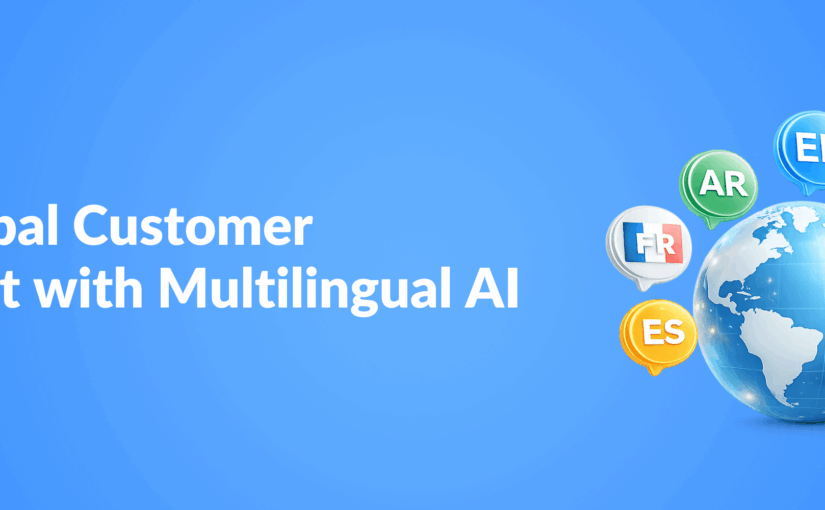
In today’s globalized marketplace, the ability to engage customers in their native language isn’t just a courtesy—it’s a competitive advantage. Implementing multilingual RAG (Retrieval Augmented Generation) agents represents a transformative approach to scaling personalized customer engagement across international markets. These AI-powered systems combine the knowledge retrieval capabilities of search engines with the natural language generation abilities of large language models, creating intelligent assistants that can communicate fluently in multiple languages while accessing your business’s specific knowledge base.

Why Multilingual Customer Support Matters in Global E-commerce

The statistics speak volumes about the importance of native language support:

  • 76% of online shoppers prefer to buy products with information in their native language
  • 40% of consumers will never purchase from websites in other languages
  • 65% prefer content in their native language, even if it’s lower quality

For e-commerce businesses with global ambitions, these numbers highlight a critical truth: speaking your customer’s language directly impacts your bottom line. Traditional approaches to multilingual support—hiring native speakers or using basic translation tools—either don’t scale cost-effectively or lack the contextual understanding needed for meaningful engagement.

Understanding Multilingual RAG Agents

Multilingual RAG agents represent the convergence of two powerful AI capabilities:

  1. Retrieval systems that can search through your company’s knowledge base (product catalogs, FAQs, support documentation) in multiple languages
  2. Generation models that can produce natural, contextually appropriate responses in the customer’s language

The “RAG” approach solves a fundamental limitation of standalone large language models: their inability to access your specific business data. By combining retrieval with generation, these agents can respond to customer inquiries with both the fluency of AI and the accuracy of your internal knowledge base.

Key Benefits of Implementing Multilingual RAG Agents

1. Expanded Market Reach

By removing language barriers, you can effectively enter new markets without the massive overhead of building localized support teams from scratch. This allows for testing market viability before making larger investments.

2. Consistent Brand Voice Across Languages

Unlike disconnected teams of human agents who might interpret your brand voice differently, RAG agents can maintain consistent tone and messaging guidelines while adapting naturally to cultural nuances in each language.

3. 24/7 Availability Without Staffing Challenges

International businesses face the challenge of providing support across multiple time zones. Multilingual RAG agents eliminate this constraint by being always available, regardless of local business hours.

4. Scalable Knowledge Distribution

When you update your knowledge base, all language versions of your RAG agent immediately gain access to this information, eliminating the delays and inconsistencies that occur when manually distributing updates to international teams.

5. Valuable Customer Intelligence

Multilingual RAG agents can identify patterns in customer inquiries across different markets, revealing product issues or opportunities that might otherwise remain hidden in language silos.

Building Effective Multilingual RAG Agents for E-commerce

Step 1: Assemble Your Knowledge Base

Before implementing any AI system, you need to organize your company’s knowledge in a structured, retrievable format:

  • Product descriptions and specifications
  • Pricing and availability information
  • Shipping policies and regional restrictions
  • Return and warranty information
  • Frequently asked questions and their answers
  • Common troubleshooting guides

This knowledge base will serve as the foundation for your RAG agent’s responses.

Step 2: Implement Cross-Lingual Retrieval

The retrieval component must be able to match customer queries in any supported language with relevant information in your knowledge base. This typically involves:

  • Multilingual embeddings that map concepts across languages to similar vector spaces
  • Cross-lingual information retrieval systems that can find relevant documents regardless of language mismatch
  • Automated translation of knowledge base content for languages where native content isn’t available

Step 3: Fine-tune Your Generation Model

The generation component needs to produce responses that are not only linguistically correct but also culturally appropriate and aligned with your brand voice. This requires:

  • Training AI personas that reflect your brand personality
  • Fine-tuning on industry-specific terminology
  • Implementing cultural awareness to avoid misunderstandings or offense
  • Developing fallback mechanisms for when the agent cannot confidently answer

Step 4: Implement Continuous Learning

Your multilingual RAG agent should improve over time based on:

  • Customer feedback across different languages
  • Analysis of successful vs. unsuccessful interactions
  • Regular updates to the knowledge base
  • Monitoring for cultural or linguistic shifts in different markets

Integration with Existing E-commerce Infrastructure

To maximize the value of multilingual RAG agents, they should be integrated with your existing systems:

  • Website and Mobile App Integration: Embed the agent as a chat interface that’s readily available throughout the customer journey
  • CRM Connection: Allow the agent to access customer history and preferences for more personalized interactions
  • Inventory and Order Management: Enable real-time checking of product availability and order status
  • Handoff Protocols: Create smooth transitions to human agents when necessary
  • Analytics Integration: Track campaign performance and customer interaction metrics across languages

Challenges and Considerations

Language-Specific Nuances

Different languages have unique idioms, cultural references, and communication styles. Your RAG agent needs to be trained to recognize these differences and respond appropriately.

Technical Infrastructure

Multilingual RAG systems require significant computational resources, especially when supporting many languages simultaneously. Consider cloud-based solutions that can scale with your needs.

Data Privacy Regulations

Different regions have varying data protection laws. Ensure your RAG implementation complies with regulations like GDPR in Europe, LGPD in Brazil, and other regional frameworks.

Quality Assurance Across Languages

Monitoring quality becomes more complex in a multilingual environment. Develop robust evaluation frameworks and consider working with native speakers to audit agent performance regularly.

Measuring Success: KPIs for Multilingual RAG Agents

To evaluate the effectiveness of your implementation, track these key performance indicators:

  • Resolution Rate by Language: Percentage of inquiries successfully resolved without human intervention
  • Customer Satisfaction Scores: Broken down by language and region
  • Average Resolution Time: Compared to previous non-AI solutions
  • Conversion Rate Impact: Changes in purchase completion when customers engage with the agent
  • Market Penetration: Growth in previously underserved language markets
  • Cost per Interaction: Compared to traditional multilingual support methods

Future Trends in Multilingual Customer Engagement

As the technology continues to evolve, watch for these emerging capabilities:

  • Multimodal Interactions: Supporting voice, image, and video alongside text
  • Dialect and Accent Understanding: Recognizing and adapting to regional variations within languages
  • Emotion Recognition: Detecting customer sentiment across different cultural expressions
  • Proactive Engagement: Initiating conversations based on browsing behavior and previous interactions

Key Takeaways

  • Multilingual RAG agents combine AI-powered language generation with your business’s specific knowledge base to provide authentic, accurate customer support across languages
  • Implementing these systems can dramatically expand your market reach while maintaining consistent brand voice and 24/7 availability
  • Effective implementation requires careful attention to knowledge base structure, cross-lingual retrieval, cultural nuances, and integration with existing systems
  • Measuring success should include both operational metrics (resolution rates, time savings) and business outcomes (conversion improvements, market growth)
  • The technology continues to evolve, with emerging capabilities in multimodal interactions, dialect understanding, and proactive engagement

Conclusion

In an increasingly global marketplace, the ability to engage customers in their native language at scale represents a significant competitive advantage. Multilingual RAG agents offer a powerful solution that combines the efficiency and scalability of AI with the nuanced understanding needed for effective cross-cultural communication.

By implementing these systems thoughtfully—with attention to both technical requirements and cultural sensitivities—e-commerce businesses can break down language barriers that have traditionally limited international growth. The result is not just wider market reach, but deeper customer relationships built on the foundation of understanding and being understood.