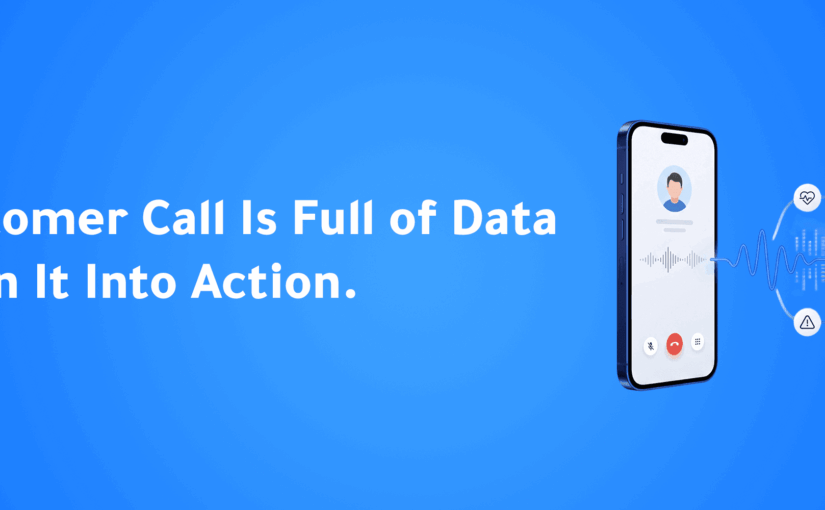
Call Intelligence: How AI Turns Customer Calls Into Business Insights

Introduction

Every day, businesses have hundreds or even thousands of conversations with customers.

Sales calls.

Support calls.

Product inquiries.

Complaints.

Appointment requests.

Follow-ups.

Inside those conversations is some of the most valuable customer data a business can collect.

Customers explain what they need.

They describe their problems.

They mention competitors.

They raise objections.

They reveal buying intent.

They provide feedback about products and services.

Yet in many organizations, most of that information disappears the moment the call ends.

A salesperson may write a few notes.

A support agent may update a ticket.

Someone may remember an important detail.

But the complete conversation—and the insights hidden inside it—rarely becomes structured business data.

This is where Call Intelligence changes the way businesses manage customer conversations.

By using artificial intelligence to analyze calls, businesses can automatically understand what happened, identify important insights, update systems, and determine what should happen next.

A call stops being just a conversation.

It becomes a source of actionable business intelligence.

What Is Call Intelligence?

Call Intelligence is the use of AI to capture, analyze, and understand business phone conversations.

Instead of relying entirely on employees to remember what happened during a call, AI can process the conversation and extract important information automatically.

This can include:

Call summaries.

Customer intent.

Key discussion points.

Customer sentiment.

Questions asked.

Sales objections.

Products discussed.

Next steps.

Follow-up requirements.

Lead qualification information.

The result is structured information that businesses can use across sales, customer service, marketing, and operations.

The Problem With Traditional Call Management

Most businesses already have systems for managing customer data.

They have CRM platforms.

Support systems.

Spreadsheets.

Call center software.

Sales pipelines.

But phone conversations often remain disconnected from these systems.

Consider what normally happens after a sales call.

The salesperson ends the call.

Then they need to remember:

What did the customer ask?

What product were they interested in?

What objections did they have?

What budget did they mention?

When should we follow up?

What should be added to the CRM?

If the salesperson is handling multiple calls every day, important information can easily be forgotten.

Even when notes are added, they may look like:

“Interested. Follow up next week.”

That tells the business very little about what actually happened.

What AI Can Understand From a Call

Modern Call Intelligence systems can analyze conversations at a much deeper level.

1. Customer Intent

Why did the customer call?

For example:

Product inquiry.

Sales request.

Support issue.

Complaint.

Appointment booking.

Order tracking.

Cancellation request.

Understanding intent helps businesses categorize conversations automatically.

2. Conversation Summary

Instead of listening to an entire recording, AI can create a concise summary.

For example:

Customer is evaluating the Enterprise plan for a 40-person sales team. They require WhatsApp integration and CRM automation. Customer requested pricing and a product demonstration next week.

A manager can understand the entire conversation in seconds.

3. Customer Sentiment

AI can help identify signals indicating whether a customer interaction was positive, neutral, frustrated, or potentially at risk.

This can help support teams identify conversations that may require additional attention.

4. Sales Objections

Sales conversations contain valuable information about why customers hesitate.

Common objections may include:

Price.

Implementation time.

Missing integrations.

Contract terms.

Security concerns.

Competitor comparisons.

When these objections are captured systematically, sales leaders can identify patterns across hundreds of conversations.

5. Buying Signals

Customers often reveal purchase intent indirectly.

They may ask:

“How quickly can we implement this?”

“Can you integrate with our CRM?”

“Can we add more users later?”

“What does onboarding look like?”

“When can we schedule a demo?”

AI can identify these signals and help prioritize high-intent opportunities.

From Call Recording to Structured Data

Traditional call recording answers one question:

What was said?

Call Intelligence answers a much more useful question:

What does this conversation mean for the business?

The process may look like this:

Customer Call

Conversation Captured

AI Analysis

Summary Generated

Intent Identified

Insights Extracted

CRM Updated

Next Action Created

Instead of storing another recording, the business receives usable information.

Call Intelligence for Sales Teams

Sales managers face a difficult problem.

They cannot personally listen to every sales call.

If ten representatives each make dozens of calls every week, reviewing every conversation becomes impossible.

As a result, managers often evaluate sales performance using outcomes alone.

Deals won.

Deals lost.

Calls completed.

Meetings booked.

But those numbers do not always explain why deals are moving or getting stuck.

Call Intelligence can provide additional context.

Managers can understand:

Which objections appear most frequently.

Which competitors customers mention.

Which questions high-intent leads ask.

Which conversations require follow-up.

Where deals are getting stuck.

Which topics appear repeatedly across sales calls.

This gives managers greater visibility into what is actually happening inside the pipeline.

Call Intelligence for Customer Support

Support conversations contain another valuable source of information.

Customers frequently explain product problems more clearly during a conversation than they do through surveys.

Call Intelligence can help identify:

Recurring complaints.

Common technical issues.

Product confusion.

Service problems.

Escalation patterns.

Customer frustration.

Frequently requested features.

Instead of waiting for individual complaints to reach management, businesses can identify patterns across many conversations.

Call Intelligence for Marketing

Marketing teams can also learn from customer calls.

Sales and support conversations contain the exact language customers use to describe their problems.

That information can help marketers understand:

What customers actually care about.

Which problems appear most frequently.

Which benefits resonate.

Which objections prevent purchases.

How customers describe the product.

What competitors they are considering.

This can improve:

Advertising messages.

Landing pages.

Sales materials.

Content strategy.

Product positioning.

Customer personas.

Customer conversations become a continuous source of market research.

Call Intelligence and CRM Data

One of the biggest opportunities is connecting Call Intelligence directly with CRM systems.

Without automation, employees often need to manually enter call information.

This creates inconsistent CRM data.

One employee writes detailed notes.

Another writes one sentence.

Another forgets to update the CRM entirely.

AI can help standardize this process.

After a call, the system can automatically generate:

Call Summary

Customer Intent

Lead Status

Key Topics

Next Action

Follow-up Date

This information can then become part of the customer’s CRM history.

Conversation Intelligence vs. Call Intelligence

These terms are often used interchangeably, but there is an important distinction.

Call Intelligence focuses specifically on voice conversations.

It analyzes what happens during phone or voice calls.

Conversation Intelligence can cover a broader range of communication channels.

This may include:

Phone calls.

WhatsApp.

Web chat.

Email.

Social messaging.

Support conversations.

The goal is similar: turn unstructured customer communication into structured business intelligence.

But Conversation Intelligence gives organizations a broader view across the entire customer journey.

From Intelligence to Action

Understanding a conversation is valuable.

But understanding alone does not complete the workflow.

Imagine AI detects that a customer:

Is highly interested.

Requested a demonstration.

Asked about enterprise pricing.

Mentioned a competitor.

Wants to follow up next Tuesday.

The system could simply display those insights.

Or it could act on them.

For example:

Update the CRM.

Change the opportunity stage.

Create a follow-up task.

Schedule the demo.

Notify the salesperson.

Add the competitor mention to the customer record.

Trigger an automated follow-up.

This is where Call Intelligence becomes much more powerful when combined with Agentic AI and workflow automation.

ConnectGain: From Call Intelligence to Action

With ConnectGain by Appgain, customer conversations can become part of a connected AI-powered workflow.

After a call, ConnectGain can help transform the conversation into structured information and next steps.

For example:

Call Completed

AI Summary Generated

Customer Intent Identified

Lead Qualified

CRM Updated

Follow-up Created

Sales Team Notified

Instead of leaving valuable information trapped inside recordings, businesses can connect call insights directly to their customer workflows.

And because ConnectGain can bring together multiple customer communication channels, businesses can connect voice conversations with customer interactions across WhatsApp, web chat, email, and other channels.

This creates a more complete customer context.

The goal is not simply to analyze calls.

It’s to make every conversation useful after it ends.

The Business Benefits of Call Intelligence

When implemented effectively, Call Intelligence can help organizations improve several areas.

Better CRM Data

Customer information can be captured more consistently.

Faster Follow-Up

Next steps can be identified immediately after conversations.

Better Sales Coaching

Managers gain visibility into real customer conversations.

Stronger Customer Insights

Recurring needs, objections, and problems become easier to identify.

Less Administrative Work

Employees spend less time manually writing notes.

Better Customer Experience

Teams have more context when continuing conversations.

More Visibility

Business leaders gain a clearer understanding of what customers are actually saying.

How to Start Using Call Intelligence

Businesses do not need to analyze every conversation from day one.

A practical approach is to begin with one high-value use case.

For example:

Sales qualification calls.

Customer support calls.

Appointment booking.

Customer complaints.

Product inquiries.

Start by identifying what information your team currently captures manually.

Then ask:

Could AI capture this automatically?

Could that information update the CRM?

Could the system automatically create the next action?

This turns Call Intelligence from an analytics project into an operational improvement.

The Future of Call Intelligence

The next generation of Call Intelligence will move beyond dashboards and reports.

AI will increasingly understand conversations while they happen and connect those insights directly to business systems.

A customer will mention a requirement.

The CRM will update.

A lead will show strong buying intent.

The opportunity will be prioritized.

A customer will become frustrated.

The conversation will be escalated.

A meeting will be requested.

The calendar workflow will begin.

The distinction between understanding conversations and executing workflows will continue to disappear.

That is where Call Intelligence meets Agentic AI.

Conclusion

Customer calls contain enormous amounts of valuable business information.

The challenge has always been capturing and using it.

Call Intelligence changes that.

Instead of leaving customer insights inside recordings or relying on manual notes, AI can transform conversations into structured data that sales, support, marketing, and operations teams can use.

But the greatest opportunity goes beyond analysis.

When Call Intelligence connects with CRM systems and automated workflows, customer conversations can directly influence what the business does next.

The future of customer calls isn’t simply recording conversations.

It’s understanding them—and acting on what they reveal.

Ready to Turn Every Customer Call Into Business Intelligence?

ConnectGain by Appgain helps businesses connect AI-powered call analysis with CRM, customer conversations, and automated workflows.

Turn calls into summaries, customer insights, CRM updates, follow-ups, and actionable next steps—without relying entirely on manual work.

Make every customer conversation useful long after the call ends.

Contact Us

📞 WhatsApp: +20 111 998 5526
🌐 Website: appgain.io
📧 Email: He***@*****in.io

About Appgain

Appgain is an Agentic AI company helping businesses automate customer conversations and turn communication into real business actions.

Through ConnectGain, organizations can connect AI with CRM platforms, WhatsApp, voice calls, customer conversations, and business workflows—bringing intelligence and execution into one connected customer journey.

ConnectGain by Appgain

AI That Works Where Your Business Works.
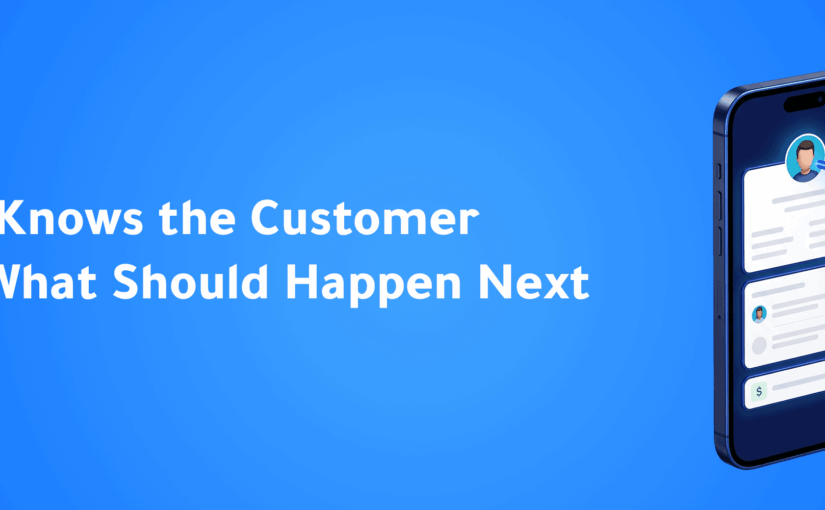
 

AI CRM Automation: How AI Is Turning CRM From a Database Into an Action System

Introduction

CRM systems were designed to help businesses organize customer relationships.

They store contacts.

Track opportunities.

Record activities.

Manage sales pipelines.

Schedule follow-ups.

Keep customer information in one place.

But there is a problem.

A CRM is only as useful as the information people put into it—and the actions they take afterward.

Sales representatives forget to update deals.

Customer information becomes outdated.

Follow-up tasks are created too late.

Call notes never make it into the system.

Leads remain in the wrong pipeline stage.

Important opportunities quietly disappear.

The CRM may contain enormous amounts of customer data, but employees still need to constantly decide:

What should I do next?

Artificial intelligence is beginning to change this.

With AI CRM Automation, CRM platforms can move beyond simply storing customer information.

AI can understand conversations, identify customer intent, recommend next steps, update records, trigger workflows, and help teams act on opportunities faster.

The CRM is evolving from a system of record into a system of action.

What Is AI CRM Automation?

AI CRM Automation combines artificial intelligence with customer relationship management systems to automate tasks, decisions, and workflows around customer interactions.

Traditional CRM automation usually relies on predefined rules.

For example:

If lead status = Qualified → Create follow-up task.

AI introduces another layer.

Instead of relying only on predefined fields, AI can understand unstructured information from:

Customer conversations.

Phone calls.

WhatsApp messages.

Emails.

Support interactions.

Sales notes.

Previous customer activity.

It can then determine what information matters and what should happen next.

The Problem With Traditional CRM Systems

Most modern businesses already have a CRM.

Yet many sales teams still struggle with CRM adoption.

Why?

Because maintaining the CRM often creates additional work.

After speaking with a customer, a salesperson may need to:

Create the contact.

Enter company information.

Write call notes.

Update the opportunity.

Change the pipeline stage.

Set the deal value.

Create a task.

Schedule a follow-up.

Assign the opportunity.

Then send another message to the customer.

None of these tasks individually takes very long.

But multiplied across hundreds of customer conversations, they consume significant amounts of time.

More importantly, they create opportunities for mistakes.

The Hidden Cost of Manual CRM Updates

When CRM updates depend entirely on employees, data quality becomes inconsistent.

One salesperson documents everything.

Another enters only basic information.

Another waits until the end of the day.

Another forgets completely.

The result is a CRM filled with incomplete information.

That creates several problems.

Missed Follow-Ups

If the next action is not recorded, opportunities can easily disappear.

Inaccurate Pipelines

Deals remain in stages that no longer reflect reality.

Poor Forecasting

Management makes decisions using incomplete information.

Lost Customer Context

Employees may not know what happened in previous conversations.

Administrative Work

Sales professionals spend valuable time maintaining systems instead of talking to customers.

AI CRM Automation is designed to reduce this gap.

How AI CRM Automation Works

The process begins with customer activity.

Imagine a potential customer sends a WhatsApp message:

“We’re looking for a solution for our 25-person sales team. Can we schedule a demo next week?”

A traditional workflow may require an employee to manually process everything.

With AI CRM Automation, the system can understand the conversation and identify:

Intent: Product Inquiry

Company Size: 25-person sales team

Buying Signal: Demo Requested

Lead Status: Qualified

Next Action: Schedule Demo

The CRM can then be updated automatically.

1. AI Captures Customer Information

Customer information often appears naturally during conversations.

A customer may mention:

Their name.

Company.

Team size.

Budget.

Location.

Product interest.

Implementation timeline.

Preferred meeting date.

Instead of asking employees to manually transfer this information into CRM fields, AI can identify relevant details and structure them automatically.

2. AI Understands Customer Intent

Not every customer conversation has the same objective.

Someone may be:

Requesting support.

Asking for pricing.

Comparing products.

Booking a demonstration.

Following up on an order.

Considering cancellation.

AI can analyze the conversation and determine why the customer is contacting the business.

That intent can then influence the next workflow.

3. AI Qualifies Leads

Lead qualification often involves repetitive questions.

Sales teams want to understand factors such as:

Company size.

Customer need.

Budget.

Timeline.

Decision-making authority.

Product interest.

Instead of manually reviewing every conversation, AI can help capture qualification information as the conversation happens.

High-intent opportunities can then be prioritized faster.

4. AI Updates CRM Records

This is one of the most practical applications of AI CRM Automation.

After a conversation, AI can help:

Create a new contact.

Update an existing contact.

Add conversation summaries.

Create an opportunity.

Change the pipeline stage.

Update lead status.

Add qualification information.

Create follow-up tasks.

Instead of asking employees to remember every administrative step, the workflow can happen automatically.

5. AI Determines the Next Action

Storing information is useful.

Knowing what to do with it is more valuable.

Imagine a customer says:

“The pricing looks good. I need to discuss it with my manager and get back to you on Thursday.”

AI can identify that the opportunity is still active.

It can then create:

Follow-up: Thursday

and associate the task with the correct customer and opportunity.

This helps ensure that customer intent becomes an actual business action.

6. AI Triggers Workflows

CRM automation becomes even more powerful when connected to other systems.

For example:

Customer Requests Demo

Lead Qualified

CRM Opportunity Created

Calendar Checked

Demo Scheduled

Confirmation Sent

Sales Representative Assigned

Reminder Scheduled

One customer message can initiate an entire workflow.

From CRM Data Entry to CRM Intelligence

Traditional CRM systems require employees to tell the system what happened.

AI-powered CRM systems can increasingly understand what happened themselves.

Consider a sales call.

Without AI:

Call Ends

Employee writes notes

Employee updates CRM

Employee creates task

Employee schedules follow-up

With AI CRM Automation:

Call Ends

Summary Generated

Intent Identified

CRM Updated

Next Action Created

Follow-Up Scheduled

The salesperson can focus on the customer rather than administrative work.

AI CRM Automation for Sales Teams

Sales teams are one of the clearest use cases.

AI can help sales representatives spend less time on repetitive CRM administration.

For example, after a customer interaction, the system may automatically capture:

Lead source.

Customer requirement.

Product interest.

Qualification information.

Deal stage.

Expected next step.

Follow-up date.

Salespeople gain more time to focus on conversations, negotiations, and closing opportunities.

AI CRM Automation for Customer Support

CRM automation is not limited to sales.

Customer service teams also benefit from better customer context.

When a customer contacts support, AI can help identify:

Who the customer is.

Previous conversations.

Products they use.

Existing issues.

Recent purchases.

Open support requests.

The system can then update the customer record after the interaction.

This creates a more complete customer history across departments.

Connecting CRM With Customer Conversations

One of the biggest limitations of traditional CRM systems is that customer conversations often happen somewhere else.

WhatsApp.

Instagram.

Messenger.

Phone calls.

Email.

Web chat.

Employees communicate with customers across multiple channels, while the CRM sits in another system.

This creates fragmentation.

The conversation happens in one place.

Customer data exists somewhere else.

Tasks live in another tool.

Call recordings exist somewhere else.

AI can help connect these environments.

The CRM Should Understand the Conversation

Imagine a customer contacts your company on WhatsApp.

They previously spoke with your team by phone.

They already have an open opportunity.

They now ask:

“Can we move forward with the Enterprise plan?”

Without connected systems, an employee may need to search across several platforms to understand the context.

With AI-powered customer intelligence, the business can identify the customer, retrieve previous interactions, understand the current request, and update the existing opportunity.

The CRM becomes connected to the conversation instead of operating separately from it.

AI CRM Automation and Agentic AI

This is where CRM automation begins to evolve into something larger.

Traditional automation follows rules.

Agentic AI can understand objectives and determine which actions are required to move toward them.

Consider the objective:

Convert a qualified lead into a scheduled sales meeting.

An AI agent may need to:

Understand the conversation.

Retrieve CRM information.

Ask qualification questions.

Determine whether the lead is suitable.

Check calendar availability.

Book the meeting.

Update the opportunity.

Send confirmation.

Notify the salesperson.

The CRM becomes one part of a broader Agentic AI workflow.

The AI isn’t simply updating a database.

It is helping complete the business process.

ConnectGain: Connecting Conversations, CRM and AI

With ConnectGain by Appgain, businesses can connect customer conversations with CRM data, AI Agents, and automated workflows.

Instead of requiring teams to constantly move between communication channels and CRM screens, ConnectGain can help bring customer context and business actions together.

A conversation may begin on:

WhatsApp.

Instagram.

Messenger.

Web Chat.

Email.

Voice.

From there, AI can help understand the customer and trigger the appropriate next steps.

For example:

Customer Message

Intent Detected

Lead Qualified

Contact Created

CRM Deal Created

Sales Representative Assigned

Follow-Up Scheduled

The goal is simple:

Reduce the gap between what the customer says and what the business does next.

Better CRM Data Without More Manual Work

CRM data quality is often treated as an employee discipline problem.

Managers tell teams:

“Update the CRM.”

“Write better notes.”

“Don’t forget your follow-ups.”

“Move your deals.”

But the real problem may be the workflow itself.

If every customer interaction creates several administrative tasks, some of those tasks will eventually be missed.

AI can help capture information at the moment it is created.

That can lead to:

More complete customer records.

More consistent sales data.

Better pipeline visibility.

Fewer forgotten follow-ups.

Less administrative work.

The CRM becomes more useful because maintaining it requires less manual effort.

Will AI Replace CRM Systems?

No.

AI does not eliminate the need for CRM.

It makes CRM more useful.

Businesses still need a structured system for:

Customer records.

Sales opportunities.

Pipeline management.

Activities.

Reporting.

Ownership.

Customer history.

What changes is how information enters the CRM and what happens after it arrives.

Instead of employees manually maintaining every field, AI can increasingly assist with understanding, organizing, and acting on customer information.

How to Start With AI CRM Automation

Businesses do not need to automate the entire CRM immediately.

Start with the workflows that create the most repetitive work.

For example:

Lead Creation

Automatically create contacts from customer conversations.

Conversation Summaries

Generate structured summaries after calls or chats.

Lead Qualification

Capture qualification information during conversations.

Follow-Ups

Automatically create tasks when customers request future contact.

Pipeline Updates

Update opportunities based on customer actions.

Appointment Booking

Connect qualified leads directly with scheduling workflows.

Once these processes work reliably, automation can gradually expand.

The Future of CRM Is Action

CRM systems have spent decades becoming better at storing information.

The next evolution is helping businesses act on that information.

AI can understand what customers are saying.

CRM systems provide business context.

Automation connects systems.

Agentic AI determines what should happen next.

Together, these technologies can transform CRM from a passive database into an active part of the customer journey.

Instead of asking:

“Did someone update the CRM?”

Businesses will increasingly ask:

“What did the AI do after the customer responded?”

Conclusion

CRM systems remain essential to modern businesses.

But simply storing customer information is no longer enough.

The real value comes from turning customer data into timely action.

AI CRM Automation helps businesses connect conversations with CRM records, qualification, pipeline management, tasks, scheduling, and follow-ups.

That means less repetitive administration for employees and more consistent customer processes for the business.

The future of CRM isn’t a larger database.

It’s a system that understands the customer—and helps your team take the next action.

Ready to Turn Your CRM Into a System of Action?

ConnectGain by Appgain connects Agentic AI with customer conversations, CRM data, and business workflows.

From capturing leads and qualifying opportunities to updating CRM records, creating tasks, and triggering follow-ups, ConnectGain helps businesses move from conversation to action with less manual work.

Your CRM already knows the customer. Let AI help decide what happens next.

Contact Us

📞 WhatsApp: +20 111 998 5526
🌐 Website: appgain.io
📧 Email: He***@*****in.io

About Appgain

Appgain is an Agentic AI company helping businesses automate customer conversations and workflows through intelligent AI solutions.

Through ConnectGain, organizations can deploy AI across CRM, WhatsApp, voice, customer conversations, and business workflows—helping teams turn customer interactions into real business actions.

ConnectGain by Appgain

AI That Works Where Your Business Works.
 

AI + CRM + Automation: The Growth Formula for Modern Businesses

Introduction

Modern businesses are under constant pressure to do more with less.

Customers expect instant responses, personalized experiences, seamless communication, and faster service than ever before. At the same time, businesses are expected to increase revenue, reduce operational costs, and scale efficiently without continuously expanding their teams.

Trying to meet these expectations using disconnected tools and manual processes has become nearly impossible.

This is why more organizations are combining Artificial Intelligence (AI), Customer Relationship Management (CRM), and Workflow Automation into one unified business strategy.

Individually, each technology delivers significant value.

Together, they become a powerful growth engine that helps businesses improve customer engagement, streamline operations, and accelerate revenue growth.

In this article, we’ll explore how AI, CRM, and automation work together—and why this combination is becoming the foundation of every modern business.


Why Businesses Need More Than Just Software

Many companies already use CRM software.

Others have adopted AI assistants.

Some automate repetitive tasks.

However, implementing these technologies separately often creates disconnected workflows.

Customer data lives in one system.

Sales activities happen in another.

Automation runs somewhere else.

As a result:

  • Teams waste time switching between tools.
  • Customer information becomes fragmented.
  • Follow-ups are missed.
  • Opportunities are lost.

Real transformation happens when these technologies work together.


What AI Brings to Modern Businesses

Artificial Intelligence enables businesses to work smarter rather than harder.

AI can:

  • Answer customer questions instantly
  • Understand customer intent
  • Qualify leads automatically
  • Predict buying behavior
  • Recommend next-best actions
  • Analyze customer sentiment
  • Personalize customer experiences

Instead of replacing employees, AI handles repetitive work so teams can focus on strategic activities.


Why CRM Remains the Business Foundation

A CRM system acts as the central hub for customer information.

It stores everything businesses need to understand and manage customer relationships, including:

  • Contact details
  • Conversation history
  • Sales opportunities
  • Purchase history
  • Customer preferences
  • Follow-up activities

With all customer information in one place, every department works with the same data.

This creates a more connected and personalized customer experience.


How Workflow Automation Connects Everything

Automation ensures that work gets done consistently without relying on manual effort.

Instead of employees remembering every task, workflows automatically trigger the next action.

Automation can:

  • Assign new leads
  • Create follow-up tasks
  • Update CRM records
  • Send customer notifications
  • Schedule appointments
  • Launch customer journeys
  • Notify team members

Every customer interaction automatically moves the business process forward.


Why AI, CRM, and Automation Work Better Together

Each technology solves a different business challenge.

When combined, they create a unified customer engagement ecosystem.

For example:

A customer sends a WhatsApp message.

AI understands the customer’s intent.

Customer information is automatically saved in the CRM.

The lead is scored automatically.

Automation assigns the lead to the correct sales representative.

A follow-up task is created.

The customer receives a personalized response.

Managers track everything through the CRM dashboard.

No manual intervention.

No missed opportunities.

No disconnected systems.


The Business Benefits

Faster Response Times

AI responds instantly while automation routes conversations to the right teams.

Customers receive assistance within seconds instead of hours.


Higher Conversion Rates

AI identifies buying intent.

CRM tracks every opportunity.

Automation ensures every lead receives consistent follow-up.

This combination significantly increases sales performance.


Better Customer Experiences

Every interaction becomes personalized because AI has access to CRM data.

Customers never need to repeat the same information.

Communication feels consistent across every channel.


Increased Productivity

Employees spend less time on repetitive administrative work and more time closing deals, supporting customers, and building relationships.


Smarter Business Decisions

CRM collects customer data.

AI analyzes it.

Automation acts on it.

Managers gain real-time insights instead of relying on historical reports.


Real-World Example

Imagine a customer asking about your services on WhatsApp.

Without integration:

  • An employee manually replies.
  • Customer information is copied into a spreadsheet.
  • A follow-up reminder is forgotten.
  • The lead is eventually lost.

With AI, CRM, and automation working together:

  • AI responds instantly.
  • Customer information is captured automatically.
  • CRM creates a customer profile.
  • AI scores the lead.
  • Automation assigns it to sales.
  • Follow-up messages are scheduled automatically.

The customer receives a faster and more professional experience while your team works more efficiently.


Industries Benefiting from AI + CRM + Automation

This approach is transforming businesses across every industry, including:

  • Retail & E-commerce
  • Real Estate
  • Healthcare
  • Education
  • Tourism
  • Financial Services
  • SaaS
  • Logistics
  • Manufacturing

Any business that communicates with customers can benefit from this combination.


Common Mistakes Businesses Make

Many organizations invest in technology without connecting it.

Common mistakes include:

  • Using separate CRM and communication tools
  • Automating without AI
  • Implementing AI without customer data
  • Storing customer information in spreadsheets
  • Relying on manual follow-ups

The result is disconnected systems and inefficient operations.


How ConnectGain Brings Everything Together

ConnectGain combines Artificial Intelligence, CRM, Workflow Automation, and Omnichannel Communication into one intelligent customer engagement platform.

With ConnectGain, businesses can:

  • Manage WhatsApp, Instagram, Messenger, website chat, and email through one Unified Inbox
  • Centralize customer information with an AI-powered CRM
  • Qualify leads automatically using AI
  • Automate customer journeys and follow-up workflows
  • Trigger intelligent business processes
  • Analyze customer conversations
  • Monitor sales and customer engagement through real-time dashboards

Instead of using multiple disconnected tools, ConnectGain provides one unified platform for managing every stage of the customer journey.


The Future Belongs to Connected Businesses

The businesses growing fastest today are no longer relying on manual work or disconnected software.

They are building intelligent ecosystems where:

  • AI makes decisions faster.
  • CRM centralizes customer intelligence.
  • Automation executes workflows automatically.

Together, these technologies create organizations that are more productive, more responsive, and better prepared for future growth.


Conclusion

Artificial Intelligence, CRM, and Workflow Automation are no longer optional technologies.

Together, they form the foundation of modern business growth.

Businesses that combine these three capabilities can deliver better customer experiences, improve operational efficiency, increase sales, and scale without unnecessary complexity.

ConnectGain helps organizations bring AI, CRM, automation, and customer communication together through one intelligent platform designed to accelerate growth and strengthen customer relationships.


Ready to Accelerate Business Growth?

ConnectGain helps businesses combine AI, CRM, and automation to streamline customer engagement, improve sales performance, and manage conversations across WhatsApp, Instagram, Messenger, websites, Email, SMS, Web Push, and App Push from one intelligent platform.

📞 WhatsApp: +20 111 998 5526

🌐 Website: https://appgain.io

📧 Email: He***@*****in.io