Best WhatsApp Automation Strategies for Businesses

Introduction

WhatsApp has evolved from a simple messaging application into one of the most powerful customer engagement and sales channels available to businesses today.

Across industries, customers increasingly prefer communicating through WhatsApp because it is fast, familiar, and convenient.

However, as customer conversations grow, managing WhatsApp manually becomes difficult.

Sales teams struggle to follow up consistently.

Customer support teams become overwhelmed.

Leads are missed.

Response times increase.

This is where WhatsApp Automation becomes essential.

By automating key customer interactions, businesses can engage customers faster, improve customer experiences, increase conversions, and scale operations without significantly increasing workload.

In this article, we’ll explore the most effective WhatsApp automation strategies businesses can use to improve customer engagement and drive growth.

Why WhatsApp Automation Matters

Modern customers expect:

  • Immediate responses
  • Personalized communication
  • 24/7 availability
  • Fast issue resolution
  • Seamless customer experiences

Meeting these expectations manually is increasingly challenging.

WhatsApp automation helps businesses:

  • Reduce response times
  • Improve lead management
  • Increase productivity
  • Deliver consistent communication
  • Scale customer engagement

Businesses that automate customer interactions often gain a significant competitive advantage.

Strategy 1: Automate Welcome Messages

First impressions matter.

When a customer contacts your business for the first time, an automated welcome message can immediately acknowledge their inquiry and set expectations.

A welcome message can:

  • Introduce your business
  • Share working hours
  • Provide quick options
  • Collect initial information

This ensures customers receive an immediate response even when agents are unavailable.

Benefits

  • Faster engagement
  • Better customer experience
  • Reduced waiting times

Strategy 2: Automate Lead Qualification

Not every lead is ready to buy.

Sales teams often spend valuable time qualifying prospects manually.

WhatsApp automation can ask qualification questions such as:

  • What service are you interested in?
  • What is your budget?
  • When do you plan to purchase?
  • What challenges are you trying to solve?

Responses can automatically determine lead quality and route prospects to the appropriate sales representative.

Benefits

  • Faster lead qualification
  • Improved sales productivity
  • Better lead prioritization

Strategy 3: Automate Appointment Booking

Scheduling appointments manually can be time-consuming.

WhatsApp automation can allow customers to:

  • Select available time slots
  • Confirm appointments
  • Receive reminders
  • Reschedule when necessary

This creates a more convenient experience while reducing administrative work.

Benefits

  • Fewer missed appointments
  • Better customer convenience
  • Reduced scheduling workload

Strategy 4: Automate Follow-Up Messages

One of the biggest reasons businesses lose sales opportunities is inconsistent follow-up.

Automation ensures prospects continue receiving communication after their initial inquiry.

Examples include:

  • Product information
  • Proposal reminders
  • Meeting follow-ups
  • Sales check-ins

Consistent follow-up helps keep opportunities moving through the sales pipeline.

Benefits

  • Higher conversion rates
  • Improved customer engagement
  • More sales opportunities

Strategy 5: Automate Customer Support

Many customer inquiries are repetitive.

Examples include:

  • Order status requests
  • Pricing inquiries
  • Business hours
  • Return policies
  • Product availability

Automated WhatsApp workflows can answer these questions instantly.

This reduces support workload while improving response times.

Benefits

  • Faster support
  • Lower operational costs
  • Increased customer satisfaction

Strategy 6: Automate Abandoned Cart Recovery

For e-commerce businesses, abandoned carts represent lost revenue opportunities.

WhatsApp automation can automatically send reminders when customers leave products in their shopping carts without completing purchases.

Messages can include:

  • Product reminders
  • Promotional offers
  • Discount codes
  • Checkout links

This helps recover sales that might otherwise be lost.

Benefits

  • Increased revenue
  • Improved conversion rates
  • Better customer re-engagement

Strategy 7: Automate Customer Onboarding

The first few interactions after a purchase are critical.

Automation can help businesses guide new customers through onboarding processes.

Examples include:

  • Welcome messages
  • Product tutorials
  • Setup instructions
  • Training resources

This helps customers achieve value more quickly.

Benefits

  • Better adoption rates
  • Improved customer satisfaction
  • Reduced support requests

Strategy 8: Automate Re-Engagement Campaigns

Some customers stop interacting with a business over time.

WhatsApp automation can help re-engage inactive customers through:

  • Special offers
  • Product updates
  • New service announcements
  • Loyalty rewards

This keeps your brand top of mind and increases customer retention.

Benefits

  • Improved retention
  • Increased repeat purchases
  • Better customer lifetime value

Strategy 9: Combine WhatsApp with CRM Automation

WhatsApp becomes significantly more powerful when integrated with a CRM platform.

This allows businesses to:

  • Create customer records automatically
  • Track conversation history
  • Update customer profiles
  • Assign leads
  • Trigger workflows

A connected CRM creates a complete view of the customer journey.

Benefits

  • Better customer insights
  • Improved sales visibility
  • More efficient operations

Strategy 10: Use AI-Powered WhatsApp Automation

Artificial Intelligence is transforming WhatsApp engagement.

AI-powered assistants can:

  • Understand customer intent
  • Answer questions naturally
  • Qualify leads automatically
  • Route conversations intelligently
  • Generate customer insights

This creates a more personalized and scalable customer experience.

Benefits

  • 24/7 customer engagement
  • Smarter conversations
  • Increased efficiency
  • Better customer experiences

Common Mistakes to Avoid

When implementing WhatsApp automation, businesses should avoid:

Over-Automation

Customers should always have access to human support when needed.

Generic Messaging

Personalization is critical for engagement.

Avoid sending identical messages to every customer.

Poor Follow-Up Timing

Messages should be relevant and delivered at the appropriate time.

Lack of CRM Integration

Automation is most effective when connected to customer data and workflows.

How ConnectGain Helps Businesses Automate WhatsApp Engagement

ConnectGain helps businesses build intelligent WhatsApp automation strategies through one unified platform.

With ConnectGain, organizations can:

  • Automate customer journeys
  • Deploy AI-powered WhatsApp assistants
  • Qualify leads automatically
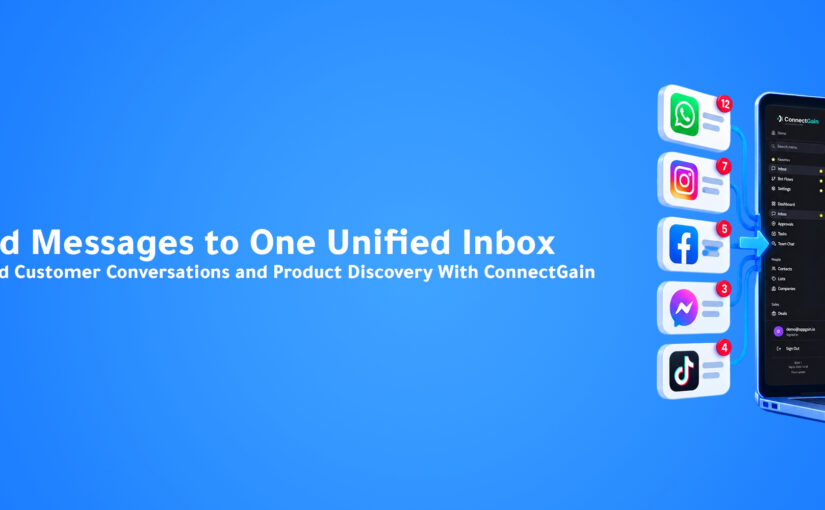
  • Manage conversations through a Unified Inbox
  • Connect WhatsApp with CRM workflows
  • Trigger personalized follow-up sequences
  • Manage customer engagement across multiple channels

By combining WhatsApp, CRM, AI, and workflow automation, ConnectGain helps businesses create scalable customer engagement strategies that drive measurable results.

The Future of WhatsApp Automation

Customer communication is becoming increasingly automated, personalized, and intelligent.

Future WhatsApp automation will include:

  • Advanced AI assistants
  • Predictive customer engagement
  • Personalized recommendations
  • Automated sales workflows
  • Intelligent customer journey orchestration

Businesses that adopt automation today will be better positioned to compete tomorrow.

Conclusion

WhatsApp has become one of the most important communication channels for modern businesses.

However, managing growing conversation volumes manually is no longer sustainable.

By implementing effective WhatsApp automation strategies, businesses can improve customer experiences, reduce operational workload, increase conversions, and scale customer engagement more efficiently.

From lead qualification and appointment booking to customer support and AI-powered engagement, automation helps organizations unlock the full potential of WhatsApp as a business channel.

ConnectGain helps businesses automate customer journeys, streamline communication, and maximize customer engagement through one intelligent platform.

Ready to Automate Your WhatsApp Customer Journey?

ConnectGain helps businesses automate conversations, qualify leads, manage customer relationships, and engage customers across WhatsApp, Instagram, Messenger, websites, Email, SMS, Web Push, and App Push from one centralized platform.

📞 WhatsApp: +20 111 9985526

🌐 Website: https://appgain.io

📧 Email: He***@*****in.io
 

From Call to Task: Automating Customer Follow-Up After Every Conversation

Introduction

Every customer call creates an opportunity.

Whether it’s a sales inquiry, a support request, a product demonstration, or a follow-up discussion, the real value of a customer call often depends on what happens after the conversation ends.

Unfortunately, many businesses still rely on manual processes to manage post-call activities.

Sales representatives take notes manually.

Managers create tasks later.

Follow-ups are scheduled inconsistently.

Important details are forgotten.

As a result, opportunities are lost, customers become frustrated, and teams struggle to maintain consistent communication.

This is why businesses are increasingly investing in customer follow-up automation.

By automatically converting conversations into tasks, workflows, reminders, and customer actions, organizations can improve productivity, increase conversion rates, and ensure that no opportunity is overlooked.

In this article, we’ll explore how businesses can automate customer follow-up after calls and why it has become essential for modern customer engagement.

Why Follow-Up Matters More Than the Call Itself

Many businesses focus heavily on customer conversations but overlook the follow-up process.

In reality, a successful call is often only the beginning of the customer journey.

After a call, teams may need to:

  • Schedule another meeting
  • Send a proposal
  • Follow up with pricing
  • Assign a task
  • Update customer records
  • Escalate an issue
  • Create a sales opportunity

If these actions are delayed or forgotten, customer engagement suffers.

The speed and consistency of follow-up often determine whether a conversation becomes a sale or a missed opportunity.

Common Challenges with Manual Follow-Up

Many organizations still depend on employees to manage follow-up activities manually.

This approach creates several challenges.

Forgotten Tasks

Employees are often handling multiple customers simultaneously.

Important actions can easily be missed.

Inconsistent Follow-Up

Different team members may follow different processes.

This creates inconsistent customer experiences.

Delayed Responses

Tasks are often created hours or days after the original conversation.

This slows down customer engagement.

Lost Customer Information

Critical details discussed during calls may never be documented properly.

Valuable context can disappear.

Missed Sales Opportunities

Without structured follow-up, qualified leads may lose interest or choose a competitor.

What Is Customer Follow-Up Automation?

Customer follow-up automation uses technology to automatically trigger actions after customer interactions.

Instead of relying on manual processes, the system automatically performs predefined tasks.

Examples include:

  • Creating CRM records
  • Assigning tasks
  • Sending follow-up messages
  • Scheduling reminders
  • Updating deal stages
  • Triggering customer journeys
  • Notifying team members

Automation ensures every conversation results in the appropriate next step.

From Call to Task: How Automation Works

Step 1: Capture Customer Information

After a customer interaction, information is automatically recorded.

This may include:

  • Customer details
  • Call notes
  • Conversation outcomes
  • Lead status
  • Customer requests

All information is stored centrally.

Step 2: Analyze the Conversation

AI-powered systems can analyze conversation outcomes and customer intent.

Examples include:

  • Interested in a demo
  • Requesting pricing
  • Support issue reported
  • Follow-up required
  • Escalation needed

This enables intelligent workflow execution.

Step 3: Create Tasks Automatically

Based on predefined business rules, tasks can be generated instantly.

Examples:

  • Call customer tomorrow
  • Send product proposal
  • Schedule demonstration
  • Assign support ticket
  • Escalate issue to management

No manual task creation is required.

Step 4: Notify the Right Team

Automation routes tasks to the appropriate employee or department.

This improves accountability and response speed.

Step 5: Trigger Customer Follow-Ups

The system can automatically send:

  • WhatsApp messages
  • Emails
  • SMS notifications
  • Appointment confirmations
  • Customer updates

This keeps customers informed and engaged.

Benefits of Automating Customer Follow-Up

Faster Response Times

Automation ensures customers receive immediate next steps after conversations.

This improves customer satisfaction and engagement.

Higher Conversion Rates

Consistent follow-up increases the likelihood of converting prospects into customers.

Sales teams can focus on opportunities instead of administrative work.

Improved Team Productivity

Employees spend less time creating tasks and managing reminders.

This allows them to focus on higher-value activities.

Better Customer Experiences

Customers receive timely communication and consistent service.

This builds trust and improves brand perception.

Reduced Human Errors

Automation prevents:

  • Forgotten follow-ups
  • Missed deadlines
  • Lost notes
  • Inconsistent processes

Every customer receives the same level of attention.

Real-World Examples of Follow-Up Automation

Sales Teams

After a discovery call:

  • A deal is created in the CRM
  • A proposal task is assigned
  • A follow-up reminder is scheduled
  • A thank-you message is sent automatically

Customer Support Teams

After a support conversation:

  • A support ticket is created
  • The issue is categorized
  • Escalation workflows are triggered if needed
  • Customer updates are sent automatically

Account Management Teams

After a customer meeting:

  • Action items are assigned
  • Follow-up meetings are scheduled
  • Customer records are updated automatically

This improves coordination and accountability.

The Role of AI in Customer Follow-Up Automation

Artificial Intelligence makes customer follow-up even more powerful.

AI can:

  • Generate call summaries
  • Identify action items
  • Detect customer intent
  • Recommend next steps
  • Prioritize tasks
  • Predict customer needs

Instead of simply automating workflows, AI helps optimize them.

This creates smarter customer engagement processes.

How ConnectGain Automates Customer Follow-Up

ConnectGain helps businesses automate customer engagement, task management, and follow-up workflows through one unified platform.

With ConnectGain, organizations can:

  • Capture customer interactions automatically
  • Create tasks based on customer actions
  • Trigger automated customer journeys
  • Assign leads and opportunities instantly
  • Manage conversations through a Unified Inbox
  • Track interactions through an integrated CRM
  • Use AI-powered tools to analyze conversations and identify next actions

By combining CRM, AI, automation, and omnichannel communication, ConnectGain ensures every customer interaction leads to meaningful action.

The Future of Customer Follow-Up

Businesses are moving toward increasingly automated and intelligent customer engagement models.

Future systems will automatically:

  • Summarize conversations
  • Generate tasks
  • Assign ownership
  • Predict follow-up priorities
  • Personalize customer communication

The result will be faster, smarter, and more effective customer engagement.

Organizations that adopt these capabilities early will gain a significant competitive advantage.

Conclusion

A customer call should never be the end of the process.

The real value comes from what happens next.

By automating customer follow-up, businesses can ensure every conversation leads to action, every opportunity receives attention, and every customer receives a consistent experience.

From task creation and CRM updates to AI-powered recommendations and automated customer journeys, follow-up automation helps organizations improve productivity, increase conversions, and strengthen customer relationships.

ConnectGain helps businesses transform conversations into actions through intelligent automation designed for modern customer engagement.

Ready to Turn Every Conversation Into Action?

ConnectGain helps businesses automate customer follow-ups, manage customer journeys, and streamline communication across WhatsApp, Instagram, Messenger, websites, Email, SMS, Web Push, and App Push from one centralized platform.

📞 WhatsApp: +20 111 9985526

🌐 Website: https://appgain.io

📧 Email: He***@*****in.io
 

How Automation Reduces Human Errors in Business Operations

Introduction

Human errors are an unavoidable part of business operations.

Whether it’s forgetting to follow up with a lead, entering incorrect customer information, sending the wrong message, or missing an important task, even small mistakes can have significant consequences.

As businesses grow and processes become more complex, the risk of human error increases. These mistakes can lead to lost sales opportunities, dissatisfied customers, operational inefficiencies, and unnecessary costs.

This is why more organizations are investing in Business Automation.

Business automation helps companies standardize processes, eliminate repetitive manual work, and ensure tasks are completed accurately and consistently.

In this article, we’ll explore how Business Automation reduces human errors, improves operational efficiency, and helps businesses deliver better customer experiences.

The Cost of Human Errors in Business

Many organizations underestimate the impact of human error.

A single mistake can result in:

  • Lost revenue
  • Missed sales opportunities
  • Customer dissatisfaction
  • Delayed operations
  • Data inaccuracies
  • Compliance issues
  • Reduced team productivity

While occasional mistakes may seem minor, repeated errors can significantly affect business performance over time.

Common Human Errors Businesses Face

Missed Customer Follow-Ups

One of the most common mistakes in sales and customer service is forgetting to follow up with prospects or customers.

Without a structured process, leads can easily be overlooked.

The result:

  • Lost opportunities
  • Lower conversion rates
  • Reduced customer engagement

Incorrect Data Entry

Manually entering customer information often leads to:

  • Wrong phone numbers
  • Incorrect email addresses
  • Duplicate records
  • Missing information

Poor data quality impacts sales, marketing, and customer service performance.

Delayed Responses

Teams managing multiple communication channels often struggle to respond quickly.

Messages can be missed or assigned to the wrong person, resulting in:

  • Slower response times
  • Frustrated customers
  • Lost sales opportunities

Inconsistent Processes

Different employees often perform the same task in different ways.

This inconsistency can lead to:

  • Uneven customer experiences
  • Process inefficiencies
  • Quality control challenges

Missed Internal Tasks

Manual task management often results in:

  • Forgotten assignments
  • Delayed approvals
  • Missed deadlines
  • Incomplete workflows

These issues can slow down operations and impact overall performance.

What Is Business Automation?

Business Automation uses technology to execute tasks and workflows automatically with minimal human intervention.

Automation can handle:

  • Customer follow-ups
  • Lead assignment
  • Data collection
  • Workflow management
  • Customer notifications
  • Appointment scheduling
  • Task creation
  • Reporting processes

Instead of relying on memory or manual execution, businesses create predefined rules that ensure processes run automatically.

How Business Automation Reduces Human Errors

1. Eliminates Manual Repetitive Tasks

Repetitive work often leads to mistakes.

When employees perform the same tasks repeatedly, errors become more likely.

Business Automation removes manual effort from processes such as:

  • Data entry
  • Lead routing
  • Status updates
  • Customer notifications

This reduces the likelihood of mistakes while improving efficiency.

2. Ensures Consistent Process Execution

Automation follows predefined rules every time.

Unlike humans, automated workflows do not:

  • Forget steps
  • Skip actions
  • Become distracted
  • Interpret processes differently

Every task is executed consistently and accurately.

3. Prevents Missed Follow-Ups

Sales opportunities are often lost because follow-ups are forgotten.

Automation can automatically:

  • Schedule reminders
  • Send follow-up messages
  • Create tasks
  • Trigger notifications

This ensures every lead receives the attention it deserves.

4. Improves Data Accuracy

Automation reduces the need for manual data entry.

Customer information can be captured automatically from:

  • WhatsApp conversations
  • Website forms
  • Social media inquiries
  • CRM integrations

This minimizes data entry errors and improves database quality.

5. Accelerates Response Times

Customers expect fast responses.

Automation can instantly:

  • Acknowledge inquiries
  • Route conversations
  • Answer common questions
  • Assign requests to the correct team

This helps businesses improve customer satisfaction while reducing operational delays.

6. Reduces Communication Errors

Manual communication often results in:

  • Missed messages
  • Incorrect information
  • Inconsistent responses

Automation ensures communication workflows follow predefined guidelines and business rules.

This creates a more reliable customer experience.

7. Improves Visibility and Accountability

Automation provides a clear record of every action.

Managers can easily track:

  • Workflow status
  • Task completion
  • Customer interactions
  • Team performance

This visibility reduces confusion and helps identify operational bottlenecks quickly.

Real-World Examples of Business Automation

Sales Teams

Business Automation helps sales teams:

  • Assign leads automatically
  • Schedule follow-ups
  • Update CRM records
  • Trigger sales workflows

This prevents missed opportunities and improves conversion rates.

Customer Service Teams

Automation helps support teams:

  • Route inquiries correctly
  • Respond instantly
  • Escalate complex issues
  • Track customer requests

This improves service quality and reduces response-related errors.

Marketing Teams

Automation can:

  • Launch campaigns automatically
  • Segment audiences
  • Send personalized messages
  • Track engagement

This minimizes campaign execution mistakes and improves performance.

Business Automation and Customer Experience

Reducing internal errors directly improves customer experience.

Customers benefit from:

  • Faster responses
  • More accurate information
  • Consistent communication
  • Better follow-up
  • Smoother customer journeys

When processes run efficiently, customer satisfaction naturally improves.

How ConnectGain Helps Businesses Reduce Human Errors

ConnectGain helps businesses eliminate manual inefficiencies through intelligent automation, CRM management, and omnichannel communication.

With ConnectGain, organizations can:

  • Automate lead qualification and assignment
  • Create customer journey workflows
  • Manage conversations through a Unified Inbox
  • Trigger automatic follow-ups
  • Centralize customer information
  • Route conversations automatically
  • Track every customer interaction in one place

By automating repetitive processes and reducing manual intervention, ConnectGain helps businesses improve accuracy, increase productivity, and deliver better customer experiences.

The Future of Business Automation

As Artificial Intelligence continues to evolve, automation is becoming more intelligent and proactive.

Future automation systems will be able to:

  • Predict customer needs
  • Recommend actions automatically
  • Detect operational risks
  • Optimize workflows dynamically
  • Improve decision-making through AI insights

Organizations that embrace Business Automation today will be better positioned to scale efficiently and compete in increasingly digital markets.

Conclusion

Human errors are inevitable, but their impact doesn’t have to be.

As businesses grow, relying on manual processes increases the risk of missed follow-ups, inaccurate data, delayed responses, and operational inefficiencies.

Business Automation helps organizations reduce these risks by standardizing workflows, improving data accuracy, automating repetitive tasks, and ensuring processes are executed consistently every time.

Beyond improving productivity, automation creates better customer experiences through faster responses, reliable communication, and smoother customer journeys.

ConnectGain helps businesses automate customer engagement, streamline workflows, centralize customer interactions, and reduce operational errors through one intelligent platform designed for modern business operations.

Ready to Eliminate Manual Errors and Improve Efficiency?

ConnectGain helps businesses automate customer journeys, manage conversations, and streamline workflows across WhatsApp, Instagram, Messenger, websites, Email, SMS, Web Push, and App Push from one centralized platform.

WhatsApp: +20 111 9985526

Website: https://appgain.io

Email: He***@*****in.io


7 Practical Uses of Artificial Intelligence in Modern Businesses

Introduction

Artificial Intelligence in Business is no longer a future trend—it’s a competitive necessity.

Businesses across every industry are using Artificial Intelligence (AI) to automate operations, improve customer experiences, increase productivity, and make smarter decisions.

As customer expectations continue to rise and competition becomes more intense, organizations need efficient ways to scale operations without dramatically increasing costs.

Artificial Intelligence is helping businesses achieve exactly that.

From AI-powered customer support and automated lead qualification to predictive analytics and intelligent workflow automation, AI is transforming how modern companies operate.

In this article, we’ll explore seven practical uses of Artificial Intelligence in Business and how organizations can leverage AI to improve performance and drive sustainable growth.

Why Businesses Are Investing in Artificial Intelligence

Artificial Intelligence helps organizations:

  • Automate repetitive tasks
  • Improve operational efficiency
  • Reduce human error
  • Enhance customer experiences
  • Increase employee productivity
  • Generate valuable business insights
  • Scale operations more effectively

Rather than replacing employees, AI enables teams to focus on higher-value activities while automation handles routine processes.

1. AI-Powered Customer Support

Customer support is one of the most widely adopted applications of Artificial Intelligence.

Modern AI assistants can:

  • Answer customer questions instantly
  • Provide 24/7 support
  • Handle frequently asked questions
  • Route conversations automatically
  • Reduce customer wait times

This improves customer satisfaction while lowering operational costs.

Business Benefits

  • Faster response times
  • Better customer experience
  • Reduced support workload
  • Increased support capacity

2. Automated Lead Qualification

Not every lead is ready to purchase.

Sales teams often waste valuable time pursuing prospects who have little intention of buying.

Artificial Intelligence can automatically:

  • Analyze lead behavior
  • Detect buying intent
  • Score leads
  • Prioritize opportunities
  • Route qualified leads to sales representatives

This allows sales teams to focus on opportunities with the highest probability of conversion.

Business Benefits

  • Improved lead quality
  • Increased sales efficiency
  • Higher conversion rates
  • Shorter sales cycles

3. Personalized Customer Engagement

Modern consumers expect personalized experiences.

AI can analyze:

  • Customer preferences
  • Purchase history
  • Browsing behavior
  • Communication patterns
  • Engagement activity

Using these insights, businesses can deliver:

  • Personalized offers
  • Product recommendations
  • Targeted campaigns
  • Customized customer journeys

Personalization increases engagement, loyalty, and customer lifetime value.

Business Benefits

  • Better customer engagement
  • Increased retention
  • Higher customer lifetime value
  • Improved marketing performance

4. Workflow and Process Automation

Many business processes involve repetitive tasks that consume valuable employee time.

Examples include:

  • Data entry
  • Lead assignment
  • Follow-up reminders
  • Approval workflows
  • Customer onboarding

AI-powered automation can handle these tasks automatically, improving efficiency and reducing manual errors.

Business Benefits

  • Lower operational costs
  • Higher productivity
  • Reduced human error
  • Faster business processes

5. Predictive Analytics and Business Intelligence

One of the most powerful uses of Artificial Intelligence is predictive analytics.

AI can analyze large volumes of data and identify patterns that humans may overlook.

Businesses can use predictive analytics to:

  • Forecast sales
  • Predict customer behavior
  • Identify growth opportunities
  • Detect business risks
  • Improve strategic planning

Instead of reacting to events after they happen, businesses can make proactive decisions based on future predictions.

Business Benefits

  • Better forecasting accuracy
  • Smarter business decisions
  • Improved planning
  • Increased profitability

6. Sales Automation and CRM Optimization

Artificial Intelligence is changing how businesses manage customer relationships and sales pipelines.

Modern CRM platforms use AI to:

  • Recommend next actions
  • Automate follow-ups
  • Prioritize deals
  • Analyze customer interactions
  • Predict sales outcomes

This helps sales teams work more efficiently while improving visibility across the sales process.

Business Benefits

  • Increased sales productivity
  • Better pipeline management
  • Improved conversion rates
  • Stronger customer relationships

7. Intelligent Omnichannel Communication

Today’s customers communicate through multiple channels, including:

  • WhatsApp
  • Instagram
  • Facebook Messenger
  • Email
  • Websites
  • Mobile Applications

Managing these channels separately often creates fragmented customer experiences.

Artificial Intelligence helps businesses centralize communication, understand customer intent, and maintain consistent interactions across every touchpoint.

Business Benefits

  • Better customer experiences
  • Faster communication
  • Increased engagement
  • Improved team collaboration

Common Challenges Businesses Face Without AI

Organizations that rely entirely on manual processes often struggle with:

  • Slow response times
  • Missed sales opportunities
  • Inconsistent customer experiences
  • High operational costs
  • Limited scalability
  • Poor visibility into customer data

Artificial Intelligence helps solve these challenges by introducing automation, intelligence, and efficiency into everyday operations.

How ConnectGain Helps Businesses Leverage Artificial Intelligence

ConnectGain helps businesses unlock the full potential of Artificial Intelligence through a unified customer engagement and CRM platform.

With ConnectGain, organizations can:

  • Deploy AI-powered customer assistants
  • Automate lead qualification and follow-ups
  • Manage conversations across WhatsApp, Instagram, Messenger, and websites
  • Centralize customer data and communication
  • Automate customer journeys
  • Optimize sales pipelines through CRM automation
  • Improve customer engagement with AI-driven insights

By combining Artificial Intelligence, CRM, automation, and omnichannel communication, ConnectGain helps businesses scale efficiently while delivering exceptional customer experiences.

The Future of Artificial Intelligence in Business

Artificial Intelligence adoption continues to accelerate across industries.

Over the coming years, businesses will increasingly use AI to:

  • Improve customer experiences
  • Automate decision-making
  • Optimize operations
  • Predict customer needs
  • Increase revenue growth

Organizations that invest in AI today will be better positioned to compete and grow in the digital economy.

Conclusion

Artificial Intelligence is no longer an emerging technology—it is a practical business tool delivering measurable results every day.

From customer support and lead qualification to workflow automation and predictive analytics, AI helps businesses improve efficiency, reduce costs, and create better customer experiences.

Companies that successfully adopt Artificial Intelligence gain a significant competitive advantage and position themselves for long-term growth.

ConnectGain helps businesses harness the power of AI to automate customer engagement, streamline operations, and improve sales performance through one intelligent platform.

Ready to Put AI to Work for Your Business?

ConnectGain helps businesses automate customer conversations, optimize sales processes, and manage customer engagement across WhatsApp, Instagram, Messenger, websites, Email, SMS, Web Push, and App Push from one centralized platform.

WhatsApp: +20 111 9985526

Website: https://appgain.io

Email: He***@*****in.io


AI-Powered Customer Engagement Strategies for 2026

Introduction

AI-powered customer engagement is no longer a competitive advantage—it is becoming a business necessity.

As customer expectations continue to rise, businesses face increasing pressure to deliver personalized experiences, instant responses, and seamless communication across multiple channels. Customers expect brands to understand their needs, respond quickly, and engage with them through the right channel at the right moment.

In 2026, Artificial Intelligence is transforming how businesses attract, engage, and retain customers.

From AI-powered chatbots and predictive analytics to automated customer journeys and omnichannel communication, organizations are using AI to build stronger customer relationships while improving operational efficiency.

This guide explores the most effective AI customer engagement strategies businesses should implement in 2026 to improve customer experiences, increase loyalty, and drive sustainable growth.


What Is AI-Powered Customer Engagement?

AI-powered customer engagement refers to the use of Artificial Intelligence technologies to enhance interactions between businesses and customers throughout the entire customer lifecycle.

AI helps organizations:

  • Understand customer behavior
  • Personalize communication
  • Automate conversations
  • Predict customer needs
  • Improve response times
  • Deliver relevant experiences at scale

The goal is simple: create meaningful, timely, and personalized interactions that strengthen customer relationships and improve business outcomes.


Why Customer Engagement Matters More Than Ever

Today’s customers have more options than ever before.

A single poor experience can push a customer toward a competitor.

Strong customer engagement helps businesses:

  • Increase customer loyalty
  • Improve retention rates
  • Boost customer satisfaction
  • Increase customer lifetime value
  • Generate referrals
  • Drive revenue growth

Businesses that consistently engage customers often outperform competitors in both customer experience and profitability.


Strategy 1: Deploy AI-Powered Conversational Assistants

Customers increasingly prefer messaging over traditional communication channels.

AI-powered conversational assistants can engage customers across:

  • WhatsApp
  • Instagram
  • Facebook Messenger
  • Websites
  • Mobile Applications

These intelligent assistants can:

  • Answer customer questions instantly
  • Qualify leads automatically
  • Schedule appointments
  • Guide purchasing decisions
  • Provide 24/7 customer support

By automating routine interactions, businesses improve customer satisfaction while reducing operational workload.


Strategy 2: Personalize Every Customer Interaction

Personalization has become one of the strongest drivers of customer engagement.

AI can analyze:

  • Purchase history
  • Customer preferences
  • Browsing behavior
  • Previous conversations
  • Engagement patterns

Using this data, businesses can deliver:

  • Personalized recommendations
  • Relevant content
  • Customized offers
  • Tailored customer journeys

Customers are significantly more likely to engage with brands that provide experiences designed specifically for them.


Strategy 3: Use Predictive Analytics to Anticipate Customer Needs

Predictive analytics is one of the most powerful applications of AI.

By analyzing historical data and behavioral patterns, AI can forecast future customer actions.

Businesses can use predictive insights to:

  • Identify customers likely to churn
  • Predict buying intent
  • Recommend next-best actions
  • Forecast customer demand
  • Improve retention strategies

Instead of reacting to customer behavior, businesses can proactively engage customers before problems occur.


Strategy 4: Build Omnichannel Customer Journeys

Modern customers interact with businesses across multiple touchpoints.

A typical customer journey may include:

  1. Discovering a product on Instagram
  2. Asking questions on WhatsApp
  3. Visiting the company website
  4. Receiving an email offer
  5. Completing a purchase through a mobile app

AI helps businesses connect these interactions into one seamless experience.

Omnichannel engagement ensures customers receive consistent communication regardless of the channel they choose.


Strategy 5: Automate Customer Journeys

Customer engagement should not depend entirely on manual effort.

AI-powered automation allows businesses to create intelligent customer journeys that respond automatically to customer behavior.

Examples include:

  • Welcome sequences
  • Lead nurturing campaigns
  • Abandoned cart recovery
  • Customer onboarding journeys
  • Re-engagement campaigns
  • Loyalty and retention programs

Automation ensures every customer receives the right message at the right time.


Strategy 6: Deliver Real-Time Customer Support

Speed is one of the most important factors affecting customer satisfaction.

AI enables businesses to provide:

  • Instant responses
  • 24/7 support availability
  • Faster issue resolution
  • Intelligent conversation routing

Customers no longer want to wait hours—or even minutes—for answers.

Real-time support improves both customer experience and brand perception.


Strategy 7: Leverage AI for Customer Segmentation

Not all customers behave the same way.

AI-powered segmentation helps businesses group customers based on:

  • Interests
  • Purchase behavior
  • Demographics
  • Engagement levels
  • Communication preferences

This allows organizations to create highly targeted campaigns and more effective engagement strategies.

Better segmentation leads to stronger engagement and higher conversion rates.


Strategy 8: Use AI to Improve Customer Retention

Acquiring new customers is significantly more expensive than retaining existing ones.

AI can identify customers who are at risk of leaving by analyzing:

  • Purchase activity
  • Engagement frequency
  • Customer support interactions
  • Satisfaction indicators

Businesses can then proactively launch retention campaigns, personalized offers, or support initiatives before customers disengage.


Strategy 9: Analyze Customer Conversations

Customer conversations contain valuable business intelligence.

AI can analyze conversations across multiple channels to identify:

  • Frequently asked questions
  • Customer sentiment
  • Common complaints
  • Product feedback
  • Sales opportunities

These insights help businesses continuously improve products, services, and customer experiences.


Strategy 10: Combine AI, CRM, and Automation

The most successful customer engagement strategies combine:

  • Artificial Intelligence
  • CRM systems
  • Marketing automation
  • Omnichannel communication

Together, these technologies create a unified customer experience that improves engagement, increases efficiency, and supports business growth.

Organizations that successfully integrate these capabilities gain a significant competitive advantage.


How ConnectGain Helps Businesses Build AI-Powered Customer Engagement

ConnectGain provides a unified platform for AI-powered customer engagement, CRM management, automation, and omnichannel communication.

With ConnectGain, businesses can:

  • Deploy AI-powered customer assistants
  • Manage conversations across WhatsApp, Instagram, Messenger, and websites
  • Automate customer journeys
  • Capture and qualify leads automatically
  • Centralize conversations through a Unified Inbox
  • Build personalized engagement workflows
  • Track customer activity across the entire lifecycle

By combining AI, automation, and CRM capabilities, ConnectGain helps organizations create scalable and personalized customer experiences.


The Future of Customer Engagement

Customer engagement is becoming increasingly intelligent, automated, and data-driven.

Businesses that embrace AI today will be better positioned to:

  • Deliver exceptional customer experiences
  • Increase customer loyalty
  • Improve operational efficiency
  • Generate sustainable revenue growth

As AI technologies continue to evolve, customer engagement strategies will become even more personalized, predictive, and effective.

Organizations that adapt early will gain a lasting competitive advantage.


Conclusion

AI-powered customer engagement is redefining how businesses connect with customers in 2026.

From conversational AI and predictive analytics to personalized journeys and omnichannel communication, AI provides the tools businesses need to build stronger customer relationships and accelerate growth.

Companies that invest in AI-driven engagement strategies today will be better equipped to meet evolving customer expectations, improve customer loyalty, and stay ahead of the competition.

ConnectGain helps businesses unify customer communication, automate engagement workflows, and deliver personalized experiences across every customer touchpoint through one intelligent platform.


Ready to Transform Customer Engagement with AI?

ConnectGain helps businesses automate customer conversations, personalize customer journeys, and manage engagement across WhatsApp, Instagram, Messenger, Email, SMS, Web Push, and App Push from one centralized platform.

WhatsApp: +20 111 9985526

Website: https://appgain.io

Email: He***@*****in.io

How Businesses Can Scale Customer Service with AI

Introduction

Businesses looking to scale customer service with AI are gaining a significant competitive advantage in today’s digital economy.

AI-powered customer service is rapidly changing how businesses support, engage, and retain customers. As customer expectations continue to rise, companies are under increasing pressure to deliver faster responses, personalized experiences, and consistent support across multiple channels.

However, scaling customer service through traditional methods often means hiring more agents, increasing operational costs, and managing growing complexity.

Artificial Intelligence offers a smarter solution.

By combining automation, intelligent conversations, and data-driven insights, businesses can scale customer service efficiently while improving customer satisfaction and reducing costs.

In this article, we’ll explore how businesses can leverage AI to scale customer service operations and create exceptional customer experiences.


Why Scaling Customer Service Is Challenging

As businesses grow, customer inquiries increase significantly.

Support teams often face challenges such as:

  • High conversation volumes
  • Long response times
  • Rising operational costs
  • Inconsistent customer experiences
  • Limited support availability
  • Difficulty managing multiple communication channels

Without the right systems in place, these challenges can negatively impact customer satisfaction and business growth.

This is why many organizations are turning to AI-powered customer service solutions.


How AI Helps Businesses Scale Customer Service

1. Providing Instant Responses 24/7

Customers expect immediate answers regardless of the time or day.

AI-powered assistants can handle customer inquiries around the clock, providing instant responses without requiring human intervention.

This ensures customers receive support:

  • During weekends
  • On holidays
  • Outside business hours
  • Across different time zones

As a result, businesses can improve customer satisfaction while maintaining continuous availability.


2. Automating Repetitive Customer Inquiries

A large percentage of support requests are repetitive.

Examples include:

  • Order tracking
  • Pricing questions
  • Product availability
  • Appointment scheduling
  • Return policies
  • Account information

AI can automate these routine interactions, allowing support teams to focus on complex customer issues that require human expertise.

This significantly improves team productivity and operational efficiency.


3. Managing High Conversation Volumes

During peak seasons, product launches, or marketing campaigns, customer inquiries can increase dramatically.

Hiring and training additional agents is often expensive and time-consuming.

AI systems can handle thousands of simultaneous conversations without compromising response quality or speed.

This enables businesses to scale support operations instantly without increasing headcount.


4. Delivering Consistent Customer Experiences

Customers expect accurate and consistent information across every touchpoint.

AI-powered customer service ensures:

  • Standardized responses
  • Consistent brand messaging
  • Reliable support quality
  • Reduced human error

This creates a more professional and trustworthy customer experience.


5. Supporting Omnichannel Communication

Today’s customers interact with businesses across multiple channels, including:

  • WhatsApp
  • Facebook Messenger
  • Instagram
  • Email
  • Websites
  • Mobile Applications

Managing conversations across separate platforms can be difficult and inefficient.

AI helps businesses centralize communications and maintain seamless customer interactions across all channels.


AI and Human Agents: Working Together

The goal of AI is not to replace human support teams.

Instead, AI enhances their capabilities.

AI handles:

  • Frequently asked questions
  • Customer routing
  • Data collection
  • Initial customer engagement
  • Routine support requests

Human agents focus on:

  • Complex customer cases
  • Escalations
  • Relationship building
  • High-value interactions

This hybrid model allows businesses to scale support while maintaining a personalized human touch.


Using AI to Improve Customer Service Performance

Faster Response Times

AI dramatically reduces customer waiting times by responding instantly to inquiries.

Faster responses often lead to:

  • Higher customer satisfaction
  • Better customer retention
  • Increased trust in the brand

Improved Customer Insights

AI can analyze customer conversations to identify:

  • Common issues
  • Customer sentiment
  • Frequently asked questions
  • Service bottlenecks

These insights help businesses continuously improve customer service operations.


Smarter Ticket Routing

AI can automatically identify customer intent and route conversations to the appropriate department or agent.

This reduces transfer times and helps customers reach the right person faster.


Scalable Knowledge Management

AI-powered systems can access company knowledge bases, FAQs, product catalogs, and support documentation in real time.

This ensures customers receive accurate information while reducing dependency on manual processes.


How ConnectGain Helps Businesses Scale Customer Service

Scaling customer service requires more than basic automation.

ConnectGain combines AI-powered conversations, CRM capabilities, workflow automation, and omnichannel communication into a unified platform designed for modern businesses.

With ConnectGain, organizations can:

  • Automate customer support across multiple channels
  • Manage WhatsApp, Instagram, Messenger, and website conversations from one inbox
  • Deploy AI-powered customer service assistants
  • Automatically qualify leads and create CRM records
  • Enable human-agent takeover whenever required
  • Track customer interactions across the entire journey
  • Automate workflows and follow-up processes

By centralizing customer communication and leveraging AI, ConnectGain helps businesses handle more conversations, improve response times, and deliver exceptional customer experiences without increasing operational costs.


The Future of AI-Powered Customer Service

Customer service is evolving rapidly.

Emerging AI technologies are introducing capabilities such as:

  • Voice AI assistants
  • Real-time language translation
  • Sentiment analysis
  • AI-generated conversation summaries
  • Predictive customer support
  • Automated task creation

Businesses that embrace these innovations will be better positioned to meet growing customer expectations while scaling efficiently.


Why Businesses Are Investing in AI Customer Service

Companies across industries are adopting AI because it delivers measurable benefits:

  • Lower support costs
  • Faster response times
  • Improved customer satisfaction
  • Higher operational efficiency
  • Better scalability
  • Increased customer retention

Whether serving hundreds or millions of customers, AI enables businesses to grow customer service operations without growing complexity.


Conclusion

As customer expectations continue to rise, businesses need smarter ways to scale customer service without significantly increasing costs or team size.

AI provides the tools needed to automate routine interactions, improve response times, support omnichannel communication, and deliver personalized customer experiences at scale.

Organizations that adopt AI-powered customer service solutions today will be better equipped to handle future growth, improve customer satisfaction, and maintain a competitive advantage.

ConnectGain helps businesses automate customer conversations, manage omnichannel communication, and streamline customer journeys through AI-powered engagement and CRM automation.

Ready to transform your customer service operations with AI?

📞 WhatsApp: +20 111 998 5526

🌐 Website: https://appgain.io

📧 Email: He***@*****in.io
How to Choose a CRM for a Fast-Growing SME in the Middle East

Introduction:

CRM MENA solutions are becoming essential for fast-growing SMEs in the Middle East.

The CRM Problem No One Talks About

Most CRM buying guides are written for enterprise companies with massive sales teams, long implementation cycles, and dedicated IT departments.

That’s not the reality for most SMEs in the Middle East.

Your business is probably growing fast with a lean team. Customer conversations happen on WhatsApp more than email. Your sales process changes every few months as you scale. Your team switches between Arabic and English constantly. And you need systems that work immediately — not after a six-month implementation project.

That’s where most global CRM platforms fail.

They were designed around Western sales workflows:

  • Email-first communication
  • English-only operations
  • Large enterprise teams
  • Complex implementation models

But businesses across the MENA region operate differently.

WhatsApp is the primary customer channel. Instagram and TikTok generate leads. Arabic support isn’t optional. And speed matters more than enterprise complexity.

Choosing the right CRM is no longer just a software decision. It directly impacts:

  • Response times
  • Lead conversion
  • Team productivity
  • Customer retention
  • Revenue growth

And for fast-growing SMEs, the wrong choice becomes expensive very quickly.

This guide explains exactly how to evaluate and choose a CRM that actually fits the reality of growing businesses in the Middle East.


Why This Decision Matters More Than You Think

When businesses start scaling, the first cracks usually appear in customer communication.

Leads stop receiving follow-ups. Conversations get lost across WhatsApp accounts. Different agents give conflicting information. Managers lose visibility into pipeline progress. Response times increase.

These aren’t employee problems.

They’re system problems.

A CRM is supposed to solve them.

The right platform becomes more valuable as your company grows:

  • More automation
  • Better visibility
  • Faster response times
  • Cleaner customer data
  • Stronger collaboration

The wrong platform creates the opposite:

  • Manual work
  • Low team adoption
  • Disconnected communication
  • Data loss
  • Operational chaos

For SMEs in high-growth mode, this decision shapes how the company operates for years.


The 7 Questions You Must Ask Before Choosing a CRM

1. Where Do Your Customer Conversations Actually Happen?

This is the most important question — and the one most CRM vendors ignore.

In the MENA region, customer conversations are overwhelmingly happening on:

  • WhatsApp
  • Instagram DMs
  • Facebook Messenger
  • Telegram
  • TikTok
  • SMS

Not email.

If your CRM treats WhatsApp as a secondary integration instead of a core communication channel, it’s already misaligned with your business.

Your CRM should unify all channels into one inbox where agents can:

  • Reply instantly
  • View conversation history
  • Track customer activity
  • Create deals and tasks automatically
  • Continue conversations across channels

For MENA SMEs, multi-channel messaging is not a premium feature.

It’s the foundation.


2. Does It Handle Arabic Properly?

Many platforms claim they “support Arabic.”

Very few actually do it well.

Real Arabic support means:

  • Full RTL interface compatibility
  • Proper Arabic rendering in messages and reports
  • Arabic search functionality
  • Arabic templates and automations
  • Seamless bilingual workflows

It should also support instant Arabic ↔ English translation inside the inbox.

Your agents shouldn’t need to copy messages into external translators during customer conversations.

A CRM built for the region should make bilingual communication effortless.


3. Will It Scale With Your Growth?

What works for 300 contacts usually breaks at 3,000.

A CRM should scale in two ways:

Functional Scalability

Can it handle:

  • Larger teams?
  • More conversations?
  • Advanced automation?
  • Multiple departments?
  • More complex workflows?

Commercial Scalability

What happens to pricing as you grow?

  • More users
  • More conversations
  • More automation
  • More integrations

Many CRMs look affordable initially but become extremely expensive once your business scales.

Look for transparent pricing and clear upgrade paths.


4. How Difficult Is Implementation?

Enterprise CRM implementations can take months.

Most SMEs don’t have:

  • Internal IT teams
  • CRM consultants
  • Operations specialists

You need something your team can actually launch quickly.

Evaluate:

  • Onboarding simplicity
  • No-code automation
  • Visual workflow builders
  • Drag-and-drop setup
  • Ease of channel integration

The easier implementation is, the faster your team adopts the system.

And adoption is everything.


5. What Happens to Conversations Outside the CRM?

This is where many businesses lose visibility.

A customer messages your business directly on WhatsApp.

What happens next?

Does the CRM:

  • Capture the conversation automatically?
  • Create a lead?
  • Assign an agent?
  • Trigger automation?
  • Store conversation history?

Or does someone manually copy information between apps?

Every conversation happening outside your CRM creates data loss.

As volume grows, that problem compounds fast.


6. Does It Support Post-Sale Operations?

Most businesses evaluate CRMs only as sales tools.

But customer relationships continue after the sale.

Your CRM should support:

  • Customer onboarding
  • Follow-up scheduling
  • Ongoing support conversations
  • Renewals
  • Upselling
  • Retention workflows

The best platforms unify:

  • Sales
  • Customer communication
  • Support
  • Automation
  • Analytics

All in one system.


7. Can AI Reduce Manual Work?

Modern CRM systems should automate repetitive operational tasks.

AI can now handle:

  • Lead scoring
  • Conversation analysis
  • Sentiment detection
  • Call summaries
  • Follow-up recommendations
  • Intent detection
  • Conversation prioritization

For fast-growing SMEs, AI is no longer optional.

It’s what allows smaller teams to scale efficiently without sacrificing customer experience.


The CRM Feature Checklist for MENA SMEs

Here’s what should be considered non-negotiable for businesses in the Middle East.


Multi-Channel Communication

  • Native WhatsApp integration
  • Instagram DM support
  • Facebook Messenger
  • Telegram support
  • TikTok integration
  • Email and SMS support
  • Unified inbox

Arabic & Localization

  • Full RTL support
  • Arabic templates
  • Arabic search
  • Arabic ↔ English live translation
  • Arabic AI analysis capabilities

CRM Core Features

  • Contact management
  • Company records
  • Visual pipelines
  • Task management
  • Scheduling integration
  • Notes and activity history
  • Tagging and segmentation

Automation

  • No-code workflow builder
  • Automated follow-ups
  • Multi-channel sequences
  • Smart task assignment
  • API and webhook integrations

AI Features

  • Lead interest scoring
  • Sentiment analysis
  • AI-generated summaries
  • Intent detection
  • Call intelligence
  • Smart recommendations

Analytics & Reporting

  • Real-time dashboards
  • Pipeline analysis
  • Agent performance tracking
  • Response time monitoring
  • SLA reporting

Team Management

  • Role-based permissions
  • Multi-agent inbox
  • Team collaboration tools
  • Availability management
  • Attendance tracking

Ease of Implementation

  • Fast onboarding
  • No developer dependency
  • Mobile optimization
  • PWA support
  • Clear pricing

Common CRM Mistakes SMEs Make

Choosing Based on Price Alone

Cheap software often becomes expensive later through:

  • Poor productivity
  • Manual workarounds
  • Missing integrations
  • Migration costs

Evaluate long-term operational value — not just monthly subscription fees.


Prioritizing Enterprise Features You Don’t Need

Complex enterprise CRMs often create unnecessary friction for smaller teams.

If your team is still growing, simplicity and usability matter more than advanced enterprise forecasting tools.

Buy for your next 18 months — not your next 10 years.


Ignoring Channel Fit

This is one of the biggest mistakes in the MENA region.

If your team communicates on WhatsApp but your CRM is built around email workflows, your operations become fragmented immediately.

Your communication channels must live inside your CRM.

Not beside it.


Ignoring Team Adoption

The best CRM is the one your team actually uses daily.

If the platform creates friction:

  • Agents stop updating records
  • Managers lose visibility
  • Data quality declines
  • Automation breaks

Usability matters more than feature count.


Not Testing with Real Workflows

Demos are designed to look perfect.

Your real workflows aren’t.

Before committing:

  • Test actual conversations
  • Import real contacts
  • Run live automations
  • Use Arabic data
  • Let your actual team use the system

That’s where the real differences appear.


Why MENA Businesses Need a Different CRM Approach

Most global CRM platforms were designed around Western business communication.

But the Middle East operates differently:

  • WhatsApp-first communication
  • Bilingual customer interactions
  • Faster operational cycles
  • Informal decision-making
  • Messaging-driven sales

A CRM built specifically for that environment will always outperform one adapted to it later.

That’s why platforms like ConnectGain focus heavily on:

  • WhatsApp-native workflows
  • Arabic-first UX
  • Real-time translation
  • AI-powered messaging operations
  • Unified communication systems

Because that reflects how businesses in the region actually operate.


A Practical CRM Evaluation Framework

Here’s a simple 4-week evaluation process.

Week 1 — Channel Testing

Connect WhatsApp and Instagram.

Let your team handle real conversations.

Evaluate:

  • Speed
  • Ease of use
  • Inbox organization
  • Collaboration

Week 2 — Pipeline Testing

Import actual deals and contacts.

Test:

  • Pipeline flexibility
  • Task management
  • Deal tracking
  • Agent workflows

Week 3 — Automation Testing

Build:

  • Lead qualification flows
  • Follow-up automation
  • Drip campaigns

Measure:

  • Setup time
  • Ease of use
  • Workflow quality

Week 4 — Analytics Testing

Review dashboards with your managers.

Ask:

  • Are insights actionable?
  • Do reports reflect real operations?
  • Can managers make decisions faster?

After four weeks, the right platform usually becomes obvious.

The platform with the least friction wins.


Conclusion: Choose the CRM That Fits Your Reality

There is no universally “best” CRM.

There’s only the CRM that fits:

  • Your communication channels
  • Your team structure
  • Your language requirements
  • Your workflows
  • Your growth stage

For fast-growing SMEs in the Middle East, that means:

  • WhatsApp-first communication
  • Arabic-native support
  • AI-powered automation
  • Fast implementation
  • Unified customer conversations

The best CRM is not the most famous one.

It’s the one your team actually uses every day — because it matches the way your business truly operates.


Appgain.io builds ConnectGain — a unified customer engagement and CRM platform designed for fast-growing businesses across the MENA region.

ConnectGain combines:

  • Multi-channel messaging
  • AI-powered automation
  • Sales pipeline management
  • Call intelligence
  • WhatsApp-first workflows
  • Arabic-native support

All in one platform built for modern teams.

Let’s build a smarter sales process together.

WhatsApp: +20 111 9985526
Website: https://appgain.io
Email: He***@*****in.io

AI Lead Qualification: Stop Wasting Time on Bad Leads

Introduction

AI lead qualification is transforming how businesses manage sales inquiries and customer intent.

Most sales teams waste significant time speaking to people who are unlikely to buy. Meanwhile, highly qualified leads often wait too long for a response because agents are busy handling low-quality inquiries.

As a result, conversion opportunities are lost, sales cycles become longer, and team efficiency declines.

Traditional qualification methods rely heavily on manual conversations and subjective judgment. However, AI changes this completely.

This guide explains how AI lead qualification works and how businesses can automate lead scoring, routing, and nurturing to improve sales performance.


Why Manual Lead Qualification Does Not Scale

Most businesses receive more inquiries than sales teams can properly evaluate manually.

Consider a typical sales operation:

Hundreds of inbound inquiries weekly
WhatsApp conversations
Website form submissions
Call inquiries
Social media leads

Each lead requires qualification before sales teams know whether it deserves immediate attention.

Without automation:

Agents spend time on low-quality leads
Qualified prospects wait too long
CRM pipelines become cluttered
Sales forecasting becomes inaccurate

As inquiry volume grows, these problems become even worse.


What AI Lead Qualification Does

AI automates the process of evaluating lead quality and purchase intent.


Intent Detection

When a lead sends a message, AI analyzes the language immediately.

For example:

“I need pricing for 20 users” → high intent
“Can you send information?” → low intent

This allows businesses to prioritize serious buyers automatically.


Automated Qualification Questions

AI asks targeted questions naturally through conversation.

Examples include:

Budget range
Business size
Purchase timeline
Current solution used
Specific needs or goals

Unlike forms, conversational qualification feels natural and improves engagement.


AI Lead Scoring

Based on responses and behavior, the system generates a qualification score automatically.

High-scoring leads receive immediate attention.

Medium-scoring leads enter automated nurturing sequences.

Low-scoring leads continue receiving automated communication until intent changes.


Smart Lead Routing

Qualified leads are routed automatically to the right sales team member.

Examples:

Enterprise leads → senior consultants
Real estate investors → investment specialists
Rental inquiries → property management team

This removes manual assignment delays completely.


Building an Effective Lead Scoring Model

Successful AI lead qualification starts with defining what a qualified lead looks like for your business.


Analyze Converted Customers

Review your previous successful customers.

Identify:

Budget patterns
Purchase timelines
Company size
Common needs
Decision-making behavior

This becomes the foundation of your scoring model.


Analyze Lost Leads

Review leads that never converted.

Common indicators may include:

No urgency
Low budget
Wrong market fit
Low engagement

These become negative scoring signals.


Define Scoring Criteria

Create clear scoring dimensions.

Examples:

Budget → high / medium / low
Timeline → immediate / future / unclear
Authority → decision maker / influencer / researcher

Assign point values to each factor.


Configure Routing Thresholds

Typical scoring thresholds include:

80+ points → Immediate sales follow-up
50–79 points → Automated nurture sequence
Under 50 → Low-priority nurturing

This ensures agents focus on the highest-value opportunities first.


Behavioral Lead Scoring

AI also tracks behavioral indicators automatically.

These include:

Message frequency
Content downloads
Response speed
Question complexity
Repeated engagement

For example:

A lead requesting implementation details shows stronger intent than someone asking general questions.

ConnectGain continuously updates lead scores as customer behavior changes.

As a result, cold leads can become hot leads automatically based on engagement activity.


How ConnectGain Delivers AI Lead Qualification

ConnectGain by Appgain combines:

AI intent analysis
Automated qualification flows
CRM integration
Lead scoring automation
Smart routing workflows
Behavioral tracking

This creates a fully automated lead qualification system designed for MENA businesses.


Business Impact of AI Lead Qualification

AI qualification improves both efficiency and revenue generation.

Benefits include:

Faster response times
Higher conversion rates
Shorter sales cycles
Better CRM organization
Reduced workload for sales teams

Instead of spreading attention across every inquiry, sales teams focus only on leads with strong purchase intent.


Common Mistakes to Avoid

Relying only on manual qualification
Ignoring behavioral scoring
Not integrating qualification with CRM
Treating all leads equally
Responding slowly to high-intent inquiries

These mistakes reduce conversion performance significantly.


Implementation: What to Expect

Week 1 — Setup
Connect CRM and communication channels
Configure lead scoring rules

Week 2 — Calibration
Review scoring accuracy
Adjust qualification logic

Week 3 — Go Live
Enable automated routing
Deploy qualification flows

Month 2+ — Optimization
Improve scoring models
Track conversion trends
Refine nurturing sequences


Getting Started

If your sales team spends too much time on low-quality leads, AI qualification can transform your process.

With AI lead qualification, businesses can:

Prioritize serious buyers
Automate lead scoring
Improve conversion rates
Reduce sales workload
Respond faster to opportunities

Learn more about implementation:
https://appgain.io


Start Your Growth Journey

If you are ready to automate your lead qualification process and improve sales efficiency, Appgain can help.

We work with businesses across MENA to implement AI-powered automation that improves response speed, increases conversions, and eliminates manual qualification work.

Let’s build your success story.

WhatsApp: +20 111 9985526
Website: https://appgain.io
Email: He***@*****in.io


Conclusion

AI lead qualification is not just a productivity improvement. It is a smarter way to manage sales opportunities.

Instead of wasting time on low-intent prospects, businesses can focus their energy on leads most likely to convert.

This creates faster sales cycles, better customer experiences, and higher revenue growth.

For modern sales teams, AI qualification is becoming a competitive necessity.

Omnichannel Communication Strategy for MENA Businesses

Introduction

Your customers are everywhere.

They send WhatsApp messages in the morning, comment on Instagram in the afternoon, call during business hours, and send emails when they need formal communication.

Some customers prefer Telegram. Others use website chat widgets or Facebook Messenger.

The problem is not the number of channels.

The problem is managing them separately.

This creates fragmented customer experiences, missed conversations, delayed responses, and operational chaos.

That is why building a strong omnichannel communication strategy is now essential for MENA businesses.

This guide explains how to create a practical omnichannel communication strategy that improves customer experience, increases response speed, and supports business growth.


Why Omnichannel Is Harder in MENA

Most omnichannel guides are written for Western markets where email and phone are the primary channels.

In MENA, the channel priority is very different.


Primary Channels

These are the highest-volume and highest-priority channels:

  • WhatsApp
  • Phone calls
  • Instagram

WhatsApp dominates customer communication across industries.

Phone calls remain critical for high-value deals and older customer segments.

Instagram is often the first contact point for younger buyers.


Secondary Channels

These still matter but serve different purposes:

  • Facebook Messenger
  • TikTok
  • Telegram

Messenger remains strong in Egypt.

TikTok is growing fast for retail and F&B.

Telegram is preferred by privacy-focused users and specific business communities.


Formal and Transactional Channels

These include:

  • Email
  • SMS

Email supports invoices, contracts, and B2B communication.

SMS remains important for OTPs, reminders, and notifications.


Most global platforms still treat WhatsApp and Instagram as add-ons.

For MENA businesses, they should be the center of the strategy.


The Four Stages of Omnichannel Maturity

Not every business needs full automation from day one.

Understanding the maturity stages helps define your next move.


Stage 1 — Multi-Channel

Most MENA businesses are here today.

They use multiple channels, but each one is managed separately.

This creates disconnected customer experiences.

A customer who contacts you twice may need to repeat everything again.


Stage 2 — Centralized Inbox

All channels feed into one inbox.

Agents manage WhatsApp, Instagram, Messenger, and email from one place.

Customer history becomes visible across channels.

This improves efficiency significantly.


Stage 3 — Intelligent Routing

The system routes conversations automatically based on:

  • Agent skills
  • Customer priority
  • Workload
  • Urgency
  • VIP status

This improves speed and service quality.


Stage 4 — AI-Powered Omnichannel

This is the transformation stage.

AI handles a large percentage of incoming messages automatically.

Customers describe what they need naturally.

The system responds using CRM data, knowledge base content, and automation rules.

Human agents focus only on complex or high-value interactions.

This is where real scalability begins.


Building Your Omnichannel Communication Strategy

Before building the system, start with a channel audit.


Step 1 — Volume Audit

Review the last 30 days.

Count incoming messages from every channel.

Identify which channels generate the highest volume.

This becomes your primary focus.


Step 2 — Quality Audit

Which channels bring the highest-value leads?

High volume does not always mean high quality.

For example:

Instagram may generate more inquiries, but WhatsApp often brings faster buyers.


Step 3 — Conversion Audit

Measure how each channel converts.

Track:

  • First contact
  • Qualified lead
  • Closed deal

This helps you prioritize investment.


Step 4 — Abandonment Audit

How many messages go unanswered?

How many leads disappear because of delayed responses?

These are your fastest automation wins.


The Unified Inbox: The Foundation of Omnichannel

The first real investment should be a unified inbox.

This means all customer conversations appear in one place.

ConnectGain supports:

  • WhatsApp (Lite + Cloud API)
  • Facebook Messenger
  • Instagram Direct Messages
  • Telegram
  • TikTok Messages
  • Email
  • SMS
  • Web Push
  • Website Chat Widget

Every customer profile includes full conversation history across all channels.

If someone messages on Instagram today and WhatsApp tomorrow, your team sees everything.

This matches ConnectGain’s unified conversations hub where every interaction becomes a single customer journey .


AI Automation Across All Channels

The real power of omnichannel appears when automation works everywhere.


One Bot Across Multiple Channels

The same chatbot flow works on:

  • WhatsApp
  • Instagram
  • Messenger
  • Telegram
  • Website chat

Build once. Deploy everywhere.


One Knowledge Base for All Conversations

Your FAQ, pricing, and product information power responses across every channel.

This creates consistency and accuracy.


CRM Updates From Every Interaction

Whether the customer calls, messages, or emails, the CRM updates automatically.

This removes manual work and improves visibility.


Behavior-Based Follow-Ups

Follow-up should depend on customer behavior—not the channel.

A serious buyer should receive the same journey whether they contacted you by call or WhatsApp.

This reflects ConnectGain’s execution automation engine where workflows trigger actions based on intent, not platform .


Practical Implementation Roadmap


Month 1 — Connect Your Channels

Start with:

  • WhatsApp Business API
  • Instagram Business
  • Facebook Messenger
  • Email integration

Build the centralized inbox first.


Month 2 — Standardize Response Templates

Create approved templates for:

  • Pricing requests
  • Booking inquiries
  • Support questions
  • Follow-up responses

This improves speed and consistency.


Month 3 — Deploy First Automation Flows

Start with your top three inquiry types.

Deploy first on WhatsApp, then expand to Instagram and Messenger.


Month 4 — Connect CRM and Automation

When customers request quotes, create deals automatically.

When deal stages change, trigger follow-up sequences.

This turns conversations into sales pipelines.


Month 5 — Add AI Intelligence

Deploy RAG-based AI automation.

Train the system using:

  • FAQs
  • Product documents
  • Service information
  • Internal knowledge

Now the system becomes truly intelligent.


Month 6+ — Optimize With Data

Review:

  • Response times
  • Deflection rate
  • Conversion by channel
  • Customer satisfaction

Use real data to improve continuously.


The Metrics That Matter

Track the right KPIs:

  • First Response Time
  • Deflection Rate
  • Cross-Channel Contact Rate
  • Customer Satisfaction Score
  • Conversion Rate by Channel

Without measurement, optimization is impossible.


Start Your Growth Journey

If your customers are everywhere, your business must be ready everywhere too.

A strong omnichannel communication strategy helps you:

  • Respond faster
  • Reduce missed leads
  • Improve customer satisfaction
  • Increase sales conversions
  • Scale operations without chaos

Appgain helps businesses across MENA unify conversations, automate customer journeys, and build scalable growth systems.

Let’s build your success story.

WhatsApp: +20 111 9985526
Website: https://appgain.io
Email: He***@*****in.io


Conclusion

Customers do not think in channels.

They think in conversations.

Your business should do the same.

A strong omnichannel communication strategy is not about adding more channels.

It is about creating one connected customer experience across all of them.

That is how modern MENA businesses grow faster, serve better, and compete smarter.

The Real Cost of Manual Sales Operations in MENA

Introduction

Most businesses calculate sales costs by looking at salaries, software subscriptions, and office expenses.

However, that is only part of the picture.

The real cost of manual sales operations is not what you spend—it is what you fail to earn.

It is the leads that never received a fast response. It is the deals lost because follow-up happened too late. It is the customers who moved to competitors while your team was still updating spreadsheets.

This invisible cost is often bigger than the visible one.

For many MENA businesses, manual sales operations are quietly costing millions in lost revenue.

This guide explains where that cost comes from and how automation changes everything.


The Five Hidden Costs of Manual Sales Operations

1. Lost Leads From Slow Response

Response speed directly affects revenue.

A lead that receives a reply within 5 minutes is far more likely to convert than one that waits an hour.

In many MENA businesses, the average response time during busy periods is 2–4 hours.

During evenings, holidays, and Ramadan peak hours, it can be even longer.

Those lost leads rarely appear in reports—but they are real lost revenue.


2. Follow-Up Failure

Most sales require multiple follow-ups.

However, manual operations depend on agents remembering to follow up.

That creates a major problem.

Agents get busy. New leads arrive. Old leads get delayed.

As a result, many potential customers disappear before the deal closes.

Every missed follow-up is a missed opportunity.


3. Agent Time Lost to Admin Work

A large part of the sales day is spent on tasks that do not generate revenue.

Typical examples include:

  • Updating CRM records
  • Managing WhatsApp conversations
  • Reviewing call notes
  • Coordinating internal handoffs

This reduces actual selling time dramatically.

With automation, the same sales team can handle significantly more conversations without increasing headcount.


4. Poor CRM Data Quality

Manual CRM updates create inaccurate data.

Common problems include:

  • Missing fields
  • Incomplete notes
  • Duplicate contacts
  • Delayed pipeline updates

This affects forecasting, reporting, and decision-making.

Bad data leads to bad business decisions.


5. Knowledge Lost When Agents Leave

Top sales performers often carry critical knowledge in their heads.

They know:

  • Which objections matter most
  • Which offers convert faster
  • Which follow-up timing works best

When they leave, that knowledge leaves too.

Automation helps businesses capture these patterns permanently.


How to Calculate the Cost of Manual Sales Operations

Most businesses underestimate how much revenue they lose.

Here is a simple framework to calculate it.


Step 1 — Monthly Lead Volume

How many new leads do you receive every month?

Include:

  • WhatsApp inquiries
  • Phone calls
  • Website forms
  • Instagram messages
  • Facebook Messenger leads

This is your starting point.


Step 2 — Current Conversion Rate

What percentage of those leads become paying customers?

Even an estimated number helps.

Most businesses can calculate this using the last 90 days of data.


Step 3 — Average Response Time

How fast does your team reply to new inquiries?

If you do not know, check your latest conversations manually.

This number matters more than most teams realize.


Step 4 — Estimate Conversion Improvement

If your response time dropped to under 5 minutes, how much would conversions improve?

A realistic estimate is often 20–30%.

Automation makes this possible.


Step 5 — Calculate the Revenue Gap

Use this formula:

Monthly Leads × Conversion Improvement × Average Deal Value

This reveals how much revenue is being lost every month.

For most businesses, the number is surprisingly large.


What Changes When You Automate

Automation is not just about saving time.

It changes how the business operates.


Every Lead Gets an Immediate Response

Even outside working hours.

At night, during weekends, or during Ramadan, AI handles first responses and lead qualification automatically.


Every Follow-Up Happens on Time

Follow-up sequences are triggered automatically based on contact stage and timing.

No lead depends on human memory.


Every Call Gets Reviewed

AI call intelligence analyzes every call.

Not 2% of calls.

100% of calls.

This improves coaching and visibility.


Every Agent Has Full Context

CRM updates happen automatically after every interaction.

When a customer returns, the team already knows the full story.


Management Gets Accurate Data

Pipeline visibility becomes reliable.

Leaders make decisions based on facts—not outdated spreadsheets.


ConnectGain: Built for Sales Automation in MENA

At Appgain, we built ConnectGain specifically for businesses that want to eliminate manual sales operations.

The platform combines:

  • Unified inbox across all channels
  • WhatsApp automation
  • AI lead qualification
  • CRM automation
  • AI call intelligence
  • Automated follow-up workflows
  • Task management
  • Revenue tracking dashboards

This matches ConnectGain’s execution automation engine where every conversation becomes a tracked business opportunity .

Businesses move from disconnected conversations to full revenue execution without manual effort.


Start Small: One Process at a Time

The biggest mistake is trying to automate everything at once.

A better strategy is step by step.


Month 1 — Automate Inbound Leads

Start with:

  • WhatsApp chatbot
  • FAQ automation
  • Lead qualification
  • Routing to sales agents

Month 2 — Automate Follow-Ups

Set up:

  • CRM follow-up triggers
  • Email reminders
  • WhatsApp re-engagement sequences

Month 3 — Add AI Call Intelligence

Deploy:

  • Call transcription
  • Sentiment analysis
  • CRM auto-updates
  • Agent performance tracking

Month 4+ — Scale the System

Add:

  • Broadcast campaigns
  • Drip sequences
  • Advanced automation workflows
  • Cross-channel engagement

Each stage builds stronger operational efficiency.


Start Your Growth Journey

If your business still depends on manual sales operations, growth will always be limited.

Automation helps you:

  • Respond faster
  • Convert more leads
  • Improve follow-up consistency
  • Reduce operational waste
  • Increase revenue without increasing team size

Appgain helps businesses across MENA build scalable sales systems powered by AI.

Let’s build your success story.

WhatsApp: +20 111 9985526
Website: https://appgain.io
Email:He***@*****in.io


Conclusion

The real cost of manual sales operations is not visible in your expense report.

It shows up in missed leads, delayed responses, lost deals, and poor customer experiences.

That cost grows every day.

Businesses that automate early create faster teams, stronger pipelines, and higher revenue.

In MENA, automation is no longer optional.

It is the difference between growth and stagnation.