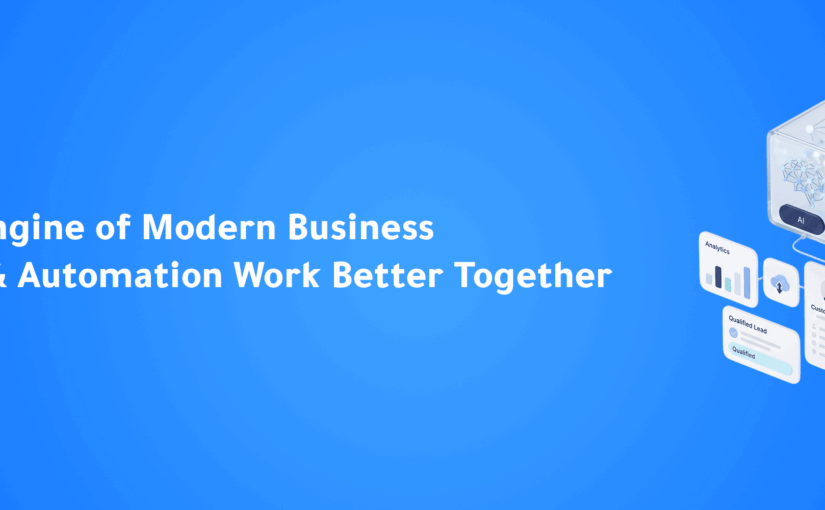
AI + CRM + Automation: The Growth Engine Behind Modern Businesses

Introduction

Businesses today face more pressure than ever before.

Customers expect instant responses, personalized experiences, seamless communication, and fast problem resolution—regardless of whether they’re contacting a business through WhatsApp, Instagram, email, live chat, or phone calls.

At the same time, companies are expected to grow without dramatically increasing operational costs or hiring large teams.

Traditional business tools can no longer keep up with these demands.

This is why forward-thinking organizations are combining three powerful technologies:

  • Artificial Intelligence (AI)
  • Customer Relationship Management (CRM)
  • Workflow Automation

Individually, each technology offers significant benefits.

Together, they become a powerful growth engine that helps businesses improve customer experiences, increase sales, boost productivity, and scale more efficiently.

In this article, we’ll explore why AI, CRM, and automation work so well together—and how modern businesses use this combination to drive sustainable growth.

Why Businesses Need More Than Just a CRM

For years, CRM systems helped businesses organize customer information and track sales opportunities.

While this was a significant improvement over spreadsheets, customer expectations have evolved.

Today’s businesses manage conversations across:

  • WhatsApp
  • Instagram
  • Facebook Messenger
  • Website Live Chat
  • Email
  • Phone calls
  • SMS

Simply storing customer information is no longer enough.

Businesses need systems that understand customer behavior, automate repetitive work, and help teams make smarter decisions.

This is where AI and automation transform the traditional CRM into a complete growth platform.

The Three Pillars of Modern Business Growth

Artificial Intelligence (AI)

AI helps businesses understand customers and make intelligent decisions.

It can:

  • Detect buying intent
  • Analyze customer sentiment
  • Qualify leads
  • Summarize conversations
  • Recommend next actions
  • Predict customer behavior

Instead of reacting to customer needs, businesses become proactive.

Customer Relationship Management (CRM)

CRM acts as the central hub for customer information.

It stores:

  • Customer profiles
  • Conversation history
  • Sales opportunities
  • Purchase records
  • Support interactions
  • Team activities

Every department works from the same customer data, creating a consistent experience.

Workflow Automation

Automation connects people, systems, and processes.

It eliminates repetitive tasks such as:

  • Assigning leads
  • Sending follow-up messages
  • Creating tasks
  • Updating customer records
  • Scheduling appointments
  • Sending internal notifications

Automation allows businesses to operate faster while reducing human error.

Why AI Alone Isn’t Enough

Many businesses invest in AI expecting immediate transformation.

However, AI is only effective when it has access to accurate customer data and well-defined business processes.

Without CRM, AI lacks context.

Without automation, AI insights often require manual action.

AI becomes significantly more valuable when connected to customer information and automated workflows.

Why CRM Alone Isn’t Enough

Traditional CRM systems organize information—but they don’t necessarily improve productivity.

Employees still spend time:

  • Entering customer data
  • Updating sales pipelines
  • Scheduling follow-ups
  • Logging conversations

Without AI and automation, CRM can become another administrative tool instead of a growth platform.

Why Automation Alone Isn’t Enough

Automation speeds up repetitive tasks.

However, automation follows predefined rules.

It doesn’t understand customer emotions, buying intent, or conversation context.

AI provides intelligence.

CRM provides context.

Automation executes the actions.

Together, they create a complete business system.

How AI + CRM + Automation Work Together

Imagine a customer sends a WhatsApp message asking about your services.

Here’s what happens inside a modern business platform:

Step 1: AI Understands the Conversation

AI detects:

  • Customer intent
  • Product interest
  • Language
  • Sentiment
  • Buying signals

Step 2: CRM Updates the Customer Profile

The system automatically:

  • Creates or updates the customer record
  • Saves the conversation
  • Links previous interactions
  • Records communication history

Step 3: Automation Takes Action

The workflow automatically:

  • Assigns the lead
  • Creates follow-up tasks
  • Notifies the sales representative
  • Schedules reminders
  • Updates the sales pipeline

No manual intervention is required.

The Business Benefits of Combining AI, CRM, and Automation

Faster Customer Response Times

Customers receive immediate responses while employees focus on higher-value conversations.

Better Lead Qualification

AI identifies which leads are most likely to convert, allowing sales teams to prioritize their efforts.

Increased Sales Productivity

Automation eliminates repetitive administrative work, giving sales teams more time to build relationships and close deals.

Personalized Customer Experiences

CRM provides customer history, while AI personalizes conversations based on preferences, behavior, and previous interactions.

Better Decision-Making

Managers gain access to real-time dashboards, AI insights, and customer analytics that support smarter business decisions.

Improved Team Collaboration

Sales, marketing, and customer support teams all work from the same customer profile, reducing duplication and improving communication.

Scalable Business Operations

Instead of hiring additional staff to manage increasing workloads, businesses use automation to handle growing customer volumes efficiently.

Real-World Example

Imagine an e-commerce customer sends a WhatsApp message asking about a product.

Without AI, CRM, and automation:

  • The message waits for an employee.
  • Customer details are entered manually.
  • Follow-up depends on employee memory.
  • The sales opportunity may be forgotten.

With AI, CRM, and automation:

  • AI responds instantly.
  • Customer information is automatically saved.
  • Buying intent is detected.
  • The lead is assigned to the right salesperson.
  • Follow-up tasks are created automatically.
  • Every interaction is recorded inside the CRM.

The customer receives a faster, more personalized experience—and the business operates far more efficiently.

Industries Benefiting from AI + CRM + Automation

Businesses across many industries are adopting this approach, including:

  • Retail and E-commerce
  • Healthcare
  • Real Estate
  • Financial Services
  • Education
  • Hospitality
  • Automotive
  • Professional Services
  • Travel and Tourism

Any organization that manages customer relationships can benefit from combining AI, CRM, and automation.

Common Misconceptions

“Only large enterprises need AI.”

Today, AI-powered platforms are accessible to businesses of all sizes.

“Automation removes the human touch.”

Automation handles repetitive work so employees can spend more time building meaningful customer relationships.

“CRM is just a contact database.”

Modern CRM platforms have evolved into intelligent customer engagement systems that integrate AI, automation, analytics, and omnichannel communication.

How ConnectGain Brings Everything Together

ConnectGain combines Artificial Intelligence, CRM, and workflow automation into one centralized customer engagement platform.

With ConnectGain, businesses can:

  • Manage conversations from WhatsApp, Instagram, Messenger, websites, Email, SMS, Web Push, and App Push through one Unified Inbox
  • Build complete customer profiles in an integrated CRM
  • Qualify leads using AI-powered insights
  • Detect customer intent and sentiment automatically
  • Automate follow-ups, task creation, and workflow management
  • Track deals through customizable sales pipelines
  • Analyze customer conversations with AI
  • Monitor business performance using real-time dashboards and analytics

Instead of relying on disconnected tools, ConnectGain helps businesses manage the entire customer journey through one intelligent platform.

The Future of Business Growth

The companies growing the fastest today aren’t necessarily hiring the largest teams.

They’re building smarter systems.

By combining AI, CRM, and automation, businesses can deliver better customer experiences, improve employee productivity, reduce operational costs, and scale without adding unnecessary complexity.

The future belongs to organizations that connect intelligence, customer data, and automation into one seamless workflow.

Conclusion

AI, CRM, and automation are no longer separate technologies.

Together, they form the foundation of modern business growth.

CRM provides the customer data.

AI transforms that data into actionable insights.

Automation ensures every action happens quickly and consistently.

Businesses that combine these three capabilities are better equipped to increase sales, improve customer satisfaction, and operate more efficiently in an increasingly competitive market.

Ready to Power Your Business with AI, CRM, and Automation?

ConnectGain helps businesses combine AI, CRM, workflow automation, and omnichannel communication into one intelligent platform—connecting WhatsApp, Instagram, Messenger, websites, Email, SMS, Web Push, and App Push to streamline customer engagement and accelerate business growth.

📞 WhatsApp: +20 111 998 5526

🌐 Website: https://appgain.io

📧 Email: He***@*****in.io 

 

The Hidden Cost of Managing Customers with Excel

Introduction

For many businesses, Microsoft Excel is where customer management begins.

It’s familiar, affordable, and easy to use.

Sales teams use spreadsheets to track leads, customer information, follow-up dates, quotations, and sales opportunities.

While Excel works for small datasets and simple tasks, it quickly becomes a bottleneck as businesses grow.

The problem isn’t that Excel is a bad tool.

The problem is that it was never designed to manage modern customer relationships.

As customer conversations spread across WhatsApp, email, phone calls, websites, and social media, relying on spreadsheets creates hidden costs that impact productivity, customer experience, and revenue.

In this article, we’ll explore why managing customers with Excel is costing businesses more than they realize—and why modern CRM platforms have become essential.

Why So Many Businesses Still Use Excel

Excel remains one of the most widely used business tools because it’s:

  • Easy to learn
  • Flexible
  • Low cost
  • Available in almost every organization

Many companies start by tracking:

  • Customer names
  • Phone numbers
  • Email addresses
  • Sales status
  • Follow-up dates
  • Notes

At first, this approach works.

But as customer interactions increase, spreadsheets become increasingly difficult to manage.

The Hidden Cost #1: Wasted Time on Manual Updates

Every customer interaction requires someone to manually update the spreadsheet.

Employees constantly need to:

  • Add new leads
  • Update customer details
  • Change deal status
  • Record meeting notes
  • Mark completed follow-ups

These repetitive tasks consume hours every week.

Instead of selling or supporting customers, employees spend valuable time maintaining spreadsheets.

The Hidden Cost #2: Customer Information Becomes Outdated

Customer data changes frequently.

People change:

  • Phone numbers
  • Email addresses
  • Company names
  • Job titles
  • Business needs

With Excel, updates depend entirely on manual input.

Outdated information leads to:

  • Failed follow-ups
  • Missed opportunities
  • Poor customer experiences

Accurate customer data should never depend on remembering to update a spreadsheet.

The Hidden Cost #3: No Complete Customer History

Customers rarely interact through one channel.

A customer might:

  • Send a WhatsApp message
  • Call the sales team
  • Reply by email
  • Visit the website
  • Contact support later

Excel cannot automatically connect all these interactions.

As a result, employees lack the full context of the customer journey.

Customers end up repeating the same information multiple times.

The Hidden Cost #4: Missed Follow-Ups

Following up at the right time is critical for closing deals.

In Excel, follow-up reminders often rely on:

  • Manual notes
  • Calendar entries
  • Employee memory

Busy teams inevitably miss opportunities.

One forgotten follow-up can mean losing a high-value customer to a competitor.

The Hidden Cost #5: No Real-Time Team Collaboration

When multiple employees update the same spreadsheet, problems quickly appear.

Teams face issues such as:

  • Duplicate entries
  • Overwritten information
  • Version conflicts
  • Missing updates
  • Limited visibility

Without a centralized system, collaboration becomes inefficient and error-prone.

The Hidden Cost #6: Limited Reporting and Insights

Excel can generate reports—but only after significant manual effort.

Managers often struggle to answer questions like:

  • Which sales representative performs best?
  • Which marketing channel generates the most leads?
  • How long does it take to close a deal?
  • Which customers haven’t received follow-ups?
  • What is our conversion rate?

Without real-time analytics, businesses make decisions based on incomplete information.

The Hidden Cost #7: Increased Risk of Human Error

Even the most experienced employees make mistakes.

Common spreadsheet errors include:

  • Typing incorrect customer information
  • Accidentally deleting rows
  • Using outdated files
  • Copy-and-paste mistakes
  • Duplicate records

Small errors can lead to major business consequences, especially when customer relationships are involved.

The Hidden Cost #8: No Automation

Excel doesn’t automatically:

  • Assign leads
  • Schedule follow-ups
  • Send reminders
  • Update customer records
  • Trigger notifications
  • Route conversations

Everything depends on manual work.

As the business grows, these repetitive tasks consume more time and reduce efficiency.

The Hidden Cost #9: Poor Customer Experience

Customers expect businesses to remember previous interactions.

When employees rely on spreadsheets, customers often hear questions like:

  • “Can you remind me of your order?”
  • “Have we spoken before?”
  • “Can you send the details again?”

These repeated requests create frustration and reduce customer confidence.

A modern customer experience requires instant access to complete customer information.

The Hidden Cost #10: Excel Doesn’t Scale

A spreadsheet that works for 100 customers becomes difficult to manage with:

  • 5,000 customers
  • Multiple sales representatives
  • Several communication channels
  • Hundreds of daily conversations

As businesses grow, Excel becomes a limitation instead of a solution.

Scaling customer management requires systems built for collaboration, automation, and intelligence.

CRM vs Excel: What’s the Difference?

Feature Excel Modern CRM
Customer Database Manual Centralized and dynamic
Customer History Limited Complete 360° view
Follow-Up Management Manual Automated
Team Collaboration Limited Real-time
Workflow Automation No Yes
AI Insights No Yes
Sales Pipeline Basic Visual and customizable
Omnichannel Communication No Integrated
Analytics Manual Real-time dashboards
Scalability Limited Designed for business growth

A CRM doesn’t replace spreadsheets because Excel is bad.

It replaces them because modern customer relationships require capabilities spreadsheets simply weren’t built to provide.

Signs Your Business Has Outgrown Excel

You may need a CRM if:

  • Customer information exists in multiple spreadsheets.
  • Your sales team misses follow-ups.
  • Employees ask customers for the same information repeatedly.
  • Reporting takes hours instead of minutes.
  • Multiple people edit the same spreadsheet.
  • You receive customer inquiries through several communication channels.
  • Managers lack visibility into team performance.
  • Business growth is making spreadsheets difficult to manage.

If several of these situations sound familiar, it may be time to upgrade.

How ConnectGain Replaces Excel with an Intelligent CRM

ConnectGain helps businesses move beyond spreadsheets by providing a centralized, AI-powered CRM platform.

With ConnectGain, businesses can:

  • Store complete customer profiles in one place
  • Manage customer conversations across WhatsApp, Instagram, Messenger, websites, Email, SMS, Web Push, and App Push
  • Track opportunities using visual sales pipelines
  • Automate follow-ups and repetitive workflows
  • Capture customer interactions automatically
  • Analyze conversations with AI
  • Assign leads to the right team members
  • Monitor business performance through real-time dashboards and analytics

Instead of managing disconnected spreadsheets, businesses gain one intelligent platform that supports growth and improves customer relationships.

The Future of Customer Management

Excel will always be a valuable tool for calculations, financial analysis, and data organization.

But customer relationship management has evolved.

Today’s businesses need systems that combine customer communication, automation, Artificial Intelligence, and real-time insights.

The companies that continue relying on spreadsheets for customer management may find it increasingly difficult to compete with organizations using intelligent CRM platforms.

Conclusion

Excel is an excellent spreadsheet application—but it was never designed to manage complex customer relationships.

As businesses grow, the hidden costs of manual updates, missed follow-ups, disconnected data, and limited visibility become increasingly expensive.

Modern CRM platforms eliminate these challenges by centralizing customer information, automating repetitive work, and providing AI-powered insights that help teams work smarter.ؤخ

Moving beyond Excel isn’t just about adopting new technology.

It’s about building a better customer experience and creating a stronger foundation for sustainable business growth.

Ready to Move Beyond Excel?

ConnectGain helps businesses replace spreadsheets with an AI-powered CRM that centralizes customer communication, automates workflows, and improves sales across WhatsApp, Instagram, Messenger, websites, Email, SMS, Web Push, and App Push—all from one intelligent platform.

📞 WhatsApp: +20 111 998 5526

🌐 Website: https://appgain.io

📧 Email: He***@*****in.io
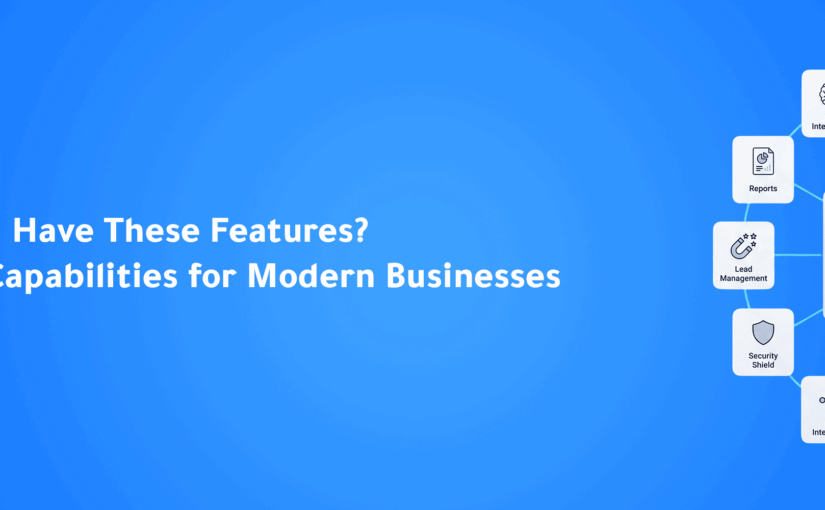
 

What Features Should Every Modern CRM Have?

Introduction

Choosing the right Customer Relationship Management (CRM) platform is one of the most important decisions a business can make.

A CRM is no longer just a place to store customer contact information. Modern businesses need a platform that helps them build stronger relationships, improve team productivity, automate repetitive work, and make smarter decisions using data.

With customer conversations happening across WhatsApp, Instagram, Facebook Messenger, email, websites, and phone calls, businesses need a CRM that goes beyond basic contact management.

But with hundreds of CRM solutions available today, how do you know which features truly matter?

In this article, we’ll explore the essential features every modern CRM should have—and why they’re critical for business growth.


Why Traditional CRM Features Are No Longer Enough

Years ago, businesses mainly used CRM software to store customer records and track sales opportunities.

Today, customer expectations have changed.

Customers expect:

  • Instant responses
  • Personalized communication
  • Consistent experiences across channels
  • Fast problem resolution
  • Seamless interactions

To meet these expectations, businesses need CRM platforms that combine customer data, communication, Artificial Intelligence, and automation into one intelligent system.


1. Unified Customer Profiles

One of the most important CRM features is a complete customer profile.

Instead of scattered information across spreadsheets, emails, and messaging apps, every interaction should be stored in one place.

A modern CRM should include:

  • Contact information
  • Conversation history
  • Purchase history
  • Sales opportunities
  • Support requests
  • Notes and activities
  • Documents and attachments

Having a 360-degree customer view allows every team member to understand the customer’s journey without asking repetitive questions.


2. Omnichannel Communication

Customers communicate through multiple channels.

A modern CRM should connect with:

  • WhatsApp
  • Instagram
  • Facebook Messenger
  • Website Live Chat
  • Email
  • SMS
  • Voice calls

Rather than switching between different applications, teams should manage every conversation from one centralized inbox.

This improves response times and creates a more consistent customer experience.


3. AI-Powered Lead Management

Not every lead has the same value.

Modern CRM platforms should help businesses identify which opportunities deserve immediate attention.

AI can automatically:

  • Score leads
  • Detect buying intent
  • Prioritize opportunities
  • Recommend the next best action

This enables sales teams to focus on customers who are most likely to convert.


4. Sales Pipeline Management

A visual sales pipeline gives businesses complete visibility into every deal.

A modern CRM should allow teams to:

  • Create custom sales stages
  • Track deal progress
  • Assign opportunities
  • Estimate revenue
  • Forecast sales performance

Managers can quickly identify bottlenecks and help sales representatives move deals forward.


5. Workflow Automation

Repetitive tasks reduce productivity.

Modern CRM platforms should automate routine processes such as:

  • Follow-up reminders
  • Task creation
  • Lead assignment
  • Status updates
  • Customer notifications
  • Appointment confirmations
  • Internal alerts

Automation helps businesses save time while reducing human error.


6. AI Conversation Intelligence

Customer conversations contain valuable business insights.

A modern CRM should analyze interactions across chat, email, and voice channels to identify:

  • Customer intent
  • Frequently asked questions
  • Sales objections
  • Customer sentiment
  • Action items
  • Conversation summaries

Instead of manually reviewing conversations, businesses can use AI to uncover patterns and improve decision-making.


7. Advanced Reporting and Analytics

Business growth depends on accurate data.

A modern CRM should provide dashboards that answer questions such as:

  • Which marketing channels generate the most leads?
  • Which sales representatives close the most deals?
  • What is the average response time?
  • How long does it take to close a sale?
  • Which products perform best?
  • Where are deals being lost?

Real-time analytics help managers make informed decisions based on facts rather than assumptions.


8. Task and Team Collaboration

Sales, customer service, and marketing teams often work together.

A modern CRM should include collaboration features like:

  • Shared tasks
  • Internal notes
  • Team assignments
  • Notifications
  • Activity tracking
  • Role-based permissions

This keeps everyone aligned and prevents important customer requests from being overlooked.


9. Mobile Accessibility

Business doesn’t stop when employees leave the office.

A modern CRM should offer a mobile experience that allows teams to:

  • Reply to customers
  • Update deals
  • Access customer records
  • Receive notifications
  • Complete follow-ups

Having access anywhere improves responsiveness and productivity.


10. Integration with Business Tools

CRM software should connect seamlessly with the tools businesses already use.

Important integrations include:

  • ERP systems
  • Accounting software
  • E-commerce platforms
  • Marketing tools
  • Payment gateways
  • Calendar applications
  • Communication platforms
  • API and Webhooks

Connected systems eliminate duplicate work and improve operational efficiency.


11. Strong Security and User Permissions

Customer data is one of a company’s most valuable assets.

A modern CRM should include enterprise-grade security features such as:

  • Role-Based Access Control (RBAC)
  • Multi-Factor Authentication (MFA)
  • Data encryption
  • Activity logs
  • Secure backups
  • Audit trails

These features protect sensitive information while ensuring compliance with security standards.


12. Scalability for Future Growth

The CRM you choose today should support your business tomorrow.

As your company grows, your CRM should be able to handle:

  • More customers
  • Larger sales teams
  • Additional communication channels
  • Higher conversation volumes
  • More automation
  • More integrations

A scalable CRM reduces the need for costly migrations in the future.


Common Mistakes Businesses Make When Choosing a CRM

Many companies focus only on price.

However, choosing the cheapest CRM often leads to hidden costs later.

Before making a decision, ask yourself:

  • Does it support multiple communication channels?
  • Does it include AI capabilities?
  • Can it automate repetitive tasks?
  • Will it scale with my business?
  • Does it integrate with my existing tools?
  • Is customer data easy to access?
  • Can managers measure team performance?

Selecting a CRM based on long-term value rather than short-term cost leads to better business outcomes.


How ConnectGain Delivers the Features Modern Businesses Need

ConnectGain is designed to help businesses manage customer relationships more intelligently through one AI-powered platform.

With ConnectGain, businesses can:

  • Manage customer conversations from WhatsApp, Instagram, Messenger, websites, Email, SMS, Web Push, and App Push through a Unified Inbox
  • Store complete customer profiles in an integrated CRM
  • Track deals using customizable sales pipelines
  • Automate workflows, follow-ups, and repetitive tasks
  • Analyze conversations with AI to detect customer intent and sentiment
  • Assign leads and tasks automatically
  • Access real-time dashboards and business analytics
  • Integrate with existing business systems using APIs and webhooks

By combining CRM, Artificial Intelligence, automation, and omnichannel communication, ConnectGain helps businesses improve efficiency, increase sales, and deliver exceptional customer experiences.


The Future of CRM

The future of CRM is not simply about managing contacts.

It’s about creating intelligent systems that understand customers, automate routine work, and help teams make better decisions.

Businesses that invest in modern CRM platforms today will be better equipped to meet rising customer expectations, improve operational efficiency, and stay competitive in an increasingly digital world.


Conclusion

A modern CRM should do much more than organize customer information.

It should centralize communication, automate repetitive tasks, provide AI-powered insights, support collaboration, and help businesses build stronger customer relationships.

When evaluating CRM platforms, focus on features that improve both customer experience and internal productivity—not just basic contact management.

Choosing a CRM with the right capabilities today can create lasting advantages for your business tomorrow.


Ready to Choose a CRM Built for the Future?

ConnectGain helps businesses streamline customer communication, automate workflows, and grow sales with an AI-powered CRM that brings WhatsApp, Instagram, Messenger, websites, Email, SMS, Web Push, and App Push together in one centralized platform.

📞 WhatsApp: +20 111 998 5526

🌐 Website: https://appgain.io

📧 Email: He***@*****in.io
AI CRM vs Traditional CRM: What’s the Difference?

Introduction

Customer Relationship Management (CRM) software has become an essential tool for businesses looking to improve sales, customer service, and long-term customer relationships.

For years, traditional CRM systems helped organizations organize contacts, track deals, and manage customer information. While these systems remain valuable, the way businesses interact with customers has changed dramatically.

Today’s customers expect instant responses, personalized experiences, and seamless communication across multiple channels such as WhatsApp, Instagram, Facebook Messenger, email, and websites.

At the same time, Artificial Intelligence (AI) has transformed how businesses collect, analyze, and act on customer data.

This shift has introduced a new generation of CRM platforms—AI CRM.

But what exactly is the difference between an AI CRM and a traditional CRM?

More importantly, which one is the right choice for your business?

In this article, we’ll compare both approaches and explain why AI-powered CRM is becoming the future of customer relationship management.


What Is a Traditional CRM?

A traditional CRM is designed to help businesses organize customer information and manage sales activities.

Typical features include:

  • Contact management
  • Deal tracking
  • Sales pipelines
  • Task management
  • Activity logs
  • Basic reporting

Traditional CRM systems act as centralized databases where employees manually update customer information throughout the sales process.

They improve organization, but they still depend heavily on human input.


What Is an AI CRM?

An AI CRM goes beyond storing customer data.

It uses Artificial Intelligence to understand customer behavior, automate repetitive tasks, and provide actionable recommendations.

Instead of simply recording information, an AI CRM helps businesses make smarter decisions.

It can automatically:

  • Analyze customer conversations
  • Predict buying intent
  • Prioritize leads
  • Generate follow-up tasks
  • Recommend next actions
  • Detect customer sentiment
  • Create conversation summaries
  • Automate workflows

Rather than being just a database, an AI CRM becomes an intelligent business assistant.


AI CRM vs Traditional CRM: A Side-by-Side Comparison

Feature Traditional CRM AI CRM
Contact Management Manual Automated and enriched
Lead Qualification Manual AI-powered scoring and prioritization
Data Entry Mostly manual Automated from conversations and activities
Customer Insights Basic reports Predictive AI insights
Workflow Automation Limited Advanced automation
Conversation Analysis Not available AI analyzes calls and messages
Follow-Up Management Manual reminders Automated follow-up recommendations
Customer Personalization Limited Dynamic, AI-driven personalization
Decision Support User-driven AI-assisted recommendations
Productivity Depends on manual work Significantly higher through automation

The difference is clear: traditional CRMs help businesses store data, while AI CRMs help businesses use data intelligently.


Why Traditional CRM Systems Are No Longer Enough

Customer communication has evolved.

Businesses no longer interact with customers through only email or phone calls.

Today, conversations happen across:

  • WhatsApp
  • Instagram
  • Facebook Messenger
  • Live Chat
  • Email
  • Voice calls
  • SMS

Managing all these interactions manually creates challenges.

Sales teams spend more time updating CRM records than selling.

Important follow-ups are forgotten.

Customer information becomes outdated.

Managers struggle to identify which opportunities deserve immediate attention.

Traditional CRM systems were never designed for this level of complexity.


Benefit #1: AI Eliminates Manual Data Entry

One of the biggest frustrations with traditional CRM software is manual data entry.

Employees often need to:

  • Update customer records
  • Log meetings
  • Create tasks
  • Record call outcomes
  • Add conversation notes

These repetitive activities consume valuable time.

AI CRM platforms automate much of this work by capturing customer interactions and updating records automatically.

Employees spend less time typing and more time engaging with customers.


Benefit #2: AI Prioritizes the Best Sales Opportunities

Not every lead has the same potential.

Traditional CRM systems treat every opportunity similarly unless sales teams manually qualify them.

AI CRM platforms analyze customer behavior to identify which prospects are most likely to convert.

Signals may include:

  • Response speed
  • Conversation frequency
  • Questions about pricing
  • Product interest
  • Customer sentiment
  • Previous interactions

Sales teams can then focus on opportunities with the highest probability of success.


Benefit #3: AI Understands Customer Conversations

Traditional CRM systems record customer activities but don’t understand them.

AI CRM platforms can analyze:

  • WhatsApp conversations
  • Emails
  • Voice calls
  • Live chat
  • Customer support interactions

AI identifies:

  • Buying intent
  • Customer concerns
  • Frequently asked questions
  • Sales objections
  • Emotional sentiment
  • Action items

These insights help businesses make better decisions without manually reviewing every conversation.


Benefit #4: AI Improves Customer Personalization

Modern customers expect personalized experiences.

Traditional CRM systems require employees to manually review customer history before responding.

AI CRM platforms instantly surface relevant information such as:

  • Previous purchases
  • Recent conversations
  • Preferred communication channels
  • Open opportunities
  • Customer interests

This allows businesses to deliver faster and more relevant responses.


Benefit #5: AI Automates Repetitive Work

Sales teams often lose hours every week performing administrative tasks.

Examples include:

  • Scheduling follow-ups
  • Assigning leads
  • Sending reminders
  • Updating pipelines
  • Creating tasks
  • Logging activities

AI CRM platforms automate these workflows, reducing repetitive work while improving consistency.


Benefit #6: AI Provides Smarter Business Insights

Traditional CRM reporting focuses on historical data.

AI CRM platforms go further by identifying patterns and predicting future outcomes.

Businesses can discover:

  • Which leads are likely to convert
  • Why customers stop responding
  • Which communication channels perform best
  • Which sales representatives achieve the highest conversion rates
  • Which products generate the strongest interest

Instead of simply reviewing past performance, businesses can proactively improve future results.


Which Businesses Should Choose an AI CRM?

AI CRM is particularly valuable for businesses that:

  • Receive a high volume of customer inquiries
  • Sell through WhatsApp or social media
  • Manage growing sales teams
  • Need faster customer responses
  • Want to automate repetitive tasks
  • Use multiple communication channels
  • Want deeper customer insights

For organizations aiming to scale without significantly increasing operational costs, AI CRM offers a significant competitive advantage.


Common Misconceptions About AI CRM

“AI will replace my sales team.”

AI is designed to assist—not replace—sales professionals.

It handles repetitive work so teams can focus on building relationships and closing deals.

“AI CRM is only for large enterprises.”

Modern AI CRM platforms are scalable and suitable for businesses of all sizes, from startups to enterprise organizations.

“Switching to AI CRM is complicated.”

Many AI CRM solutions integrate with existing communication channels and business systems, making adoption easier than many businesses expect.


How ConnectGain Combines AI and CRM

ConnectGain combines customer relationship management with Artificial Intelligence to help businesses work smarter—not harder.

With ConnectGain, businesses can:

  • Manage customer conversations from WhatsApp, Instagram, Messenger, website chat, email, and more through one Unified Inbox
  • Automatically capture customer information in an integrated CRM
  • Qualify leads using AI-powered insights
  • Analyze customer conversations for buying intent and sentiment
  • Automate workflows, follow-ups, and task creation
  • Track deals through customizable sales pipelines
  • Measure performance with real-time dashboards and analytics

Instead of relying on disconnected tools and manual processes, ConnectGain brings customer communication, CRM, AI, and automation together in one intelligent platform.


The Future of CRM Is Intelligent

CRM software is evolving.

Businesses no longer need systems that simply store customer information.

They need platforms that understand customer behavior, automate repetitive work, and provide actionable insights.

Artificial Intelligence is transforming CRM from a passive database into an active business partner.

Organizations that adopt AI CRM today will be better positioned to improve customer experiences, increase productivity, and grow revenue in the years ahead.


Conclusion

Traditional CRM systems laid the foundation for organized customer management, but today’s business environment demands more.

An AI CRM doesn’t just collect data—it interprets it, automates routine work, and helps teams make faster, smarter decisions.

Whether it’s identifying high-value leads, analyzing customer conversations, or automating follow-ups, AI CRM enables businesses to deliver better customer experiences while increasing operational efficiency.

As customer expectations continue to rise, businesses that embrace AI-powered CRM will have a clear advantage over those relying solely on traditional systems.


Ready to Upgrade from Traditional CRM to AI CRM?

ConnectGain helps businesses manage customer relationships more intelligently with AI-powered CRM, Unified Inbox, workflow automation, and omnichannel communication across WhatsApp, Instagram, Messenger, websites, Email, SMS, Web Push, and App Push—all from one centralized platform.

📞 WhatsApp: +20 111 998 5526

🌐 Website: https://appgain.io

📧 Email: He***@*****in.io
5 Signs Your Business Needs a Modern CRM Platform


Introduction

As businesses grow, managing customer relationships becomes increasingly complex.

What once worked with spreadsheets, sticky notes, or separate messaging apps quickly becomes inefficient as customer interactions increase.

Many organizations don’t realize they need a modern CRM platform until they start experiencing missed opportunities, inconsistent follow-ups, slower response times, and declining customer satisfaction.

Today’s CRM platforms are much more than customer databases. They combine customer relationship management, workflow automation, Artificial Intelligence (AI), and omnichannel communication to help businesses manage every stage of the customer journey.

If you’re wondering whether it’s time to upgrade your CRM, these five signs can help you decide.


Why a Modern CRM Matters

Customers now expect businesses to:

  • Respond instantly
  • Remember previous conversations
  • Deliver personalized experiences
  • Communicate consistently across every channel

Meanwhile, sales and customer service teams need better visibility and automation to keep up with increasing demand.

A modern CRM helps businesses:

  • Centralize customer data
  • Improve sales performance
  • Automate repetitive tasks
  • Strengthen customer relationships
  • Increase operational efficiency

Without the right system, growth quickly becomes difficult to manage.


Sign #1: Customer Information Is Scattered Everywhere

One of the clearest signs your business needs a CRM is when customer information exists across multiple tools.

Examples include:

  • Excel spreadsheets
  • WhatsApp chats
  • Emails
  • Sticky notes
  • Personal phones
  • Separate databases

This creates duplicate records, inconsistent communication, and wasted time searching for customer information.

How a Modern CRM Helps

A modern CRM centralizes everything into one customer profile, including:

  • Contact information
  • Conversation history
  • Sales opportunities
  • Tasks
  • Notes
  • Customer activity

Every team member works from the same information.


Sign #2: Your Team Keeps Missing Follow-Ups

Following up consistently is one of the biggest challenges for growing businesses.

Leads are often forgotten because:

  • Employees become busy
  • Reminders are missed
  • Tasks aren’t assigned
  • Follow-up schedules are unclear

Every missed follow-up represents a potential lost sale.

How a Modern CRM Helps

Modern CRM platforms automate:

  • Follow-up reminders
  • Task creation
  • Lead assignments
  • Customer journey workflows
  • Sales notifications

Automation ensures every opportunity receives timely attention.


Sign #3: You Have No Clear View of Your Sales Pipeline

Can your business instantly answer questions like:

  • How many active opportunities do we have?
  • Which deals are most likely to close this month?
  • Which leads haven’t been contacted?
  • Where are deals getting stuck?

If not, your sales pipeline lacks visibility.

How a Modern CRM Helps

A visual sales pipeline enables businesses to:

  • Track every opportunity
  • Monitor deal progress
  • Forecast revenue
  • Identify bottlenecks
  • Improve sales performance

Managers gain complete visibility into the sales process.


Sign #4: Customer Conversations Are Spread Across Multiple Channels

Today’s customers communicate through:

  • WhatsApp
  • Instagram
  • Facebook Messenger
  • Websites
  • Email
  • Phone calls

Managing these channels separately creates fragmented conversations and inconsistent customer experiences.

How a Modern CRM Helps

A Unified Inbox centralizes every conversation, allowing teams to:

  • View all conversations in one place
  • Access complete customer histories
  • Respond faster
  • Deliver consistent customer experiences

Sign #5: Your Business Is Growing Faster Than Your Processes

Growth is exciting—but it also exposes operational weaknesses.

As customer numbers increase, businesses often experience:

  • Slower response times
  • Higher workloads
  • More manual processes
  • Increased human errors
  • Reduced productivity

How a Modern CRM Helps

Modern CRM platforms combine:

  • Workflow automation
  • AI-powered customer engagement
  • Task management
  • Customer journey automation
  • Sales optimization

This allows businesses to scale efficiently without significantly increasing administrative work.


Additional Benefits of a Modern CRM

Beyond solving operational challenges, modern CRM platforms help businesses:

Improve Team Collaboration

Every department works from the same customer information, improving coordination between sales, marketing, and customer support.

Increase Customer Satisfaction

Faster responses and personalized communication create stronger customer experiences.

Improve Decision-Making

Real-time dashboards and analytics provide better visibility into customer activity and business performance.

Support Sustainable Growth

Automation and centralized customer management allow organizations to scale without sacrificing efficiency.


How AI Makes CRM Smarter

Artificial Intelligence has transformed CRM into an intelligent business platform.

AI can:

  • Score leads automatically
  • Identify buying intent
  • Recommend next actions
  • Analyze customer conversations
  • Predict sales opportunities
  • Personalize customer engagement

These capabilities help businesses make faster and more informed decisions.


How ConnectGain Helps Businesses Modernize CRM

ConnectGain combines CRM, Artificial Intelligence, workflow automation, and omnichannel communication into one intelligent platform.

With ConnectGain, businesses can:

  • Capture leads automatically from WhatsApp, Instagram, Messenger, and websites
  • Manage conversations through a Unified Inbox
  • Automate follow-ups and customer journeys
  • Track opportunities through a visual sales pipeline
  • Centralize customer information
  • Use AI-powered insights to improve sales and customer engagement
  • Monitor performance through real-time dashboards

By bringing customer communication, sales management, and automation together, ConnectGain helps businesses improve efficiency while building stronger customer relationships.


Is It Time to Upgrade Your CRM?

If your business experiences even one of these challenges, it’s worth evaluating whether your current processes can support future growth.

If you’re experiencing several of them, the answer is clear.

A modern CRM is no longer optional—it has become a critical business tool for organizations that want to improve customer experiences, increase sales, and scale efficiently.


Conclusion

Successful businesses don’t grow simply by generating more leads—they grow by managing customer relationships more effectively.

Scattered customer data, missed follow-ups, disconnected communication, and limited sales visibility all create barriers to growth.

A modern CRM platform eliminates these challenges by centralizing information, automating workflows, and providing AI-powered insights that strengthen customer relationships.

ConnectGain helps businesses transform customer management through AI-powered CRM, workflow automation, and omnichannel engagement—enabling teams to work smarter, respond faster, and grow with confidence.

Ready to Upgrade Your Customer Relationship Management?

ConnectGain helps businesses centralize customer data, automate workflows, manage sales pipelines, and engage customers across WhatsApp, Instagram, Messenger, websites, Email, SMS, Web Push, and App Push from one intelligent platform.

📞 WhatsApp: +20 111 9985526

🌐 Website: https://appgain.io

📧 Email: He***@*****in.io

How Modern CRM Turns Leads Into Deals

Introduction

The journey from Lead to Deal is one of the most important processes in modern sales management. Every business wants more customers, but generating leads is only the beginning. Converting prospects into paying customers requires a structured process that captures opportunities, nurtures relationships, and guides prospects through the sales funnel.

Many companies invest heavily in marketing campaigns, advertising, and lead generation activities, only to lose potential customers due to poor follow-up, fragmented communication, or a lack of visibility into the sales process.

This is where a modern Customer Relationship Management (CRM) system becomes essential.

A modern CRM helps businesses track, manage, and optimize the entire Lead to Deal journey while giving sales teams complete visibility into every stage of the customer lifecycle. By centralizing customer data, automating follow-ups, and improving collaboration, CRM platforms help organizations close more deals and drive sustainable growth.


What Is a Lead?

A lead is a potential customer who has shown interest in your business, products, or services.

Leads can come from multiple sources, including:

  • Website forms
  • WhatsApp conversations
  • Facebook and Instagram messages
  • Email inquiries
  • Advertising campaigns
  • Events and webinars
  • Referral programs

At this stage, the individual has expressed interest but has not yet been qualified as a sales opportunity.

Without a structured process, many leads are forgotten, ignored, or lost to competitors.


Why Managing Leads Matters

As businesses grow, managing customer inquiries manually becomes increasingly difficult.

Common challenges include:

  • Missed follow-ups
  • Lost conversations
  • Duplicate customer records
  • Lack of sales visibility
  • Inconsistent communication
  • Poor lead prioritization

Businesses that respond quickly and consistently are significantly more likely to convert prospects into customers. This is why modern CRM platforms have become essential for managing the Lead to Deal process efficiently.


The Lead to Deal Process in Modern CRM

A modern CRM provides a structured framework that helps businesses move prospects through every stage of the sales journey.

From the first interaction to the final purchase, the Lead to Deal process becomes more organized, measurable, and scalable.

By tracking every interaction, businesses gain complete visibility into customer behavior and sales performance.


Stage 1: Lead Capture

The customer journey begins with lead capture.

A modern CRM automatically collects customer information from various channels and stores it in a centralized database.

Information may include:

  • Name
  • Phone number
  • Email address
  • Communication channel
  • Inquiry details
  • Acquisition source

Instead of manually entering customer data, businesses can automatically create lead records whenever a customer contacts the company.

This ensures that no opportunity is missed.


Stage 2: Lead Qualification

Not every lead is ready to buy.

Lead qualification helps businesses identify which prospects are most likely to become customers.

Sales teams evaluate factors such as:

  • Budget
  • Business needs
  • Purchase intent
  • Timeline
  • Decision-making authority

Modern CRM systems can automate parts of this process using AI and predefined qualification rules.

This allows teams to focus on high-value opportunities while improving efficiency.


Stage 3: Lead Nurturing

Many prospects are not ready to make a purchasing decision immediately.

Lead nurturing involves maintaining communication until the customer is ready to buy.

Examples include:

  • Educational content
  • Product demonstrations
  • Follow-up messages
  • Promotional offers
  • Personalized recommendations

CRM systems ensure every interaction is recorded and every prospect receives timely follow-up throughout the Lead to Deal journey.


Stage 4: Opportunity Creation

Once a lead demonstrates strong buying intent, it becomes a sales opportunity.

At this stage, the CRM creates a structured deal record containing:

  • Deal value
  • Expected close date
  • Assigned sales representative
  • Sales stage
  • Customer requirements
  • Interaction history

This allows teams to track progress and manage opportunities effectively.


How CRM Simplifies the Lead to Deal Journey

CRM platforms centralize customer information, automate repetitive tasks, and provide complete visibility into every opportunity.

Benefits include:

  • Faster response times
  • Better collaboration
  • Improved follow-up consistency
  • Reduced manual work
  • Higher conversion rates

This makes the Lead to Deal journey significantly more efficient and scalable.


Stage 5: Pipeline Management

One of the most valuable CRM features is visual pipeline management.

A typical sales pipeline includes:

  • New Lead
  • Contacted
  • Qualified
  • Proposal Sent
  • Negotiation
  • Deal Won
  • Deal Lost

Each opportunity progresses through these stages as the sales process advances.

This visibility helps sales managers forecast revenue and identify bottlenecks before they impact performance.


Stage 6: Sales Automation

Modern CRM platforms automate many repetitive activities, including:

  • Follow-up reminders
  • Task assignments
  • Lead routing
  • Meeting scheduling
  • Customer notifications
  • Workflow management

Automation helps organizations accelerate the Lead to Deal workflow while ensuring that no opportunity falls through the cracks.


Why the Lead to Deal Workflow Matters

Businesses that optimize their Lead to Deal workflow often experience:

  • Higher conversion rates
  • Faster sales cycles
  • Better customer relationships
  • Increased team productivity
  • More predictable revenue growth

By creating a repeatable and measurable sales process, organizations can focus on closing more opportunities and driving growth.


The Role of AI in Modern CRM

Artificial Intelligence is transforming customer relationship management.

AI-powered CRM systems can:

  • Automatically qualify leads
  • Prioritize opportunities
  • Predict buying intent
  • Generate conversation summaries
  • Recommend next actions
  • Analyze customer sentiment
  • Automate follow-up sequences

These capabilities help businesses improve decision-making and increase sales performance throughout the Lead to Deal process.


How ConnectGain Helps Businesses Move From Lead to Deal

Managing leads across multiple channels can quickly become overwhelming.

ConnectGain simplifies the entire customer journey by combining CRM, AI, automation, and omnichannel communication into a single platform.

With ConnectGain, businesses can:

  • Capture leads automatically from WhatsApp, Instagram, Facebook Messenger, and websites
  • Manage conversations through a Unified Inbox
  • Track deals through a visual sales pipeline
  • Automate lead qualification and follow-ups
  • Assign opportunities to team members
  • Maintain complete customer histories
  • Leverage AI-powered engagement tools

By centralizing customer interactions and sales workflows, ConnectGain helps businesses manage the entire Lead to Deal journey more efficiently while improving conversion rates and team productivity.


Conclusion

Turning a lead into a paying customer requires much more than generating interest.

Successful businesses follow a structured process that captures, qualifies, nurtures, and manages opportunities throughout the entire customer lifecycle.

A modern CRM provides the visibility, automation, and intelligence needed to optimize every stage of the Lead to Deal journey and maximize sales performance.

With platforms like ConnectGain, businesses can streamline sales operations, automate customer engagement, and convert more opportunities into revenue through one intelligent platform.

Ready to Turn More Leads Into Deals?

ConnectGain helps businesses capture leads, automate follow-ups, manage sales pipelines, and unify customer conversations across multiple channels from one centralized platform.

🌐 Website: https://appgain.io