Introduction
Customers no longer communicate with businesses through a single channel.
One customer may discover your business on Instagram, ask questions through WhatsApp, receive an email, visit your website, and later contact customer support through Facebook Messenger—all before making a purchase.
Today’s customer journey is no longer linear.
It moves across multiple communication channels, and customers expect businesses to recognize them and continue the conversation without requiring them to repeat information.
Unfortunately, many organizations still manage each communication channel separately.
- Sales teams use WhatsApp.
- Marketing relies on email.
- Support works through Messenger.
- Website inquiries are handled independently.
The result is fragmented customer experiences, slower response times, duplicated work, and lost sales opportunities.
This is why Multi-Channel Customer Communication has become a critical business strategy.
In this article, we’ll explore the best practices that help businesses deliver faster, smarter, and more consistent customer experiences across every communication channel.
What Is Multi-Channel Customer Communication?
Multi-channel customer communication is the ability to engage customers across multiple platforms while maintaining consistent, high-quality interactions.
Common communication channels include:
- Facebook Messenger
- Website Live Chat
- Phone Calls
- SMS
- Mobile Applications
Customers choose whichever channel is most convenient for them.
Businesses must be prepared to deliver the same quality of service across every touchpoint.
Why Multi-Channel Communication Matters
Customer expectations have changed dramatically.
People expect businesses to:
- Respond quickly
- Remember previous conversations
- Offer personalized support
- Be available across multiple platforms
- Deliver a seamless customer experience
Businesses that fail to meet these expectations often experience:
- Lower customer satisfaction
- Missed sales opportunities
- Poor customer retention
- Increased support costs
A well-designed communication strategy improves both customer experience and operational efficiency.
Best Practice #1: Meet Customers on Their Preferred Channels
Every customer has a preferred way of communicating.
Some prefer WhatsApp.
Others choose Instagram, Messenger, or email.
Rather than forcing customers to use one platform, businesses should be available wherever their customers already communicate.
Making communication convenient removes friction from the customer journey.
Best Practice #2: Centralize Every Conversation
One of the biggest challenges businesses face is managing conversations across multiple applications.
Important customer information becomes scattered between:
- Messenger
- CRM
- Phone calls
This makes it difficult to maintain context.
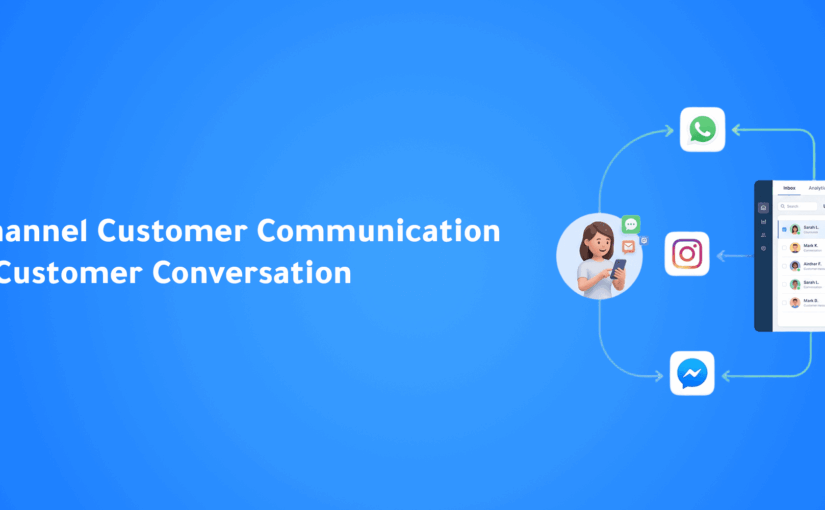
A Unified Inbox solves this problem by bringing every customer conversation into one centralized workspace.
Teams gain complete visibility into every interaction, regardless of the communication channel.
Best Practice #3: Keep Customer Data in One CRM
Conversations alone are not enough.
Businesses also need a complete customer profile.
A modern CRM should include:
- Contact information
- Previous conversations
- Purchase history
- Sales opportunities
- Notes
- Tasks
- Customer preferences
Centralized customer data allows every department to deliver more personalized service.
Best Practice #4: Respond Quickly Across Every Channel
Response time directly impacts customer satisfaction and conversion rates.
Customers expect businesses to acknowledge their inquiries within minutes.
Long delays often result in lost opportunities.
Businesses can improve response times by using:
- AI-powered assistants
- Automated greetings
- Smart conversation routing
- Internal notifications
Fast responses create stronger first impressions and improve customer trust.
Best Practice #5: Maintain a Consistent Brand Voice
Customers should receive the same experience regardless of where they contact your business.
Whether communication happens through WhatsApp or email, your brand should maintain:
- Consistent tone of voice
- Accurate information
- Professional communication
- Unified messaging
Consistency strengthens brand identity and builds customer confidence.
Best Practice #6: Personalize Every Interaction
Customers appreciate businesses that remember previous interactions.
Instead of sending generic responses, personalize communication using:
- Customer name
- Previous purchases
- Conversation history
- Interests
- Customer behavior
Personalization creates stronger relationships and increases engagement.
Best Practice #7: Use Automation Without Losing the Human Touch
Automation improves efficiency but should never make customer interactions feel robotic.
The best customer experiences combine:
- AI-powered chatbots
- Automated workflows
- Human support when needed
Automation should handle repetitive tasks while human agents focus on conversations requiring empathy and problem-solving.
Best Practice #8: Give Every Team Access to Customer History
Customer conversations often involve multiple departments.
Sales, marketing, and customer support should all have access to the same customer information.
This eliminates repeated questions and creates smoother customer experiences.
Customers should never have to explain the same issue multiple times.
Best Practice #9: Measure Communication Performance
Improvement begins with measurement.
Businesses should monitor key communication metrics such as:
- First response time
- Resolution time
- Customer satisfaction
- Conversion rates
- Customer engagement
- Channel performance
Analytics help identify opportunities to improve customer communication continuously.
Best Practice #10: Continuously Optimize the Customer Journey
Customer expectations continue to evolve.
Businesses should regularly review:
- Customer feedback
- Communication workflows
- Automation performance
- Sales outcomes
- Customer engagement
Continuous optimization ensures communication strategies remain effective as customer behavior changes.
Common Mistakes Businesses Should Avoid
Even businesses with multiple communication channels can struggle if they make common mistakes.
These include:
- Managing each channel separately
- Responding inconsistently
- Delayed customer replies
- Lack of CRM integration
- Sending generic messages
- Overusing automation
- Ignoring customer history
- Measuring only response volume instead of customer outcomes
Avoiding these mistakes creates a more connected and customer-centric experience.
The Role of Artificial Intelligence in Multi-Channel Communication
Artificial Intelligence is helping businesses manage customer communication more effectively than ever before.
AI can:
- Respond instantly to common questions
- Route conversations to the right department
- Qualify sales leads
- Recommend next actions
- Analyze customer sentiment
- Personalize communication
- Trigger automated workflows
Instead of replacing employees, AI enables teams to work more efficiently while delivering better customer experiences.
How ConnectGain Helps Businesses Deliver Better Multi-Channel Communication
ConnectGain brings customer conversations, CRM, Artificial Intelligence, and workflow automation together in one intelligent platform.
With ConnectGain, businesses can:
- Manage WhatsApp, Instagram, Messenger, Website Chat, Email, SMS, Web Push, and App Push from a single Unified Inbox
- Centralize customer information with an integrated CRM
- Automate customer journeys and follow-up workflows
- Qualify leads using AI
- Assign conversations automatically to the right teams
- Track customer interactions across every communication channel
- Monitor performance through real-time dashboards and analytics
By combining AI, CRM, automation, and omnichannel communication, ConnectGain helps businesses create seamless customer experiences while improving productivity and increasing sales opportunities.
The Future of Customer Communication
Customer communication will continue becoming more intelligent, connected, and personalized.
Businesses are moving beyond simply supporting multiple channels.
The future lies in creating one continuous conversation where customers can move effortlessly between platforms without losing context.
Organizations that invest in unified communication strategies today will be better prepared to meet the expectations of tomorrow’s customers.
Conclusion
Successful customer communication is no longer about being present on multiple platforms.
It is about creating one connected experience across every channel.
Businesses that centralize conversations, personalize interactions, automate repetitive tasks, and empower their teams with AI and CRM technology can improve customer satisfaction, strengthen relationships, and drive sustainable business growth.
ConnectGain enables organizations to manage customer communication from one intelligent platform, helping teams respond faster, collaborate better, and deliver exceptional customer experiences across every touchpoint.
Ready to Transform Your Customer Communication?
ConnectGain helps businesses manage customer conversations, automate workflows, and engage customers across WhatsApp, Instagram, Messenger, Websites, Email, SMS, Web Push, and App Push from one centralized AI-powered platform.
Contact Us
WhatsApp:
+20 111 998 5526
Website:
https://appgain.io
Email:
He***@*****in.io