Conversational Commerce: How AI Is Turning Customer Conversations Into Sales Channels

Introduction

A customer sees a product on Instagram.

They send a message:

“Is this available in black?”

The business replies.

The customer asks about the price.

Then delivery.

Then sizing.

Then payment.

At some point, they receive a link and are asked to continue somewhere else.

Open the website.

Find the product again.

Select the right option.

Enter their information.

Complete checkout.

For the business, these may feel like normal steps.

For the customer, every step is another opportunity to leave.

This is why a major shift is happening in digital commerce.

Instead of treating messaging as a place where customers simply ask questions, businesses are increasingly turning conversations into places where customers can discover, evaluate, decide, and take action.

This approach is known as Conversational Commerce.

And with AI becoming capable of understanding intent, retrieving product information, accessing customer context, and triggering business workflows, conversational commerce is becoming far more powerful than the chatbots businesses have used in the past.

The conversation is no longer just supporting the sale.

It can become part of the sale itself.

What Is Conversational Commerce?

Conversational Commerce is the use of messaging, chat, voice, and AI-powered conversations to help customers move through the buying journey.

Instead of forcing customers to navigate the entire journey alone, businesses can assist them conversationally.

A customer can ask:

“Which package is best for a team of 20?”

Then:

“What’s the difference between these two?”

Then:

“Can you send me the pricing?”

Then:

“Okay, I want to move forward.”

Each message provides additional context.

The business can use that context to help move the customer toward the appropriate next step.

Messaging Has Changed How Customers Buy

Messaging is no longer limited to personal communication.

Customers already use messaging channels to contact businesses about:

Products.

Prices.

Availability.

Bookings.

Orders.

Technical questions.

Recommendations.

Delivery.

Support.

They often choose messaging because it feels easier than navigating a complicated website or waiting on hold.

The customer can simply ask what they want.

That changes the interface of digital commerce.

Instead of:

Search → Browse → Filter → Compare → Navigate

the journey can become:

Ask → Understand → Decide → Act

The Problem With Traditional Digital Journeys

Traditional websites are designed around navigation.

Customers need to know where to go.

Which category?

Which page?

Which filter?

Which plan?

Which form?

Which button?

For simple purchases, this may work perfectly.

But when customers need help making a decision, navigation creates friction.

Imagine someone looking for software for a 50-person customer service team.

They don’t necessarily want to read 15 product pages.

They want to ask:

“We have 50 agents handling WhatsApp and Instagram. Which plan should we use?”

That is not a navigation problem.

It’s a conversation problem.

Search Requires Customers to Know What They’re Looking For

Traditional search works best when the customer already knows the answer they need.

They type:

“Enterprise CRM pricing.”

But many customers begin with a problem rather than a product.

For example:

“My sales team is losing WhatsApp leads.”

“We need to manage messages from several branches.”

“Our support team keeps answering the same questions.”

“We need someone answering customers after working hours.”

These customers may not know which feature, package, or solution they need.

Conversational AI can begin with the problem.

Then help identify the appropriate solution.

From Product Search to Product Discovery

Consider an online retailer.

A customer writes:

“I need running shoes for daily training under $150.”

A conversational system can potentially understand:

Product: Running Shoes

Use Case: Daily Training

Budget: Under $150

Instead of showing hundreds of products, the experience can narrow the options.

The customer may then say:

“I prefer something lightweight.”

Now another preference is available.

This creates a different kind of product discovery.

The experience becomes interactive rather than purely navigational.

AI Makes Conversational Commerce More Powerful

Conversational commerce existed before modern AI.

Businesses used:

Live chat.

Messaging agents.

Rule-based bots.

Automated menus.

The difference is that traditional automation required customers to follow predefined paths.

For example:

Choose an option:

1 — Sales

2 — Support

3 — Orders

Then:

1 — Pricing

2 — Products

3 — Talk to Agent

Modern AI allows customers to communicate more naturally.

They don’t need to understand the company’s menu structure.

They can simply explain what they need.

Understanding Intent Is the First Step

Imagine a customer sends:

“We’re opening three new branches next month and need one place to manage customer messages.”

The AI can help understand several things.

The customer has:

A business requirement.

Multiple locations.

A customer communication problem.

A timeline.

Potential buying intent.

The business can respond differently from how it would respond to someone who simply asks:

“What does your platform do?”

Intent creates context.

Context creates a better conversation.

Conversational Commerce Is More Than Chatbots

One of the biggest misconceptions is that conversational commerce simply means adding a chatbot to a website.

It doesn’t.

A chatbot that answers FAQs may improve support.

But conversational commerce connects conversations with the systems required to move the customer forward.

That may include:

Product catalogs.

CRM systems.

Customer profiles.

Inventory.

Pricing.

Knowledge bases.

Calendars.

Payment or checkout workflows.

Order systems.

Sales teams.

The conversation becomes an interface to the business.

The Customer Shouldn’t Have to Start Again

Imagine a customer spends ten minutes discussing their needs with an AI assistant.

Then the AI says:

“I’ll transfer you to sales.”

A salesperson enters and asks:

“How can I help?”

The entire advantage disappears.

The customer now needs to repeat everything.

A strong conversational commerce journey preserves context during handoffs.

The salesperson should already understand:

Who the customer is.

What they asked.

What they need.

Which products were discussed.

What concerns they raised.

What action they want next.

The handoff should continue the conversation—not restart it.

AI Product Recommendations

One valuable use case for conversational commerce is helping customers narrow choices.

Many businesses offer several:

Products.

Plans.

Packages.

Services.

Configurations.

Customers may struggle to understand which option fits their needs.

Instead of displaying every option, AI can ask relevant questions.

For example:

AI: How many people will use the platform?

Customer: Around 30.

AI: Which channels do you currently use?

Customer: WhatsApp and Instagram.

AI: Do you also need a CRM?

Customer: Yes.

The system now has useful context for recommending an appropriate option.

The recommendation becomes based on the customer’s stated needs rather than simply promoting the same product to everyone.

Conversational Selling for B2B

Conversational commerce isn’t limited to e-commerce.

B2B buying journeys can benefit even more because the products are often more complex.

A business customer may need to discuss:

Team size.

Integrations.

Security.

Deployment.

Pricing.

Technical requirements.

Implementation.

Contract structure.

AI can help handle early-stage questions and gather relevant information before sales becomes involved.

For example:

Customer Inquiry

↓

AI Understands Requirement

↓

Qualification Questions

↓

Relevant Solution Explained

↓

Buying Intent Identified

↓

Sales Conversation Triggered

The AI helps move the customer forward without trying to replace the salesperson in complex stages.

Conversational Commerce on WhatsApp

WhatsApp is particularly suited to conversational buying journeys because customers already use it naturally.

A customer can:

Ask about a product.

Request pricing.

Send a photo.

Ask whether something is available.

Request a recommendation.

Confirm details.

Schedule a call.

Follow up later.

The challenge for businesses is turning those messages into a structured customer journey.

Without connected systems, WhatsApp can become just another inbox.

With AI and workflow automation, it can become a more operational sales channel.

Social Conversations Can Become Sales Opportunities

Customers also discover businesses through platforms such as Instagram and Messenger.

A customer sees content.

They respond.

Ask a question.

Then potentially become a lead.

The problem is that social conversations can easily remain disconnected from the sales process.

A message sits inside an inbox.

No CRM record is created.

No owner is assigned.

No next action exists.

Conversational commerce connects that initial interest with the business workflow behind it.

From “How Much?” to a Structured Opportunity

Consider a simple message:

“How much?”

It looks small.

But the business may need to determine:

Which product?

Which package?

Where is the customer located?

Are they a consumer or a business?

How many units do they need?

Do they require delivery?

Are they ready to purchase?

AI can help continue the conversation naturally until enough information exists to determine the appropriate next step.

A two-word message can become a qualified opportunity.

Customer Context Makes Conversations Better

A returning customer should not always receive the same experience as a new visitor.

If the business already knows:

Previous purchases.

Previous conversations.

Current plan.

Customer status.

Open opportunity.

Support history.

The conversation can become more relevant.

For example, instead of:

“Which plan are you using?”

the system may already know.

This reduces unnecessary questions and creates a smoother customer experience.

When AI Should Hand Off to a Human

Not every sale should be completed by AI.

Some situations require:

Negotiation.

Complex advice.

Special approval.

Relationship building.

Technical expertise.

Sensitive conversations.

High-value decisions.

The objective of conversational commerce isn’t to remove humans.

It’s to use human attention where it creates the most value.

AI can handle repetitive parts of the journey.

Then bring in the appropriate employee with the relevant context.

The Difference Between Automation and Friction

Businesses sometimes automate processes in ways that make the experience harder.

A customer asks a simple question.

The bot forces them through six menus.

They type something unexpected.

The workflow breaks.

They repeatedly ask for a human.

That’s automation from the company’s perspective.

From the customer’s perspective, it’s friction.

Good conversational commerce should feel easier than the process it replaces.

If the automated experience requires more effort than talking to an employee, something is wrong.

Conversations Generate Valuable Commerce Data

Customer conversations also contain information businesses may not capture through traditional analytics.

Customers tell you:

What they want.

What confuses them.

Why they hesitate.

What competitors they consider.

Which features matter.

What they cannot find.

Why they don’t purchase.

This information can help businesses improve:

Products.

Offers.

Website content.

Sales scripts.

FAQs.

Marketing messages.

Customer journeys.

Conversational commerce isn’t only a selling channel.

It can become a continuous source of customer intelligence.

Measuring Conversational Commerce

Businesses should look beyond the number of messages.

Useful metrics may include:

Conversation-to-lead conversion.

Conversation-to-purchase conversion.

Qualified conversations.

Average response time.

Human handoff rate.

Booking rate.

Customer drop-off.

Frequently asked product questions.

Common objections.

Revenue influenced by conversations.

The goal isn’t to generate more chat activity.

It’s to understand whether conversations are moving customers toward useful outcomes.

ConnectGain: Turning Conversations Into Business Actions

With ConnectGain by Appgain, businesses can connect customer conversations with AI, CRM context, and automated workflows.

Instead of conversations ending after an answer, the interaction can trigger the next appropriate business action.

For example:

Customer Asks About a Solution

↓

AI Understands Intent

↓

Relevant Information Retrieved

↓

Customer Need Identified

↓

Lead Qualified

↓

CRM Updated

↓

Next Action Triggered

↓

Sales Team Joins When Needed

Customer conversations can take place across connected channels such as WhatsApp, Instagram, Messenger, web chat, email, and voice.

The objective is simple:

Turn conversations into progress.

From Conversational Commerce to Agentic Commerce

The next evolution goes even further.

AI is moving from systems that only recommend what the customer should do toward systems that can help execute the next step.

Instead of:

“You should schedule a demo.”

AI can help schedule it.

Instead of:

“I’ll tell sales you’re interested.”

AI can create the opportunity and assign it.

Instead of:

“Someone will follow up.”

AI can trigger the workflow.

This is where conversational commerce begins to intersect with Agentic AI.

The AI doesn’t simply participate in the conversation.

It helps move the business process forward.

How Businesses Can Start

Businesses do not need to automate every customer conversation.

Start with one high-volume journey.

For example:

Product Questions → Recommendation.

WhatsApp Inquiry → Qualified Lead.

Pricing Question → Sales Opportunity.

Customer Request → Appointment.

Product Interest → Purchase Assistance.

Then map the questions customers already ask.

Identify:

What information is needed?

Which systems contain that information?

What actions happen afterward?

When should a human become involved?

Where do customers currently leave the journey?

This provides a practical foundation for conversational commerce.

The Future of Digital Commerce Is Conversational

Websites are not disappearing.

Apps are not disappearing.

Traditional checkout is not disappearing.

But conversation is becoming another important interface between customers and businesses.

Instead of customers learning how a company’s systems work, AI can increasingly learn what the customer wants.

The customer says:

“Here’s what I need.”

The system understands.

Retrieves information.

Asks questions.

Provides options.

Connects systems.

Triggers actions.

And brings humans into the journey when appropriate.

Commerce becomes less about navigating interfaces and more about expressing intent.

Conclusion

For years, businesses treated customer conversations as something that happened around the buying journey.

A customer asked a question.

An employee answered.

Then the customer returned to the website, form, calendar, or checkout process.

Conversational Commerce changes that model.

The conversation itself can help customers discover solutions, compare options, get recommendations, provide information, qualify their needs, and move toward the next action.

AI makes those conversations more scalable.

Connected systems make them more useful.

Automation turns them into action.

The businesses that benefit most won’t simply add more chatbots.

They will design customer journeys where conversation becomes part of how business gets done.

Ready to Turn More Conversations Into Business?

ConnectGain by Appgain helps businesses connect customer conversations with AI, CRM data, and automated workflows across WhatsApp, social messaging, web, email, and voice.

Understand customer intent, provide relevant information, capture opportunities, trigger workflows, and bring your team into the conversation at the right moment.

Don’t let the conversation end with an answer. Turn it into the next action.

Contact Us

📞 WhatsApp: +20 111 998 5526
🌐 Website: appgain.io
📧 Email: He***@*****in.io

About Appgain

Appgain is an Agentic AI company helping businesses turn customer conversations into intelligent business workflows.

Through ConnectGain, organizations can connect AI with CRM, WhatsApp, voice, social messaging, customer data, and automation—helping customers move from questions to real business actions.

ConnectGain by Appgain

AI That Works Where Your Business Works.

 

AI Customer Journey Orchestration: How Businesses Can Coordinate Every Customer Interaction

Introduction

Marketing teams build funnels.

Sales teams build pipelines.

Customer service teams build support processes.

But customers rarely follow any of them perfectly.

A customer might discover your company through Instagram.

Visit your website three days later.

Send a WhatsApp message.

Disappear for a week.

Return through web chat.

Request pricing.

Speak with sales.

Download a proposal.

Call with a question.

Then finally decide to buy.

From the customer’s perspective, this is one continuous relationship with your business.

Inside the company, however, it may look like eight completely separate interactions.

Different channels.

Different employees.

Different systems.

Different departments.

Different pieces of customer data.

This creates one of the biggest challenges in modern customer engagement:

How do you coordinate the journey when the customer decides where it goes next?

This is where AI Customer Journey Orchestration becomes valuable.

Instead of forcing every customer through the same predefined sequence, businesses can use AI, customer context, and automation to determine the most appropriate next interaction based on what is actually happening.

The result is a customer journey that becomes more responsive, connected, and relevant.

What Is Customer Journey Orchestration?

Customer Journey Orchestration is the process of coordinating customer interactions across different channels, systems, and stages of the customer lifecycle.

Traditional automation often follows predefined sequences.

For example:

Lead Created

↓

Email 1

↓

Wait 2 Days

↓

Email 2

↓

Wait 3 Days

↓

Sales Follow-Up

Journey orchestration works differently.

It asks:

What is happening with this customer right now?

Then the next interaction can change accordingly.

Why Linear Funnels Don’t Reflect Real Customers

Businesses often visualize customer journeys as straight lines:

Awareness → Consideration → Purchase → Retention

This framework is useful for planning.

But actual customer behavior is much messier.

A customer can move forward.

Then backward.

Then disappear.

Then return.

They may speak with sales before reading your website.

They may ask support questions before purchasing.

They may compare competitors after requesting a proposal.

They may switch channels several times.

The customer journey isn’t a straight line.

It’s a collection of signals.

The Problem With Disconnected Customer Journeys

Imagine a potential customer has already:

Spoken with your sales team.

Explained their requirements.

Received pricing.

Requested a proposal.

Then they send a WhatsApp message.

The person answering WhatsApp asks:

“Hi! How can we help you today?”

Technically, the response is polite.

But from the customer’s perspective, something is wrong.

They have already spent time explaining what they need.

The business simply doesn’t remember.

This is what happens when channels operate independently.

Customers Expect Businesses to Remember

Customers increasingly interact with companies across multiple touchpoints.

They expect context to travel with them.

If they move from:

Website → WhatsApp

or:

Instagram → Phone Call

or:

Email → Sales Meeting

they don’t think they are starting a new relationship.

They are continuing the same one.

Businesses therefore need to preserve:

Identity.

Conversation history.

Intent.

Previous actions.

Customer status.

Next steps.

Without that context, every channel becomes another starting point.

What AI Adds to Journey Orchestration

Traditional automation is excellent when the path is predictable.

AI becomes valuable when the customer does something unexpected.

Instead of relying only on:

If X happens → Do Y

AI can help understand:

What the customer wants.

What happened previously.

How interested they appear.

Which stage they may be in.

What information they already received.

Whether human involvement is needed.

What action may make sense next.

This allows automation to become more adaptive.

A Simple Example

Imagine a customer downloads a product guide.

A traditional workflow may automatically send three nurturing emails.

But after downloading the guide, the customer immediately sends:

“We need this for 50 users. Can someone send me enterprise pricing today?”

Should they continue receiving basic educational emails?

Probably not.

Their behavior has changed.

An intelligent journey can recognize the new intent and adjust.

Product Guide Downloaded

↓

High-Intent Message Received

↓

Educational Sequence Paused

↓

Lead Qualified

↓

Sales Opportunity Created

↓

Enterprise Representative Assigned

↓

Immediate Follow-Up Triggered

The journey adapts to the customer.

Journey Orchestration Starts With Identity

Before a business can coordinate customer interactions, it needs to understand who is interacting.

This becomes difficult when customers use different channels.

The same person may:

Message on WhatsApp.

Use an email address on the website.

Call from their phone.

Submit a form.

Speak with a salesperson.

When customer identities remain fragmented, the business may treat one person as several different leads.

Connecting customer identity creates a foundation for a more coherent journey.

Context Is More Valuable Than Channel

Businesses often organize operations around channels.

WhatsApp Team.

Email Team.

Call Center.

Social Team.

Website Leads.

But customers don’t care which internal team owns a channel.

They care about getting the right answer.

A better operating model focuses on customer context.

Instead of asking:

“Where did this message come from?”

the system can also ask:

“Who is this customer and what has already happened?”

Channel still matters.

But context matters more.

AI Can Understand Journey Signals

Customers constantly generate signals.

Some are obvious.

Others are subtle.

Examples include:

Requesting pricing.

Visiting a product page.

Asking about implementation.

Booking a demo.

Missing a meeting.

Replying after weeks of inactivity.

Mentioning a competitor.

Asking about contract terms.

Reporting a problem.

Requesting cancellation.

AI can help interpret these signals and determine whether the customer’s journey has changed.

Not Every Customer Needs the Same Next Step

Imagine three customers receive a product demonstration.

Customer A

Says:

“Please send the contract.”

Customer B

Says:

“I need some time to think.”

Customer C

Doesn’t respond afterward.

Sending all three customers the same follow-up sequence makes little sense.

Their situations are different.

A more adaptive workflow could respond differently.

Customer A

→ Sales closing workflow.

Customer B

→ Educational nurturing.

Customer C

→ Re-engagement workflow.

Same starting event.

Different next actions.

Customer Journey Orchestration for Sales

Sales journeys contain many possible paths.

A lead may:

Ask for pricing.

Request a demo.

Need technical information.

Bring another decision-maker.

Delay the purchase.

Request a proposal.

Go silent.

Return later.

AI can help interpret these changes and connect them with appropriate sales actions.

The objective isn’t to automate every sales decision.

It’s to prevent important customer signals from disappearing.

Customer Journey Orchestration for Support

Support interactions can also influence the broader customer relationship.

Imagine an existing customer has an unresolved critical support issue.

At the same time, an automated system sends:

“Would you like to upgrade your plan?”

That’s technically possible.

But it’s poor customer experience.

Journey orchestration can use support context to influence other communications.

For example:

Critical Support Case Open

↓

Promotional Sequence Paused

↓

Support Resolution Prioritized

↓

Issue Resolved

↓

Customer Experience Follow-Up

Customer context determines communication.

Journey Orchestration for Customer Retention

Customer journeys do not end after the sale.

After purchase, businesses still need to manage:

Onboarding.

Adoption.

Support.

Renewal.

Expansion.

Feedback.

Retention.

AI can help identify signals indicating that a customer may need attention.

For example:

Reduced engagement.

Repeated support requests.

Negative conversation sentiment.

Renewal approaching.

Upgrade interest.

New requirements.

Different signals can trigger different customer success workflows.

The Importance of Timing

The right message at the wrong time can still fail.

Imagine a customer asks for enterprise pricing.

The business responds three days later.

The information may be correct.

The timing isn’t.

Journey orchestration helps businesses react when important signals appear.

This could mean:

Escalating a high-intent lead.

Pausing an irrelevant campaign.

Triggering a support workflow.

Assigning an employee.

Sending relevant information.

Creating a task.

The value often comes from doing the appropriate thing while the customer still cares.

From Campaign Automation to Journey Automation

Campaign automation asks:

What message should we send next?

Journey orchestration asks a broader question:

What should happen next for this customer?

Sometimes the answer is a message.

Sometimes it’s:

A sales call.

A CRM update.

A support escalation.

A meeting.

An internal task.

A human handoff.

No communication at all.

That distinction is important.

Not every customer signal requires another automated message.

Sometimes the smartest automation is knowing when not to send one.

Cross-Channel Journeys

A modern customer journey may move through several communication channels.

For example:

Instagram Inquiry

↓

WhatsApp Conversation

↓

AI Qualification

↓

Voice Call

↓

Demo Scheduled

↓

Email Proposal

↓

WhatsApp Follow-Up

↓

Deal Closed

If each interaction exists independently, teams lose context.

When they are connected, every interaction contributes to the same customer journey.

ConnectGain: Connecting the Customer Journey

With ConnectGain by Appgain, businesses can bring customer conversations, CRM context, AI, and workflows into a more connected customer journey.

Instead of treating each interaction as an isolated message, ConnectGain can help businesses understand customer context and connect conversations with appropriate business actions.

A journey might look like:

Customer Interaction

↓

Identity Recognized

↓

Context Retrieved

↓

Intent Understood

↓

Journey Stage Evaluated

↓

Next Action Triggered

↓

CRM Updated

↓

Customer Journey Continues

The customer may communicate through WhatsApp, voice, web chat, email, or another connected channel.

The underlying objective remains the same:

Keep the business context connected as the customer moves.

AI Should Know When Humans Matter

Journey orchestration doesn’t mean removing people from customer relationships.

Some moments become more valuable when handled by humans.

For example:

Complex negotiations.

Sensitive complaints.

High-value opportunities.

Strategic accounts.

Cancellation risks.

Unusual requests.

AI can help identify these moments.

Then instead of continuing automation blindly, the system can bring the right employee into the journey with the relevant context.

Automation handles coordination.

Humans handle moments where judgment matters.

Avoid Over-Automating the Journey

There is a danger in customer journey automation.

Businesses can automate too much.

A customer sends a message.

Automation responds.

Another automation follows.

Another sequence begins.

Another notification arrives.

Eventually, the customer feels like they are communicating with a machine rather than a business.

Good journey orchestration should reduce unnecessary interactions.

The objective is relevance, not volume.

Ask:

Does this action help the customer move forward?

If not, it may not need to happen.

How to Start With Journey Orchestration

Do not attempt to automate the entire customer lifecycle immediately.

Start with one important journey.

For example:

Lead → Demo.

Demo → Proposal.

Purchase → Onboarding.

Support Request → Resolution.

Renewal → Retention.

Map what happens today.

Then identify:

Where does customer context disappear?

Where do employees manually transfer information?

Where do customers wait?

Where are irrelevant messages sent?

Where are important signals ignored?

These gaps are strong candidates for orchestration.

Questions Businesses Should Ask

Before building a customer journey workflow, ask:

Can we recognize the customer across channels?

Do we know what happened previously?

Can the system understand current intent?

Can previous customer actions influence the next workflow?

Can automation stop when it is no longer relevant?

Can a human enter the journey when necessary?

Can customer information update automatically?

Can one interaction trigger actions in another system?

These questions help separate basic automation from true journey orchestration.

The Future of Customer Journeys

Customer journeys are becoming too dynamic for businesses to manage entirely through static sequences.

Customers change channels.

Their intent changes.

Their priorities change.

Their relationship with the company changes.

AI gives businesses a way to interpret those changes faster.

CRM systems provide customer context.

Communication channels provide signals.

Automation executes actions.

Humans handle important moments.

Together, these components create customer journeys that can adapt rather than simply follow a predefined path.

Conclusion

Customers don’t experience your CRM, marketing platform, WhatsApp account, call center, and support system as separate technologies.

They experience one business.

When those systems don’t communicate, the customer feels the disconnect.

They repeat information.

Receive irrelevant messages.

Wait for internal handoffs.

Get treated like a stranger after previous interactions.

AI Customer Journey Orchestration helps businesses connect those moments.

By combining customer identity, conversation context, intent, CRM information, and automation, organizations can create journeys that respond to what customers actually do.

Because the best customer journey isn’t the one your business planned perfectly.

It’s the one that can adapt when the customer doesn’t follow the plan.

Ready to Build Customer Journeys That Adapt?

ConnectGain by Appgain helps businesses connect customer conversations, AI, CRM context, and workflows across the customer journey.

Understand intent, preserve context across channels, trigger relevant actions, involve the right teams, and adapt workflows as customer behavior changes.

Your customers choose the journey. ConnectGain helps your business keep up.

Contact Us

📞 WhatsApp: +20 111 998 5526
🌐 Website: appgain.io
📧 Email: He***@*****in.io

About Appgain

Appgain is an Agentic AI company helping businesses build intelligent, connected customer experiences.

Through ConnectGain, organizations can bring together AI, CRM, WhatsApp, voice, customer conversations, and business workflows—helping every interaction carry the context needed for the next action.

ConnectGain by Appgain

AI That Works Where Your Business Works.
 

Automated Customer Journey: From the First Message to a Closed Deal

Introduction

A customer’s first message is much more than the beginning of a conversation—it’s the beginning of a relationship.

Whether someone contacts your business through WhatsApp, Instagram, Facebook Messenger, your website, or email, every interaction influences how they perceive your brand.

Unfortunately, many businesses still rely on manual processes to manage customer interactions. Sales representatives forget follow-ups, customer information becomes scattered across different systems, and support teams often lack the context needed to provide fast, personalized service.

The result is delayed responses, inconsistent communication, and missed sales opportunities.

Customer Journey Automation solves these challenges by connecting every interaction into one seamless experience—from the first message to the final purchase and beyond.

In this article, you’ll discover how automated customer journeys work, why they matter, and how AI, CRM, and workflow automation help businesses create better customer experiences while increasing conversions.

What Is Customer Journey Automation?

Customer Journey Automation is the process of guiding customers automatically through every stage of their relationship with your business using workflow automation, CRM, Artificial Intelligence (AI), and omnichannel communication.

Instead of relying on manual actions, the system responds intelligently to customer behavior.

Each interaction automatically triggers the next appropriate action, creating a faster, more personalized, and consistent customer experience.

Why Businesses Need Automated Customer Journeys

Today’s customers expect businesses to:

  • Respond immediately
  • Remember previous conversations
  • Personalize every interaction
  • Deliver consistent experiences across multiple channels

Without automation, businesses often struggle with:

  • Missed follow-ups
  • Slow response times
  • Lost leads
  • Inconsistent customer experiences
  • Poor collaboration between teams

Automation ensures every customer receives the right message at exactly the right time.

Stage 1: The First Message

Every customer journey starts with an interaction.

Customers may reach your business through:

  • WhatsApp
  • Instagram
  • Facebook Messenger
  • Your Website
  • Email

Instead of waiting for a human agent, automation immediately:

  • Sends a welcome message
  • Collects customer information
  • Identifies the purpose of the inquiry
  • Routes the conversation to the appropriate team

This creates an excellent first impression while reducing response times.

Stage 2: Lead Capture

As the conversation continues, customer information is automatically stored inside your CRM.

This includes:

  • Customer name
  • Contact details
  • Communication channel
  • Inquiry type
  • Lead source

No spreadsheets.
No manual data entry.
No lost information.

Stage 3: AI-Powered Lead Qualification

Not every customer is ready to buy immediately.

Artificial Intelligence analyzes:

  • Customer questions
  • Conversation intent
  • Engagement level
  • Product interest
  • Buying signals

Qualified leads are automatically scored and assigned to the right sales representative.

This allows sales teams to focus on the opportunities most likely to convert.

Stage 4: Intelligent Conversation Routing

Different inquiries require different teams.

Automation ensures conversations are instantly routed to the correct department.

Examples include:

  • Sales inquiries → Sales Team
  • Support requests → Customer Service
  • Billing questions → Finance Team

Customers reach the right people faster, improving both efficiency and satisfaction.

Stage 5: Automated Follow-Up

Many businesses lose customers simply because no one follows up.

Automation prevents this by automatically:

  • Sending reminders
  • Scheduling follow-ups
  • Sharing proposals
  • Delivering product information
  • Sending appointment confirmations

Every prospect stays engaged without relying on manual reminders.

Stage 6: Sales Pipeline Management

As customer interest grows, opportunities automatically move through your CRM pipeline.

Typical stages include:

  • New Lead
  • Qualified
  • Proposal Sent
  • Negotiation
  • Won
  • Lost

Managers gain complete visibility into every opportunity while sales teams always know the next step.

Stage 7: Closing the Deal

Once the customer decides to purchase, automation continues working behind the scenes.

The system can automatically:

  • Update customer records
  • Notify internal teams
  • Trigger onboarding workflows
  • Send confirmation messages
  • Create future follow-up tasks

The transition from prospect to customer becomes seamless.

Stage 8: Post-Sale Engagement

The customer journey doesn’t end after the sale.

Automation helps businesses continue building relationships through:

  • Welcome messages
  • Product tutorials
  • Customer satisfaction surveys
  • Renewal reminders
  • Upselling campaigns
  • Loyalty programs

Long-term engagement increases customer retention and customer lifetime value.

Benefits of Customer Journey Automation

Businesses that automate customer journeys often experience:

Faster Response Times

Customers receive instant engagement regardless of the communication channel.

Higher Conversion Rates

Consistent follow-ups prevent valuable opportunities from being lost.

Better Customer Experiences

Every interaction feels connected, personalized, and professional.

Increased Team Productivity

Employees spend less time on repetitive administrative tasks and more time helping customers.

Better Business Insights

Managers gain complete visibility into every stage of the customer lifecycle.

Common Mistakes to Avoid

Many organizations automate customer engagement incorrectly.

Common mistakes include:

  • Automating without personalization
  • Using disconnected systems
  • Ignoring CRM integration
  • Failing to monitor customer behavior
  • Building overly complex workflows

Successful automation simplifies the customer experience—it never complicates it.

How ConnectGain Automates the Entire Customer Journey

ConnectGain helps businesses build intelligent customer journeys from the first message through long-term customer engagement.

With ConnectGain, organizations can:

  • Capture leads automatically from WhatsApp, Instagram, Messenger, and websites
  • Manage conversations through a Unified Inbox
  • Qualify leads using AI
  • Automate follow-up workflows
  • Track opportunities through an integrated CRM
  • Build personalized customer journeys
  • Automate onboarding, engagement, and retention campaigns

By combining CRM, AI, workflow automation, and omnichannel communication, ConnectGain enables businesses to create exceptional customer experiences while improving operational efficiency and sales performance.

The Future of Customer Journeys

Customer journeys are becoming increasingly intelligent.

Artificial Intelligence is enabling businesses to:

  • Predict customer needs
  • Personalize communication
  • Automate decisions
  • Recommend next actions
  • Improve engagement in real time

Businesses that embrace automation today will be better prepared to deliver exceptional customer experiences and scale efficiently.

Conclusion

Customers no longer judge businesses only by the quality of their products or services.

They judge them by the quality of the experience.

An automated customer journey ensures every interaction—from the very first message to the final purchase and beyond—is timely, consistent, and personalized.

By combining CRM, Artificial Intelligence, workflow automation, and omnichannel communication, businesses can reduce manual work, improve customer engagement, increase conversions, and build stronger long-term relationships.

ConnectGain empowers organizations to automate every stage of the customer journey through one intelligent platform designed for modern customer engagement.

Ready to Automate Your Customer Journey?

ConnectGain helps businesses automate customer journeys, manage conversations, qualify leads, and engage customers across WhatsApp, Instagram, Messenger, websites, Email, SMS, Web Push, and App Push from one intelligent platform.

📞 WhatsApp: +20 111 9985526

🌐 Website: https://appgain.io

📧 Email: He***@*****in.io


WhatsApp Automation: Turn CRM Data Into Real-Time Sales

Most businesses today hold large volumes of customer data inside their CRM systems, yet very few unlock its true potential. This is where WhatsApp Campaign Automation becomes essential. By activating real-time, behavior-based messaging, businesses can engage customers instantly based on actions, intent, or inactivity.

When a customer browses, abandons a cart, or stops engaging, automation ensures the next step happens immediately. With Appgain’s WhatsApp API combined with n8n’s no-code workflows, marketing teams can build a complete automated funnel that moves customers from CRM to WhatsApp in a seamless, conversion-driven journey.


The Challenge: Fragmented Marketing Execution

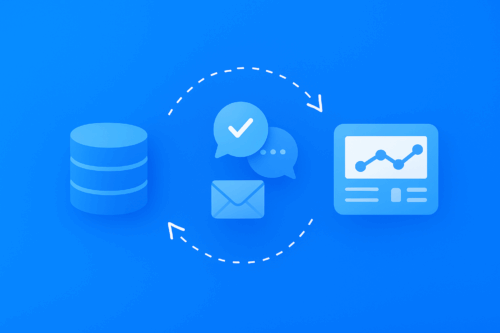
Visual illustration showing fragmented communication channels scattered around a central workspace, symbolizing disorganized customer communication.
A visual snapshot of fragmented tools and channels before automation.

In many companies, marketing operations are spread across disconnected tools:

  • CRM platforms store customer data

  • Messaging tools handle communication

  • Analytics tools measure engagement and performance

This fragmentation leads to delays, inconsistent messaging, and missed sales opportunities. Without WhatsApp Campaign Automation, customer journeys become slow and heavily dependent on manual steps.


The Solution: A Fully Automated WhatsApp Funnel

By integrating Appgain with n8n, teams can activate CRM data instantly and send personalized WhatsApp messages in real time. This solution connects the entire customer journey inside one workflow:

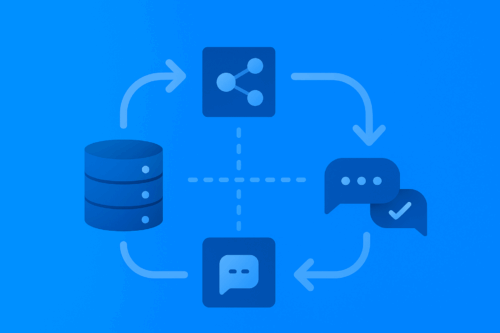
Automated funnel illustration showing CRM data flowing through n8n automation nodes into WhatsApp message bubbles.
A visual funnel showing how CRM data moves through automation before reaching customers on WhatsApp.
  • Import CRM contacts

  • Build audience segments

  • Trigger automated campaigns

  • Deliver messages instantly

  • Track opens, clicks, and conversions

  • Push insights back into the CRM

This approach transforms static data into an active communication engine.


How WhatsApp Campaign Automation Works

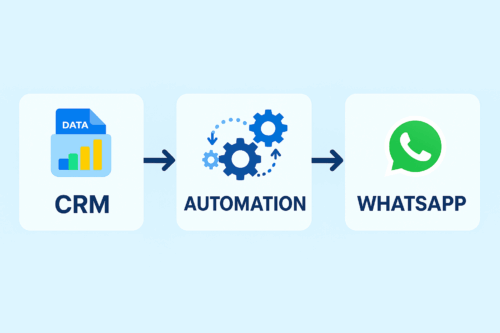
Visual workflow showing CRM data flowing into automation, then delivered to customers through WhatsApp.
A simple workflow illustrating how CRM data moves through automation to WhatsApp messaging.

1. Import CRM Contacts Into n8n

Use native connectors or an API to sync contacts directly from your CRM into the workflow.

2. Segment Customers Based on Behavior

Create dynamic segments based on activity, lifecycle stage, geography, purchases, or product interest.

3. Build Campaign Logic

Examples of automation rules include:

  • If a cart is abandoned for 48 hours, send a WhatsApp reminder

  • If a customer is inactive for 14 days, trigger a re-engagement message

  • After a purchase, send a thank-you message or referral offer

4. Deliver Messages via Appgain’s WhatsApp API

This includes images, buttons, product recommendations, and dynamic personalization fields.

5. Track Performance in Real Time

Monitor delivery rates, message opens, clicks, and conversion events. Feed this performance data back into the CRM to continually improve segmentation and targeting.


Real Example: Automated Drip Campaign for E-commerce

A fashion retailer implemented a fully automated seven-day WhatsApp campaign using Appgain and n8n:

  • Day 1: Identify and segment VIP customers

  • Day 2: Send early access to new arrivals

  • Day 3: Deliver exclusive limited-time discount

  • Day 6: Trigger low-stock reminders

  • Day 7: Send thank-you message with referral incentive

Results included:

  • A 47 percent increase in click-through rate

  • A three-times higher conversion rate compared to email

  • A 30 percent drop in customer support tickets due to automated responses

This shows the power of WhatsApp Campaign Automation when CRM data is activated instantly.


Why WhatsApp Campaign Automation Works

Faster Execution
Campaigns can be created and deployed within hours rather than weeks.

Hyper-Personalization
Messages respond to customer behavior in real time.

No-Code Simplicity
Marketers can build workflows without engineering involvement.

Scalable Performance
A single automated workflow can serve thousands of customers simultaneously.

For deeper workflow examples, see n8n’s official documentation at:
https: // n8n . io


Additional Resources

For deeper workflow examples and automation best practices, you can explore the official n8n resource at  n8n.io.
If you want to learn more about the value of WhatsApp-first communication, check our internal guide on WhatsApp-first strategies available on the Appgain blog.

Conclusion

Customer data becomes valuable only when activated at the right moment with the right message. Through WhatsApp Campaign Automation using Appgain’s WhatsApp API and the automation power of n8n, businesses can build continuous, personalized communication that boosts engagement and accelerates revenue.

This is not just marketing automation.
It is a complete customer conversion engine.

From CRM to customer, every step becomes part of one automated, intelligent loop — where data turns into real conversations, and conversations turn into growth.


Ready to Market Like It’s 2025?

Unlock real-time, AI-powered WhatsApp campaigns and turn your CRM data into conversations that convert.

With Appgain, you can launch your first automated WhatsApp journey in under 10 minutes — no engineering, no complexity.

Start Your Smart Campaign Today