Why Recording Calls Isn’t Enough Anymore

Introduction

For years, businesses have relied on call recording for one primary purpose: documentation.

Recording customer conversations helped organizations maintain records, resolve disputes, train employees, and comply with regulatory requirements. While these benefits remain valuable, today’s customer interactions have become far more complex.

Modern businesses don’t handle dozens of conversations each day—they manage hundreds or even thousands across multiple communication channels. Sales teams, customer support agents, and account managers generate an enormous amount of conversational data daily.

The problem isn’t collecting conversations anymore.

The problem is understanding them.

Listening to every recorded call manually is simply impossible, which means valuable customer insights often remain hidden inside hours of audio files that no one has time to review.

Today’s businesses need more than recordings.

They need intelligence.

Artificial Intelligence is transforming customer conversations from passive recordings into actionable business insights that improve sales, customer experience, and operational performance.

In this article, we’ll explore why traditional call recording is no longer enough—and how AI Call Intelligence helps businesses unlock the true value of every conversation.

Traditional Call Recording Has Reached Its Limits

Recording calls tells you what happened.

But it doesn’t explain why it happened.

A recorded conversation cannot automatically tell you:

  • Why the customer contacted your business
  • Whether the customer was satisfied
  • If the salesperson handled objections effectively
  • Why a deal was won or lost
  • Which customers require immediate follow-up
  • What recurring problems appear across thousands of conversations

Without analysis, recordings become nothing more than digital archives.

Most businesses store thousands of customer calls that are never reviewed again.

The information exists.

The insights don’t.

Customer Conversations Have Never Been More Valuable

Today’s customers communicate through multiple channels, including:

  • Phone calls
  • WhatsApp
  • Email
  • Website Live Chat
  • Instagram
  • Facebook Messenger

Among all these channels, phone conversations often contain the richest customer insights.

During a phone call, customers naturally explain:

  • Their challenges
  • Their expectations
  • Their concerns
  • Their purchasing intentions
  • Their frustrations
  • Their decision-making process

Every conversation contains valuable business intelligence.

The challenge is extracting that intelligence at scale.

Manual Call Reviews Don’t Scale

Imagine a sales department handling:

  • 100 customer calls every day
  • 500 calls every week
  • More than 25,000 calls every year

No manager has enough time to review every conversation manually.

Instead, businesses typically:

  • Listen to random samples
  • Review only escalated complaints
  • Focus on failed deals
  • Miss valuable trends hidden in thousands of conversations

As a result, important business decisions are based on incomplete information rather than the full customer picture.

What Businesses Miss When They Only Record Calls

Traditional call recording cannot automatically identify:

  • Customer sentiment
  • Purchase intent
  • Sales objections
  • Frequently asked questions
  • Competitor mentions
  • Escalation risks
  • Compliance violations
  • Follow-up opportunities
  • Customer satisfaction trends

Without these insights, businesses become reactive instead of proactive.

Instead of improving customer experiences before problems grow, they spend time solving issues after they’ve already affected customers.

AI Transforms Calls into Business Intelligence

Artificial Intelligence completely changes how businesses use customer conversations.

Instead of simply storing audio files, AI automatically analyzes every conversation the moment it ends.

Modern AI can identify:

  • Customer emotions
  • Buying signals
  • Product interest
  • Sales objections
  • Keywords and important topics
  • Action items
  • Conversation summaries
  • Recommended next steps

Rather than spending hours reviewing recordings, managers receive actionable insights within minutes.

Benefit #1: Automatic Call Transcription

Listening to long recordings is inefficient.

AI automatically converts every customer conversation into searchable text.

This provides several advantages:

  • Faster conversation reviews
  • Instant keyword searches
  • Better documentation
  • Easier compliance reporting
  • Improved accessibility

Instead of replaying a 45-minute conversation, teams can search for specific topics in seconds.

Benefit #2: AI Detects Customer Sentiment

Customer emotions influence purchasing decisions.

AI analyzes conversations to detect whether customers sound:

  • Positive
  • Neutral
  • Frustrated
  • Interested
  • Confused
  • Dissatisfied

Managers immediately know which conversations require attention without listening to every recording.

This allows customer support teams to respond faster and sales managers to prioritize high-risk conversations.

Benefit #3: Automatically Identify Sales Objections

Every sales team hears the same objections repeatedly.

Customers commonly say:

  • “It’s too expensive.”
  • “We’re evaluating other vendors.”
  • “I need approval.”
  • “Let’s discuss this next month.”

Instead of discovering these patterns manually, AI automatically categorizes and measures every objection.

This helps businesses:

  • Improve sales scripts
  • Refine pricing strategies
  • Create better sales enablement materials
  • Coach representatives using real customer conversations

Benefit #4: Discover Buying Intent

Not every prospect is equally ready to buy.

AI recognizes buying signals such as:

  • Pricing discussions
  • Product comparisons
  • Urgency
  • Budget conversations
  • Purchase timelines

Sales teams can then prioritize high-intent opportunities and focus their efforts where they’re most likely to generate revenue.

Benefit #5: Improve Sales Coaching

Traditional coaching evaluates only a small sample of calls.

AI evaluates every conversation.

Managers quickly identify:

  • Top-performing representatives
  • Common communication mistakes
  • Missed sales opportunities
  • Winning sales behaviors
  • Coaching priorities

Performance reviews become objective, data-driven, and far more effective.

Benefit #6: Understand Customer Experience at Scale

Instead of reviewing conversations individually, AI analyzes thousands of customer interactions simultaneously.

Businesses can instantly identify:

  • Common customer complaints
  • Frequently requested features
  • Product quality issues
  • Service performance trends
  • Customer satisfaction patterns

These insights help organizations continuously improve products, services, and customer experiences.

Benefit #7: Never Miss a Follow-Up Again

Every customer conversation ends with commitments.

Examples include:

  • Sending a quotation
  • Scheduling a product demo
  • Following up next week
  • Sharing product documentation

Without automation, these promises are easily forgotten.

AI automatically:

  • Creates follow-up tasks
  • Assigns responsibilities
  • Notifies team members
  • Updates CRM records
  • Tracks completion status

Every customer commitment becomes part of an organized workflow.

From Audio Files to Actionable Intelligence

Traditional call recording answers one question:

“What was said?”

AI Call Intelligence answers much more valuable questions:

  • What does this conversation mean?
  • Why did the customer react this way?
  • What should happen next?
  • Which conversations need immediate attention?
  • How can future conversations improve?

This transforms customer conversations into strategic business assets instead of archived recordings.

How ConnectGain Makes Every Conversation Smarter

ConnectGain combines AI Call Intelligence, CRM, and Omnichannel Communication into one centralized platform.

With ConnectGain, businesses can:

  • Automatically transcribe every customer call
  • Analyze conversations using AI
  • Detect customer sentiment and buying intent
  • Identify sales objections and recurring topics
  • Generate AI-powered conversation summaries
  • Create automatic follow-up tasks
  • Sync conversation insights directly with customer CRM profiles
  • Monitor team performance through real-time dashboards and analytics

Instead of storing thousands of recordings that no one reviews, ConnectGain helps organizations transform every conversation into measurable business value.

The Future of Call Management

Call recording will always remain important.

But recording conversations is no longer enough.

Modern businesses need to understand every interaction—not simply archive it.

Organizations that adopt AI-powered Conversation Intelligence can:

  • Improve customer experiences
  • Increase sales conversion rates
  • Coach teams more effectively
  • Respond faster to customer needs
  • Make smarter, data-driven business decisions

The future isn’t about recording more conversations.

It’s about understanding every one of them.

Conclusion

Recording customer calls is only the beginning.

The real value comes from understanding what those conversations reveal about customer behavior, sales performance, and business opportunities.

By combining AI-powered transcription, sentiment analysis, CRM integration, and intelligent automation, businesses can transform every phone call into actionable business intelligence.

Organizations that move beyond traditional call recording gain stronger customer relationships, higher sales performance, and a significant competitive advantage.

Ready to Turn Every Call Into Business Intelligence?

ConnectGain helps businesses analyze customer conversations, automate follow-ups, and improve sales performance using AI Call Intelligence, CRM, and Omnichannel Communication across WhatsApp, Instagram, Facebook Messenger, Websites, Email, SMS, Web Push, and App Push—all from one centralized platform.

📞 WhatsApp: +20 111 998 5526

🌐 Website: https://appgain.io

📧 Email:He***@*****in.io
Multi-Channel Customer Communication Best Practices: How to Deliver a Seamless Customer Experience Across Every Channel

Introduction

Customers no longer communicate with businesses through a single channel.

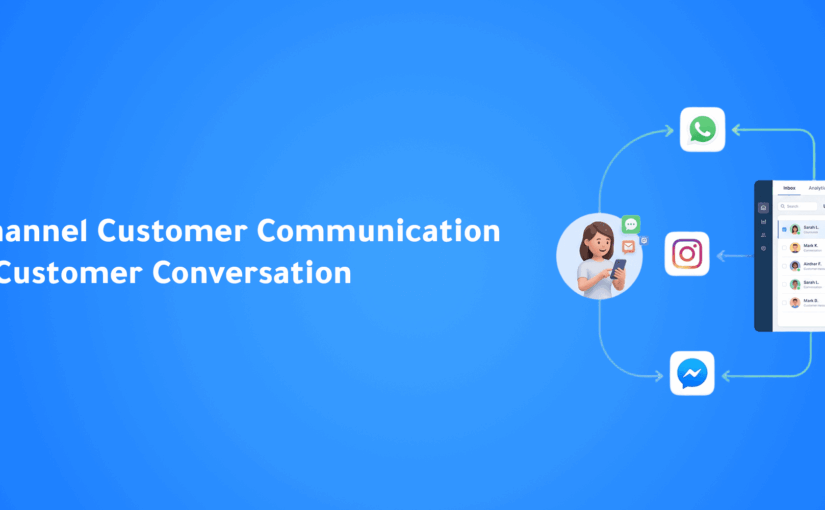
One customer may discover your business on Instagram, ask questions through WhatsApp, receive an email, visit your website, and later contact customer support through Facebook Messenger—all before making a purchase.

Today’s customer journey is no longer linear.

It moves across multiple communication channels, and customers expect businesses to recognize them and continue the conversation without requiring them to repeat information.

Unfortunately, many organizations still manage each communication channel separately.

  • Sales teams use WhatsApp.
  • Marketing relies on email.
  • Support works through Messenger.
  • Website inquiries are handled independently.

The result is fragmented customer experiences, slower response times, duplicated work, and lost sales opportunities.

This is why Multi-Channel Customer Communication has become a critical business strategy.

In this article, we’ll explore the best practices that help businesses deliver faster, smarter, and more consistent customer experiences across every communication channel.


What Is Multi-Channel Customer Communication?

Multi-channel customer communication is the ability to engage customers across multiple platforms while maintaining consistent, high-quality interactions.

Common communication channels include:

  • WhatsApp
  • Instagram
  • Facebook Messenger
  • Email
  • Website Live Chat
  • Phone Calls
  • SMS
  • Mobile Applications

Customers choose whichever channel is most convenient for them.

Businesses must be prepared to deliver the same quality of service across every touchpoint.


Why Multi-Channel Communication Matters

Customer expectations have changed dramatically.

People expect businesses to:

  • Respond quickly
  • Remember previous conversations
  • Offer personalized support
  • Be available across multiple platforms
  • Deliver a seamless customer experience

Businesses that fail to meet these expectations often experience:

  • Lower customer satisfaction
  • Missed sales opportunities
  • Poor customer retention
  • Increased support costs

A well-designed communication strategy improves both customer experience and operational efficiency.


Best Practice #1: Meet Customers on Their Preferred Channels

Every customer has a preferred way of communicating.

Some prefer WhatsApp.

Others choose Instagram, Messenger, or email.

Rather than forcing customers to use one platform, businesses should be available wherever their customers already communicate.

Making communication convenient removes friction from the customer journey.


Best Practice #2: Centralize Every Conversation

One of the biggest challenges businesses face is managing conversations across multiple applications.

Important customer information becomes scattered between:

  • WhatsApp
  • Instagram
  • Messenger
  • Email
  • CRM
  • Phone calls

This makes it difficult to maintain context.

A Unified Inbox solves this problem by bringing every customer conversation into one centralized workspace.

Teams gain complete visibility into every interaction, regardless of the communication channel.


Best Practice #3: Keep Customer Data in One CRM

Conversations alone are not enough.

Businesses also need a complete customer profile.

A modern CRM should include:

  • Contact information
  • Previous conversations
  • Purchase history
  • Sales opportunities
  • Notes
  • Tasks
  • Customer preferences

Centralized customer data allows every department to deliver more personalized service.


Best Practice #4: Respond Quickly Across Every Channel

Response time directly impacts customer satisfaction and conversion rates.

Customers expect businesses to acknowledge their inquiries within minutes.

Long delays often result in lost opportunities.

Businesses can improve response times by using:

  • AI-powered assistants
  • Automated greetings
  • Smart conversation routing
  • Internal notifications

Fast responses create stronger first impressions and improve customer trust.


Best Practice #5: Maintain a Consistent Brand Voice

Customers should receive the same experience regardless of where they contact your business.

Whether communication happens through WhatsApp or email, your brand should maintain:

  • Consistent tone of voice
  • Accurate information
  • Professional communication
  • Unified messaging

Consistency strengthens brand identity and builds customer confidence.


Best Practice #6: Personalize Every Interaction

Customers appreciate businesses that remember previous interactions.

Instead of sending generic responses, personalize communication using:

  • Customer name
  • Previous purchases
  • Conversation history
  • Interests
  • Customer behavior

Personalization creates stronger relationships and increases engagement.


Best Practice #7: Use Automation Without Losing the Human Touch

Automation improves efficiency but should never make customer interactions feel robotic.

The best customer experiences combine:

  • AI-powered chatbots
  • Automated workflows
  • Human support when needed

Automation should handle repetitive tasks while human agents focus on conversations requiring empathy and problem-solving.


Best Practice #8: Give Every Team Access to Customer History

Customer conversations often involve multiple departments.

Sales, marketing, and customer support should all have access to the same customer information.

This eliminates repeated questions and creates smoother customer experiences.

Customers should never have to explain the same issue multiple times.


Best Practice #9: Measure Communication Performance

Improvement begins with measurement.

Businesses should monitor key communication metrics such as:

  • First response time
  • Resolution time
  • Customer satisfaction
  • Conversion rates
  • Customer engagement
  • Channel performance

Analytics help identify opportunities to improve customer communication continuously.


Best Practice #10: Continuously Optimize the Customer Journey

Customer expectations continue to evolve.

Businesses should regularly review:

  • Customer feedback
  • Communication workflows
  • Automation performance
  • Sales outcomes
  • Customer engagement

Continuous optimization ensures communication strategies remain effective as customer behavior changes.


Common Mistakes Businesses Should Avoid

Even businesses with multiple communication channels can struggle if they make common mistakes.

These include:

  • Managing each channel separately
  • Responding inconsistently
  • Delayed customer replies
  • Lack of CRM integration
  • Sending generic messages
  • Overusing automation
  • Ignoring customer history
  • Measuring only response volume instead of customer outcomes

Avoiding these mistakes creates a more connected and customer-centric experience.


The Role of Artificial Intelligence in Multi-Channel Communication

Artificial Intelligence is helping businesses manage customer communication more effectively than ever before.

AI can:

  • Respond instantly to common questions
  • Route conversations to the right department
  • Qualify sales leads
  • Recommend next actions
  • Analyze customer sentiment
  • Personalize communication
  • Trigger automated workflows

Instead of replacing employees, AI enables teams to work more efficiently while delivering better customer experiences.


How ConnectGain Helps Businesses Deliver Better Multi-Channel Communication

ConnectGain brings customer conversations, CRM, Artificial Intelligence, and workflow automation together in one intelligent platform.

With ConnectGain, businesses can:

  • Manage WhatsApp, Instagram, Messenger, Website Chat, Email, SMS, Web Push, and App Push from a single Unified Inbox
  • Centralize customer information with an integrated CRM
  • Automate customer journeys and follow-up workflows
  • Qualify leads using AI
  • Assign conversations automatically to the right teams
  • Track customer interactions across every communication channel
  • Monitor performance through real-time dashboards and analytics

By combining AI, CRM, automation, and omnichannel communication, ConnectGain helps businesses create seamless customer experiences while improving productivity and increasing sales opportunities.


The Future of Customer Communication

Customer communication will continue becoming more intelligent, connected, and personalized.

Businesses are moving beyond simply supporting multiple channels.

The future lies in creating one continuous conversation where customers can move effortlessly between platforms without losing context.

Organizations that invest in unified communication strategies today will be better prepared to meet the expectations of tomorrow’s customers.


Conclusion

Successful customer communication is no longer about being present on multiple platforms.

It is about creating one connected experience across every channel.

Businesses that centralize conversations, personalize interactions, automate repetitive tasks, and empower their teams with AI and CRM technology can improve customer satisfaction, strengthen relationships, and drive sustainable business growth.

ConnectGain enables organizations to manage customer communication from one intelligent platform, helping teams respond faster, collaborate better, and deliver exceptional customer experiences across every touchpoint.


Ready to Transform Your Customer Communication?

ConnectGain helps businesses manage customer conversations, automate workflows, and engage customers across WhatsApp, Instagram, Messenger, Websites, Email, SMS, Web Push, and App Push from one centralized AI-powered platform.


Contact Us

WhatsApp:
+20 111 998 5526

Website:
https://appgain.io

Email:
He***@*****in.io

What is RCS (Rich Communication Services) and How Can Your Business Use It?

RCS (Rich Communication Services) is an upgrade from SMS (Short Message Service). In fact, it improves messaging features and goes beyond regular text messages. Moreover, with support from major phone carriers, RCS allows businesses to connect with customers using rich media and interactive content within messaging apps.

Key Features of RCS

RCS has many advanced features. For instance:

  • Rich Media Support: Users can share high-quality images, videos, GIFs, and audio files. This capability enhances the overall communication experience.
  • Group Chats: RCS allows messaging groups, so you can talk to many people at once. Consequently, it makes group communication easier.
  • Typing Notifications: RCS shows when someone is typing as well as when messages are sent or read. Thus, users can better understand communication flow.
  • Branded Messaging: Businesses can create unique messages for promotions and customer service. This feature enables companies to build their brand identity.
  • Action Buttons: Messages can include buttons for tasks like visiting a website or making a purchase. As a result, this leads to increased engagement.

Overall, these features make RCS a valuable tool for improving customer interaction.

How Businesses Can Use RCS

RCS is useful in many fields. Here are several ways businesses can use RCS:

1. Customer Support

  • Better Interaction: RCS allows live chats with images and videos. For example, customers can send pictures of their problems, and support can reply with guides.
  • AI Chatbots: AI can answer common questions and pass complex issues to human agents. Thus, this improves the efficiency of customer support.

2. Marketing Campaigns

  • Rich Promotions: Businesses can send messages with images or videos to show new products. Additionally, they can create interactive campaigns that capture customer interest.
  • Interactive Engagement: Customers can vote in polls or enter contests directly in messages. As a consequence, this encourages customer participation.

3. E-commerce

  • Interactive Catalogs: Retailers can send product catalogs, allowing customers to browse and buy directly. Moreover, RCS can help with tracking orders and recovering abandoned carts.
  • Order Tracking: RCS can help track orders and send personalized messages to encourage purchases.

4. Appointment Reminders

  • Automated Reminders: Send reminders about appointments. As a result, customers can confirm, reschedule, or cancel easily.
  • Follow-Up Messages: Send surveys or suggestions after appointments to improve service quality.

5. Travel and Hospitality

  • Booking Confirmations: Travel agencies can send booking confirmations and real-time updates. Consequently, this keeps travelers informed and engaged.

6. Financial Services

  • Secure Notifications: Banks can send alerts about accounts and transactions securely through RCS. In addition, they can provide fraud alerts.
  • Fraud Alerts: Customers can verify or dispute transactions directly in messages, which enhances security.

7. Retail and Loyalty Programs

  • Tailored Updates: Send personalized notifications about loyalty points and offers. For instance, retailers can provide exclusive deals to loyal customers.
  • Interactive Coupons: Customers can redeem coupons easily, which improves their shopping experience.

8. Event Management

  • Engaging Invitations: Send event invites that let recipients confirm attendance and access details. Furthermore, you can provide real-time updates about the event.
  • Real-Time Updates: Communicate schedule changes using rich media, so attendees stay informed.

9. Transportation

  • Ride-Hailing Confirmations: Send booking confirmations and tracking info through RCS. Similarly, public transport updates can be provided.
  • Public Transport Updates: Provide real-time updates on schedules and routes to keep passengers informed.

10. Utility and Telecom Services

  • Service Notifications: Notify customers about service interruptions and upcoming bills. Additionally, telecom companies can advertise new plans with engaging content.
  • Promotional Content: Advertise new plans using engaging media, which attracts customers.

How RCS Differs from SMS

SMS is limited to 160 characters of text. In contrast, RCS allows rich media and interactive experiences. Therefore, RCS is better for business communication. It leads to more engagement and higher sales.

Why Your Business Should Use RCS

RCS helps businesses improve customer interaction. Not only does it offer app-like features in messaging apps, but it also means customers don’t need extra apps. This, in turn, makes it easier to engage with clients and promote products effectively.

By using RCS, businesses can:

  • Enhance Engagement: Create dynamic, interesting content that captures attention.
  • Improve Customer Experience: Use tailored messaging for better interactions with clients.
  • Increase Sales: Utilize action buttons and branding to drive purchases.
  • Boost Efficiency: Automate replies and support with chatbots for faster service.

RCS Availability

RCS is widely available in countries like Canada, Mexico, Brazil, the UK, Germany, France, Spain, Italy, and India. However, other regions have some support through local carriers or Google services.

In summary,, RCS is a key tool for businesses that want to modernize communication. Ultimately, it improves customer engagement and makes interactions easier through rich, interactive messaging, with Appgain.io providing these services with the highest efficiency.