
How Businesses Can Scale Customer Service with AI

Introduction

Businesses looking to scale customer service with AI are gaining a significant competitive advantage in today’s digital economy.

AI-powered customer service is rapidly changing how businesses support, engage, and retain customers. As customer expectations continue to rise, companies are under increasing pressure to deliver faster responses, personalized experiences, and consistent support across multiple channels.

However, scaling customer service through traditional methods often means hiring more agents, increasing operational costs, and managing growing complexity.

Artificial Intelligence offers a smarter solution.

By combining automation, intelligent conversations, and data-driven insights, businesses can scale customer service efficiently while improving customer satisfaction and reducing costs.

In this article, we’ll explore how businesses can leverage AI to scale customer service operations and create exceptional customer experiences.


Why Scaling Customer Service Is Challenging

As businesses grow, customer inquiries increase significantly.

Support teams often face challenges such as:

  • High conversation volumes
  • Long response times
  • Rising operational costs
  • Inconsistent customer experiences
  • Limited support availability
  • Difficulty managing multiple communication channels

Without the right systems in place, these challenges can negatively impact customer satisfaction and business growth.

This is why many organizations are turning to AI-powered customer service solutions.


How AI Helps Businesses Scale Customer Service

1. Providing Instant Responses 24/7

Customers expect immediate answers regardless of the time or day.

AI-powered assistants can handle customer inquiries around the clock, providing instant responses without requiring human intervention.

This ensures customers receive support:

  • During weekends
  • On holidays
  • Outside business hours
  • Across different time zones

As a result, businesses can improve customer satisfaction while maintaining continuous availability.


2. Automating Repetitive Customer Inquiries

A large percentage of support requests are repetitive.

Examples include:

  • Order tracking
  • Pricing questions
  • Product availability
  • Appointment scheduling
  • Return policies
  • Account information

AI can automate these routine interactions, allowing support teams to focus on complex customer issues that require human expertise.

This significantly improves team productivity and operational efficiency.


3. Managing High Conversation Volumes

During peak seasons, product launches, or marketing campaigns, customer inquiries can increase dramatically.

Hiring and training additional agents is often expensive and time-consuming.

AI systems can handle thousands of simultaneous conversations without compromising response quality or speed.

This enables businesses to scale support operations instantly without increasing headcount.


4. Delivering Consistent Customer Experiences

Customers expect accurate and consistent information across every touchpoint.

AI-powered customer service ensures:

  • Standardized responses
  • Consistent brand messaging
  • Reliable support quality
  • Reduced human error

This creates a more professional and trustworthy customer experience.


5. Supporting Omnichannel Communication

Today’s customers interact with businesses across multiple channels, including:

  • WhatsApp
  • Facebook Messenger
  • Instagram
  • Email
  • Websites
  • Mobile Applications

Managing conversations across separate platforms can be difficult and inefficient.

AI helps businesses centralize communications and maintain seamless customer interactions across all channels.


AI and Human Agents: Working Together

The goal of AI is not to replace human support teams.

Instead, AI enhances their capabilities.

AI handles:

  • Frequently asked questions
  • Customer routing
  • Data collection
  • Initial customer engagement
  • Routine support requests

Human agents focus on:

  • Complex customer cases
  • Escalations
  • Relationship building
  • High-value interactions

This hybrid model allows businesses to scale support while maintaining a personalized human touch.


Using AI to Improve Customer Service Performance

Faster Response Times

AI dramatically reduces customer waiting times by responding instantly to inquiries.

Faster responses often lead to:

  • Higher customer satisfaction
  • Better customer retention
  • Increased trust in the brand

Improved Customer Insights

AI can analyze customer conversations to identify:

  • Common issues
  • Customer sentiment
  • Frequently asked questions
  • Service bottlenecks

These insights help businesses continuously improve customer service operations.


Smarter Ticket Routing

AI can automatically identify customer intent and route conversations to the appropriate department or agent.

This reduces transfer times and helps customers reach the right person faster.


Scalable Knowledge Management

AI-powered systems can access company knowledge bases, FAQs, product catalogs, and support documentation in real time.

This ensures customers receive accurate information while reducing dependency on manual processes.


How ConnectGain Helps Businesses Scale Customer Service

Scaling customer service requires more than basic automation.

ConnectGain combines AI-powered conversations, CRM capabilities, workflow automation, and omnichannel communication into a unified platform designed for modern businesses.

With ConnectGain, organizations can:

  • Automate customer support across multiple channels
  • Manage WhatsApp, Instagram, Messenger, and website conversations from one inbox
  • Deploy AI-powered customer service assistants
  • Automatically qualify leads and create CRM records
  • Enable human-agent takeover whenever required
  • Track customer interactions across the entire journey
  • Automate workflows and follow-up processes

By centralizing customer communication and leveraging AI, ConnectGain helps businesses handle more conversations, improve response times, and deliver exceptional customer experiences without increasing operational costs.


The Future of AI-Powered Customer Service

Customer service is evolving rapidly.

Emerging AI technologies are introducing capabilities such as:

  • Voice AI assistants
  • Real-time language translation
  • Sentiment analysis
  • AI-generated conversation summaries
  • Predictive customer support
  • Automated task creation

Businesses that embrace these innovations will be better positioned to meet growing customer expectations while scaling efficiently.


Why Businesses Are Investing in AI Customer Service

Companies across industries are adopting AI because it delivers measurable benefits:

  • Lower support costs
  • Faster response times
  • Improved customer satisfaction
  • Higher operational efficiency
  • Better scalability
  • Increased customer retention

Whether serving hundreds or millions of customers, AI enables businesses to grow customer service operations without growing complexity.


Conclusion

As customer expectations continue to rise, businesses need smarter ways to scale customer service without significantly increasing costs or team size.

AI provides the tools needed to automate routine interactions, improve response times, support omnichannel communication, and deliver personalized customer experiences at scale.

Organizations that adopt AI-powered customer service solutions today will be better equipped to handle future growth, improve customer satisfaction, and maintain a competitive advantage.

ConnectGain helps businesses automate customer conversations, manage omnichannel communication, and streamline customer journeys through AI-powered engagement and CRM automation.

Ready to transform your customer service operations with AI?

📞 WhatsApp: +20 111 998 5526

🌐 Website: https://appgain.io

📧 Email: He***@*****in.io
Omnichannel Communication Strategy for MENA Businesses

Introduction

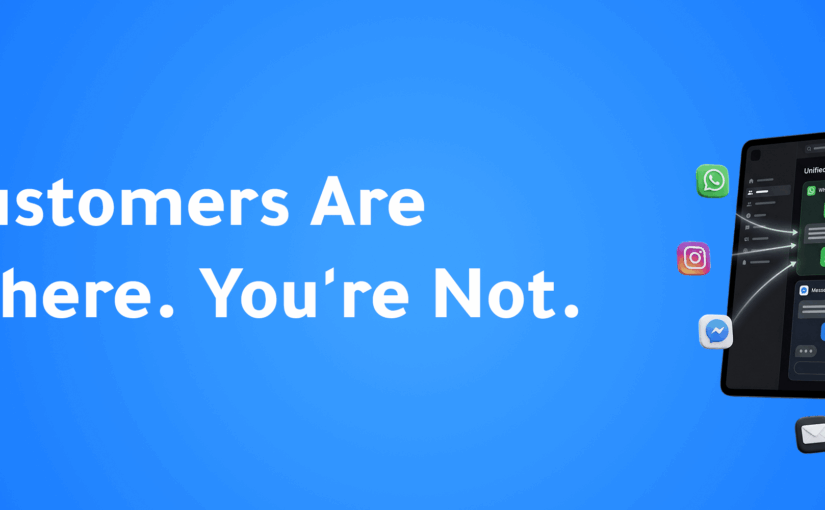
Your customers are everywhere.

They send WhatsApp messages in the morning, comment on Instagram in the afternoon, call during business hours, and send emails when they need formal communication.

Some customers prefer Telegram. Others use website chat widgets or Facebook Messenger.

The problem is not the number of channels.

The problem is managing them separately.

This creates fragmented customer experiences, missed conversations, delayed responses, and operational chaos.

That is why building a strong omnichannel communication strategy is now essential for MENA businesses.

This guide explains how to create a practical omnichannel communication strategy that improves customer experience, increases response speed, and supports business growth.


Why Omnichannel Is Harder in MENA

Most omnichannel guides are written for Western markets where email and phone are the primary channels.

In MENA, the channel priority is very different.


Primary Channels

These are the highest-volume and highest-priority channels:

  • WhatsApp
  • Phone calls
  • Instagram

WhatsApp dominates customer communication across industries.

Phone calls remain critical for high-value deals and older customer segments.

Instagram is often the first contact point for younger buyers.


Secondary Channels

These still matter but serve different purposes:

  • Facebook Messenger
  • TikTok
  • Telegram

Messenger remains strong in Egypt.

TikTok is growing fast for retail and F&B.

Telegram is preferred by privacy-focused users and specific business communities.


Formal and Transactional Channels

These include:

  • Email
  • SMS

Email supports invoices, contracts, and B2B communication.

SMS remains important for OTPs, reminders, and notifications.


Most global platforms still treat WhatsApp and Instagram as add-ons.

For MENA businesses, they should be the center of the strategy.


The Four Stages of Omnichannel Maturity

Not every business needs full automation from day one.

Understanding the maturity stages helps define your next move.


Stage 1 — Multi-Channel

Most MENA businesses are here today.

They use multiple channels, but each one is managed separately.

This creates disconnected customer experiences.

A customer who contacts you twice may need to repeat everything again.


Stage 2 — Centralized Inbox

All channels feed into one inbox.

Agents manage WhatsApp, Instagram, Messenger, and email from one place.

Customer history becomes visible across channels.

This improves efficiency significantly.


Stage 3 — Intelligent Routing

The system routes conversations automatically based on:

  • Agent skills
  • Customer priority
  • Workload
  • Urgency
  • VIP status

This improves speed and service quality.


Stage 4 — AI-Powered Omnichannel

This is the transformation stage.

AI handles a large percentage of incoming messages automatically.

Customers describe what they need naturally.

The system responds using CRM data, knowledge base content, and automation rules.

Human agents focus only on complex or high-value interactions.

This is where real scalability begins.


Building Your Omnichannel Communication Strategy

Before building the system, start with a channel audit.


Step 1 — Volume Audit

Review the last 30 days.

Count incoming messages from every channel.

Identify which channels generate the highest volume.

This becomes your primary focus.


Step 2 — Quality Audit

Which channels bring the highest-value leads?

High volume does not always mean high quality.

For example:

Instagram may generate more inquiries, but WhatsApp often brings faster buyers.


Step 3 — Conversion Audit

Measure how each channel converts.

Track:

  • First contact
  • Qualified lead
  • Closed deal

This helps you prioritize investment.


Step 4 — Abandonment Audit

How many messages go unanswered?

How many leads disappear because of delayed responses?

These are your fastest automation wins.


The Unified Inbox: The Foundation of Omnichannel

The first real investment should be a unified inbox.

This means all customer conversations appear in one place.

ConnectGain supports:

  • WhatsApp (Lite + Cloud API)
  • Facebook Messenger
  • Instagram Direct Messages
  • Telegram
  • TikTok Messages
  • Email
  • SMS
  • Web Push
  • Website Chat Widget

Every customer profile includes full conversation history across all channels.

If someone messages on Instagram today and WhatsApp tomorrow, your team sees everything.

This matches ConnectGain’s unified conversations hub where every interaction becomes a single customer journey .


AI Automation Across All Channels

The real power of omnichannel appears when automation works everywhere.


One Bot Across Multiple Channels

The same chatbot flow works on:

  • WhatsApp
  • Instagram
  • Messenger
  • Telegram
  • Website chat

Build once. Deploy everywhere.


One Knowledge Base for All Conversations

Your FAQ, pricing, and product information power responses across every channel.

This creates consistency and accuracy.


CRM Updates From Every Interaction

Whether the customer calls, messages, or emails, the CRM updates automatically.

This removes manual work and improves visibility.


Behavior-Based Follow-Ups

Follow-up should depend on customer behavior—not the channel.

A serious buyer should receive the same journey whether they contacted you by call or WhatsApp.

This reflects ConnectGain’s execution automation engine where workflows trigger actions based on intent, not platform .


Practical Implementation Roadmap


Month 1 — Connect Your Channels

Start with:

  • WhatsApp Business API
  • Instagram Business
  • Facebook Messenger
  • Email integration

Build the centralized inbox first.


Month 2 — Standardize Response Templates

Create approved templates for:

  • Pricing requests
  • Booking inquiries
  • Support questions
  • Follow-up responses

This improves speed and consistency.


Month 3 — Deploy First Automation Flows

Start with your top three inquiry types.

Deploy first on WhatsApp, then expand to Instagram and Messenger.


Month 4 — Connect CRM and Automation

When customers request quotes, create deals automatically.

When deal stages change, trigger follow-up sequences.

This turns conversations into sales pipelines.


Month 5 — Add AI Intelligence

Deploy RAG-based AI automation.

Train the system using:

  • FAQs
  • Product documents
  • Service information
  • Internal knowledge

Now the system becomes truly intelligent.


Month 6+ — Optimize With Data

Review:

  • Response times
  • Deflection rate
  • Conversion by channel
  • Customer satisfaction

Use real data to improve continuously.


The Metrics That Matter

Track the right KPIs:

  • First Response Time
  • Deflection Rate
  • Cross-Channel Contact Rate
  • Customer Satisfaction Score
  • Conversion Rate by Channel

Without measurement, optimization is impossible.


Start Your Growth Journey

If your customers are everywhere, your business must be ready everywhere too.

A strong omnichannel communication strategy helps you:

  • Respond faster
  • Reduce missed leads
  • Improve customer satisfaction
  • Increase sales conversions
  • Scale operations without chaos

Appgain helps businesses across MENA unify conversations, automate customer journeys, and build scalable growth systems.

Let’s build your success story.

WhatsApp: +20 111 9985526
Website: https://appgain.io
Email: He***@*****in.io


Conclusion

Customers do not think in channels.

They think in conversations.

Your business should do the same.

A strong omnichannel communication strategy is not about adding more channels.

It is about creating one connected customer experience across all of them.

That is how modern MENA businesses grow faster, serve better, and compete smarter.