How AI Personalizes WhatsApp Conversations at Scale

Every customer wants to feel understood.

Not processed.

Whether someone is asking about pricing, requesting support, tracking an order, or booking a meeting, they expect businesses to recognize who they are and respond accordingly.

The challenge?

Modern businesses receive hundreds—or even thousands—of WhatsApp messages every day.

Customers expect instant responses, but they also expect those responses to feel personal.

This creates a difficult balance.

Respond manually, and your team struggles to keep up.

Automate everything with generic messages, and conversations begin to feel robotic.

Neither approach delivers the experience today’s customers expect.

Artificial Intelligence changes this completely.

Instead of sending the same reply to every customer, AI understands context, recognizes intent, accesses CRM information, and generates personalized conversations at scale.

The result isn’t simply faster communication.

It’s a smarter, more human customer experience.

Why Personalization Matters More Than Ever

Customers no longer compare your business only with competitors in your industry.

They compare every experience with every digital service they use.

If Netflix recommends exactly what they want to watch…

If Spotify understands their music preferences…

If Amazon remembers previous purchases…

Why shouldn’t businesses remember customer conversations?

Personalization has become an expectation—not a luxury.

Customers expect businesses to remember:

  • Their name.
  • Previous conversations.
  • Recent purchases.
  • Support requests.
  • Preferred communication channel.
  • Language.
  • Product interests.

When businesses fail to recognize customers, every conversation feels like starting over.

That creates friction.

Personalized conversations remove that friction and build trust from the very first message.

The Problem With Traditional WhatsApp Automation

Many businesses already use WhatsApp automation.

Unfortunately, most automation follows the same pattern.

Every customer receives:

  • The same greeting.
  • The same menu.
  • The same questions.
  • The same responses.

While this saves time, it rarely creates a memorable customer experience.

Imagine being an existing customer who has purchased five times before.

You send a simple message.

The system replies:

“Welcome! Please choose one of the following options…”

It doesn’t recognize you.

It doesn’t know your purchase history.

It doesn’t remember your previous conversations.

The interaction feels automated because it is.

Traditional automation focuses on sending messages.

AI focuses on understanding customers.

Understanding Customer Context

One of the biggest advantages of AI is its ability to understand context.

Context includes everything the business already knows about the customer.

Instead of analyzing only the latest message, AI can access information such as:

  • Customer profile.
  • Previous WhatsApp conversations.
  • CRM history.
  • Orders.
  • Support tickets.
  • Appointments.
  • Products viewed.
  • Marketing campaigns.
  • Sales pipeline.
  • Notes from previous employees.

This allows every conversation to begin with understanding rather than assumptions.

Instead of asking customers to repeat information, AI already knows the context.

That creates smoother, faster conversations.

AI Recognizes Customer Intent

Not every customer message means the same thing.

Consider these examples:

“I’d like to know your pricing.”

“Can someone call me?”

“Where is my order?”

“I want to book a demo.”

Although all four messages arrive through WhatsApp, each requires a completely different workflow.

AI automatically identifies customer intent.

Instead of relying on keywords alone, it understands what the customer is trying to achieve.

The system can distinguish between:

  • Sales inquiries.
  • Customer support.
  • Complaints.
  • Appointment requests.
  • Order tracking.
  • Billing questions.
  • Technical support.
  • General information.

Once the intent is identified, the conversation automatically follows the correct business process.

Dynamic Responses Instead of Static Templates

Traditional chatbots rely on predefined templates.

The same question always receives the same answer.

AI works differently.

Instead of selecting a fixed template, it generates responses using customer context, business knowledge, and conversation history.

For example:

A new visitor asks about pricing.

AI provides a complete introduction.

An existing customer asks the same question.

AI responds differently.

It remembers previous conversations, understands which products the customer already uses, and recommends the most relevant option.

Two customers ask the same question.

Two completely different conversations happen.

That’s the difference between automation and intelligence.

Speaking the Customer’s Language

Personalization isn’t only about customer history.

It’s also about communication style.

AI can recognize:

  • Preferred language.
  • Writing style.
  • Formal or casual tone.
  • Conversation complexity.

A business serving international customers may receive messages in:

  • English.
  • Arabic.
  • French.
  • Spanish.

Instead of routing conversations manually, AI can instantly understand the language and continue naturally.

This creates faster communication while improving customer satisfaction.

Remembering Every Conversation

One of the most frustrating customer experiences is repeating the same information multiple times.

Customers often explain their issue through WhatsApp…

Then repeat it during a phone call…

Then explain it again to another employee.

AI eliminates this problem by maintaining conversation memory.

Every interaction becomes part of one connected customer journey.

Employees immediately understand:

  • What happened previously.
  • What the customer needs.
  • What actions have already been taken.
  • What should happen next.

Customers feel recognized.

Employees become more productive.

Businesses deliver a much more consistent experience.

Connecting AI With Your CRM

Personalized conversations become truly powerful when AI is connected to your CRM.

Without CRM integration, AI only understands the current conversation.

With CRM integration, AI understands the customer.

The moment a WhatsApp message arrives, AI can instantly retrieve information such as:

  • Customer name.
  • Company.
  • Previous purchases.
  • Active deals.
  • Recent support tickets.
  • Assigned account manager.
  • Recent phone calls.
  • Appointment history.
  • Payment status.

Instead of treating every conversation like a first interaction, AI continues the customer journey from where it left off.

For customers, the experience feels effortless.

For businesses, every conversation becomes more productive.

Knowing When to Involve a Human

Despite its capabilities, AI shouldn’t handle every conversation alone.

Some situations require human expertise, negotiation, or empathy.

The difference is that AI knows when to step aside.

For example, AI can automatically transfer conversations when:

  • A customer requests a manager.
  • The issue becomes too complex.
  • A high-value enterprise opportunity is detected.
  • A customer expresses significant frustration.
  • A legal or financial decision requires human approval.

When the conversation is transferred, employees don’t start from scratch.

The AI provides:

  • A conversation summary.
  • Customer history.
  • Identified intent.
  • Suggested next actions.
  • Important notes.

Instead of asking customers to repeat themselves, employees immediately continue the conversation with full context.

This creates a seamless transition between automation and human support.

Turning Conversations Into Business Workflows

A WhatsApp message shouldn’t end with a reply.

It should trigger business actions.

Imagine a customer sending:

“I’d like to schedule a product demo.”

Instead of simply replying, AI can automatically:

  • Create a CRM contact.
  • Open a new sales opportunity.
  • Qualify the lead.
  • Assign the conversation to the correct salesperson.
  • Check calendar availability.
  • Schedule the meeting.
  • Send a confirmation.
  • Create follow-up reminders.
  • Notify the sales manager.

One message.

Multiple business processes.

Zero manual effort.

This is where Agentic AI goes beyond conversation automation.

It becomes business execution.

Real Business Examples

E-commerce

A customer asks whether a product is available.

AI immediately checks inventory, recommends related products, answers shipping questions, and updates the CRM with customer interests.

The buying journey continues without delay.

Healthcare

Patients request appointments through WhatsApp.

AI identifies the required specialty, checks doctor availability, schedules the appointment, sends confirmation messages, and records the interaction in the patient profile.

Administrative work is significantly reduced.

Real Estate

Potential buyers often inquire about multiple properties.

AI understands location preferences, budget, property type, and preferred viewing dates.

Qualified leads are automatically assigned to the right agent while meetings are scheduled instantly.

Travel & Hospitality

Customers frequently ask about packages, pricing, and availability.

AI recommends relevant offers, answers questions based on customer preferences, and initiates the booking process before a sales consultant joins the conversation.

Business Benefits of Personalized AI Conversations

Organizations that personalize customer conversations using AI often see improvements across the entire customer journey.

Key benefits include:

  • Faster response times.
  • More meaningful customer interactions.
  • Higher lead conversion rates.
  • Increased customer satisfaction.
  • Improved customer retention.
  • Reduced manual workload.
  • Better CRM data quality.
  • More efficient sales teams.
  • Higher employee productivity.
  • Stronger customer loyalty.

Personalization doesn’t only improve communication.

It strengthens long-term customer relationships.

The Future of WhatsApp Business

Businesses are moving beyond simple chatbots and predefined automation flows.

The future belongs to intelligent AI agents that can:

  • Understand customer intent.
  • Remember previous conversations.
  • Access business knowledge.
  • Make decisions.
  • Execute workflows.
  • Collaborate with employees.
  • Continuously improve customer experiences.

Customers won’t notice they’re speaking to AI.

They’ll simply notice that every interaction feels easier, faster, and more helpful.

That is the real promise of Agentic AI.

How ConnectGain Makes This Possible

Personalized WhatsApp conversations require more than simple automation—they require AI that understands customers, remembers context, and takes action.

ConnectGain brings all of these capabilities together in one AI-powered platform. Instead of sending generic replies, ConnectGain AI analyzes every incoming WhatsApp message, identifies customer intent, retrieves CRM data, remembers previous conversations, and generates personalized responses in real time.

Beyond answering questions, ConnectGain can automatically qualify leads, create or update CRM contacts, open sales opportunities, assign conversations to the right team member, schedule meetings, trigger workflow automations, and provide AI-generated conversation summaries—all without manual intervention.

By connecting WhatsApp, CRM, AI, and business workflows into one intelligent ecosystem, ConnectGain helps businesses deliver faster, more personalized customer experiences while improving sales performance, operational efficiency, and customer satisfaction.

Conclusion

Customers don’t expect businesses to know everything.

But they do expect businesses to remember them.

Generic automation may save time, but it rarely builds trust.

Personalized conversations create stronger relationships, increase customer satisfaction, and help businesses grow without increasing operational complexity.

By combining AI with CRM data, conversation history, and intelligent workflow automation, organizations can deliver experiences that feel personal—even across thousands of daily customer interactions.

The future of customer communication isn’t about sending more messages.

It’s about making every message more meaningful.

About Appgain

At Appgain, we build Agentic AI that works where your business works.

Our platform connects WhatsApp, CRM, voice, customer conversations, and business workflows into one intelligent ecosystem that helps businesses automate communication, personalize every customer interaction, qualify leads, and accelerate sales.

Instead of sending automated replies, Appgain enables businesses to deliver conversations that understand customers, take action, and create measurable business outcomes.

AI That Works Where Your Business Works.

Ready to Deliver Personalized Customer Conversations at Scale?

Appgain helps businesses automate customer conversations, connect CRM, WhatsApp, voice, and business workflows through one AI-powered platform.

Deliver intelligent, personalized experiences across WhatsApp, Instagram, Messenger, websites, Email, SMS, Web Push, and App Push while improving customer engagement, sales performance, and operational efficiency.

📞 WhatsApp: +20 111 998 5526

🌐 Website: https://appgain.io

📧 Email: He***@*****in.io
 

WhatsApp Automation: 2026 Guide for MENA Businesses

Introduction

WhatsApp automation for business is no longer optional in the MENA region. It is now the main channel where customers ask about prices, confirm bookings, and make buying decisions.

However, most businesses still manage conversations manually. As a result, response times are slow, opportunities are missed, and potential customers move to competitors.

This guide explains how WhatsApp automation for business works in 2026, and how MENA companies can use it to improve response speed, reduce workload, and increase conversions.


Why WhatsApp Automation for Business Is No Longer Optional

During peak hours, most businesses receive dozens of WhatsApp messages at the same time.

For example, a customer might ask about availability while your team is busy handling other conversations. Therefore, the reply is delayed. In many cases, the customer leaves before receiving a response.

In addition, high-intent customers expect fast replies. If they do not get one, they move on quickly.

Key Statistics

  • Average manual response time: 2 to 4 hours
  • Customer patience: less than 5 minutes
  • Automation improves response speed by up to 60%
  • AI reduces agent workload by up to 80%

Clearly, this is not just an operational issue. It directly impacts revenue.


Types of WhatsApp Automation for Business

Not all automation solutions offer the same level of performance. Therefore, it is important to understand the different types.

1. Basic Auto-Reply

This is the simplest form of automation.

  • Sends replies outside working hours
  • Requires no integrations
  • Limited functionality

However, it only solves a small part of the problem.


2. Template-Based Messaging

This method uses pre-approved templates.

  • Order confirmations
  • Appointment reminders
  • Notifications

These messages are reliable. However, they are one-way and do not support full conversations.


3. Flow-Based Chatbots

These bots follow a structured path.

For example:

  • Press 1 for pricing
  • Press 2 for support

They are useful for handling repetitive inquiries. However, they often feel rigid and lack flexibility.


4. AI-Powered Conversational Agents

This is the most advanced form of WhatsApp automation for business.

  • Understands natural language
  • Responds instantly
  • Uses your business data
  • Updates CRM automatically

As a result, conversations feel natural and scalable at the same time.


5. WhatsApp CRM Integration

Every interaction becomes structured data.

  • Contacts are created automatically
  • Deals are updated
  • Follow-ups are triggered

Therefore, no lead is lost and no conversation is forgotten.


How to Build a WhatsApp Automation for Business Flow

A successful system starts with planning, not tools.

Step 1 — Identify Top Inquiries

Review your recent conversations.

In most businesses, customers ask about:

  • Pricing
  • Availability
  • Booking
  • Order status
  • Support

These should be automated first.


Step 2 — Design the Flow

For each inquiry, define:

  • What the customer wants
  • What data you need
  • What the final outcome is

For example, the flow may end with a booking, a response, or a human handoff.


Step 3 — Write Natural Messages

Messages should feel human.

  • Keep them short
  • Avoid complex words
  • Match your brand tone

In addition, support both Arabic and English to serve MENA audiences effectively.


Step 4 — Connect to Real Systems

Automation becomes powerful when it connects to live data.

For example:

  • Inventory systems
  • CRM platforms
  • Booking tools

Static answers are not enough.


Step 5 — Define Human Handoff

Not every conversation should be automated.

For instance, you should transfer to a human when:

  • The customer is frustrated
  • The request is complex
  • The lead is high-value

This balance improves both efficiency and customer experience.


Step 6 — Measure and Improve

Track key metrics from the start.

  • Response time
  • Resolution rate
  • Customer satisfaction

Over time, these insights help you improve performance.


ConnectGain: WhatsApp Automation for Business Platform

ConnectGain by Appgain is built specifically for WhatsApp automation for business in MENA.

Core Features

AI Flow Builder
A visual interface that allows you to build automation without coding.

WhatsApp API Integration
Supports large-scale messaging, media, and interactive communication.

Unified Inbox
Manages conversations across multiple channels in one place.

AI Auto-Reply (RAG)
Answers customer questions using your real business data.

Broadcast Campaigns
Send targeted WhatsApp messages with tracking and segmentation.

Post-Call Follow-Up
Automatically send messages after calls without manual effort.


Use Cases by Industry

Real Estate

  • Qualify leads
  • Recommend properties
  • Schedule viewings

Tourism and Hospitality

  • Handle bookings 24/7
  • Check availability
  • Send confirmations

Healthcare

  • Book appointments
  • Send reminders
  • Handle patient inquiries

E-commerce

  • Recover abandoned carts
  • Send order updates
  • Automate returns

Financial Services

  • Qualify leads
  • Send document reminders
  • Manage follow-ups

Common Mistakes to Avoid

No Human Option

Customers should always be able to reach a real person.


Robotic Messages

Generic responses reduce trust and engagement.


No Arabic Support

Automation must support Arabic to work effectively in MENA.


No CRM Integration

Disconnected systems lead to lost data.


No Performance Tracking

Without data, you cannot improve or scale.


Getting Started

If you are still handling WhatsApp manually, you are limiting your growth.

With the right setup, WhatsApp automation for business can:

  • Improve response speed
  • Reduce workload
  • Increase conversions
  • Ensure consistent follow-ups

To learn more, visit:
https://appgain.io
📱 WhatsApp: +20 111 9985526
🌐 Website: https://appgain.io
📩 Email: ***@*****in.io“>He***@*****in.io


Conclusion

Customers already use WhatsApp to communicate with your business. Therefore, your ability to respond quickly determines whether you win or lose the deal.

WhatsApp automation for business is no longer a competitive advantage. It is a necessity.

AI-Driven Sales on WhatsApp: Multilingual Bots, Analytics & Personalization

Convert More. Speak Smarter. Scale Faster

Let’s be honest — most sales chats are either slow, generic, or just plain off.

You reach out. The bot doesn’t understand. The rep replies hours later.
Meanwhile, your customer? Already moved on.

Now imagine a sales flow where:

  • The customer is greeted instantly — in their native language
  • The bot understands intent and offers the right product
  • Every action is tracked, analyzed, and optimized automatically

This isn’t a fantasy. It’s happening now — with AI and WhatsApp at the center.

Personalization Is No Longer Optional

According to Markopolo.ai’s 2025 trend forecast, hyper-personalized messaging is the #1 driver of e-commerce sales growth.
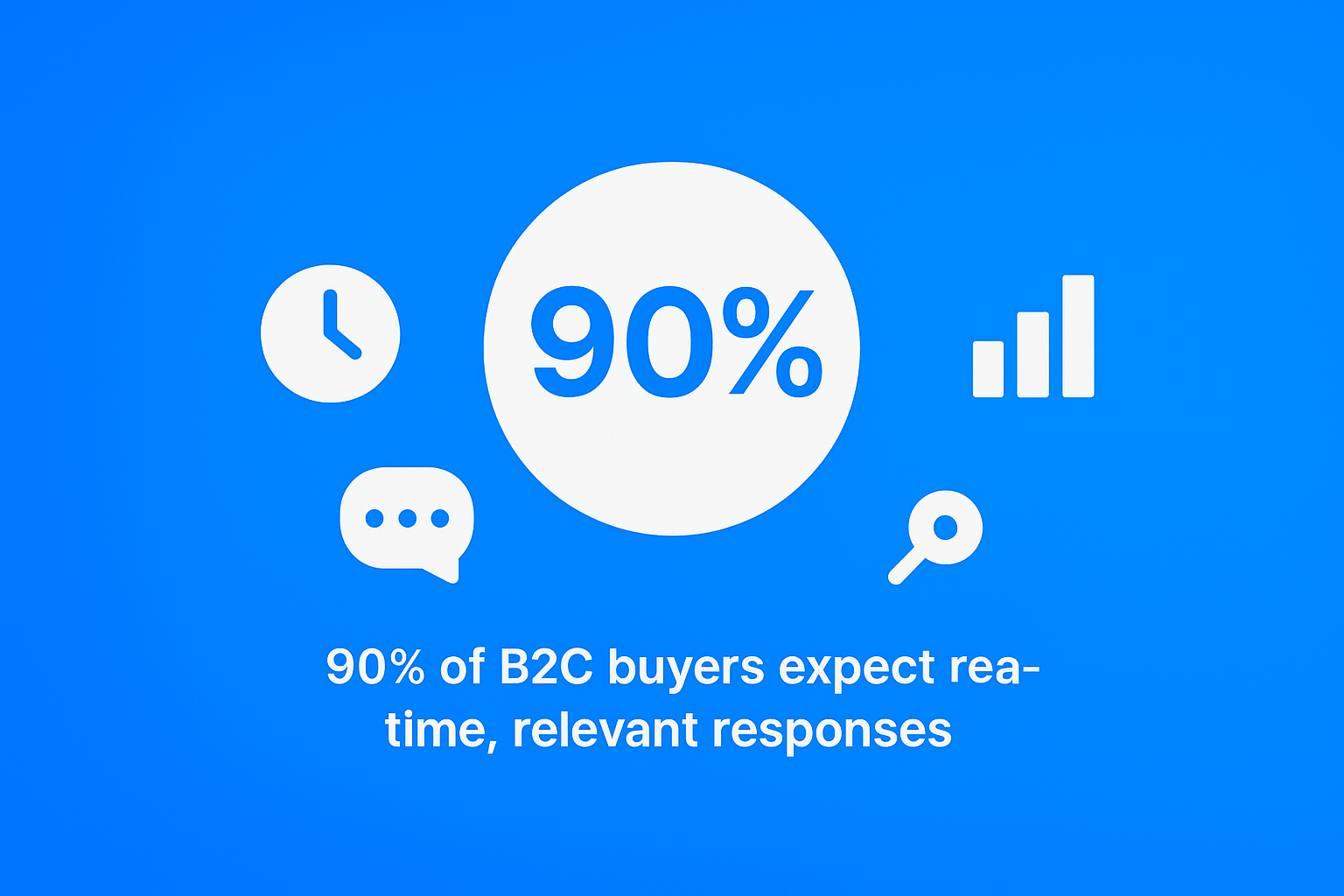
And with 90% of B2C buyers expecting real-time, relevant responses — automation is no longer a luxury.

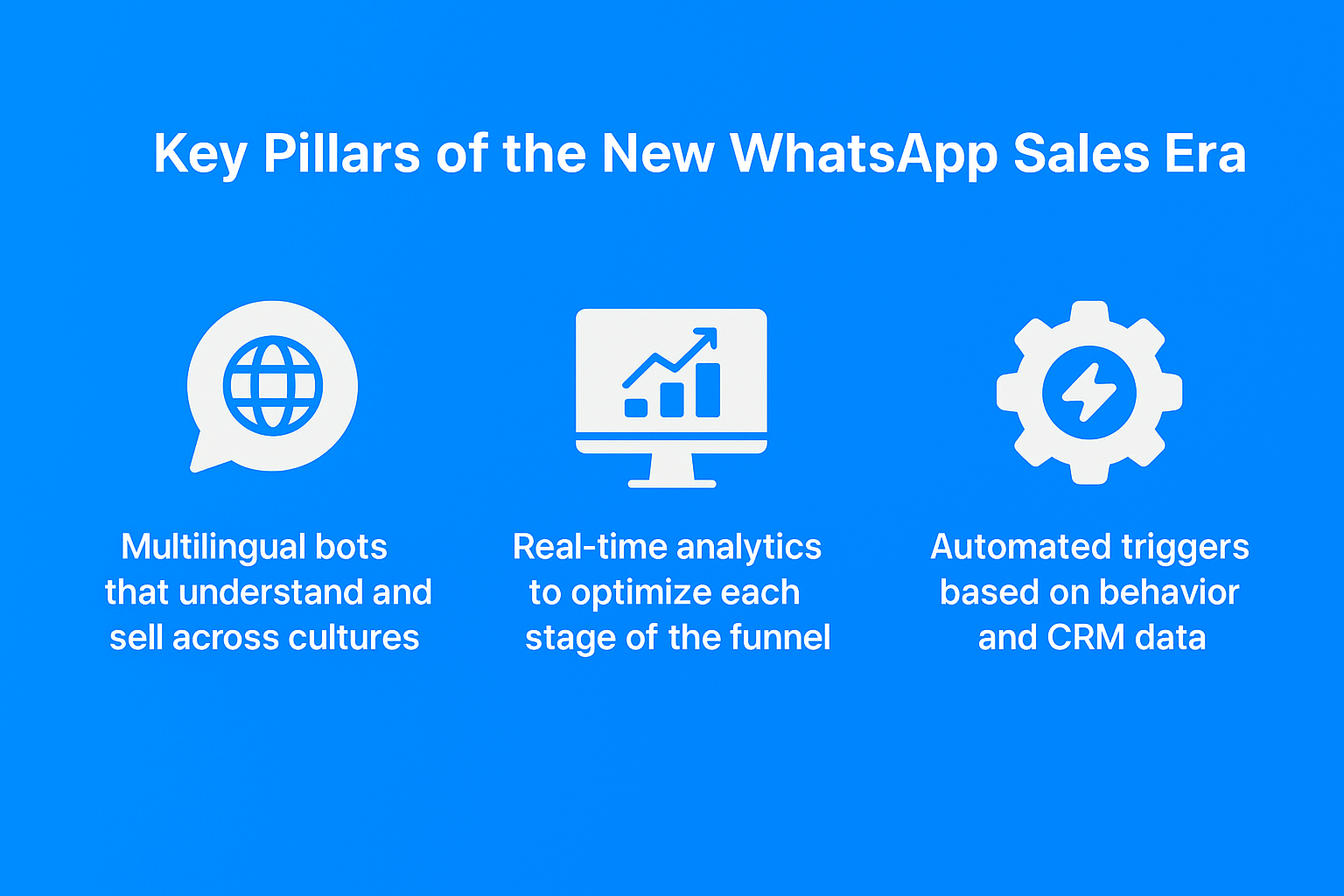
Key pillars of the new WhatsApp sales era

  • Multilingual bots that understand and sell across cultures
  • Real-time analytics to optimize each stage of the funnel
  • Automated triggers based on behavior and CRM data

How Appgain Powers AI-Driven WhatsApp Sales

Appgain’s stack is built for modern, conversion-focused messaging. Here’s how it works:

 1. Multilingual AI Chatbots

Appgain bots can detect language, region, and user intent — then respond accordingly.
Examples:

  • Spanish buyer? Product description + checkout in Spanish.
  • Saudi customer? Conversational flow in Arabic dialect.
  • French user? Offers tailored for EU shipping zones.

All from one unified bot engine.

 2. Behavior-Based Funnel Automation


With Appgain’s Automation Builder and CRM Segments:

  • Cart abandoned? Trigger a timed WhatsApp nudge
  • Product viewed but not purchased? Recommend similar items
  • Past buyer? Offer loyalty rewards or restock alerts

Every funnel stage is mapped and automated — no manual follow-up required.

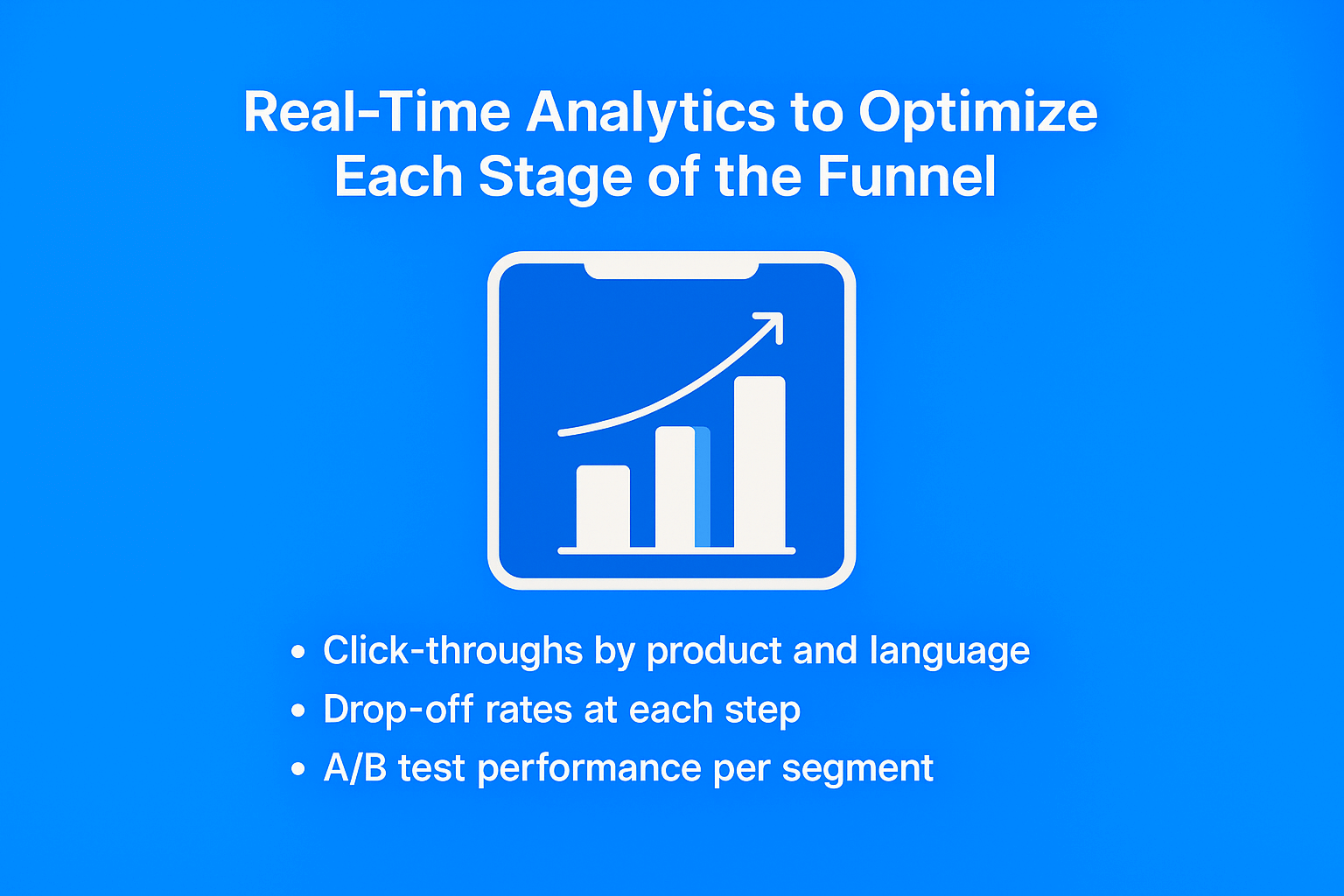
3. Analytics That Drive Conversions

Integrated dashboards track:

  • Click-throughs by product and language
  • Drop-off rates at each step
  • A/B test performance per segment

Use these insights to refine content, timing, and targeting — all in real time.

Syncing It All with n8n

n8n acts as the automation brain behind the scenes.
Here’s how it powers seamless, AI-driven sales journeys:

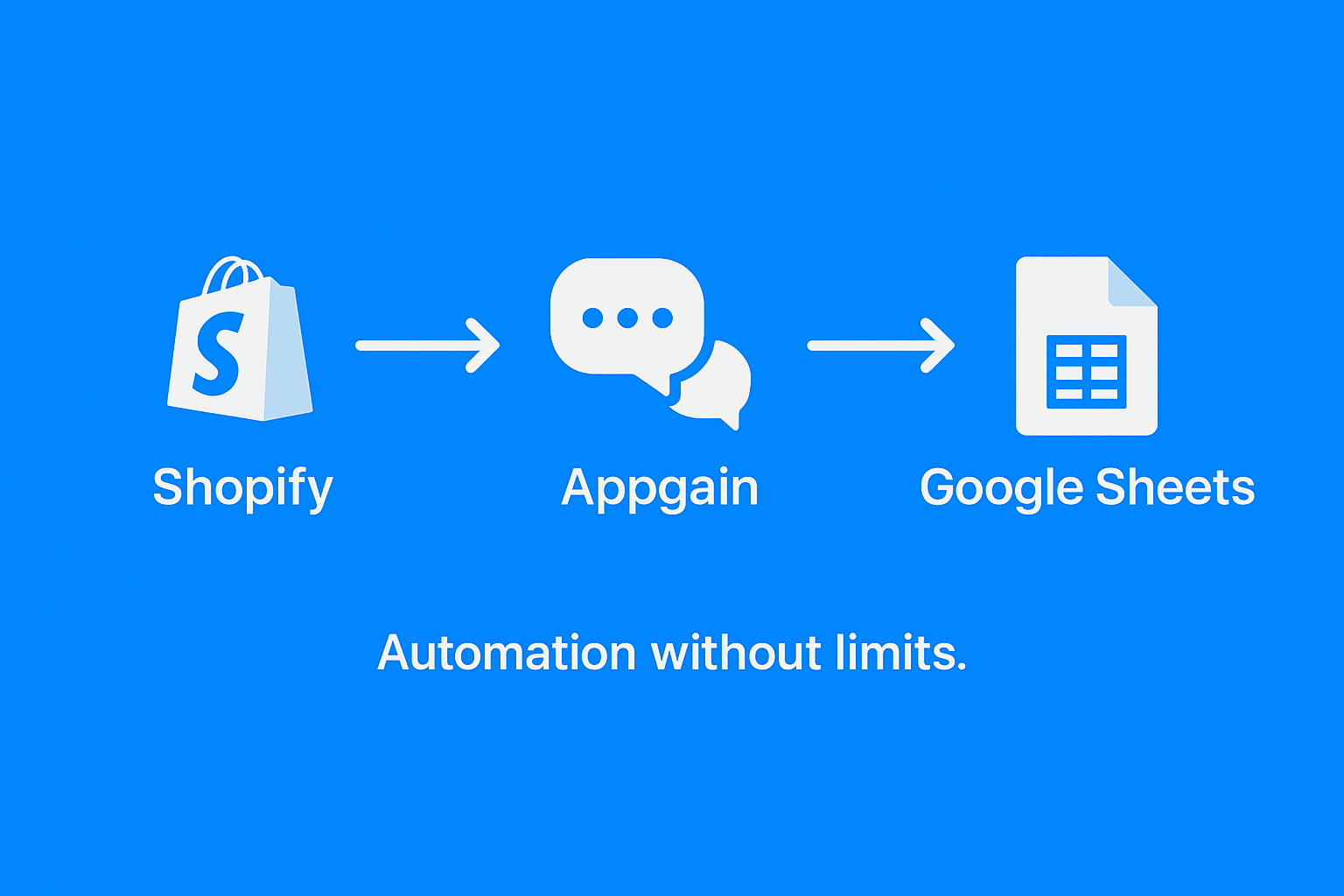
  • Sync CRM data (e.g., Shopify, HubSpot) into Appgain
  • Use conditions (e.g., cart total > $100) to trigger WhatsApp flows
  • Log replies, purchases, and outcomes into Google Sheets or analytics tools
  • Enrich responses using OpenAI to tailor messages dynamically

It’s automation without limits — designed for teams who want to scale without adding headcount.

Real Results in B2C & eCommerce

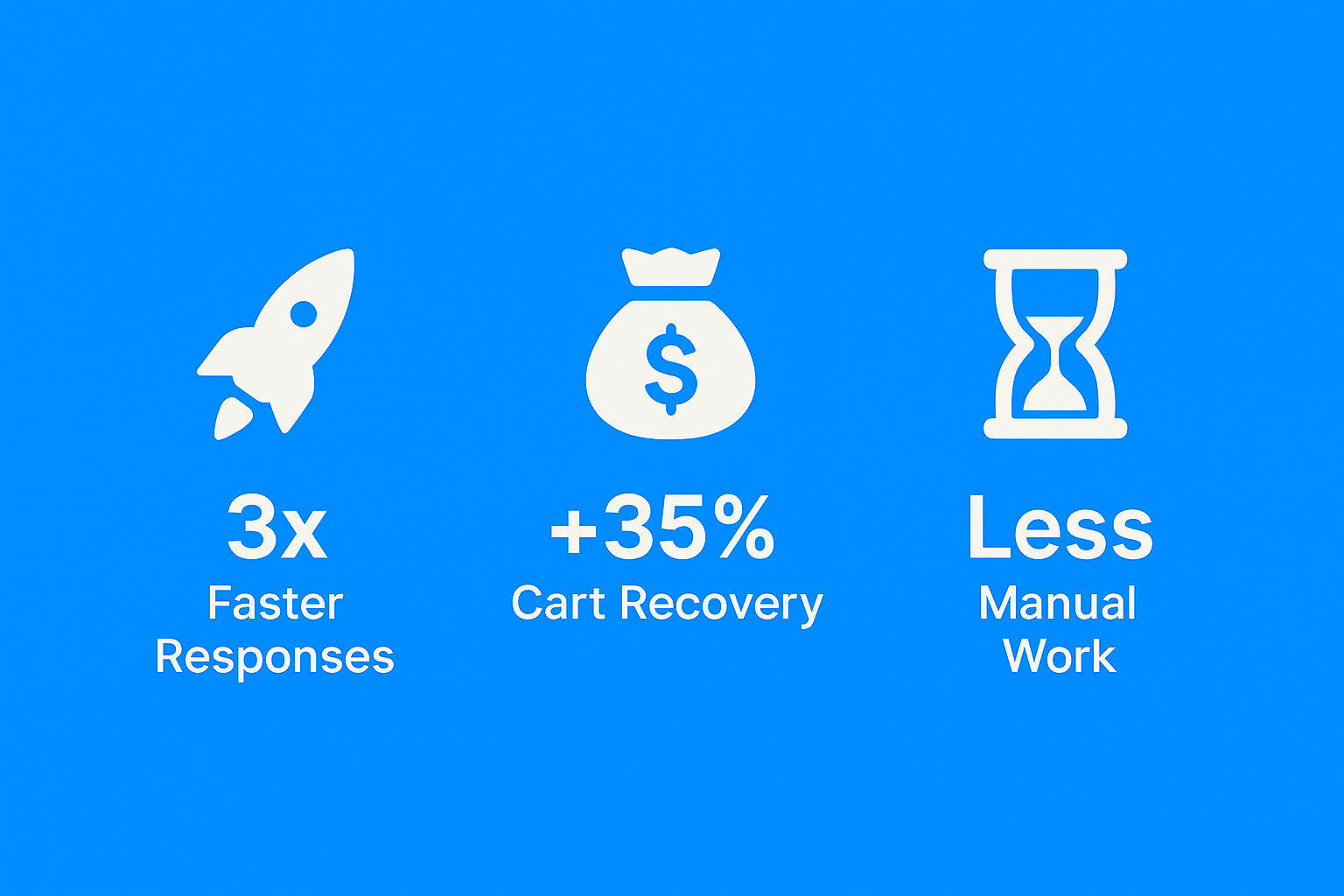
Businesses using this model have seen:

  • 3x faster response times
  • 20–35% increase in cart recovery rates
  • Massive reduction in manual outreach and follow-ups

Instead of hiring 10 agents, you deploy one multilingual bot — available 24/7 — on your customer’s favorite app.

The Bottom Line

WhatsApp isn’t just a chat app anymore — it’s your fastest path to smarter, scalable sales.
When powered by AI and automation, it becomes a 24/7 sales engine that speaks every language, understands every customer, and never misses an opportunity.

With Appgain, you’re not just sending messages — you’re building conversations that convert.
You get:

  • A multilingual AI chatbot that sells like your best agent

  • Automation workflows that recover carts and close sales

  • Real-time analytics to optimize every step

  • Messaging infrastructure built to scale without limits

The result? Higher conversions, lower costs, and happier customers — all on the app they already trust most.

So the question isn’t if you should automate sales on WhatsApp.
It’s how soon you’ll start.

? Ready to see it in action? [Book a demo today.]
? Prefer a quick chat? [Contact us directly on WhatsApp].

WhatsApp Automation = 98% Open Rate – Here’s Why It Works

98%. That’s the average open rate for WhatsApp messages.
Not emails. Not SMS.
WhatsApp.

In a world full of unopened emails and ignored push notifications, WhatsApp is the rare channel where people actually read, react, and respond — often within seconds.

That’s why the smartest brands are embracing WhatsApp marketing automation — not just as a support channel, but as their primary engagement and sales engine.


WhatsApp-First: A Shift in Marketing Strategy

Your audience isn’t in their inbox anymore. They’re on WhatsApp — chatting with friends, family, and yes, businesses.
That’s what makes it powerful.

WhatsApp-first means you lead the customer journey from chat, not email. From personalized messages, not generic ads.
It’s a shift from broadcasting to real-time conversation — and it’s working.


The Power of WhatsApp Automation

Manual replies don’t scale. One-off messages don’t convert.
But automation on WhatsApp? That’s where the magic happens.

With the right stack, you can:

  • Build Conversational Flows
    Answer questions, qualify leads, and guide users — without a human.

  • Send Broadcast Campaigns
    Reach thousands with dynamic offers, images, and CTAs.

  • Segment Your Audience
    Target based on CRM tags, abandoned carts, past purchases, or location.

Learn more about CRM Segmentation and Cart Recovery on WhatsApp

This isn’t just fast. It’s effective.


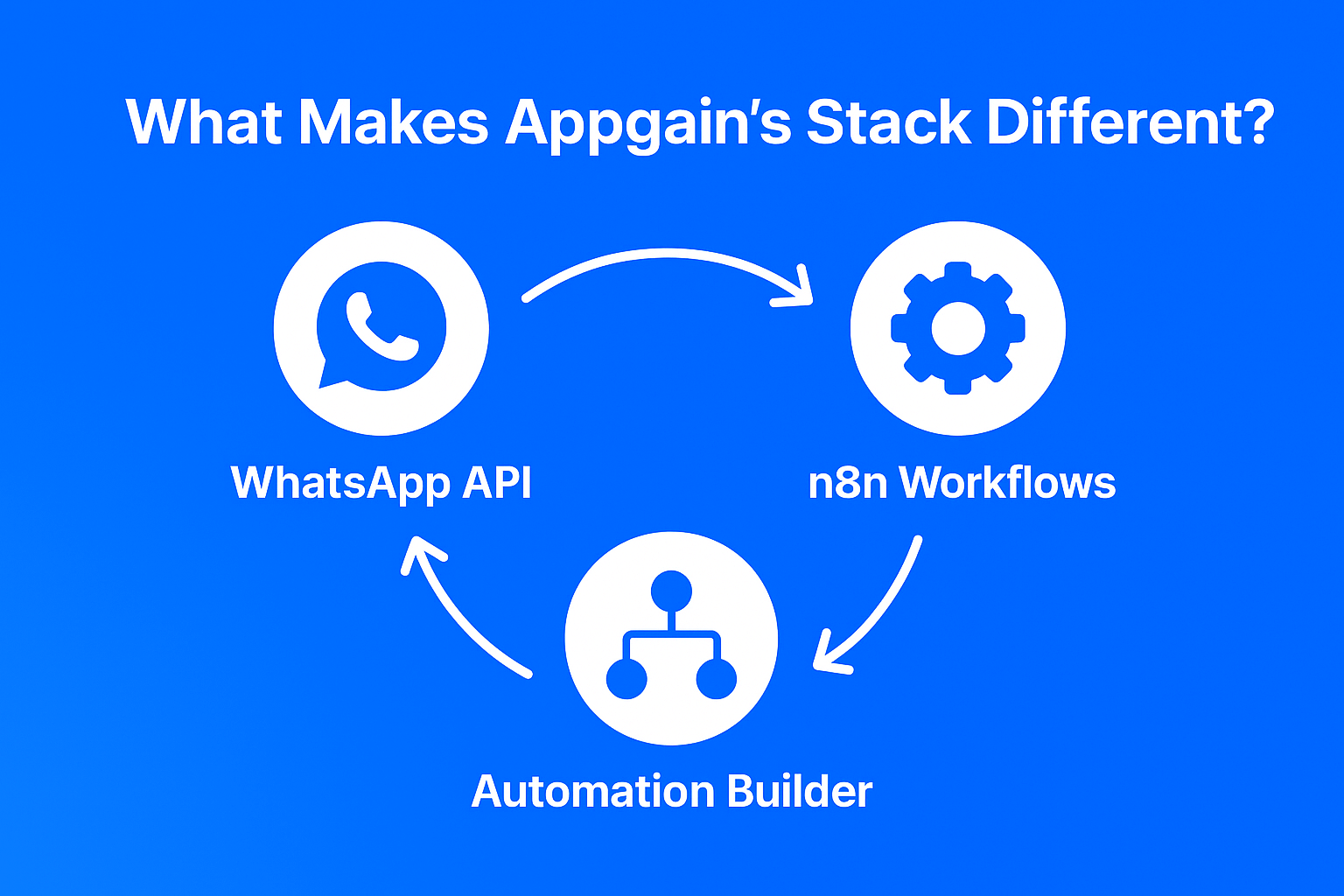
What Makes Appgain’s Stack Different?

With Appgain’s WhatsApp Business API, Automation Builder, and n8n integration, marketers can design custom flows that run 24/7 — and convert better.

Here’s how it works:

  • WhatsApp API – Send rich, verified messages with images, buttons, and personalized offers.

  • Automation Builder – Create flows triggered by user actions or CRM events — no code needed.

  • n8n Workflows – Connect your store, CRM, email, analytics, and more — all in one visual automation engine.

(Source: [Meta Business](https://business.whatsapp.com/))

The result? Your marketing becomes proactive, data-driven, and personalized.


From Cart to Conversion: WhatsApp Automation in Action

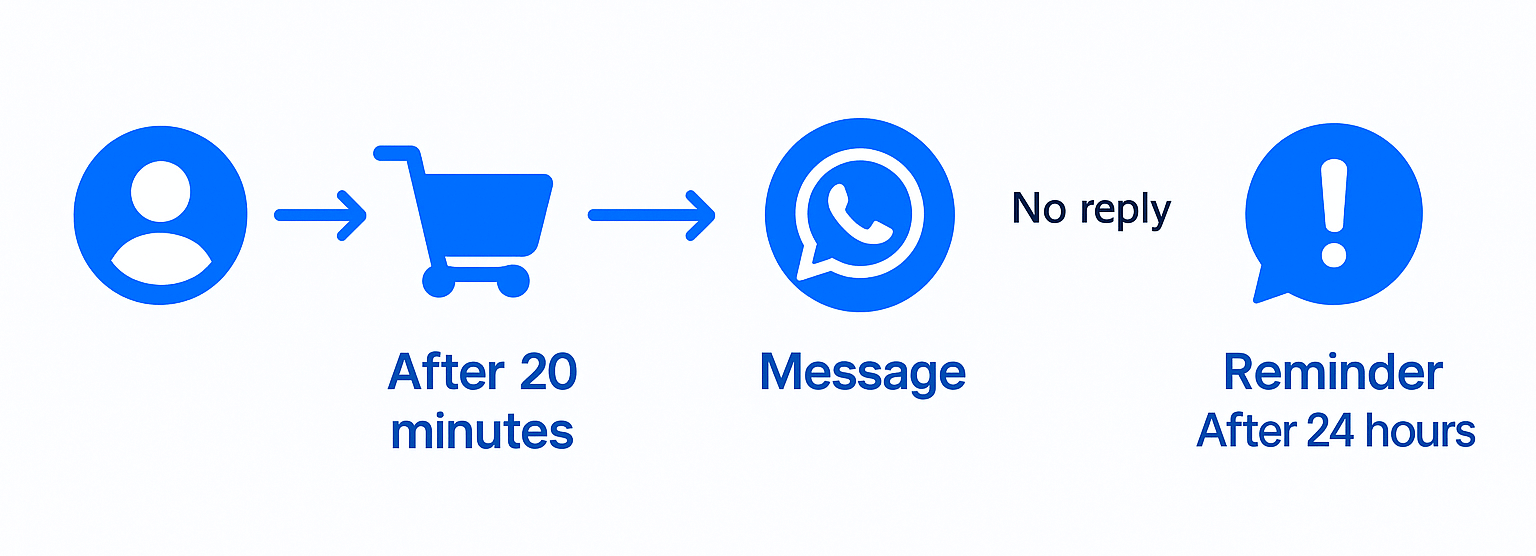
Let’s say a shopper browses your fashion store and adds a denim jacket to their cart, then leaves.

Here’s what your Appgain-powered workflow can do:

  • Trigger: Abandoned cart after 20 minutes

  • Message (WhatsApp):
    “Still thinking about that denim jacket? Here’s 15% off – valid for the next 3 hours.”

  • Action: If no reply in 24h, follow up with low-stock urgency.

This isn’t just messaging — it’s sales automation that feels human.


Why WhatsApp‑First Automation Works

  • Unmatched Open Rates – 98%+ average

  • Higher Conversions – Personalized journeys outperform static funnels

  • Reduced Manual Effort – Let automation handle the heavy lifting

  • Real-Time Engagement – No waiting. No friction. No leaks in the funnel.


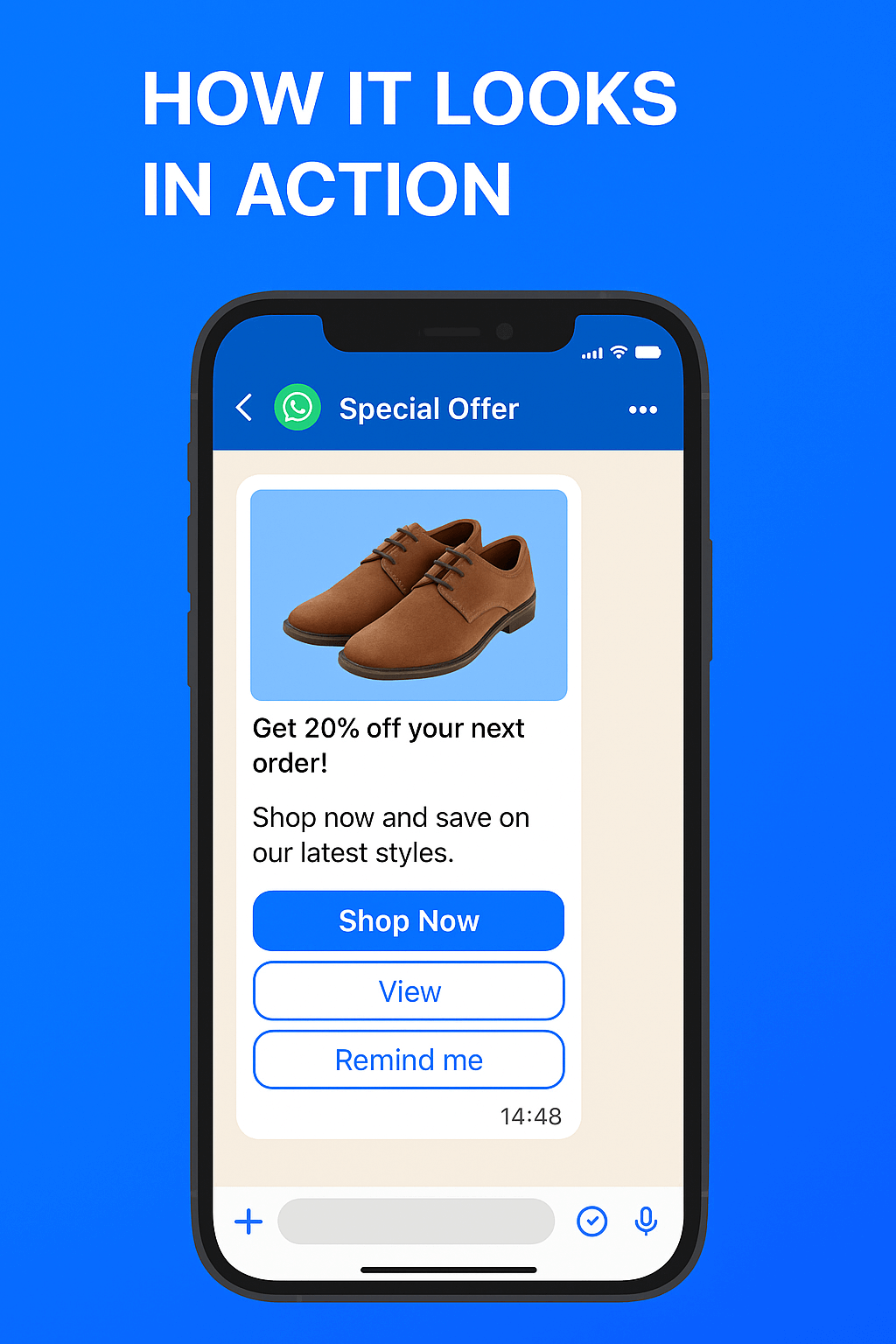
How It Looks in Action

 Imagine this:
A customer opens WhatsApp and finds a rich, branded message with a special offer — complete with image, CTA button, and reply options.

Behind the scenes, your flow tracks who clicked, who bought, and who needs a reminder.

 Overlay this with automation icons and stats like:
“WhatsApp Automation = 98% Open Rate”

That’s not just marketing. That’s precision.


Want to Try It for Your Business?

Whether you’re in e-commerce, retail, or education, WhatsApp-first automation will:

  • Save you time

  • Boost your ROI

  • And make every message count


Don’t just send messages.
Build journeys. Convert leads. Own the conversation.
With Appgain.


? Have questions or want to see it in action?
Our team is ready to help you experience the power of WhatsApp-first automation — tailored to your business goals.

? Chat with us on WhatsApp

Let’s build your first WhatsApp-first campaign — together..