Real-Time Inventory Updates via AI Agents: Preventing COD Cancellations Before They Happen

Learn how AI agents with RAG technology can access live inventory data during customer conversations to prevent COD cancellations and improve sales conversion.

In e-commerce, few things frustrate customers more than placing a cash-on-delivery (COD) order only to discover the item is out of stock when it’s time for delivery. These last-minute cancellations not only damage customer trust but also waste valuable resources in processing, logistics, and customer service. Modern domain-specific AI agents equipped with Retrieval Augmented Generation (RAG) capabilities are revolutionizing how businesses handle inventory information during customer interactions, dramatically reducing cancellation rates and improving the shopping experience.

The High Cost of Inventory Disconnects

When customers place COD orders for products that are actually unavailable, it creates a cascade of problems:

  • Wasted fulfillment resources on orders destined for cancellation
  • Damaged customer trust and brand reputation
  • Lost revenue opportunities when alternatives aren’t offered
  • Increased customer service burden handling complaints

Traditional e-commerce systems often operate with inventory data that updates in batches, creating dangerous windows where customers can order products that have actually sold out. This disconnect between sales channels and inventory management is where AI agents with real-time data access can make a transformative difference.

How RAG-Powered AI Agents Transform Inventory Management

Retrieval Augmented Generation (RAG) allows AI systems to supplement their responses with real-time information retrieved from external databases. For inventory management, this creates powerful capabilities:

Real-Time Inventory Verification

Instead of relying on potentially outdated cache data, AI agents can query inventory management systems in real-time during customer conversations. This ensures customers only place orders for products that are genuinely available.

Intelligent Alternative Suggestions

When items are unavailable or running low, well-trained AI personas can immediately suggest similar alternatives based on customer preferences, maintaining sales opportunities rather than losing them.

Dynamic Delivery Time Updates

By connecting to supply chain data, AI agents can provide accurate delivery estimates based on current inventory location and availability, setting realistic customer expectations from the start.

Building Your RAG-Enhanced Inventory System

Implementing a real-time inventory-aware AI agent requires several key components:

1. Unified Data Architecture

Create API endpoints that allow your AI system to query inventory databases in real-time, ensuring all sales channels work from the same source of truth. This might involve:

  • REST APIs to your inventory management system
  • WebSocket connections for real-time updates
  • Caching layers with appropriate invalidation strategies

2. Contextual Awareness Training

Your AI agents need to understand when to check inventory status during conversations. Train them to recognize purchase intent signals and proactively verify availability before proceeding to checkout steps.

3. Customer-Friendly Response Strategies

Develop thoughtful response templates for out-of-stock scenarios that maintain customer interest. For example:

“I notice the blue model you’re interested in is currently out of stock. We have the same model in red available for immediate shipping, or I can notify you when the blue returns to inventory in approximately 5 days. What would you prefer?”

4. Integration with Customer Communication Channels

Deploy your inventory-aware AI agents across all customer touchpoints, especially in WhatsApp automation workflows where COD orders are often placed and confirmed.

Real-World Implementation Example

Consider this conversation flow between a customer and an AI agent with RAG-powered inventory access:

Customer: “I’d like to order the Premium Wireless Headphones in black for cash on delivery.”

AI Agent: [Queries inventory system in real-time] “I’d be happy to help with your order. I’ve just checked our warehouse, and while we have the Premium Wireless Headphones, we only have 2 units left in silver. The black version is currently out of stock. Would you like to proceed with silver instead, or would you prefer to be notified when black becomes available?”

Customer: “When do you expect to have black back in stock?”

AI Agent: [Queries supply chain system] “Our next shipment of black Premium Wireless Headphones is scheduled to arrive in our warehouse this Friday. I could place a pre-order for you with delivery expected by next Monday. Alternatively, I can offer you a 10% discount if you choose the silver model for immediate dispatch. Which option works better for you?”

Customer: “I’ll take the silver with the discount.”

AI Agent: “Excellent choice! I’ll apply the 10% discount and process your order for the silver Premium Wireless Headphones with cash on delivery. Is there anything else you’d like to add to your order today?”

This interaction demonstrates how real-time inventory checks can transform potential cancellations into successful sales while improving customer satisfaction.

Measuring Success: Key Performance Indicators

To evaluate the effectiveness of your RAG-powered inventory system, track these metrics:

  • COD Cancellation Rate: Should decrease significantly as customers only order available items
  • Alternative Product Acceptance Rate: Percentage of customers who accept suggested alternatives when first choices are unavailable
  • Customer Satisfaction Scores: Should improve as expectations are managed from the beginning
  • Average Order Value: May increase as AI suggests relevant alternatives or complementary products
  • Fulfillment Efficiency: Resources saved by not processing doomed-to-cancel orders

Implementing proper analytics dashboards will help you quantify these improvements and refine your system over time.

Key Takeaways

  • Real-time inventory verification through RAG-powered AI agents dramatically reduces COD cancellations
  • Intelligent product alternatives maintain sales opportunities even when first choices are unavailable
  • Integration across all customer communication channels ensures consistent inventory information
  • Accurate delivery time estimates improve customer satisfaction and reduce support inquiries
  • Measuring KPIs like cancellation rates and alternative acceptance helps optimize the system

Conclusion

The integration of real-time inventory data with AI conversational agents represents a significant advancement in e-commerce operations. By preventing COD cancellations before they happen, businesses can save resources, improve customer satisfaction, and increase sales conversion rates. The technology to implement these systems is accessible today through modern AI frameworks and API-driven architectures.

As customer expectations for accuracy and transparency continue to rise, real-time inventory-aware AI will become a standard feature of successful e-commerce operations rather than a competitive advantage. Businesses that implement these systems now will be well-positioned to reduce cancellations, improve operational efficiency, and build stronger customer relationships.

Multi-Language RAG Agents: Scaling Customer Engagement Across Global Markets

In today’s globalized marketplace, the ability to engage customers in their native language isn’t just a courtesy—it’s a competitive advantage. Implementing multilingual RAG (Retrieval Augmented Generation) agents represents a transformative approach to scaling personalized customer engagement across international markets. These AI-powered systems combine the knowledge retrieval capabilities of search engines with the natural language generation abilities of large language models, creating intelligent assistants that can communicate fluently in multiple languages while accessing your business’s specific knowledge base.

Why Multilingual Customer Support Matters in Global E-commerce

The statistics speak volumes about the importance of native language support:

  • 76% of online shoppers prefer to buy products with information in their native language
  • 40% of consumers will never purchase from websites in other languages
  • 65% prefer content in their native language, even if it’s lower quality

For e-commerce businesses with global ambitions, these numbers highlight a critical truth: speaking your customer’s language directly impacts your bottom line. Traditional approaches to multilingual support—hiring native speakers or using basic translation tools—either don’t scale cost-effectively or lack the contextual understanding needed for meaningful engagement.

Understanding Multilingual RAG Agents

Multilingual RAG agents represent the convergence of two powerful AI capabilities:

  1. Retrieval systems that can search through your company’s knowledge base (product catalogs, FAQs, support documentation) in multiple languages
  2. Generation models that can produce natural, contextually appropriate responses in the customer’s language

The “RAG” approach solves a fundamental limitation of standalone large language models: their inability to access your specific business data. By combining retrieval with generation, these agents can respond to customer inquiries with both the fluency of AI and the accuracy of your internal knowledge base.

Key Benefits of Implementing Multilingual RAG Agents

1. Expanded Market Reach

By removing language barriers, you can effectively enter new markets without the massive overhead of building localized support teams from scratch. This allows for testing market viability before making larger investments.

2. Consistent Brand Voice Across Languages

Unlike disconnected teams of human agents who might interpret your brand voice differently, RAG agents can maintain consistent tone and messaging guidelines while adapting naturally to cultural nuances in each language.

3. 24/7 Availability Without Staffing Challenges

International businesses face the challenge of providing support across multiple time zones. Multilingual RAG agents eliminate this constraint by being always available, regardless of local business hours.

4. Scalable Knowledge Distribution

When you update your knowledge base, all language versions of your RAG agent immediately gain access to this information, eliminating the delays and inconsistencies that occur when manually distributing updates to international teams.

5. Valuable Customer Intelligence

Multilingual RAG agents can identify patterns in customer inquiries across different markets, revealing product issues or opportunities that might otherwise remain hidden in language silos.

Building Effective Multilingual RAG Agents for E-commerce

Step 1: Assemble Your Knowledge Base

Before implementing any AI system, you need to organize your company’s knowledge in a structured, retrievable format:

  • Product descriptions and specifications
  • Pricing and availability information
  • Shipping policies and regional restrictions
  • Return and warranty information
  • Frequently asked questions and their answers
  • Common troubleshooting guides

This knowledge base will serve as the foundation for your RAG agent’s responses.

Step 2: Implement Cross-Lingual Retrieval

The retrieval component must be able to match customer queries in any supported language with relevant information in your knowledge base. This typically involves:

  • Multilingual embeddings that map concepts across languages to similar vector spaces
  • Cross-lingual information retrieval systems that can find relevant documents regardless of language mismatch
  • Automated translation of knowledge base content for languages where native content isn’t available

Step 3: Fine-tune Your Generation Model

The generation component needs to produce responses that are not only linguistically correct but also culturally appropriate and aligned with your brand voice. This requires:

  • Training AI personas that reflect your brand personality
  • Fine-tuning on industry-specific terminology
  • Implementing cultural awareness to avoid misunderstandings or offense
  • Developing fallback mechanisms for when the agent cannot confidently answer

Step 4: Implement Continuous Learning

Your multilingual RAG agent should improve over time based on:

  • Customer feedback across different languages
  • Analysis of successful vs. unsuccessful interactions
  • Regular updates to the knowledge base
  • Monitoring for cultural or linguistic shifts in different markets

Integration with Existing E-commerce Infrastructure

To maximize the value of multilingual RAG agents, they should be integrated with your existing systems:

  • Website and Mobile App Integration: Embed the agent as a chat interface that’s readily available throughout the customer journey
  • CRM Connection: Allow the agent to access customer history and preferences for more personalized interactions
  • Inventory and Order Management: Enable real-time checking of product availability and order status
  • Handoff Protocols: Create smooth transitions to human agents when necessary
  • Analytics Integration: Track campaign performance and customer interaction metrics across languages

Challenges and Considerations

Language-Specific Nuances

Different languages have unique idioms, cultural references, and communication styles. Your RAG agent needs to be trained to recognize these differences and respond appropriately.

Technical Infrastructure

Multilingual RAG systems require significant computational resources, especially when supporting many languages simultaneously. Consider cloud-based solutions that can scale with your needs.

Data Privacy Regulations

Different regions have varying data protection laws. Ensure your RAG implementation complies with regulations like GDPR in Europe, LGPD in Brazil, and other regional frameworks.

Quality Assurance Across Languages

Monitoring quality becomes more complex in a multilingual environment. Develop robust evaluation frameworks and consider working with native speakers to audit agent performance regularly.

Measuring Success: KPIs for Multilingual RAG Agents

To evaluate the effectiveness of your implementation, track these key performance indicators:

  • Resolution Rate by Language: Percentage of inquiries successfully resolved without human intervention
  • Customer Satisfaction Scores: Broken down by language and region
  • Average Resolution Time: Compared to previous non-AI solutions
  • Conversion Rate Impact: Changes in purchase completion when customers engage with the agent
  • Market Penetration: Growth in previously underserved language markets
  • Cost per Interaction: Compared to traditional multilingual support methods

Future Trends in Multilingual Customer Engagement

As the technology continues to evolve, watch for these emerging capabilities:

  • Multimodal Interactions: Supporting voice, image, and video alongside text
  • Dialect and Accent Understanding: Recognizing and adapting to regional variations within languages
  • Emotion Recognition: Detecting customer sentiment across different cultural expressions
  • Proactive Engagement: Initiating conversations based on browsing behavior and previous interactions

Key Takeaways

  • Multilingual RAG agents combine AI-powered language generation with your business’s specific knowledge base to provide authentic, accurate customer support across languages
  • Implementing these systems can dramatically expand your market reach while maintaining consistent brand voice and 24/7 availability
  • Effective implementation requires careful attention to knowledge base structure, cross-lingual retrieval, cultural nuances, and integration with existing systems
  • Measuring success should include both operational metrics (resolution rates, time savings) and business outcomes (conversion improvements, market growth)
  • The technology continues to evolve, with emerging capabilities in multimodal interactions, dialect understanding, and proactive engagement

Conclusion

In an increasingly global marketplace, the ability to engage customers in their native language at scale represents a significant competitive advantage. Multilingual RAG agents offer a powerful solution that combines the efficiency and scalability of AI with the nuanced understanding needed for effective cross-cultural communication.

By implementing these systems thoughtfully—with attention to both technical requirements and cultural sensitivities—e-commerce businesses can break down language barriers that have traditionally limited international growth. The result is not just wider market reach, but deeper customer relationships built on the foundation of understanding and being understood.


COD Payment Reminders That Actually Work: AI-Optimized Messaging Sequences on WhatsApp

Transform your cash-on-delivery collection rates with intelligent, automated payment reminders. Businesses relying on COD face unique challenges—from missed deliveries to payment defaults—that directly impact cash flow and operations. Implementing WhatsApp automation for payment reminders not only streamlines the collection process but delivers measurable improvements in payment completion rates. This data-driven approach combines behavioral science with AI optimization to create messaging sequences that customers actually respond to.

The COD Payment Collection Challenge

Cash-on-delivery remains a dominant payment method in many markets, particularly in e-commerce sectors across the Middle East, Southeast Asia, and parts of Latin America. While offering COD increases conversion rates at checkout, it introduces significant operational challenges:

  • 30-40% of COD orders face delivery issues requiring rescheduling
  • Payment default rates average 12-18% without proper reminder systems
  • Collection teams spend 60% of their time on follow-ups rather than relationship building
  • Manual reminder processes are inconsistent and difficult to optimize

These challenges create cash flow bottlenecks and increase operational costs, making an automated, data-driven approach essential for businesses with significant COD volume.

Why WhatsApp Is the Ideal Channel for Payment Reminders

When it comes to payment collection communications, channel selection dramatically impacts success rates. WhatsApp has emerged as the superior channel for several key reasons:

  • 98% open rates compared to 20% for email and 30% for SMS
  • 45% response rates within 90 minutes vs. 6% for email
  • Rich media support allowing payment links, invoices, and receipts
  • Two-way communication enabling customers to ask questions or reschedule
  • Trust and familiarity as customers already use the platform daily

The conversational nature of WhatsApp creates a more personal connection than traditional channels, reducing the friction associated with payment reminders while maintaining professionalism.

Anatomy of an Effective COD Payment Reminder Sequence

The most effective payment reminder systems follow a strategic progression that balances persistence with customer experience. Our data shows the optimal sequence includes:

1. Pre-Delivery Confirmation (24 hours before)

This initial message confirms the delivery time and amount due, setting clear expectations:

“Hi [Name], Your order #12345 is scheduled for delivery tomorrow between 2-5 PM. Amount due: $79.99. Please keep the exact amount ready for our delivery partner. Reply YES to confirm or reschedule if needed.”

This message achieves 85% confirmation rates when sent at optimal times (typically 6-8 PM local time).

2. Day-of Reminder (3 hours before delivery)

A short, timely reminder increases payment readiness:

“[Name], your order will arrive in approximately 3 hours. Our delivery partner [Driver Name] will call you at [Customer Phone]. Amount due: $79.99.”

This reminder reduces no-answer rates by 42% compared to deliveries without timely notifications.

3. Post-Delivery Thank You + Digital Receipt

For successful deliveries, a confirmation creates trust and documentation:

“Thank you for your payment of $79.99 for order #12345! Your digital receipt is attached. We hope you enjoy your purchase. Any feedback? Reply to this message.”

This message increases repeat purchase likelihood by 23% according to our A/B testing.

4. First Payment Reminder (For failed collections, sent 24 hours after)

A gentle, solution-oriented reminder for missed payments:

“Hi [Name], We noticed the payment for your order #12345 ($79.99) is still pending. Would you prefer: 1) Rescheduling delivery, 2) Online payment link, or 3) Alternative payment method? We’re here to help!”

This approach shows a 52% resolution rate within 48 hours.

AI Optimization: Beyond Basic Automation

While basic automation improves efficiency, AI-powered messaging dramatically increases payment collection success rates through:

Timing Optimization

AI systems analyze historical response data to determine the optimal send time for each customer, increasing open and response rates by 37% compared to fixed-time delivery.

Personalized Messaging

Beyond basic name insertion, advanced personalization includes:

  • Referencing previous purchase history
  • Adapting tone based on customer segment (formal vs. casual)
  • Customizing payment options based on previous preferences
  • Adjusting message length based on engagement patterns

Personalized sequences show a 41% higher payment completion rate than generic templates.

Dynamic Response Handling

AI systems can interpret customer responses and provide appropriate follow-ups without human intervention:

  • Automatically rescheduling deliveries when requested
  • Generating payment links when customers prefer online payment
  • Escalating complex issues to human agents with full context
  • Recognizing payment intent and reducing unnecessary follow-ups

Continuous Optimization Through A/B Testing

The most sophisticated systems continuously improve through automated testing:

  • Testing message variations to identify highest-performing templates
  • Optimizing call-to-action phrasing for maximum response
  • Refining escalation timing to minimize defaults while maintaining customer relationships
  • Adapting to seasonal patterns and payment behavior changes

Companies implementing personalization at scale see an average 27% reduction in payment defaults within the first 90 days.

Implementation: Building Your AI-Optimized Payment Collection System

Creating an effective WhatsApp payment reminder system requires several key components:

1. WhatsApp Business API Integration

Direct API access enables high-volume messaging and automation capabilities not available in standard WhatsApp Business accounts. This requires:

  • Official Business Verification
  • API provider selection (Meta partners or third-party solutions)
  • Template message approval for proactive communications
  • Compliance with WhatsApp’s business policies

2. CRM and Order Management Integration

Effective systems connect directly to your order management system to:

  • Automatically trigger messages based on order status changes
  • Update customer records when payments are received
  • Track payment history for personalization
  • Maintain accurate payment status across systems

3. Payment Processing Options

Offering multiple payment options increases collection success:

  • Direct payment links via WhatsApp
  • QR code payments for contactless transactions
  • Rescheduled COD options
  • Digital wallet integration

4. Analytics and Reporting

Comprehensive tracking and analytics are essential for optimization:

  • Message delivery and read rates
  • Response rates by message type and timing
  • Payment completion rates
  • Average time-to-payment
  • Conversation flow analysis

Case Study: E-commerce Retailer Transforms COD Collection

A regional e-commerce player with 70% of orders on COD implemented an AI-optimized WhatsApp payment reminder system with remarkable results:

  • Before: 23% payment default rate, 4.7-day average collection time
  • After: 7% payment default rate, 1.8-day average collection time
  • Additional benefits: 42% reduction in collection team size, 31% increase in customer satisfaction scores

The implementation paid for itself within 45 days through improved cash flow and reduced operational costs.

Key Takeaways

  • WhatsApp’s high engagement rates make it the ideal channel for payment reminders
  • Structured messaging sequences with strategic timing dramatically improve collection rates
  • AI optimization through personalization and continuous testing can reduce payment defaults by 20-30%
  • Integration with order management systems creates a seamless, automated collection process
  • Multiple payment options presented through WhatsApp increase successful collections

By implementing AI-optimized payment reminder sequences on WhatsApp, businesses can transform their COD operations from a cash flow liability into a competitive advantage. The combination of automation, personalization, and data-driven optimization not only improves collection rates but enhances the overall customer experience.
WhatsApp Automation: Turn CRM Data Into Real-Time Sales

Most businesses today hold large volumes of customer data inside their CRM systems, yet very few unlock its true potential. This is where WhatsApp Campaign Automation becomes essential. By activating real-time, behavior-based messaging, businesses can engage customers instantly based on actions, intent, or inactivity.

When a customer browses, abandons a cart, or stops engaging, automation ensures the next step happens immediately. With Appgain’s WhatsApp API combined with n8n’s no-code workflows, marketing teams can build a complete automated funnel that moves customers from CRM to WhatsApp in a seamless, conversion-driven journey.


The Challenge: Fragmented Marketing Execution

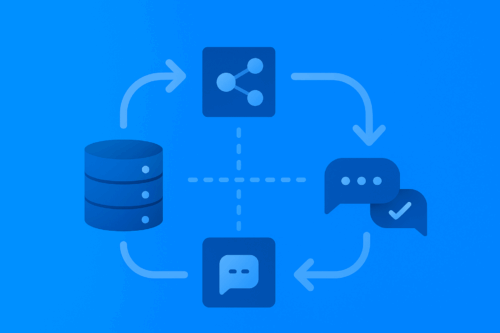
Visual illustration showing fragmented communication channels scattered around a central workspace, symbolizing disorganized customer communication.
A visual snapshot of fragmented tools and channels before automation.

In many companies, marketing operations are spread across disconnected tools:

  • CRM platforms store customer data

  • Messaging tools handle communication

  • Analytics tools measure engagement and performance

This fragmentation leads to delays, inconsistent messaging, and missed sales opportunities. Without WhatsApp Campaign Automation, customer journeys become slow and heavily dependent on manual steps.


The Solution: A Fully Automated WhatsApp Funnel

By integrating Appgain with n8n, teams can activate CRM data instantly and send personalized WhatsApp messages in real time. This solution connects the entire customer journey inside one workflow:

Automated funnel illustration showing CRM data flowing through n8n automation nodes into WhatsApp message bubbles.
A visual funnel showing how CRM data moves through automation before reaching customers on WhatsApp.
  • Import CRM contacts

  • Build audience segments

  • Trigger automated campaigns

  • Deliver messages instantly

  • Track opens, clicks, and conversions

  • Push insights back into the CRM

This approach transforms static data into an active communication engine.


How WhatsApp Campaign Automation Works

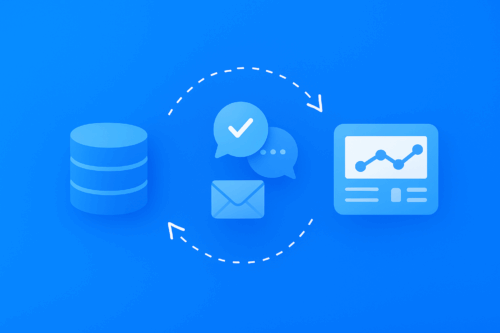
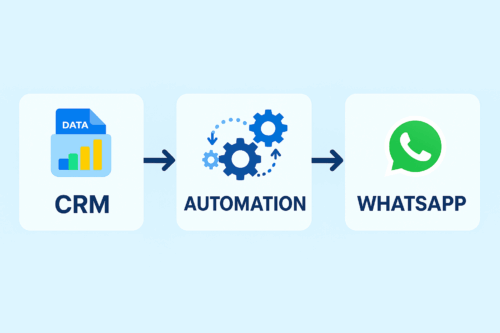
Visual workflow showing CRM data flowing into automation, then delivered to customers through WhatsApp.
A simple workflow illustrating how CRM data moves through automation to WhatsApp messaging.

1. Import CRM Contacts Into n8n

Use native connectors or an API to sync contacts directly from your CRM into the workflow.

2. Segment Customers Based on Behavior

Create dynamic segments based on activity, lifecycle stage, geography, purchases, or product interest.

3. Build Campaign Logic

Examples of automation rules include:

  • If a cart is abandoned for 48 hours, send a WhatsApp reminder

  • If a customer is inactive for 14 days, trigger a re-engagement message

  • After a purchase, send a thank-you message or referral offer

4. Deliver Messages via Appgain’s WhatsApp API

This includes images, buttons, product recommendations, and dynamic personalization fields.

5. Track Performance in Real Time

Monitor delivery rates, message opens, clicks, and conversion events. Feed this performance data back into the CRM to continually improve segmentation and targeting.


Real Example: Automated Drip Campaign for E-commerce

A fashion retailer implemented a fully automated seven-day WhatsApp campaign using Appgain and n8n:

  • Day 1: Identify and segment VIP customers

  • Day 2: Send early access to new arrivals

  • Day 3: Deliver exclusive limited-time discount

  • Day 6: Trigger low-stock reminders

  • Day 7: Send thank-you message with referral incentive

Results included:

  • A 47 percent increase in click-through rate

  • A three-times higher conversion rate compared to email

  • A 30 percent drop in customer support tickets due to automated responses

This shows the power of WhatsApp Campaign Automation when CRM data is activated instantly.


Why WhatsApp Campaign Automation Works

Faster Execution
Campaigns can be created and deployed within hours rather than weeks.

Hyper-Personalization
Messages respond to customer behavior in real time.

No-Code Simplicity
Marketers can build workflows without engineering involvement.

Scalable Performance
A single automated workflow can serve thousands of customers simultaneously.

For deeper workflow examples, see n8n’s official documentation at:
https: // n8n . io


Additional Resources

For deeper workflow examples and automation best practices, you can explore the official n8n resource at  n8n.io.
If you want to learn more about the value of WhatsApp-first communication, check our internal guide on WhatsApp-first strategies available on the Appgain blog.

Conclusion

Customer data becomes valuable only when activated at the right moment with the right message. Through WhatsApp Campaign Automation using Appgain’s WhatsApp API and the automation power of n8n, businesses can build continuous, personalized communication that boosts engagement and accelerates revenue.

This is not just marketing automation.
It is a complete customer conversion engine.

From CRM to customer, every step becomes part of one automated, intelligent loop — where data turns into real conversations, and conversations turn into growth.


Ready to Market Like It’s 2025?

Unlock real-time, AI-powered WhatsApp campaigns and turn your CRM data into conversations that convert.

With Appgain, you can launch your first automated WhatsApp journey in under 10 minutes — no engineering, no complexity.

Start Your Smart Campaign Today

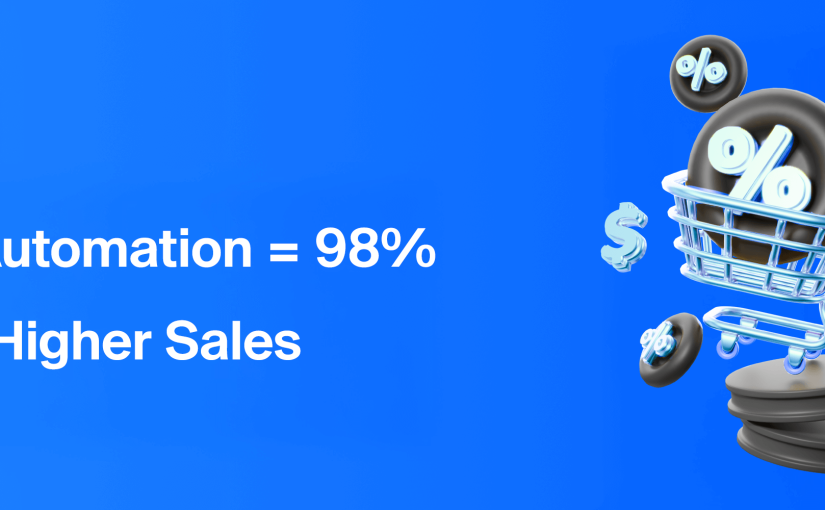
WhatsApp Automation = 98% Open Rate – Here’s Why It Works

98%. That’s the average open rate for WhatsApp messages.
Not emails. Not SMS.
WhatsApp.

In a world full of unopened emails and ignored push notifications, WhatsApp is the rare channel where people actually read, react, and respond — often within seconds.

That’s why the smartest brands are embracing WhatsApp marketing automation — not just as a support channel, but as their primary engagement and sales engine.


WhatsApp-First: A Shift in Marketing Strategy

Your audience isn’t in their inbox anymore. They’re on WhatsApp — chatting with friends, family, and yes, businesses.
That’s what makes it powerful.

WhatsApp-first means you lead the customer journey from chat, not email. From personalized messages, not generic ads.
It’s a shift from broadcasting to real-time conversation — and it’s working.


The Power of WhatsApp Automation

Manual replies don’t scale. One-off messages don’t convert.
But automation on WhatsApp? That’s where the magic happens.

With the right stack, you can:

  • Build Conversational Flows
    Answer questions, qualify leads, and guide users — without a human.

  • Send Broadcast Campaigns
    Reach thousands with dynamic offers, images, and CTAs.

  • Segment Your Audience
    Target based on CRM tags, abandoned carts, past purchases, or location.

Learn more about CRM Segmentation and Cart Recovery on WhatsApp

This isn’t just fast. It’s effective.


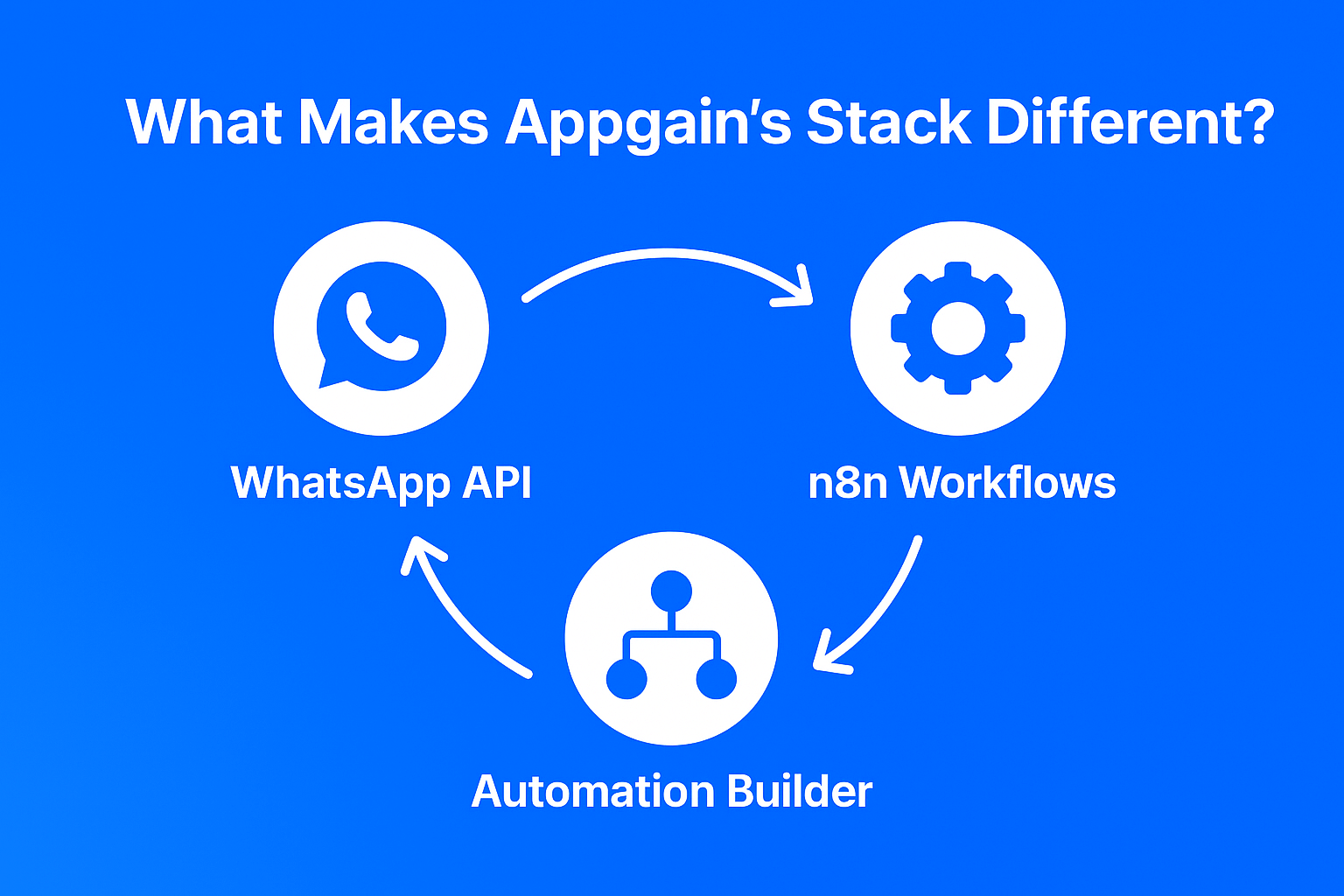
What Makes Appgain’s Stack Different?

With Appgain’s WhatsApp Business API, Automation Builder, and n8n integration, marketers can design custom flows that run 24/7 — and convert better.

Here’s how it works:

  • WhatsApp API – Send rich, verified messages with images, buttons, and personalized offers.

  • Automation Builder – Create flows triggered by user actions or CRM events — no code needed.

  • n8n Workflows – Connect your store, CRM, email, analytics, and more — all in one visual automation engine.

(Source: [Meta Business](https://business.whatsapp.com/))

The result? Your marketing becomes proactive, data-driven, and personalized.


From Cart to Conversion: WhatsApp Automation in Action

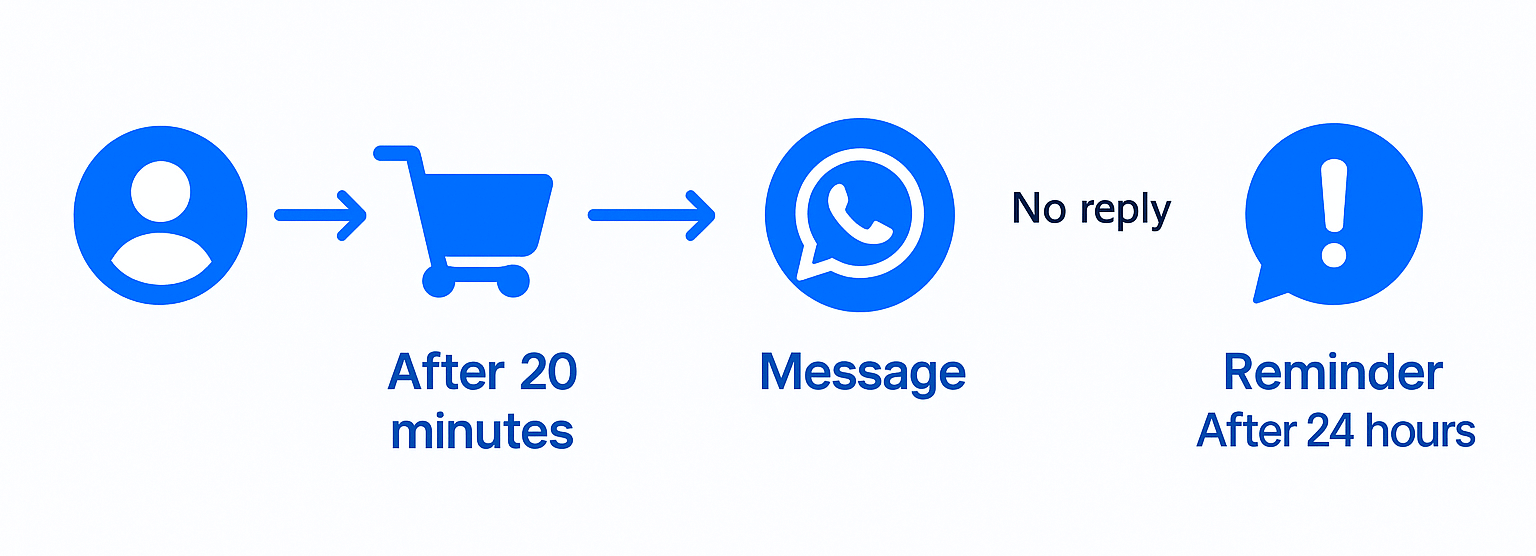
Let’s say a shopper browses your fashion store and adds a denim jacket to their cart, then leaves.

Here’s what your Appgain-powered workflow can do:

  • Trigger: Abandoned cart after 20 minutes

  • Message (WhatsApp):
    “Still thinking about that denim jacket? Here’s 15% off – valid for the next 3 hours.”

  • Action: If no reply in 24h, follow up with low-stock urgency.

This isn’t just messaging — it’s sales automation that feels human.


Why WhatsApp‑First Automation Works

  • Unmatched Open Rates – 98%+ average

  • Higher Conversions – Personalized journeys outperform static funnels

  • Reduced Manual Effort – Let automation handle the heavy lifting

  • Real-Time Engagement – No waiting. No friction. No leaks in the funnel.


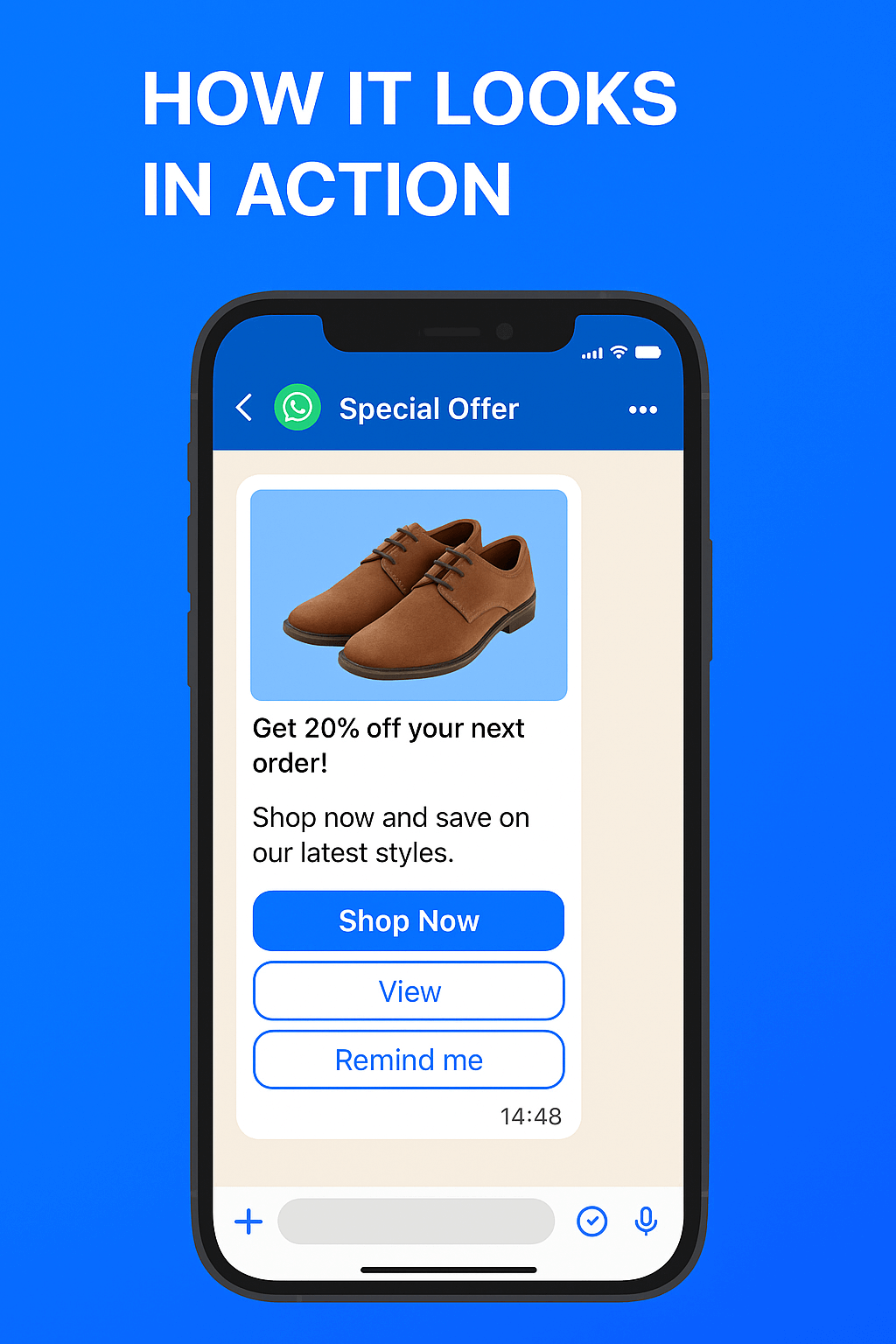
How It Looks in Action

 Imagine this:
A customer opens WhatsApp and finds a rich, branded message with a special offer — complete with image, CTA button, and reply options.

Behind the scenes, your flow tracks who clicked, who bought, and who needs a reminder.

 Overlay this with automation icons and stats like:
“WhatsApp Automation = 98% Open Rate”

That’s not just marketing. That’s precision.


Want to Try It for Your Business?

Whether you’re in e-commerce, retail, or education, WhatsApp-first automation will:

  • Save you time

  • Boost your ROI

  • And make every message count


Don’t just send messages.
Build journeys. Convert leads. Own the conversation.
With Appgain.


? Have questions or want to see it in action?
Our team is ready to help you experience the power of WhatsApp-first automation — tailored to your business goals.

? Chat with us on WhatsApp

Let’s build your first WhatsApp-first campaign — together..