WhatsApp is one of the most effective channels for business communication, yet it enforces strict policies. When companies ignore these rules, their messages may be flagged as spam or their business numbers may face restrictions. Because of that, marketers need a clear method for creating safe, user-friendly WhatsApp messages.
In this guide, you will learn how to use ChatGPT to write compliant WhatsApp messages, how WhatsApp’s spam detection works, and how to test and improve your campaigns with Appgain’s WhatsApp API.
Why WhatsApp Flags Messages
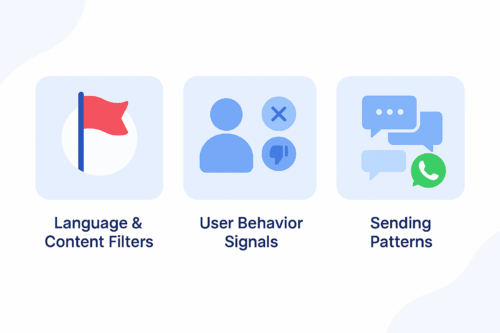
WhatsApp protects users from unwanted or irrelevant content. Its detection system relies on three main components.
1. Language and Content Filters
WhatsApp automatically flags messages that include aggressive sales language, misleading claims, or repetitive promotional formatting.
2. User Behavior Signals
If users frequently block your number, report your messages, or never engage, WhatsApp lowers your sender quality score.
3. Sending Patterns
Sending the same unpersonalized message to large audiences or sending at a high frequency increases the risk of being flagged.
How ChatGPT Helps You Stay Compliant
ChatGPT allows marketers to generate message variations, personalize content, and avoid risky language. When used effectively, it helps you:
-
Avoid spam-triggering words
-
Maintain a conversational and friendly tone
-
Personalize messages at scale
-
Generate safe, compliant WhatsApp templates
Instead of guessing what may cause a message to be flagged, you can use ChatGPT to create structured, user-focused messages based on WhatsApp’s best practices.
Best Practices for Writing WhatsApp Messages
To improve compliance and engagement, follow these principles.
Focus on Value, Not Promotion
Avoid overly pushy sales messages.
Instead of:
“Buy now and get 50% off!”
Try:
“We thought you might like these new arrivals.”
Keep the Tone Conversational
Write naturally and avoid robotic or formal text.
Personalize Whenever Possible
Reference the user’s name, interest, or purchase history to reduce block rates.
Use Soft CTAs
Avoid commands such as “Act now.”
Use gentle guidance like “Would you like to explore the latest items?”
ChatGPT Prompt Examples for Safe WhatsApp Messaging
Use the prompt ideas below to generate compliant message templates:
Cart Reminder
“Write a friendly reminder for a user who left items in their cart. Keep the tone conversational and avoid strong promotional language.”
Personalized Follow-Up
“Create a message for a returning customer based on their last purchase. Offer something relevant without pressure.”
Re-Engagement Prompt
“Write a soft re-engagement message for a customer who has not interacted in 30 days.”
Order Confirmation with Suggestion
“Write an order confirmation message that includes a light suggestion for a related product.”
Limited-Time Announcement
“Create a short message inviting the user to view a relevant campaign without using pushy phrases.”
Testing and Improving with Appgain’s WhatsApp API
Once your messages are ready, you can test their performance using Appgain’s WhatsApp API.
Step 1: Send via WhatsApp API
Deliver personalized messages using templates, dynamic fields, and buttons.
Step 2: Monitor Message Performance
Track key metrics such as delivery rate, read rate, clicks, and opt-outs.
Step 3: Iterate Based on Feedback
If a message performs poorly, adjust the tone or content using ChatGPT and test a new version. Continuous iteration leads to stronger results.
Final Thoughts
Writing WhatsApp messages that avoid spam filters isn’t just a compliance task — it’s the foundation of building conversations that users actually want to receive. When your messaging feels natural, thoughtful, and personal, it earns trust instead of triggering blocks.
With Appgain, you’re not simply sending WhatsApp campaigns.
You’re shaping a messaging experience that respects the user, follows WhatsApp’s rules, and delivers measurable business impact.