Transform your cash-on-delivery collection rates with intelligent, automated payment reminders. Businesses relying on COD face unique challenges—from missed deliveries to payment defaults—that directly impact cash flow and operations. Implementing WhatsApp automation for payment reminders not only streamlines the collection process but delivers measurable improvements in payment completion rates. This data-driven approach combines behavioral science with AI optimization to create messaging sequences that customers actually respond to.
The COD Payment Collection Challenge
Cash-on-delivery remains a dominant payment method in many markets, particularly in e-commerce sectors across the Middle East, Southeast Asia, and parts of Latin America. While offering COD increases conversion rates at checkout, it introduces significant operational challenges:
- 30-40% of COD orders face delivery issues requiring rescheduling
- Payment default rates average 12-18% without proper reminder systems
- Collection teams spend 60% of their time on follow-ups rather than relationship building
- Manual reminder processes are inconsistent and difficult to optimize
These challenges create cash flow bottlenecks and increase operational costs, making an automated, data-driven approach essential for businesses with significant COD volume.
Why WhatsApp Is the Ideal Channel for Payment Reminders
When it comes to payment collection communications, channel selection dramatically impacts success rates. WhatsApp has emerged as the superior channel for several key reasons:
- 98% open rates compared to 20% for email and 30% for SMS
- 45% response rates within 90 minutes vs. 6% for email
- Rich media support allowing payment links, invoices, and receipts
- Two-way communication enabling customers to ask questions or reschedule
- Trust and familiarity as customers already use the platform daily
The conversational nature of WhatsApp creates a more personal connection than traditional channels, reducing the friction associated with payment reminders while maintaining professionalism.
Anatomy of an Effective COD Payment Reminder Sequence
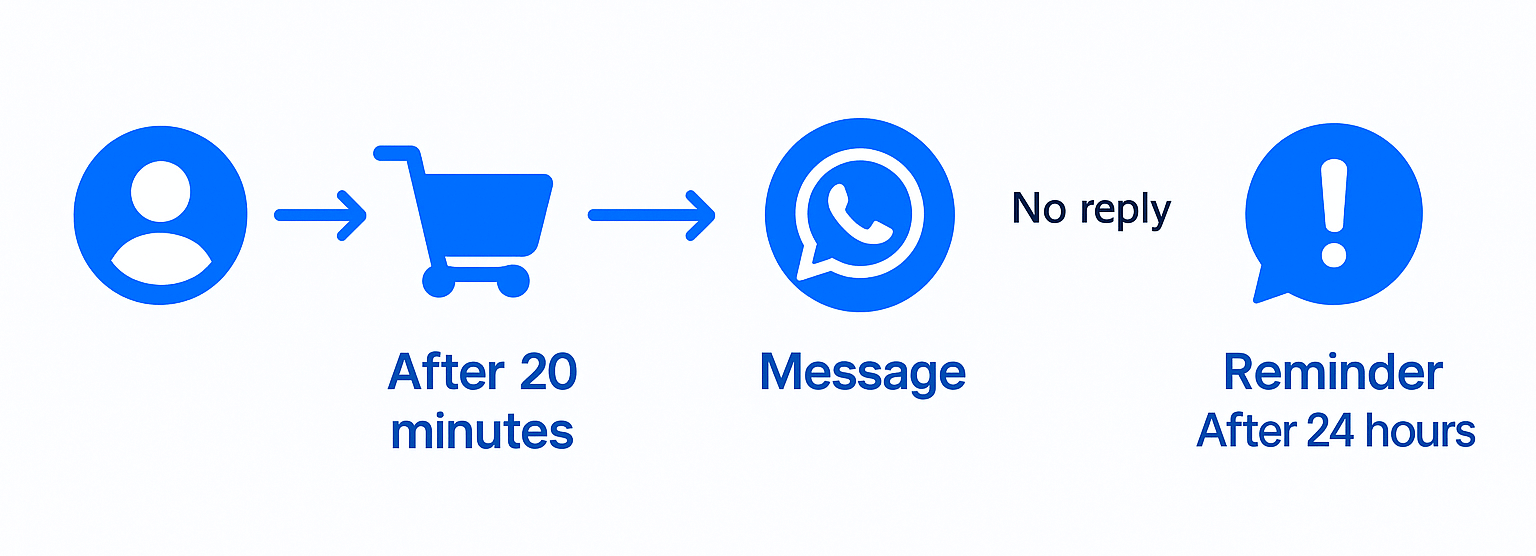
The most effective payment reminder systems follow a strategic progression that balances persistence with customer experience. Our data shows the optimal sequence includes:
1. Pre-Delivery Confirmation (24 hours before)
This initial message confirms the delivery time and amount due, setting clear expectations:
“Hi [Name], Your order #12345 is scheduled for delivery tomorrow between 2-5 PM. Amount due: $79.99. Please keep the exact amount ready for our delivery partner. Reply YES to confirm or reschedule if needed.”
This message achieves 85% confirmation rates when sent at optimal times (typically 6-8 PM local time).
2. Day-of Reminder (3 hours before delivery)
A short, timely reminder increases payment readiness:
“[Name], your order will arrive in approximately 3 hours. Our delivery partner [Driver Name] will call you at [Customer Phone]. Amount due: $79.99.”
This reminder reduces no-answer rates by 42% compared to deliveries without timely notifications.
3. Post-Delivery Thank You + Digital Receipt
For successful deliveries, a confirmation creates trust and documentation:
“Thank you for your payment of $79.99 for order #12345! Your digital receipt is attached. We hope you enjoy your purchase. Any feedback? Reply to this message.”
This message increases repeat purchase likelihood by 23% according to our A/B testing.
4. First Payment Reminder (For failed collections, sent 24 hours after)
A gentle, solution-oriented reminder for missed payments:
“Hi [Name], We noticed the payment for your order #12345 ($79.99) is still pending. Would you prefer: 1) Rescheduling delivery, 2) Online payment link, or 3) Alternative payment method? We’re here to help!”
This approach shows a 52% resolution rate within 48 hours.
AI Optimization: Beyond Basic Automation
While basic automation improves efficiency, AI-powered messaging dramatically increases payment collection success rates through:
Timing Optimization
AI systems analyze historical response data to determine the optimal send time for each customer, increasing open and response rates by 37% compared to fixed-time delivery.
Personalized Messaging
Beyond basic name insertion, advanced personalization includes:
- Referencing previous purchase history
- Adapting tone based on customer segment (formal vs. casual)
- Customizing payment options based on previous preferences
- Adjusting message length based on engagement patterns
Personalized sequences show a 41% higher payment completion rate than generic templates.
Dynamic Response Handling
AI systems can interpret customer responses and provide appropriate follow-ups without human intervention:
- Automatically rescheduling deliveries when requested
- Generating payment links when customers prefer online payment
- Escalating complex issues to human agents with full context
- Recognizing payment intent and reducing unnecessary follow-ups
Continuous Optimization Through A/B Testing
The most sophisticated systems continuously improve through automated testing:
- Testing message variations to identify highest-performing templates
- Optimizing call-to-action phrasing for maximum response
- Refining escalation timing to minimize defaults while maintaining customer relationships
- Adapting to seasonal patterns and payment behavior changes
Companies implementing personalization at scale see an average 27% reduction in payment defaults within the first 90 days.
Implementation: Building Your AI-Optimized Payment Collection System
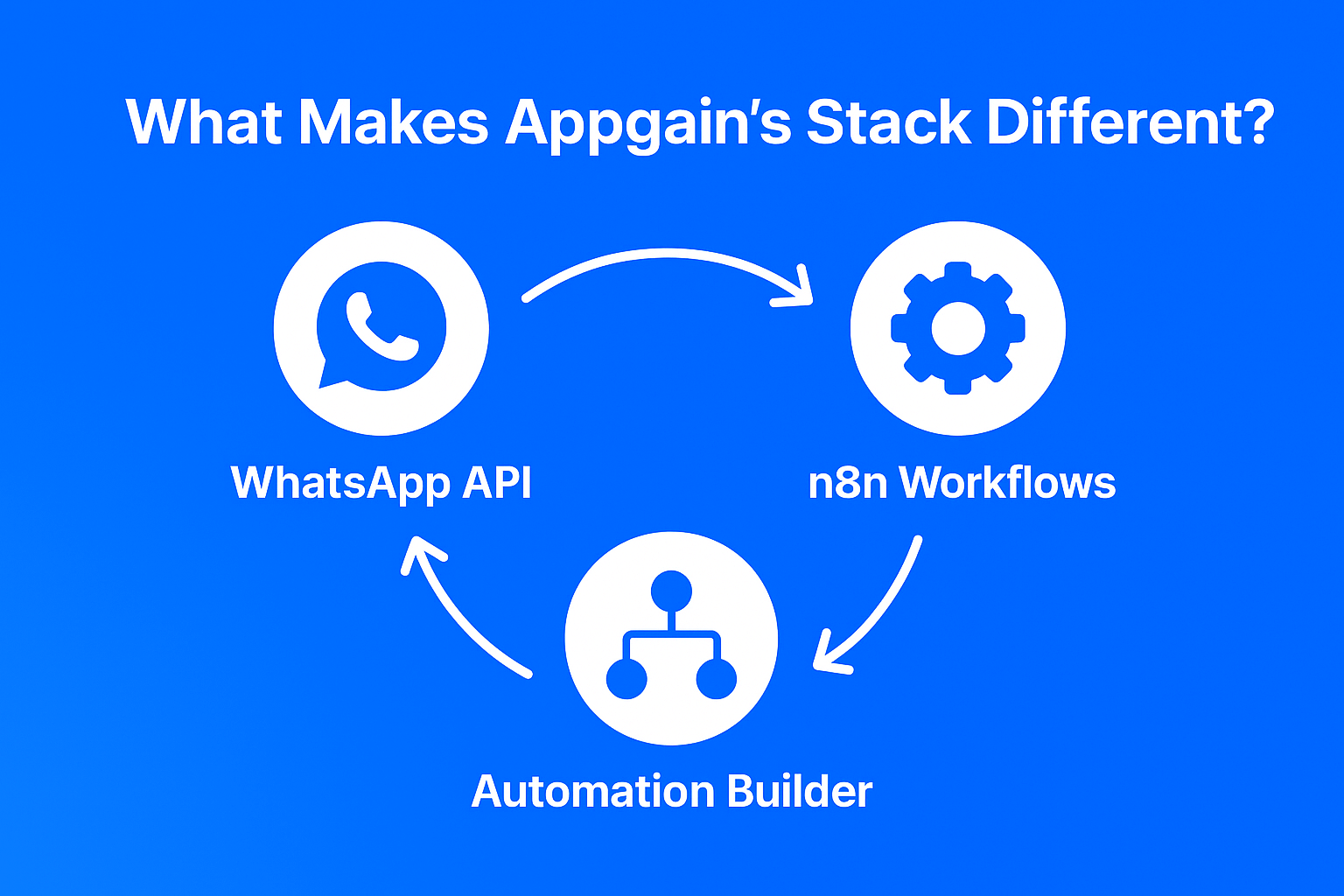
Creating an effective WhatsApp payment reminder system requires several key components:
1. WhatsApp Business API Integration
Direct API access enables high-volume messaging and automation capabilities not available in standard WhatsApp Business accounts. This requires:
- Official Business Verification
- API provider selection (Meta partners or third-party solutions)
- Template message approval for proactive communications
- Compliance with WhatsApp’s business policies
2. CRM and Order Management Integration
Effective systems connect directly to your order management system to:
- Automatically trigger messages based on order status changes
- Update customer records when payments are received
- Track payment history for personalization
- Maintain accurate payment status across systems
3. Payment Processing Options
Offering multiple payment options increases collection success:
- Direct payment links via WhatsApp
- QR code payments for contactless transactions
- Rescheduled COD options
- Digital wallet integration
4. Analytics and Reporting
Comprehensive tracking and analytics are essential for optimization:
- Message delivery and read rates
- Response rates by message type and timing
- Payment completion rates
- Average time-to-payment
- Conversation flow analysis
Case Study: E-commerce Retailer Transforms COD Collection
A regional e-commerce player with 70% of orders on COD implemented an AI-optimized WhatsApp payment reminder system with remarkable results:
- Before: 23% payment default rate, 4.7-day average collection time
- After: 7% payment default rate, 1.8-day average collection time
- Additional benefits: 42% reduction in collection team size, 31% increase in customer satisfaction scores
The implementation paid for itself within 45 days through improved cash flow and reduced operational costs.
Key Takeaways
- WhatsApp’s high engagement rates make it the ideal channel for payment reminders
- Structured messaging sequences with strategic timing dramatically improve collection rates
- AI optimization through personalization and continuous testing can reduce payment defaults by 20-30%
- Integration with order management systems creates a seamless, automated collection process
- Multiple payment options presented through WhatsApp increase successful collections
By implementing AI-optimized payment reminder sequences on WhatsApp, businesses can transform their COD operations from a cash flow liability into a competitive advantage. The combination of automation, personalization, and data-driven optimization not only improves collection rates but enhances the overall customer experience.