Build a WhatsApp AI Bot Without Code

Introduction

Building a WhatsApp AI bot used to require developers, complex integrations, and weeks of setup.

Today, that has completely changed.

With modern no-code platforms, businesses can build powerful chatbot flows using drag-and-drop builders, AI intent detection, and automated customer journeys—without writing a single line of code.

A good WhatsApp AI bot can answer customer questions instantly, qualify leads, update your CRM, and transfer conversations to human agents only when needed.

This guide explains how to build a WhatsApp AI bot in 2026 using a practical no-code framework for MENA businesses.


What Makes a Good WhatsApp AI Bot

Not every chatbot creates a good customer experience.

Many businesses still use old-style menu bots that frustrate customers and increase support workload instead of reducing it.

Bad Chatbot Experience

  • Customer asks a natural question
  • Bot sends a rigid numbered menu
  • Customer cannot find the right option
  • The customer leaves frustrated
  • The business loses trust and conversions

Good Chatbot Experience

  • Customer asks naturally
  • AI understands the real intent
  • The bot responds using your knowledge base
  • If needed, it transfers to a human smoothly
  • The issue is solved in under 60 seconds

The difference is AI intent classification.

Without it, a chatbot is just an automated menu.

With it, your WhatsApp AI bot behaves like a real assistant.


Core Node Types You Need to Know

ConnectGain uses a visual drag-and-drop flow builder where each step is built using nodes.

Understanding these nodes is the foundation of building an effective WhatsApp AI bot.


Start Node

Every flow begins here.

It defines what triggers the bot:

  • New inbound message
  • Specific keyword
  • New contact created
  • Scheduled trigger

Text Node

Sends messages to customers automatically.

It can include dynamic variables like:

  • Customer name
  • Deal status
  • CRM data

Quick Reply / Button Node

Shows clickable options for faster customer interaction.

Examples:

  • Pricing
  • Booking
  • Support

The platform automatically adapts buttons for each channel.


AI Classification Node

This is the intelligence layer.

Customers type naturally, and AI detects intent.

Examples:

  • “I need pricing”
  • “I want to know the available plans”
  • “I’m not sure which option is right for me”

The system routes the conversation automatically.


RAG Knowledge Base Node

This connects your bot to your documents.

It pulls answers from:

  • FAQs
  • Product catalogs
  • Pricing files
  • Internal documents

This allows accurate and dynamic replies.


Condition Node

Creates if/then logic.

Examples:

  • VIP customer → premium support
  • Existing deal → direct follow-up
  • Returning customer → priority routing

Input Node

Collects customer information:

  • Name
  • Phone number
  • Email
  • Appointment date

The data is stored automatically inside CRM.


Human Handoff Node

Transfers the conversation to a real agent.

The agent receives the full conversation history without losing context.


Step-by-Step: Build Your First WhatsApp AI Bot

Step 1 — Define the Goal

Start with one clear objective.

Example:

“This bot qualifies real estate leads and books property viewings.”

If the goal is unclear, the flow will fail.


Step 2 — Choose the Trigger

Decide what starts the conversation.

Options include:

  • Any new inbound message
  • A specific keyword like “pricing”
  • Button click
  • CRM automation trigger

Step 3 — Write the Opening Message

Your first message matters.

It should be:

  • Clear
  • Friendly
  • Useful immediately

Example:

“Hi {{contact_name}}! I can help with pricing, availability, and booking. What would you like to know?”


Step 4 — Build the Main Branches

Most customers ask about 3–5 main things.

These become your primary conversation branches.

Always place an AI Classification node before branching.

This improves flexibility and customer experience.


Step 5 — Add the Knowledge Base

Upload your business content:

  • FAQs
  • Product information
  • Pricing documents
  • Service details

This powers smarter answers through RAG.


Step 6 — Set Human Handoff Rules

Not every conversation should stay automated.

Transfer to human agents when:

  • Confidence is low
  • Customer frustration is detected
  • Complaint keywords appear
  • Customer requests human support

Step 7 — Test Real Customer Scenarios

Before publishing:

  • Test Arabic and English
  • Test misspellings
  • Test mixed-language messages
  • Test incomplete questions

Real customer behavior is never perfect.

Your bot must handle that.


Step 8 — Publish and Optimize

After testing:

  • Publish the flow
  • Monitor response quality
  • Measure deflection rate
  • Track customer satisfaction

Then improve based on real usage.


Example: Tourism Booking Bot

A travel agency can use a WhatsApp AI bot like this:

Trigger

Any inbound WhatsApp message


Opening Message

“Welcome! I can help you with day trips, hotel bookings, and travel packages.”


Branch A — Day Trips

  • Destination selection
  • Travel date collection
  • Group size input
  • Availability check
  • Price options
  • Human handoff for booking confirmation

Branch B — Multi-Day Packages

  • Package overview
  • PDF sending
  • Human consultation

Branch C — Hotels

  • Hotel recommendations
  • Budget selection
  • Smart filtered results

This flow automates most inquiries while keeping agents focused on closing deals.


Multi-Channel Deployment

One major advantage of ConnectGain is that the same bot works across:

  • WhatsApp Business API
  • Instagram Direct
  • Facebook Messenger
  • Telegram
  • TikTok messages
  • SMS
  • Website chat widget

Build once. Deploy everywhere.

This reduces cost and improves consistency.


Start Your Growth Journey

If your business still handles customer conversations manually, you are losing time and leads.

A WhatsApp AI bot helps you:

  • Respond instantly
  • Qualify leads automatically
  • Reduce support workload
  • Improve customer satisfaction
  • Scale sales without adding headcount

Appgain helps businesses across MENA deploy AI-powered chatbot systems built for growth.

Let’s build your success story.

WhatsApp: +20 111 9985526
Website: https://appgain.io
Email: He***@*****in.io


Conclusion

The best chatbot does not feel like a bot.

It feels like fast, helpful, and intelligent customer service.

That is what a modern WhatsApp AI bot should deliver.

And with no-code platforms like ConnectGain, building that experience is now faster, easier, and more scalable than ever.
Small Business CRM for MENA (2026 Guide)

Introduction

Choosing the right small business CRM is one of the most important decisions for MENA companies in 2026.

Many businesses in Egypt, Saudi Arabia, and the GCC still use traditional CRM platforms that were not built for local workflows. As a result, teams struggle with WhatsApp integration, Arabic support, and expensive pricing.

Traditional systems often focus on email and calls while ignoring the channels that matter most in MENA. This creates disconnected workflows, missed opportunities, and slower sales processes.

This guide explains why traditional systems fail and how the right small business CRM can improve sales, customer management, and business growth.


Why Traditional CRM Platforms Fail in MENA

Problem 1: WhatsApp Is an Afterthought

In North America and Europe, most CRM systems were built around email and phone calls.

In MENA, WhatsApp is the primary communication channel. Customers ask about pricing on WhatsApp, send complaints on WhatsApp, and close deals on WhatsApp.

When a CRM treats WhatsApp as an add-on, teams end up copying notes manually, losing customer context, and missing sales opportunities.

A proper small business CRM must make WhatsApp the center of customer communication.


Problem 2: No Real Arabic Support

Many global CRM platforms offer Arabic translation, but translation is not enough.

A true Arabic-first CRM requires:

  • Full right-to-left (RTL) interface
  • Arabic input support across all fields
  • Arabic reports and exports
  • Proper search and sorting for Arabic content
  • Mixed Arabic and English workflow support

Without this, teams struggle daily with broken workflows and poor usability.


Problem 3: Pricing Built for Western Markets

HubSpot, Salesforce, and similar platforms price their plans for Western businesses.

For small teams in Egypt or Saudi Arabia, these costs are often too high.

A small business CRM should be affordable for local markets, not priced based on North American enterprise budgets.


Problem 4: Slow and Complex Onboarding

Many CRM systems require:

  • Long setup periods
  • Technical integrations
  • Dedicated IT teams
  • Weeks of staff training

Most SMBs in MENA need a system they can deploy quickly and use immediately.


What a Small Business CRM for MENA Must Do

1. Unified Inbox Across All Channels

Your CRM should combine:

  • WhatsApp
  • Instagram
  • Facebook Messenger
  • Telegram
  • Email
  • SMS

All conversations should appear in one place with full customer history attached.

This improves speed, visibility, and follow-up quality.


2. Automatic Contact and Deal Creation

When a customer sends the first message, the system should automatically:

  • Create a contact
  • Detect buying intent
  • Create a deal
  • Assign follow-up tasks

No manual entry means fewer lost leads.


3. Native Arabic Support

The platform must work naturally in Arabic, not as an afterthought.

That includes:

  • RTL dashboards
  • Arabic exports
  • Arabic reports
  • Mixed-language support

This is essential for operational efficiency.


4. Built-In AI Automation

A modern small business CRM should include:

  • Lead scoring
  • Sentiment analysis
  • Auto-tagging
  • Intent detection
  • Workflow automation
  • Follow-up reminders

AI should be part of the CRM, not an extra subscription.


5. Flexible Sales Pipelines

Different industries need different workflows.

Real estate, tourism, healthcare, and retail in MENA all require customizable sales stages that reflect real operations.

Generic pipelines do not work.


6. Pricing Designed for MENA

Pricing should support businesses operating in:

  • EGP
  • SAR
  • AED
  • Other GCC currencies

The right small business CRM should scale with your business without becoming a financial burden.


ConnectGain: A Small Business CRM Built for MENA

Appgain built ConnectGain specifically for MENA workflows—not as a Western CRM translated into Arabic later.


Unified Multi-Channel Inbox

ConnectGain supports:

  • WhatsApp Lite
  • WhatsApp Cloud API
  • Facebook Messenger
  • Instagram
  • Telegram
  • TikTok
  • Email
  • SMS
  • Web Push Notifications

All conversations are centralized in one inbox with full customer history.

This aligns with ConnectGain’s unified conversations hub where every customer interaction becomes a tracked opportunity .


Smart Deals Pipeline

Track:

  • Deal stages
  • Probability scoring
  • Activity timelines
  • Sales progress
  • Revenue forecasting

The system supports multiple industries with drag-and-drop pipeline management.


AI-Powered Contact Management

Every customer profile includes:

  • Full interaction history
  • AI auto-tagging
  • Purchase intent detection
  • Smart segmentation
  • Behavior-based follow-up automation

This supports ConnectGain’s AI-powered decision engine for prioritizing conversations automatically .


Automated Tasks and Follow-Ups

After every conversation or phone call:

  • AI extracts action items
  • Tasks are created automatically
  • Team members are assigned instantly
  • Follow-ups are tracked to completion

This reflects ConnectGain’s execution automation engine where workflows trigger actions without manual effort .


Full Arabic + Full English Support

ConnectGain was designed with Arabic RTL support from day one.

This is not a translated language pack. It is part of the platform architecture.


Pricing Built for SMBs

Starting at competitive pricing designed for MENA businesses, ConnectGain removes the barrier of expensive enterprise subscriptions.

It is built for local business growth, not imported pricing structures.


Comparing ConnectGain vs Traditional CRM Platforms

Feature HubSpot CRM Zoho CRM Respond.io ConnectGain
Native WhatsApp Integration Add-on only Add-on only Yes (Inbox only) Full native integration
Arabic RTL Interface Partial Partial No Full native RTL
Built-in AI Automation No Partial No Yes
AI Bot Builder No No No Yes
MENA Pricing Model No Partial No Yes
E-commerce Integration No No No Yes
Deployment Speed Weeks Weeks Days Days

Migration Is Easier Than You Think

Many businesses worry about switching CRMs.

In reality, most traditional systems already have incomplete or low-quality data because updates were manual.

That makes migration simpler than expected.

ConnectGain supports:

  • CSV import and export
  • Shopify integration
  • Odoo integration
  • Zid integration
  • Salla integration

Deployment happens in days, not months.


Start Your Growth Journey

If your current CRM creates more work than results, it is time for a better system.

A true small business CRM should help you:

  • Respond faster
  • Close more deals
  • Track every customer interaction
  • Automate follow-ups
  • Improve team productivity

Appgain helps businesses across MENA build scalable systems powered by CRM automation and AI.

Let’s build your success story.

WhatsApp: +20 111 9985526
Website: https://appgain.io
Email: He***@*****in.io


Conclusion

The biggest CRM mistake MENA businesses make is choosing software built for someone else’s workflow.

A CRM should not force your team to change how they sell.

It should match how your customers communicate, how your team operates, and how your market works.

That is why a WhatsApp-native, Arabic-first, AI-powered small business CRM is no longer optional.

It is the future of business growth in MENA.

WhatsApp Automation: Turn CRM Data Into Real-Time Sales

Most businesses today hold large volumes of customer data inside their CRM systems, yet very few unlock its true potential. This is where WhatsApp Campaign Automation becomes essential. By activating real-time, behavior-based messaging, businesses can engage customers instantly based on actions, intent, or inactivity.

When a customer browses, abandons a cart, or stops engaging, automation ensures the next step happens immediately. With Appgain’s WhatsApp API combined with n8n’s no-code workflows, marketing teams can build a complete automated funnel that moves customers from CRM to WhatsApp in a seamless, conversion-driven journey.


The Challenge: Fragmented Marketing Execution

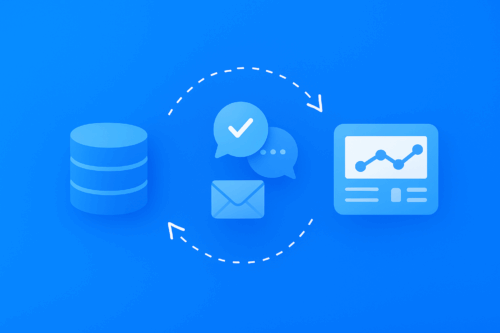
Visual illustration showing fragmented communication channels scattered around a central workspace, symbolizing disorganized customer communication.
A visual snapshot of fragmented tools and channels before automation.

In many companies, marketing operations are spread across disconnected tools:

  • CRM platforms store customer data

  • Messaging tools handle communication

  • Analytics tools measure engagement and performance

This fragmentation leads to delays, inconsistent messaging, and missed sales opportunities. Without WhatsApp Campaign Automation, customer journeys become slow and heavily dependent on manual steps.


The Solution: A Fully Automated WhatsApp Funnel

By integrating Appgain with n8n, teams can activate CRM data instantly and send personalized WhatsApp messages in real time. This solution connects the entire customer journey inside one workflow:

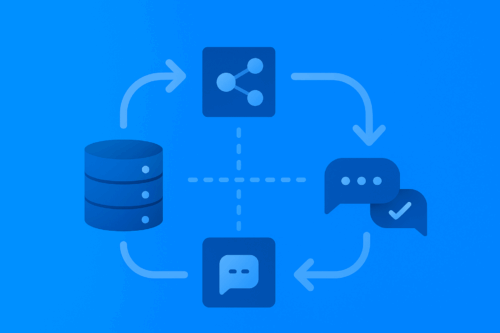
Automated funnel illustration showing CRM data flowing through n8n automation nodes into WhatsApp message bubbles.
A visual funnel showing how CRM data moves through automation before reaching customers on WhatsApp.
  • Import CRM contacts

  • Build audience segments

  • Trigger automated campaigns

  • Deliver messages instantly

  • Track opens, clicks, and conversions

  • Push insights back into the CRM

This approach transforms static data into an active communication engine.


How WhatsApp Campaign Automation Works

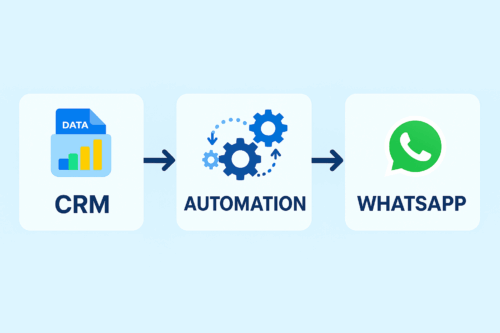
Visual workflow showing CRM data flowing into automation, then delivered to customers through WhatsApp.
A simple workflow illustrating how CRM data moves through automation to WhatsApp messaging.

1. Import CRM Contacts Into n8n

Use native connectors or an API to sync contacts directly from your CRM into the workflow.

2. Segment Customers Based on Behavior

Create dynamic segments based on activity, lifecycle stage, geography, purchases, or product interest.

3. Build Campaign Logic

Examples of automation rules include:

  • If a cart is abandoned for 48 hours, send a WhatsApp reminder

  • If a customer is inactive for 14 days, trigger a re-engagement message

  • After a purchase, send a thank-you message or referral offer

4. Deliver Messages via Appgain’s WhatsApp API

This includes images, buttons, product recommendations, and dynamic personalization fields.

5. Track Performance in Real Time

Monitor delivery rates, message opens, clicks, and conversion events. Feed this performance data back into the CRM to continually improve segmentation and targeting.


Real Example: Automated Drip Campaign for E-commerce

A fashion retailer implemented a fully automated seven-day WhatsApp campaign using Appgain and n8n:

  • Day 1: Identify and segment VIP customers

  • Day 2: Send early access to new arrivals

  • Day 3: Deliver exclusive limited-time discount

  • Day 6: Trigger low-stock reminders

  • Day 7: Send thank-you message with referral incentive

Results included:

  • A 47 percent increase in click-through rate

  • A three-times higher conversion rate compared to email

  • A 30 percent drop in customer support tickets due to automated responses

This shows the power of WhatsApp Campaign Automation when CRM data is activated instantly.


Why WhatsApp Campaign Automation Works

Faster Execution
Campaigns can be created and deployed within hours rather than weeks.

Hyper-Personalization
Messages respond to customer behavior in real time.

No-Code Simplicity
Marketers can build workflows without engineering involvement.

Scalable Performance
A single automated workflow can serve thousands of customers simultaneously.

For deeper workflow examples, see n8n’s official documentation at:
https: // n8n . io


Additional Resources

For deeper workflow examples and automation best practices, you can explore the official n8n resource at  n8n.io.
If you want to learn more about the value of WhatsApp-first communication, check our internal guide on WhatsApp-first strategies available on the Appgain blog.

Conclusion

Customer data becomes valuable only when activated at the right moment with the right message. Through WhatsApp Campaign Automation using Appgain’s WhatsApp API and the automation power of n8n, businesses can build continuous, personalized communication that boosts engagement and accelerates revenue.

This is not just marketing automation.
It is a complete customer conversion engine.

From CRM to customer, every step becomes part of one automated, intelligent loop — where data turns into real conversations, and conversations turn into growth.


Ready to Market Like It’s 2025?

Unlock real-time, AI-powered WhatsApp campaigns and turn your CRM data into conversations that convert.

With Appgain, you can launch your first automated WhatsApp journey in under 10 minutes — no engineering, no complexity.

Start Your Smart Campaign Today