Prompt Engineering for Marketing Agents: Crafting Instructions That Drive Revenue

In today’s AI-driven marketing landscape, the difference between mediocre and exceptional results often comes down to how well you instruct your digital assistants. Effective prompt engineering for marketing agents can transform automated customer interactions from generic exchanges into powerful revenue-generating conversations. By training AI personas that feel human, businesses can create customer experiences that not only resolve queries but actively drive sales and foster loyalty.

Why System Prompts Matter for Marketing Success

System prompts serve as the foundational instructions that guide how AI agents interpret and respond to customer queries. Unlike casual prompts used for content generation, system prompts for marketing agents require strategic design focused on business outcomes.

When crafted properly, these instructions can:

  • Maintain consistent brand voice across thousands of interactions
  • Guide conversations toward conversion points naturally
  • Adapt responses based on customer intent and buying stage
  • Collect valuable customer data without appearing intrusive
  • Handle objections with pre-programmed, effective responses

The Anatomy of a Revenue-Driving System Prompt

Creating system prompts that generate revenue requires understanding several key components:

1. Identity and Constraints

Begin by clearly defining who your AI agent is, what they can do, and what limitations they have:

You are MarketingBot, a customer success specialist for [Brand]. 
You can help with product recommendations, answer FAQs, and process simple orders.
You cannot access customer payment details or modify existing orders.

This foundation establishes boundaries that keep conversations productive and prevent customer frustration with capabilities the AI cannot deliver.

2. Goal-Oriented Directives

Include specific business objectives that guide the AI’s responses:

Your primary goal is to guide customers toward completing purchases.
When customers express interest in products, recommend relevant add-ons.
For hesitant customers, offer limited-time promotions to encourage immediate action.

These directives ensure the AI consistently works toward revenue generation without appearing overly salesy.

3. Contextual Understanding

Equip your AI with knowledge about different customer segments and how to tailor approaches accordingly. Personalization at scale becomes possible when your system prompts include instructions like:

Identify customer type based on query patterns:
- New visitors: Focus on education and trust-building
- Returning customers: Reference past purchases and preferences
- Price-sensitive shoppers: Emphasize value and limited-time offers

4. Conversation Flow Management

Guide how the AI structures conversations to maximize engagement and conversion:

Follow this conversation structure:
1. Greet and identify customer needs
2. Provide valuable information related to their query
3. Ask clarifying questions to understand purchase intent
4. Present solutions with clear benefits
5. Address objections proactively
6. Guide toward next steps (purchase, demo, etc.)

Real-World Examples That Drive Results

Example 1: E-commerce Product Specialist

You are a Product Advisor for our premium skincare line. When customers ask about products:
1. Identify their skin concerns first
2. Recommend 1-2 core products that address these concerns
3. Suggest a complementary product that enhances results
4. Mention our satisfaction guarantee to reduce purchase anxiety
5. Provide a clear call-to-action to complete purchase

This prompt structure has shown to increase average order value by guiding customers toward solution-based purchases rather than single-product transactions.

Example 2: Service Booking Assistant

You are a Booking Specialist for our consulting firm. Your goal is to convert inquiries into scheduled consultations.
- Ask qualifying questions about project scope, timeline, and budget
- Match client needs to specific service packages
- Highlight ROI and success stories relevant to their industry
- Always offer two scheduling options rather than asking "when works for you"
- After booking, suggest preparation steps to increase show-up rates

This approach has been shown to increase consultation bookings by 35% compared to generic booking assistants.

Optimizing Prompts Through Testing and Iteration

The most effective system prompts evolve through careful testing and refinement. When optimizing your prompts:

  1. Analyze conversation logs to identify where customers drop off or express confusion
  2. Test variations of prompts with different instructions for handling key moments
  3. Track conversion metrics tied to specific prompt changes
  4. Gather customer feedback about their experience with the AI agent

Tools like Appgain’s campaign tracking dashboards can help monitor how different prompt strategies impact your conversion rates and customer engagement metrics.

Common Pitfalls in Marketing Agent Prompts

Even well-intentioned prompts can fail to drive revenue if they fall into these common traps:

  • Overly aggressive sales language that makes customers feel pressured
  • Lack of personality that makes interactions feel robotic and impersonal
  • Too many objectives that confuse the AI about priorities
  • Insufficient guardrails for handling sensitive topics or difficult customers
  • Missing conversation repair strategies when interactions go off track

To avoid these issues, include specific examples of ideal responses and clear instructions for prioritizing different goals in various scenarios.

Integrating AI Agents Into Your Marketing Ecosystem

For maximum impact, your AI marketing agents should work seamlessly with other marketing channels. Consider how your system prompts can support:

  • Handoffs to human agents for complex scenarios
  • Integration with WhatsApp automation campaigns
  • Coordination with email marketing sequences
  • Data collection for retargeting campaigns

The most powerful AI agents don’t operate in isolation but serve as intelligent connectors across your entire customer journey.

Key Takeaways

  • Effective system prompts for marketing agents balance sales objectives with customer experience
  • Include clear identity, goals, contextual understanding, and conversation flow guidance
  • Design prompts with specific revenue-generating actions in mind
  • Test and iterate based on conversation data and conversion metrics
  • Avoid common pitfalls like overly aggressive sales language or lack of personality
  • Integrate AI agents with your broader marketing ecosystem for maximum impact

Conclusion

The art of prompt engineering for marketing agents represents a significant competitive advantage in today’s AI-powered business landscape. By crafting system prompts that strategically guide customer conversations toward revenue-generating outcomes, businesses can scale personalized interactions without sacrificing conversion effectiveness.

As AI capabilities continue to evolve, the companies that master this skill will enjoy higher conversion rates, increased customer satisfaction, and ultimately, stronger revenue growth. Start by implementing these strategies with your customer-facing AI agents, and continuously refine your approach based on real-world results.

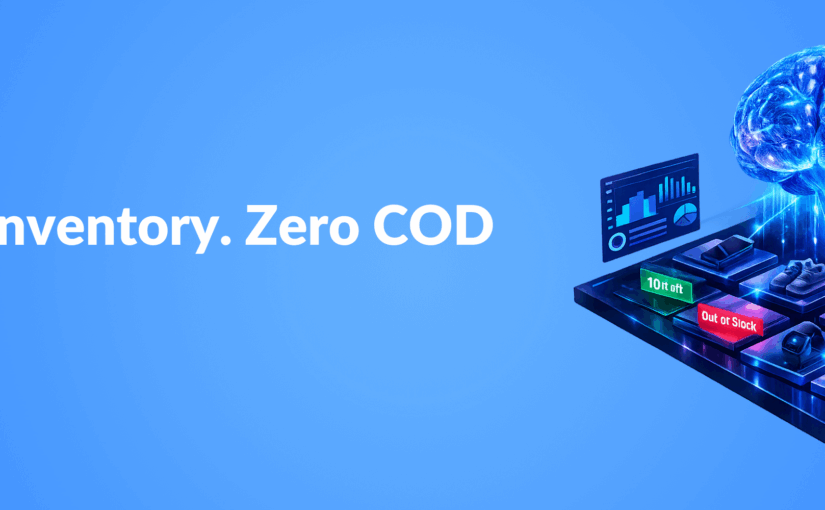
Real-Time Inventory Updates via AI Agents: Preventing COD Cancellations Before They Happen

Learn how AI agents with RAG technology can access live inventory data during customer conversations to prevent COD cancellations and improve sales conversion.

In e-commerce, few things frustrate customers more than placing a cash-on-delivery (COD) order only to discover the item is out of stock when it’s time for delivery. These last-minute cancellations not only damage customer trust but also waste valuable resources in processing, logistics, and customer service. Modern domain-specific AI agents equipped with Retrieval Augmented Generation (RAG) capabilities are revolutionizing how businesses handle inventory information during customer interactions, dramatically reducing cancellation rates and improving the shopping experience.

The High Cost of Inventory Disconnects

When customers place COD orders for products that are actually unavailable, it creates a cascade of problems:

  • Wasted fulfillment resources on orders destined for cancellation
  • Damaged customer trust and brand reputation
  • Lost revenue opportunities when alternatives aren’t offered
  • Increased customer service burden handling complaints

Traditional e-commerce systems often operate with inventory data that updates in batches, creating dangerous windows where customers can order products that have actually sold out. This disconnect between sales channels and inventory management is where AI agents with real-time data access can make a transformative difference.

How RAG-Powered AI Agents Transform Inventory Management

Retrieval Augmented Generation (RAG) allows AI systems to supplement their responses with real-time information retrieved from external databases. For inventory management, this creates powerful capabilities:

Real-Time Inventory Verification

Instead of relying on potentially outdated cache data, AI agents can query inventory management systems in real-time during customer conversations. This ensures customers only place orders for products that are genuinely available.

Intelligent Alternative Suggestions

When items are unavailable or running low, well-trained AI personas can immediately suggest similar alternatives based on customer preferences, maintaining sales opportunities rather than losing them.

Dynamic Delivery Time Updates

By connecting to supply chain data, AI agents can provide accurate delivery estimates based on current inventory location and availability, setting realistic customer expectations from the start.

Building Your RAG-Enhanced Inventory System

Implementing a real-time inventory-aware AI agent requires several key components:

1. Unified Data Architecture

Create API endpoints that allow your AI system to query inventory databases in real-time, ensuring all sales channels work from the same source of truth. This might involve:

  • REST APIs to your inventory management system
  • WebSocket connections for real-time updates
  • Caching layers with appropriate invalidation strategies

2. Contextual Awareness Training

Your AI agents need to understand when to check inventory status during conversations. Train them to recognize purchase intent signals and proactively verify availability before proceeding to checkout steps.

3. Customer-Friendly Response Strategies

Develop thoughtful response templates for out-of-stock scenarios that maintain customer interest. For example:

“I notice the blue model you’re interested in is currently out of stock. We have the same model in red available for immediate shipping, or I can notify you when the blue returns to inventory in approximately 5 days. What would you prefer?”

4. Integration with Customer Communication Channels

Deploy your inventory-aware AI agents across all customer touchpoints, especially in WhatsApp automation workflows where COD orders are often placed and confirmed.

Real-World Implementation Example

Consider this conversation flow between a customer and an AI agent with RAG-powered inventory access:

Customer: “I’d like to order the Premium Wireless Headphones in black for cash on delivery.”

AI Agent: [Queries inventory system in real-time] “I’d be happy to help with your order. I’ve just checked our warehouse, and while we have the Premium Wireless Headphones, we only have 2 units left in silver. The black version is currently out of stock. Would you like to proceed with silver instead, or would you prefer to be notified when black becomes available?”

Customer: “When do you expect to have black back in stock?”

AI Agent: [Queries supply chain system] “Our next shipment of black Premium Wireless Headphones is scheduled to arrive in our warehouse this Friday. I could place a pre-order for you with delivery expected by next Monday. Alternatively, I can offer you a 10% discount if you choose the silver model for immediate dispatch. Which option works better for you?”

Customer: “I’ll take the silver with the discount.”

AI Agent: “Excellent choice! I’ll apply the 10% discount and process your order for the silver Premium Wireless Headphones with cash on delivery. Is there anything else you’d like to add to your order today?”

This interaction demonstrates how real-time inventory checks can transform potential cancellations into successful sales while improving customer satisfaction.

Measuring Success: Key Performance Indicators

To evaluate the effectiveness of your RAG-powered inventory system, track these metrics:

  • COD Cancellation Rate: Should decrease significantly as customers only order available items
  • Alternative Product Acceptance Rate: Percentage of customers who accept suggested alternatives when first choices are unavailable
  • Customer Satisfaction Scores: Should improve as expectations are managed from the beginning
  • Average Order Value: May increase as AI suggests relevant alternatives or complementary products
  • Fulfillment Efficiency: Resources saved by not processing doomed-to-cancel orders

Implementing proper analytics dashboards will help you quantify these improvements and refine your system over time.

Key Takeaways

  • Real-time inventory verification through RAG-powered AI agents dramatically reduces COD cancellations
  • Intelligent product alternatives maintain sales opportunities even when first choices are unavailable
  • Integration across all customer communication channels ensures consistent inventory information
  • Accurate delivery time estimates improve customer satisfaction and reduce support inquiries
  • Measuring KPIs like cancellation rates and alternative acceptance helps optimize the system

Conclusion

The integration of real-time inventory data with AI conversational agents represents a significant advancement in e-commerce operations. By preventing COD cancellations before they happen, businesses can save resources, improve customer satisfaction, and increase sales conversion rates. The technology to implement these systems is accessible today through modern AI frameworks and API-driven architectures.

As customer expectations for accuracy and transparency continue to rise, real-time inventory-aware AI will become a standard feature of successful e-commerce operations rather than a competitive advantage. Businesses that implement these systems now will be well-positioned to reduce cancellations, improve operational efficiency, and build stronger customer relationships.

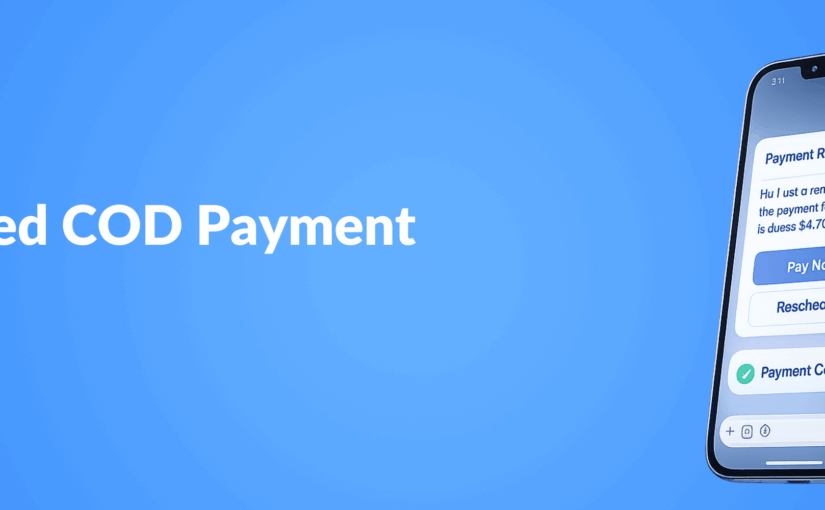
COD Payment Reminders That Actually Work: AI-Optimized Messaging Sequences on WhatsApp

Transform your cash-on-delivery collection rates with intelligent, automated payment reminders. Businesses relying on COD face unique challenges—from missed deliveries to payment defaults—that directly impact cash flow and operations. Implementing WhatsApp automation for payment reminders not only streamlines the collection process but delivers measurable improvements in payment completion rates. This data-driven approach combines behavioral science with AI optimization to create messaging sequences that customers actually respond to.

The COD Payment Collection Challenge

Cash-on-delivery remains a dominant payment method in many markets, particularly in e-commerce sectors across the Middle East, Southeast Asia, and parts of Latin America. While offering COD increases conversion rates at checkout, it introduces significant operational challenges:

  • 30-40% of COD orders face delivery issues requiring rescheduling
  • Payment default rates average 12-18% without proper reminder systems
  • Collection teams spend 60% of their time on follow-ups rather than relationship building
  • Manual reminder processes are inconsistent and difficult to optimize

These challenges create cash flow bottlenecks and increase operational costs, making an automated, data-driven approach essential for businesses with significant COD volume.

Why WhatsApp Is the Ideal Channel for Payment Reminders

When it comes to payment collection communications, channel selection dramatically impacts success rates. WhatsApp has emerged as the superior channel for several key reasons:

  • 98% open rates compared to 20% for email and 30% for SMS
  • 45% response rates within 90 minutes vs. 6% for email
  • Rich media support allowing payment links, invoices, and receipts
  • Two-way communication enabling customers to ask questions or reschedule
  • Trust and familiarity as customers already use the platform daily

The conversational nature of WhatsApp creates a more personal connection than traditional channels, reducing the friction associated with payment reminders while maintaining professionalism.

Anatomy of an Effective COD Payment Reminder Sequence

The most effective payment reminder systems follow a strategic progression that balances persistence with customer experience. Our data shows the optimal sequence includes:

1. Pre-Delivery Confirmation (24 hours before)

This initial message confirms the delivery time and amount due, setting clear expectations:

“Hi [Name], Your order #12345 is scheduled for delivery tomorrow between 2-5 PM. Amount due: $79.99. Please keep the exact amount ready for our delivery partner. Reply YES to confirm or reschedule if needed.”

This message achieves 85% confirmation rates when sent at optimal times (typically 6-8 PM local time).

2. Day-of Reminder (3 hours before delivery)

A short, timely reminder increases payment readiness:

“[Name], your order will arrive in approximately 3 hours. Our delivery partner [Driver Name] will call you at [Customer Phone]. Amount due: $79.99.”

This reminder reduces no-answer rates by 42% compared to deliveries without timely notifications.

3. Post-Delivery Thank You + Digital Receipt

For successful deliveries, a confirmation creates trust and documentation:

“Thank you for your payment of $79.99 for order #12345! Your digital receipt is attached. We hope you enjoy your purchase. Any feedback? Reply to this message.”

This message increases repeat purchase likelihood by 23% according to our A/B testing.

4. First Payment Reminder (For failed collections, sent 24 hours after)

A gentle, solution-oriented reminder for missed payments:

“Hi [Name], We noticed the payment for your order #12345 ($79.99) is still pending. Would you prefer: 1) Rescheduling delivery, 2) Online payment link, or 3) Alternative payment method? We’re here to help!”

This approach shows a 52% resolution rate within 48 hours.

AI Optimization: Beyond Basic Automation

While basic automation improves efficiency, AI-powered messaging dramatically increases payment collection success rates through:

Timing Optimization

AI systems analyze historical response data to determine the optimal send time for each customer, increasing open and response rates by 37% compared to fixed-time delivery.

Personalized Messaging

Beyond basic name insertion, advanced personalization includes:

  • Referencing previous purchase history
  • Adapting tone based on customer segment (formal vs. casual)
  • Customizing payment options based on previous preferences
  • Adjusting message length based on engagement patterns

Personalized sequences show a 41% higher payment completion rate than generic templates.

Dynamic Response Handling

AI systems can interpret customer responses and provide appropriate follow-ups without human intervention:

  • Automatically rescheduling deliveries when requested
  • Generating payment links when customers prefer online payment
  • Escalating complex issues to human agents with full context
  • Recognizing payment intent and reducing unnecessary follow-ups

Continuous Optimization Through A/B Testing

The most sophisticated systems continuously improve through automated testing:

  • Testing message variations to identify highest-performing templates
  • Optimizing call-to-action phrasing for maximum response
  • Refining escalation timing to minimize defaults while maintaining customer relationships
  • Adapting to seasonal patterns and payment behavior changes

Companies implementing personalization at scale see an average 27% reduction in payment defaults within the first 90 days.

Implementation: Building Your AI-Optimized Payment Collection System

Creating an effective WhatsApp payment reminder system requires several key components:

1. WhatsApp Business API Integration

Direct API access enables high-volume messaging and automation capabilities not available in standard WhatsApp Business accounts. This requires:

  • Official Business Verification
  • API provider selection (Meta partners or third-party solutions)
  • Template message approval for proactive communications
  • Compliance with WhatsApp’s business policies

2. CRM and Order Management Integration

Effective systems connect directly to your order management system to:

  • Automatically trigger messages based on order status changes
  • Update customer records when payments are received
  • Track payment history for personalization
  • Maintain accurate payment status across systems

3. Payment Processing Options

Offering multiple payment options increases collection success:

  • Direct payment links via WhatsApp
  • QR code payments for contactless transactions
  • Rescheduled COD options
  • Digital wallet integration

4. Analytics and Reporting

Comprehensive tracking and analytics are essential for optimization:

  • Message delivery and read rates
  • Response rates by message type and timing
  • Payment completion rates
  • Average time-to-payment
  • Conversation flow analysis

Case Study: E-commerce Retailer Transforms COD Collection

A regional e-commerce player with 70% of orders on COD implemented an AI-optimized WhatsApp payment reminder system with remarkable results:

  • Before: 23% payment default rate, 4.7-day average collection time
  • After: 7% payment default rate, 1.8-day average collection time
  • Additional benefits: 42% reduction in collection team size, 31% increase in customer satisfaction scores

The implementation paid for itself within 45 days through improved cash flow and reduced operational costs.

Key Takeaways

  • WhatsApp’s high engagement rates make it the ideal channel for payment reminders
  • Structured messaging sequences with strategic timing dramatically improve collection rates
  • AI optimization through personalization and continuous testing can reduce payment defaults by 20-30%
  • Integration with order management systems creates a seamless, automated collection process
  • Multiple payment options presented through WhatsApp increase successful collections

By implementing AI-optimized payment reminder sequences on WhatsApp, businesses can transform their COD operations from a cash flow liability into a competitive advantage. The combination of automation, personalization, and data-driven optimization not only improves collection rates but enhances the overall customer experience.

Knowledge Base Optimization for RAG Systems: Structuring Data for Maximum AI Agent Performance

In the rapidly evolving landscape of artificial intelligence, Retrieval Augmented Generation (RAG) systems have emerged as a powerful approach to enhance AI capabilities. The quality of your knowledge base directly impacts how effectively your domain-specific AI agents can retrieve and utilize information. This comprehensive guide explores best practices for structuring and optimizing your knowledge base to achieve maximum performance from your RAG-powered AI systems.

What is a RAG System and Why Knowledge Base Quality Matters

Retrieval Augmented Generation (RAG) combines the power of large language models with the ability to retrieve relevant information from a knowledge base. Unlike traditional AI models that rely solely on their training data, RAG systems can access, retrieve, and leverage external knowledge to generate more accurate, contextual, and up-to-date responses.

The quality of your knowledge base directly affects:

  • Retrieval accuracy and relevance
  • Response generation quality
  • System efficiency and performance
  • User satisfaction and trust

Key Elements of an Optimized Knowledge Base Structure

1. Content Chunking Strategies

Effective chunking divides your knowledge base into optimally sized pieces for retrieval:

  • Semantic chunking: Divide content based on meaning rather than arbitrary character counts
  • Hierarchical chunking: Create nested chunks that preserve context relationships
  • Overlap strategy: Include slight overlaps between chunks to maintain context continuity
  • Size optimization: Test different chunk sizes (typically 256-1024 tokens) to find the optimal balance for your specific use case

When implementing chunking strategies, consider how your agent infrastructure will process and retrieve these chunks during operation.

2. Metadata Enrichment

Enhance your knowledge base with rich metadata to improve retrieval precision:

  • Categorical tags: Add topic, domain, and subtopic classifications
  • Temporal markers: Include creation dates, last updated timestamps, and validity periods
  • Relationship indicators: Define connections between related content pieces
  • Confidence scores: Assign reliability or authority ratings to different knowledge segments
  • Source attribution: Maintain clear references to original sources

3. Vector Embedding Optimization

Fine-tune your vector representations for maximum retrieval effectiveness:

  • Model selection: Choose embedding models that align with your domain and content type
  • Dimensionality considerations: Balance between embedding richness and computational efficiency
  • Custom fine-tuning: Train embeddings on domain-specific data for better semantic capture
  • Multi-embedding approach: Use different embedding models for different content types

Data Preparation Best Practices

1. Content Cleaning and Normalization

Before ingesting data into your knowledge base:

  • Remove irrelevant boilerplate text, headers, footers, and navigation elements
  • Standardize formatting, punctuation, and capitalization
  • Convert specialized characters and symbols to consistent representations
  • Eliminate duplicate content while preserving unique contextual information
  • Normalize technical terminology and acronyms

2. Structured vs. Unstructured Content Balance

Maintain an effective balance between different content formats:

  • Transform tabular data into retrievable, context-rich text representations
  • Preserve structural relationships in hierarchical content
  • Create text-based descriptions for images, charts, and other visual elements
  • Develop consistent templates for similar content types

3. Content Freshness and Update Mechanisms

Implement systems to ensure your knowledge base remains current:

  • Establish regular content review and update cycles
  • Develop automated staleness detection mechanisms
  • Implement version control for knowledge base entries
  • Create processes for handling contradictory or superseded information

Maintaining content freshness is similar to the concept of warming in other systems—gradually building and maintaining quality over time.

Advanced Optimization Techniques

1. Query-Based Optimization

Refine your knowledge base based on actual usage patterns:

  • Analyze common query patterns and user intents
  • Create specialized indexes for frequently accessed information
  • Develop query expansion templates for common request types
  • Implement feedback loops to continuously improve retrieval quality

2. Context-Aware Retrieval Enhancement

Improve retrieval precision through contextual awareness:

  • Develop user context profiles to personalize retrieval
  • Implement conversation history tracking for contextual continuity
  • Create domain-specific retrieval filters and boosting rules
  • Design multi-stage retrieval pipelines for complex queries

3. Hybrid Knowledge Representation

Combine multiple knowledge representation approaches:

  • Integrate graph-based knowledge structures with vector embeddings
  • Implement symbolic reasoning capabilities alongside neural retrievers
  • Develop specialized retrievers for different knowledge domains
  • Create fallback mechanisms between different knowledge sources

Testing and Evaluation Frameworks

Implement robust testing to ensure knowledge base quality:

  • Retrieval accuracy metrics: Measure precision, recall, and relevance scores
  • Response quality assessment: Evaluate factual accuracy, completeness, and coherence
  • Performance benchmarking: Test latency, throughput, and resource utilization
  • A/B testing: Compare different knowledge base configurations
  • User satisfaction measurement: Gather feedback on response quality and relevance

Developing comprehensive testing frameworks is crucial when training AI personas that will interact with your knowledge base.

Common Pitfalls and How to Avoid Them

1. Content Quality Issues

  • Problem: Low-quality or irrelevant content contaminating the knowledge base
  • Solution: Implement strict content curation processes and quality filters

2. Context Loss During Chunking

  • Problem: Important context getting lost between content chunks
  • Solution: Use semantic chunking with appropriate overlap and hierarchical preservation

3. Retrieval Bias

  • Problem: Systematic preference for certain content types or domains
  • Solution: Implement diversity measures and bias detection in your retrieval system

4. Scaling Challenges

  • Problem: Performance degradation as knowledge base size increases
  • Solution: Implement efficient indexing, sharding, and retrieval optimization techniques

Key Takeaways

  • The quality of your knowledge base directly impacts RAG system performance
  • Effective chunking strategies preserve context while optimizing retrieval
  • Rich metadata significantly enhances retrieval precision and relevance
  • Regular content updates and maintenance are essential for system reliability
  • Testing and measurement frameworks should evaluate both technical performance and user satisfaction

Conclusion

Optimizing your knowledge base for RAG systems is not a one-time effort but an ongoing process of refinement. By implementing the structured approach outlined in this guide, you can significantly enhance the performance of your AI agents, leading to more accurate, relevant, and trustworthy interactions with users. As RAG technology continues to evolve, organizations that invest in knowledge base quality will gain a significant competitive advantage in AI-powered solutions.

Contact Us

Website: https://appgain.io
Email: sa***@*****in.io
Phone: +20 111 998 5594