Appgain Participated at RiseUp Summit Saudi

Appgain participated in the RiseUp Summit Saudi 2022, held at the King Abdullah Financial District
between November 19 and 21, The summit attracted over 10,000 participants, more than 150 startups,
150 investors, and 200 speakers from around the world to share their global experiences as well as the latest developments
in many fields to serve the startups and help them build foundations on which to base themselves.
aims to empower creativity, innovation, and entrepreneurship.

Riseup summit Saudi

The summit is supported by the Ministry of Communications and Information Technology’s National Technology Development Program (NTDP), in collaboration with the Saudi Federation for Cybersecurity, Programming, and Drones (SAFCSP).

The summit also included presentations by speakers from different domains and workshops held by well-known speakers in their fields, covering different topics such as business strategy making, product development, marketing strategy, and a career planning workshop for job seekers.

Besides representatives from the entrepreneurial sectors of the Kingdom of Saudi Arabia, including the angel investors, the Small and Medium Enterprises General Authority (Monsha’at), the Garage, the Digital Cooperation Organization (DCO), the Ministry of tourism, and the Saudi Venture Investment Company,

According to Princess Lolowah bint Yazeed, CEO of RiseUp Company in Saudi Arabia, the Kingdom has been and will continue to be the largest supporter of this sector as it represents a prosperous future for the economies of the world. The impact of startups on the lives of the Kingdom’s citizens has also become clear and palpable as the efficiency of citizens’ daily lives has been improved by reusing and recycling.

ASO Common Mistakes And How To Avoid Them

The world is digitizing rapidly, so going online is no longer an option nor merit. Because whatever your business is, there’re competitors, so what to do? 

You’re probably familiar with the term SEO or Search Engine Optimization. SEO certainly provides some impressive results, but what is also super achieving is the Apps version of it. App Store Optimization, or what we call ASO.


What is App Store optimization?

App Store Optimization, or ASO, is the science of improving the performance of the App Store menu. It’s basically about applying the scientific method to mobile key performance indicators (KPIs) associated with app stores.


ASO’s three main aspects:

  • Improved conversion rate
  • Improve keywords/improve detectability
  • Measurement


ASO’s key performance indicators usually are:

  • Number and quality of installation
  • Number of App Store appearances and grade
  • App Store Conversion Rates

These three indicators are the heart of ASO. Each has evolved into its specialty and practice.


Why is ASO So Important For Your App?

  1. Getting ASO right gives companies an additional advantage. There are about 2 million apps in the Apple App Store and more on Google Play, with new apps added daily. And a large number of mobile apps, both in gaming and non-gaming, is decreasing, which can harden the challenge for many apps.

And since paid UA (user acquisition) is not a magic bullet for success, understanding users and their motivation to install an app or game is essential. Without it, any paid UA can generate short-term success with no sign of loyalty or sustainability. 

On the other hand, companies that get UA appropriately for their apps are the only companies with a real competitive advantage in app stores. And yes, by proper UA we mean ASO.


  1. App stores have become the only place to get the distribution feature.

App stores are full of great games and apps that haven’t got more than a few thousand installations. The problem of competition in app stores today is redoubled.

It’s not about the app.

With the continuous rise in the value of producing apps, it has become difficult to discern your product in terms of usability only – by improving the user experience/user interface. A competitor may always show up with a good enough job of creating a viable alternative.


It’s also not about UA.

If the product itself is not unique enough to succeed based on its advantages, many companies resort to the UA experience as a differentiator. 

Read here, 7 Challenges that face e-commerce stores.


So yes, it’s mainly about App Store Optimization! 

App Store Optimization (ASO) is undoubtedly the new trend to improve access to applications in the spotlight. Enhancing the App Store performance is one of the most effective and ignored marketing strategies for mobile app developers.


Forrester reports indicating that 63% of apps are discovered through searches in the App Store. According to the latest trends, users tend to search mobile apps using keywords. At this point, ASO will direct users to your product and make it stand out.

Get to know more about ASO and its Importance to mobile marketing


Common Mistakes In App Store Optimization

Understanding ASO and knowing how to apply it is only the beginning. There can be many mistakes and pitfalls that one must watch to achieve better results.


Not using keywords in the app name, subtitle, or short description

This, by far, is the most common and destructive error. Apple and Google put a lot of weight on keywords that appear in the name and subtitle/short description of apps.

Some developers like to keep their apps “clean” and use only the subtitle. This means that the search algorithms won’t have anything to go through, so they will only show your app when you search by name, failing the chance of organic downloads.


Fix this clear and straightforward – once you select the keywords you want to improve, use them in both name and subtitle.


Not enhancing your keywords list

Using only branded keywords is another common app store optimization mistake, if you do not use non-trademark keywords, you will lose loads of potential traffic. Branded keywords contain brand names like Adidas training, Verv, and Google fit. Non-branded or general keywords are search queries without a company name, for example, fitness, weight loss, exercise, etc.

Knowing how to optimize or improve your keywords is not that hard. For example, App Store Connect has a keyword inventory where you can enter keywords to help Apple’s algorithm figure out keywords relevant to your app. Apple gives priority to keywords from the menu, so not taking advantage of these improvements means you’re missing possible downloads.


Going with a non-optimized long description

Unlike Apple, Google doesn’t give developers an easy way to advertise a keyword menu. Instead, Google reads directly from the app name, short description, and long description.

Google’s algorithm determines what your app does by reading its long description and searching for the most frequent words. So, a good organic description should repeat the words that describe the app’s features frequently and use strong industry keywords.


Judging the keywords before using them

Keywords are the cornerstone of a good ASO. Some keywords you may think are relevant and use but end up discovering those keywords don’t get enough traffic or are too competitive.


To avoid this common app store optimization pitfall, you should evaluate your keywords before using them. There are two things you should look for: 

  • Keywords that get search traffic: look at the degree of popularity of keywords and take the keywords with the highest popularity.
  • Keywords in which the best results get a similar number of ratings to your application


Optimizing only once

Some developers search for keywords and enhance, but only once. For some, the first app store optimization can work and enhance the app download, but mainly, ASO is an iterative practice. It needs frequency to maintain success. 


Not watching competitors

Another way to stay on top of the erratic search trends is to keep an eye on your competitors. Your competitors will most likely iterate and experiment with optimizing their app store, giving you new ideas and keywords to optimize yours.

Following your competitors gives you an idea of what works for them and what doesn’t, so you can learn faster and get new ideas for your applications.


App Store Optimization can be a bit tricky. That’s why it needs an expert or a savvy mobile marketing tool! 

You can benefit from Appgain.io ASO and other mobile app marketing features by requesting a demo.


RequestDemo

The Exceptional Value Of SMS Marketing

Did you know that the average person checks their phones more than 100 times/day? 71% of people check their phones within 10 minutes from waking up, so wouldn’t you want your content to be there when they check! If yes, then SMS marketing is a very suitable option.

Whether your messages aim to advertise for your business, announce specific offers, or draw attention to a specific product, you can guarantee that they’ll reach much more than your content on any other platform.


SMS Marketing

According to reports, 97% of all text messages are read within 5 minutes, so SMS is the fastest way to reach the customer and ensure that they read your message without delay. 

Swiftness ​​is one of the most significant features of SMS marketing. With just a click of a button, you can send your marketing message to many users, unlike many other marketing methods that require a lot of advanced preparation, time, and effort.


Check Text Messages Marketing for more.

Reach Most Of Your Audience At Once

The SMS system allows reaching a large number of users at one time, it takes a marketing expert to choose the recipients of your messages accurately, as SMS marketing is not about reaching a large number in general but reaching the maximum number of potential customers specifically.


Follow up on reactions to your marketing messages

One of the best features of SMS is knowing the reaction to your messages. Was it interesting? Who opened it? How many users did you reach exactly? Accurate monitoring keeps you informed of your marketing performance using SMS, which helps you continuously evolve.


Benefits of SMS Marketing In A Nutshell

Sending professional marketing SMS can build a strong link between you and customers. It’s a great way to always communicate with your customers, which is one of the most influential marketing pursuits.


  •  Gain extra clients:

The more professional and sufficient your messages are, the greater the interaction with your brand.


  • Save Money:

Text messages are considered one of the least expensive marketing methods, as they are an economical method compared to their results and effectiveness. 


  • Target a specific audience:

SMS marketing allows you to target a specific group with a specific geographic scope, type, or age, and through activities as well.


Tips to take benefit from SMS marketing

SMS campaigns need some things to make them run typically and be successful. Here are some tips to make the most advantage of SMS as follows:


1- Know the target customer segment well to measure your success rate for your target customers.

2- Pay attention to writing clear messages to achieve the main point clearly, considering the limited number of characters. It is 70 characters in Arabic and 160 characters in English.


3- Include a link to your app or website, such as click here, to convert users to your principal platform. 


4- Use an adequate SMS marketing tool or subscribe with Appgain.io to boost your business with a powerful customer engagement platform..


Essential practices to follow before launching SMS campaigns

  1. Ensure that customers have subscribed to SMS services

Text messages are very effective, but only if you consider particular rules. The most fundamental rule of SMS marketing strategy is to get permission from your contacts to send messages to them. SMS has a high reception and response rate, but this will not help if the user is not interested in receiving these messages. Plus, most countries require the consent of the customer.


  1. Verify that the phone numbers are correct

Before starting an SMS campaign, make sure that the customer data you have stored is correct, such as the accuracy of the number, type of carrier, and type of line. This is necessary to avoid wasting resources. The most common mistakes made are sending messages to wrong or disconnected phone numbers due to phone number bypassed validation.


  1. Write clear and direct messages

SMS allows you to write up to 160 characters in English, and only 70 characters in Arabic. The challenge here is to be expressive and make the message clear, concise, and written in explicit language based on your target audience. Avoid emojis and acronyms, and avoid using open-ended messages. Open-ended messages are those that do not provide complete information to the customer, leaving him in a state of distraction. For example, you might invite the customer to a sales season without mentioning when the offers will end. If it is an open message.


The entire SMS sending and monitoring process can easily be automated with Appgain.io SMS marketing tools.


  1. Include a user call to action CTA

The main goal of SMS marketing is customer engagement, messages that contain a clear call to action that the user reads, interacts with, and acts upon.


  1. Catch the right timing

Take your SMS marketing to the extreme by knowing the best time to send a specific message to a specific group of users, as ultra-accurate targeting can be done by segmenting users based on their geographic location, spoken language, and working hours. Avoid sending messages too early in the morning or late at night, as this reduces the chance of a response.


  1. Put your company name

Most business owners send text messages with an abbreviation that resembles their company, which means that the target contacts may not be aware of who is sending the messages, so put the name of the company first to make sure that your customers recognize you.


SMS Integration

Appgain has an integration with Twilio to grant you easy and flexible SMS automation options and ensure you use our SMS Marketing service to the max! 

And there are many other SMS Marketing programs and sites, like: 

  • Klaviyo
  • SMS Misr
  • Postscript
  • Attentive
  • SMS Bump (Yotpo)
  • Emotive
  • TextMagic
  • ClickSend
  • SimpleTexting
  • Avocato
  • SlickText

To enjoy our SMS Marketing you can request a demo.

RequestDemo

Appgain Product Update V8 & Shopify Integration

We’re thrilled to announce our first Shopify integration, providing you with many beneficial features for your E-commerce business.

First Appgain.io Shopify App

Appgain’s first Shopify App links your mobile app with your web Shopify store, boosting your business through the following features:

  • WEB2APP: Bring web visitors into your app.
  • Offer mobile-app-only discounts for users converted from the web to mobile app users.
  • Send Deep linked Push Notifications to drive the users to a specific collection or the product page.
  • Sync Shopify Products with Appgain App Deep links.
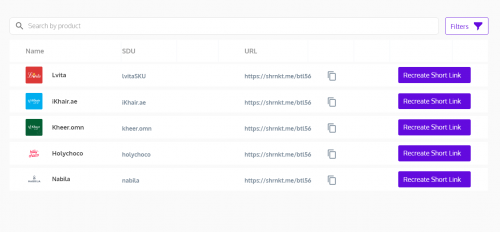
  • Creating Short and Retargeting Links for each Shopify  Product.
  • Automatically map the URLs of your Shopify products to Smart Deep Links to direct the users to the mobile app, even if they don’t have the app.

Now Available in Private mode only

shopify app integration


New Appgain Flutter SDK

  • You can now install Appgain SDK at your flutter App in a few minutes with the Appgain public pub.dev module. 


Shopify integration and Appgain flutter

Marketing AutomationBulk Mode and UI rework

The support of our platform for mobile Apps is growing as your user base grows. We have rewritten our marketing automation invocations to process users in arrays for bulk actions rather than one by one processing as a reaction to our client’s demands.

And for better results, we have redesigned and redeveloped the UI of our marketing automation scenario composer to be effortless and efficient.

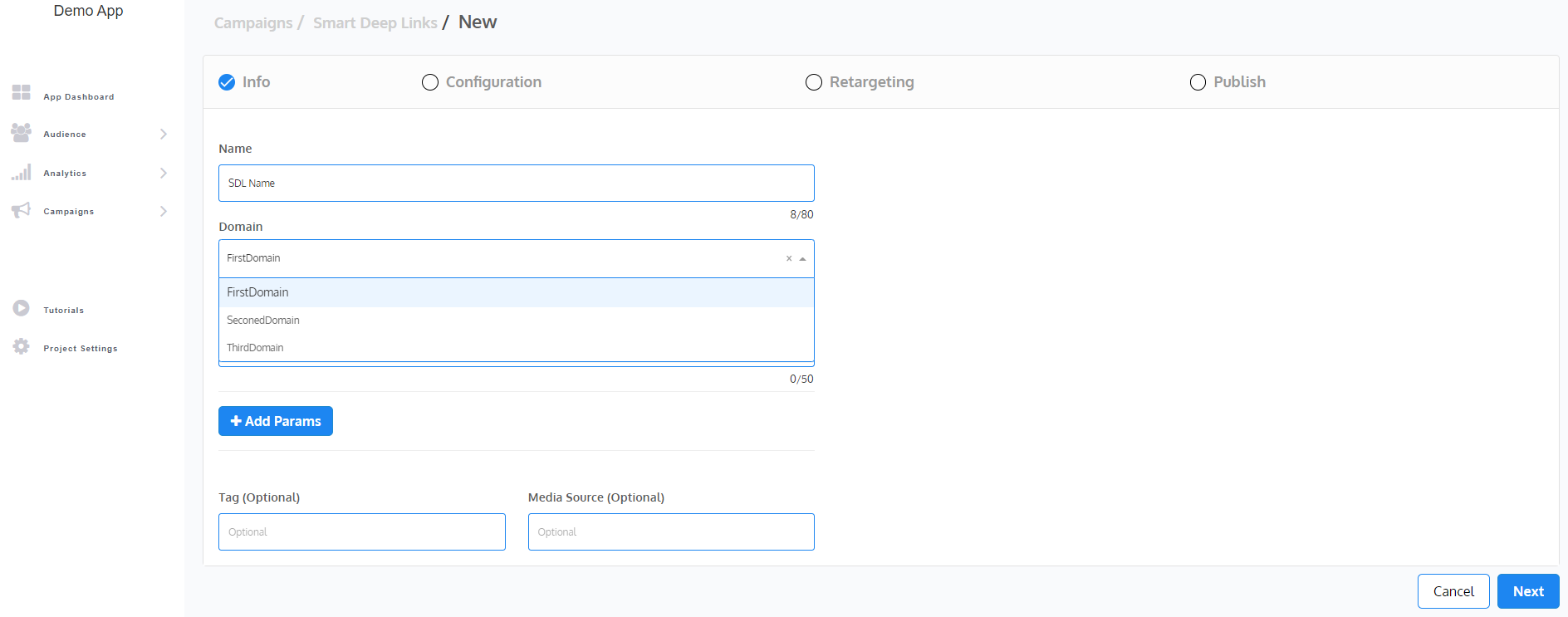
Smart Deep Links- MultiCustom Domains

Our Smart Deep Link is an Appgain Short and Pixel retargeting ready linking product. As a result, Appgain.io Smart Deep Links can now be attached to multiple custom domains. So if you have various brands or several brand names, you can use the same Appgain Project to handle its short links.

smart deep links & Shopify integration

Still haven’t tried Appgain? Request your demo now:

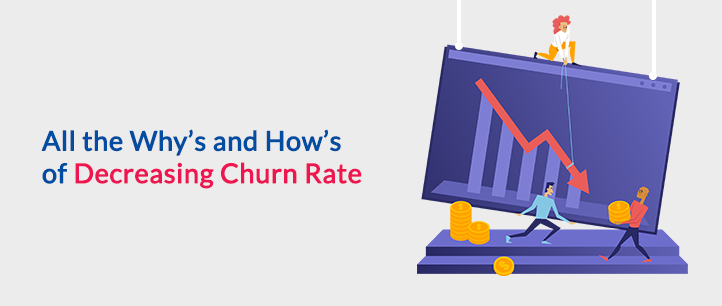
A Growth Marketer’s handbook: Tips and Tricks for Churn Rate Reduction

With the COVID-19 Pandemic, the digital marketing playground is filling up with new players. Today’s digital marketing field is now more challenging, more diverse, and companies are now organized as more customer-centric. In this situation, retaining your active users is as important as acquiring new ones. Understanding why your users stop using your product and solving those issues reduces the churn rate. As a result, you can develop & increase your product/ service and at the same time make your customer satisfied.

As the Appgain Growth team, we prepared an extensive whitepaper about Churn:

“Why low churn rate is important, why users might stop using your product, the challenges while working on decreasing the churn rate & what are the most suitable solutions.”

This blog is the introduction about what Churn rate is, why it’s important, and why keeping it at bay is a necessity for any successful growth marketeer. We know the churn rate as the percentage of the users who stop using your product. You can find the calculation guide in the whitepaper. As with any good problem-solving process, we need to ask ourselves why does churn rate happen in the first place, and the answer could be any of the below:

  • The user journey might be complicated.
  • The user may not be satisfied with the product offer or the after-sales support.
  • The user may have a pending complaint, refunds, or received not completed order.
  • The purchasing process might be long and distracting for the user.
  • They might have heard a bad comment about you.
  • They might have needed a push to purchase, which you didn’t send.

To see how appgain solves your problems, visit Appgain activation for mobile apps page

What challenges do marketers face when trying to decrease the churn rate?

    • Not knowing the reasons for the inactive users.
    • Lack of user insights.
    • Poor segmentation of users.
    • Long action & measurement process.
    • Not analyzing the outcomes of the measurement.
    • Making campaigns & actions that are not possible to measure or track.
    • Insisting on an assumed value instead of listening to the customer.
  • Being unable to get feedback directly from the user or monitor his behavior

For the answers to those questions & more, drop your email, and we will send you the whitepaper “Churn Rate: All the Why’s & How’s to Decrease Churn Rate.”


churn-whitepaper

Product Updates October

We are so excited to announce the latest updates in Appgain automation! They’re designed based on your feedback and ready for your use! Let’s have a look at what’s new:

Multi-Notifications Per Messaging Channel

For the past two years, our marketing automation has been limited to one message per messaging channel. To explain more, for abandoned cart notifications, you can send only one SMS, one push notification, and one email. We have received lots of requests from our clients to add more flexibility, so today we are releasing a more advanced version that allows you to send an unlimited number of push notifications, emails, SMS, and web pushes to recover abandoned carts. Onboard your new users!

Advanced Email Automation

Now you can customize email subjects for each email reminder. Appgain is also usable for cold emailing automation. 

Multi-Custom Domains

Appgain’s version of Linktr.ee, Mobile Landing Pages, and our Bit.ly alternative Smart Deep Links have always been cornerstones for our digital marketers in customer acquisition, social media, and Link in Bio campaigns. However, it was always limited by one custom domain (CNAME) record.

Today, we are rolling out our support for having an unlimited number of MultiCustom Domains.

Mobile Attribution Acquisition Report: Measure Post-Install Events

We have been getting requirements from our clients to use Appgain Smart Deep Links in tracking influencers and SMS App campaign performance to link post-install events to acquisition tracking links. 

Today, with the latest upgrade, digital marketers can measure the performance of influencer campaigns in terms of registration events.

Even though we work on Appgain all the time, sometimes it may seem that little is happening. This changelog is here to improve that very important part of our communication among ourselves.

Mobile Landing Pages, Desktop UI

Now it appears in a vertical layout on big screens, for better UI.

Free Plan Changes

  • Only one free app per account: Now, free plan subscribers can have only one free app per account.
  • Automatic cleanup: non-active free subscriptions for 1 month will be deleted in an automated way.

Still didn’t try Appgain? Request your demo now:

What Prompted Apple to Postpone a Feature of its Upcoming iOS 14 Software?

Apple shocked the app advertising market when they announced the new update of iOS 14 and its change in the IDFA (The Identifier for Advertisers) which is used to track user’s interactions and behavior across various apps and deliver specific ads based on that behavior and interest., now Apple decided to postpone this feature of the IDFA opt-in module until early next year.

The IDFA change will be in a permission “as a notification” that will appear for the user from a specific app to track his or her activity and interactions with other companies, websites and apps then target them with ads related to their actions as we mentioned.

Therefore, Facebook filed a public complaint that the privacy policy could negatively impact the ad market in Apple’s ecosystem, Facebook has published a public note warning that Apple’s new policy will not only threaten the prospects of marketers and advertisers on the iPhone (including Facebook itself).

But it will raise the question of whether Facebook will continue to support its Audience Network program (which uses IDFAs. Facebook’s main services for app developers and advertisers) on the platform.

So Apple now responds to that, by saying that as long as developers can implement this notification and request for permission, doing so is not a must in the new update. to give developers time to make necessary changes, apps will be required to obtain permission to track users starting early next year.

Taking into consideration that it’s just a temporary delay as Apple intends to establish the requirement in the future, and as long as it’s mandatory, so Apple will grant apps and marketers enough time to adapt to the upcoming change.


How could we help?

Finally, we offer you a 14-day Free trial, all-inclusive access to our platform to help you take the first steps along the way. Got any questions? Do not hesitate to reach out and Request a Demo.

Our customized free demo will help you to:
  • Measure the ROI of each running campaign.
  • Re-target users who didn’t convert from your campaigns.
  • Deliver campaigns across many channels such as Push, Web Push, Email, SMS.

RequestDemo

Appgain Mobile Marketing Weekly News Digest – Issue 9 – Apple ATT, Google’s Child Protection, Supply Path Optimization

Google’s New Privacy Attempt for Children

Google’s latest announcement was focused on children’s digital security.

They are planning to make an update that will increase age-sensitive ads’ control.
According to the announcement, the update will restrict some ad targeting based on children under 18. In a blog post

Google said the update will allow all under-18s and their parents or guardians to request that photos of teenagersbe deleted from Google Image search results to decrease child abuse.

Furthermore, the new features, including “take a break” and bedtime reminders, were on the way.
For users who are 13 to 17, the autoplay can be automatically turned off. Also, more features will aim to allow the users to monetize their settings for their best well-being.

In the upcoming weeks, Google will restrict excessively commercial ads on YouTube Kids.

Those materials will include videos that focus on product promotion that encourages children and youth to spend unconditioned money

You can see the video below for a detailed analysis and explanation of YouTube’s latest updates:

ATT: Apple’s Privacy Changes Don’t Seem To Affect Gaming Apps’ Revenue

Apple’s iOS privacy modifications, which mainly introduced the App Tracking Transparency framework, shook the mobile industry. As we mentioned in our previous blogs, the feature gave the users the ability to control and see which app was tracking which data.

At the same time, Apple asked the users’ permission when entering the app if they allowed the app to track their data.

Marketers, and especially gaming apps, have been concerned about fewer imported applications being installed in Facebook ads.

Some businesses have delayed upgrading their apps to avoid the ATT message until they discover
a method to collect the needed data again.
Apple was, and still is, the primary target for the majority of mobile firms. They argue that Apple excludes rivals by blocking economically important information from being disclosed.

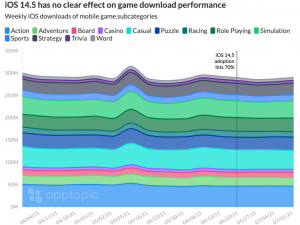
But when time passes, the data shows that ATT didn’t affect the mobile industries’ revenues and downloads. More than 3 of 4 Apple users have updated their iPhones to at least 14.5. Meanwhile, there was no decrease in the gaming app’s download rate. When we see the revenue of the apps, we don’t see a decrease either.

We know that Apple specifically prohibits fingerprinting to identify a device or a user individually. Still, some companies think that probabilistic attribution is a solution that can assist marketers in predicting if the ad reached a download or not. We need to say that probabilistic attribution is also controversial.

You can read the discussion and explanation in our previous blogs.

Can it Be the Next Big Thing?: Supply Path Optimization

There is a strong expectation from marketers to have a bigger ROI for every dollar spent. Meanwhile, the complexity and privacy issues in the digital area and the marketing that’s been thought of are being challenged. The urge and race to gain more revenue from ads sometimes result in unwanted consequences. Lately, a technology that’s giving promising signals is gaining attention: supply path optimization (SPO).

SPO refers to strategies developed by advertisers and/or demand-side platforms (DSPs) to provide the most direct, trustworthy, verifiable, and efficient pathways to publisher inventory.

According to Anupam Dikhit, Microsoft’s APAC director of digital, social, and experiential marketing, untransparent media always necessitates more investment. This perspective lacks a piece of specific information about the audience, causing uncertainty about where that dollar goes. In other words, untransparent ads cannot aim at a solely specific audience. That’s why tracking and measuring the money invested in that specific campaign is getting more difficult.

You can watch a webinar with Anupam Dinkhit explaining data-informed strategies:

To get more into the reasoning, we can say auditing, measuring, analyzing, and optimizing around a more transparent approach has traditionally been very laborious, which means marketers frequently rely on agency and tech partners for assistance.
Technology is improving in the future, with solutions such as supply-chain optimization and markets coming into play.

Finally, verifiable and direct campaigns might be the future of digital marketing. Automation is still required In addition, the most efficient ways need to be embraced.


In this newsletter, we mentioned Google’s latest privacy updates for youth, ATT’s effect on most mobile apps, and supply-chain optimization,

which is considered the new way of doing digital marketing. We will be following up on those topics and bringing you the latest updates. To be informed about what’s up, scroll down to subscribe to our newsletter.

RequestDemo

Appgain Mobile Marketing Weekly News Digest – Issue 8 -Apple’s email privacy – 2021 Q2 App Consumer Spent Report

The previous week, we mentioned Google’s third-party cookie restriction would start in mid-2023 and finish in late 2023. In addition, we summarized important privacy updates from Apple, such as email protection, iCloud updates, secure paste, and current location. To read the previous newsletter, click here.

  • How will Apple’s email privacy affect email marketing?
  • 2021 Q2 App Consumer Spending Report: $34 BILLION 
  • The Android App Bundle will be mandatory for the new apps. 
  • Microsoft Store with Windows 11

How Will Apple’s E-Mail Privacy Affect Email Marketing?

As we wrote the previous week, Apple’s session at WWDC 2021 was surprising for everyone, especially the security part, which had important updates. 

One of the most important updates was the “Hide My Mail” feature that the company announced. 

With the new feature, Apple aims to secure the users by restricting the tracking, including the mail opening data, pixel collecting, and opening time data. We know that 40% of email clients use iPhone-based Apple Mail services, and the new feature worries marketers. Furthermore, their main concern was the possibility of other companies following those updates and bringing a familiar restriction. We know that Google is working on a similar feature for Chrome called WebID, which is widely discussed in W3C circles. 

Some marketers believe this privacy change has a huge impact on online marketing by challenging the tracking itself. 

With the phasing out of third-party cookies and if the customers decide to keep their email data private from businesses, marketing will be radically altered. 

As marketers, we know that email marketing has a high ROI. But it seems that working on the lifetime value of a user or client would be the safest and most profitable strategy to follow. 

Enhancing those improvements as an industry and combining them with the ecosystem will focus on data transparency, accountability, and addressability. Those standards will help marketers and publishers build campaigns based on when and how to connect with their customers. Adapting to all those new adjustments will be difficult. But that’s also what marketing is expected to shape within a couple of years. The companies that stand to build a personalized, long-term relationship rather than one transaction will survive. 

2021 Q2 App Consumer Spent Report: $34 BILLION

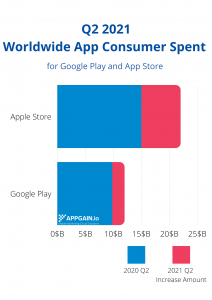
In the second quarter of 2021, consumer spending on mobile applications increased by 25% to $34 billion. This means it increased by $7 billion since Q2 2020 and by $2 billion more than in Q1 2021.

While spending on Apple’s App Store rose by 30% to $22 billion in a year, expenditure on Google Play increased by 20% to $12 billion.

Still, the accelerating digital transformation is accelerating because of the COVID-19 pandemic, but the percentages are promising. Consumers are still getting used to mobile applications, and the rate is expected to increase by 20% next year. 

To be informed about how to increase the purchase rate, check our blog!

Android App Bundle Will Be Obligatory For The New Apps

The Android App Bundle publishing format, which was released to developers in May 2018, With Android App Bundle, developers will publish their apps 15% smaller than the APK format. 

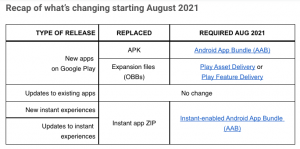
On the 29th of June, Google announced that they would require new apps to be published with the Android App Bundle beginning in August 2021. The blog stated that the goal is to deliver these benefits to more users while also focusing on the current Android distribution, which benefits all developers. They hope that Android App Bundle will eventually change the APK to the usual publishing format. Even today, some apps are using app bundles, including Twitter, Netflix, and Adobe. 

Here’s the table Google used in their blog: 

Also, you can find a little introduction video for Android App Bundle: 

New Microsoft Store with Windows 11

The launch of Windows 11 was impressive because it included lots of new features. Good news!: With Amazon App Store support, Android apps also took their place in the Windows Store.

You can watch the launch of Windows 11 from the link below:


One of the features of Windows 11 is that you will be able to make upgrades in the background and have substantially smaller update sizes. According to Microsoft, Windows 11 is the most secure Windows operating system. 

Meanwhile, the company is still working on security updates for Windows 10. 

0 Commission for the apps! 

Unlike the App Store, which charges developers a commission for in-app purchases or paid app downloads, the Microsoft Store will not charge the developers a commission. 

Here are some updates in Windows 11 in a nutshell: 

  • brand new design of the start menu and a new startup sound. 
  • More customizable start menus
  • Taskbar: Since this version is an early one of Windows 11, the controls are not fully loaded into the OS but are intended to slide out and give rapid access to news, weather, and other online apps and sources. 
  • Arrangability: In Windows 11, new snap controls are available on all apps from the maximize button. They are modern analogs to the sliding window function in the operating system, which has existed for years. You may snap windows quickly next to each other or put them into sections on your desktop.

We will be writing more about the Windows 11 updates related to the apps, Google’s news for developers, and Apple’s actions, especially about privacy. 

To be updated on the latest news on mobile marketing, scroll down and subscribe to our newsletter! 

Appgain Mobile Marketing Weekly News Digest – Issue 7 – Google Postponed The Third Party Cookie Restriction / Apple’s Privacy Cautions from WWDF

Appgain Mobile Marketing Weekly News Digest
– Issue 7 –

Hello! This week we will mention Apple’s latest updates from WWDC and Google’s phaseout of the third-party cookie. 


The previous week, we put the ATT discussion on the table and mentioned the pain points of the Apps. Some of them came up with different data collecting ways, and some saw those solutions as temporary solutions to be restricted soon. Finally, we believe Apple will bring more clarity to the restrictions for the Apps to be prepared faster. 


Meanwhile, Google was working on privacy too: They announced that users would learn about the data share such as location, camera, or even outside the app activation. 

If you haven’t read it, you can visit the blog page here.

Google Postponed The Third Party Cookie Restriction 

Based on the company’s announcement, phasing out the support will start in mid-2023 and finish in late 2023. 

Vinay Goel (Privacy Engineering Director, Chrome) pointed that Sandbox Privacy, which includes removing Chrome’s third-party cookie support, made a significant process. But at the same time, he spoke for all of us and accepted that the ecosystem needs some time to understand and apply those changes. That’s why they decided to slow down the initiative. 


There are two stages for the third part cookie support removal: 

Stage 1 (Starting late- 2022) After Google completes the testings and launches the APIs in Google, they will announce the start of stage 1. During stage 1, marketers & apps will be required to adapt their services for 9 months. Goel mentioned that they would be sure if every app’s questions would be answered. Before passing to stage 2, the feedback process will be carefully held, he points. 

Stage 2 (Starting mid-2023): After 3 months of stage 2, third-party cookie support will be removed. 

A detailed schedule is expected to be announced soon. We will inform you about the news with our weekly blogs. (You can now scroll down & subscribe to our newsletter 🙂 ) 

Even this news can be seen as a great relief in these major changing times of digital marketing. If alternative methods are not in effect, it could cause a big choke for the ad tracking. Google has ramped up its Privacy Sandbox ideas, but the ad sector has mostly seen them as inefficient substitutes and didn’t find them enough. Google kept its silence against those reactions. 

Google also repeated its commitment to ensuring that third-party cookies are not substituted with other types of individual monitoring or “covert techniques” such as fingerprinting. It’s unclear how this recent move will affect third-party cookie solutions that have gained traction last year, such as The Trade Desk’s Unified ID 2.0 and Lotame’s Panorama ID. Anyway, the lengthier timetable for Google to build its own replacements may weaken these efforts.

To give a conclusion,  Google’s delay assures that issues about how to manage privacy and monitoring in digital marketing will linger for the foreseeable future. Getting it right is critical as the importance of digital marketing grows, but the lengthier timetable is likely to complicate matters for marketers. 


Apple’s Privacy Cautions from WWDF

Apple keeps leading the privacy protections among other tech companies after bringing live the ATT.

 The latest announcement includes some protections at Siri, iCloud, copy-paste, photos, and location features. Let’s see what are the news one by one: 

Process Audio of Siri Requests on Device:

The audio of users’ demands will be activated faster on their iPhone or iPad by default with on-device speech recognition. For apple, this solves one of the most serious privacy problems for voice assistants: uninvited audio recording. It’s also mentioned in the announcement and the conference that Siri demands will also be handled on-device, allowing them to be completed without an internet connection, such as starting applications, setting timers and alarms, altering settings, or controlling music.


iCloud+

Private Relay is embedded directly into iCloud, allowing users to connect to the web more securely and privately. While using Safari, Private Relay will keep the user’s device encrypted (preventing even Apple or the user’s network provider from seeing the data). All of the user’s requests are then routed through two different internet relays. The first assigns the user an anonymous IP address, while the second decrypt the site URL. As a result, determining who a person is and which websites they visit will be prevented.

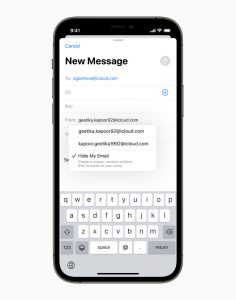
Furthermore, Hide My Email allows users to use random email addresses that forward to their personal inbox whenever they want to keep their personal email address hidden. Hide My Email, which is built directly into Safari, iCloud settings, and Mail, also allows users to create and remove as many addresses as they need at any moment, giving users control over who may contact them.


Secure Paste

Developers may utilize the secure paste to allow users to paste from another app without knowing what was copied until the user takes action to paste it into their app. Users will paste without being notified by the pasteboard transparency notification when developers utilize secure paste.


Photos Limited Library Access

With expanded Images limit library access, developers will provide smart functionality even when a user has only allowed limited access. 


Sharing the Current Location

Users can easily share their current location with an app once with share the current location, without offering the developer additional access after that action. Developers will be able to personalize and incorporate the share current location button straight into their apps.


We will be checking the latest news and developments in the mobile marketing area and bringing them to you with our weekly blogs. To be updated, scroll down to subscribe to our newsletter!