How to drive app user acquisition through website visits using deep links?

Over the past two years (2018 to 2020), desktop internet usage dropped from 54.86% to 46.5%, while mobile internet usage increased from 37.38% to 50.5%. That’s a significant growth rate. 

But here is the interesting part. Although general online consumption is mostly from mobile and it is still growing, we find that  55.9% of the time spent on websites is from desktop! This is because apps are the native language of mobile and websites are more convenient on desktop as they require large screen space.

Mobile Apps are your most effective conversion channel.

Another proof that customers prefer apps over websites is Apps drive 66% of all the mobile transactions and drive 3x more sales than mobile web.

Let’s build a scenario, you are an e-commerce business, you know that your customers are most likely to search your products through their phone and that they are 2-3x more likely to purchase if they ordered through a native app, what should you do? 

Exactly, convert every website visits into an app install, the user will have a better overall experience & a seamless checkout and you will have a higher conversion rate. Win-win!

If an imaginative Scenario isn’t convincing for you, you can check an actual case study here, using appgain products & this strategy, ikhair was able to increase user acquisition by 42% and revenues by 28%


So Why should you use a web-to-app strategy instead of driving app installs directly?

It’s simple economics, Supply & Demand, right now the costs of direct app install ads whether on stores or social media are continuously increasing due to increased demand, so now Web Ads can cost 82% less than direct app install ads. So this strategy will drastically decrease your user acquisition cost

How can you convert website visits or web ads into direct installs?

Now you think the web-to-app strategy will help you grow your app downloads & sales base at a lower cost, how exactly can you implement it? 

There are several best practices to do so, we will go through 3, but the main keywords that you will need in all of them are Deep Links and Mobile Attribution. 

What is a deep link?

It is a smart hyperlink that automatically leads the user to a specific page in your application, even if the user doesn’t have the app installed, the link will route him to the google or apple app store (depending on the device & OS), then after installation, the user will open the specific location.  Also, you can use web push notifications to convert your users to your app. To see how Appgain solution for web push works, check here. Now let’s go to the techniques.

First: Leverage Mobile Search terms

People spend on average 5 hours on their phone, they search everything, they search you before they buy from your brand, they search for the (cheapest or best or easiest) solution to their problems. Leverage that, identify the keywords mobile users type in google to visit your website, and what are the most visited pages they visit? Optimize these web pages SEO using the keywords you identified and add smart deep links in those pages that will directly route the visitor to a specific location in the app.

Second: Exclusive Promos & Offers

Add promos, offers, discounts, free trials, or App Sneak Peaks on your website and make accessing them exclusive to only those who have the app installed and as the first case, if they don’t have the app, the deep link will route them to the app store, then they can access the promo, free trial, etc. 

Third: Loyalty Programs

A loyalty program rewards loyal users/customers for doing or repeating certain actions over a period of time. One common method is the points system, that rewards users after achieving 

For example, you can give your users 20 points if they downloaded & opened the app, 30 points if they made a purchase, 50 points if their purchase reached a certain amount & 100 points if they referred your app to 10 friends and after reaching 300 points, they can get free gifts or large discount offers.

You can optimize your web-to-app conversion by building and launching exclusive loyalty programs for those who have the app installed and announce them on the most visited pages on your website. 

Fourth: Display Ads 

When designing & launching Display Ads campaigns, instead of adding a standard URL that directs to your website, add a smart deep link that will route mobile ad viewers to your app.

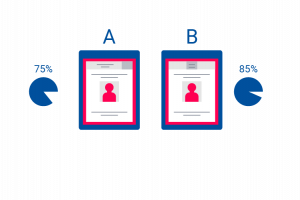
Or you can do some A/B testing yourself and try both methods (Standard URL & smart deep links), the click-through rate would be the same as the users won’t distinguish but we bet the conversion rate & revenue generated would differ by a wide margin. 

You can also make another A/B testing between deep links powered Display Ads and direct app installs Ads and checks the Customer acquisition cost in each case, we also bet that the web ads will be much lower than the direct install ads.

There are many other use cases for the deep linking technology that will help you to boost user acquisition and user engagement at a lower cost, you can find 10 of them here.


How can you measure the efficiency & ROI of this strategy?

So you have launched 2 or 3 campaigns to execute your web-to-app conversion strategy and you want to measure the efficiency of each campaign and its ROI, how will you do that?
Time for a new keyword: “Mobile Attribution”.


What is Mobile Attribution?

Mobile Attribution is the night-vision goggles for mobile developers and marketers that allow them to track every click, install & purchase process. 

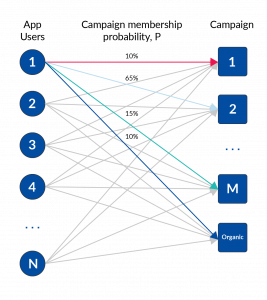
Through mobile attribution, you can track the app installs and know what channel each user came from and track the revenues, and know where each dollar came from.

So you use any mobile attribution product to track the deep links in your campaign and know how many installs came from the display ads campaign and the loyalty program campaign and know how much revenue was generated from each channel through those installs then you can compare them and see which is the best channel to acquire more customers at a lower cost. 

Our Mobile Attribution Product will help you track key metrics through all the user journey, so you can identify

  • Who clicked on the deep links.
  • Where the app installs came from
  • What are the user behaviors inside the app?

This will help you to know not only which campaign drove the most installs, but also which ones drove the highest conversion/purchases. 

To summarize, your prospective customers are on their phone on average for 5 hours daily. You want them to be on your app instead of your website because it’s more convenient and they are more likely to make a purchase through the app.

Knowing that web ads are less expensive than direct app installs ads. You will use the deep linking technology to auto-direct your website visitors to your app even if they don’t have it installed. You can measure the ROI & efficiency of this strategy using Mobile Attribution technology that will tell you how many clicks, downloads, installs & purchases were made through each channel.

But How Could We Help?

Finally, we offer you a 14-day Free trial, all-inclusive access to our platform to help you take the first steps along the way. Got any questions? Do not hesitate to reach out and Request a Demo.

Our customized free demo will help you to:

  • Build smart deep links that auto-direct to your app
  • Track installs & campaign revenue through Mobile Attribution
  • Re-target users who didn’t convert from your campaigns

RequestDemo

Meet Appgain.io at SEAMLESS MIDDLE EAST 2020

We are excited to announce our participation in SEAMLESS MIDDLE EAST as an  EXHIBITOR on November 16-17 in the Dubai World Trade Centre, Halls 1-3. 

What is SEAMLESS MIDDLE EAST?

Seamless is the region’s leading payments and commerce technology conference and exhibition. The event has separate conference agendas covering the world of Payments, Fintech, e-commerce, Retail, and Identity. With one shared free-to-attend exhibition hosting 500 of the region’s leading technology providers.
It brings together the regional payments, banking, and fintech ecosystem for two days of creative exchange, networking, inspiring talks.

Why is it important?

It’s a very good step for Appgain to participate there, this opportunity will allow us to show how our platform can help retailers and mobile apps engage their customers and improve their user retention.
We also look forward to sharing information about our new product features, to make your App more engaging and effective. 

How can you find us?
Our team will be there at booth E71 to assist you with everything you want

We will be also available virtually through this link

Will be glad to welcome all app developers and marketers to help them with everything.


visit us in PERSON and ONLINE
And
Get Free App Clinic

⭐️ UX review ⭐️ Marketing Stack review ⭐️ User Engagement Strategy Advice

Appgain Startup Program

In the post COVID19 pandemic era, charging mobile-first startups thousands of dollars to grow their struggling businesses is no longer fair!

Being a startup ourselves, bootstrapped until a few months ago, we decided to review our pricing structure to support business in Post Covid19 time. 

Today we are excited to announce a new pricing plan and feature update, a plan created to help small app owners and businesses boost their App revenue.

Introducing the Appgain Startup Plan

A startup plan is suitable for startups in all stages, even early-stage B2C startups. Purposely created to help startups and small businesses to grow up at a stable pace.

We believe that this plan’s core value-added is the real key that many startups seek nowadays. After COVID 19, you can find the best beginning that your business needs at an affordable price.

So, our main focus was to provide your business with a startup-friendly price and the best startup program as it’s the key to achieve your startup goals.

The Appgain Startup Program is for Apps that have up to 50,000 monthly active users, alongside our best engagement tools.

⭐️Marketing Automation: Influence your users’ actions by pushing highly-targeted and relevant content through mobile app multi-channel marketing. It can help design automated marketing campaigns for the entire mobile customer lifecycle, with Omnichannel messaging through push/web push /Email /SMS channels, for up to 6 automation scenarios.

⭐️Remarketing: retarget your users as soon as they open your links or even removed your app on all major social media/ads platforms.

⭐️Mobile Attribution: Get visibility of customer acquisition channel, and ROI  of each channel, Track Downloads per channel, Sales from users of each channel.

⭐️Smart Deep Link: A short link that allows you to route the user to a specific page inside an app, with built-in social media retargeting up to 500K Hits/month

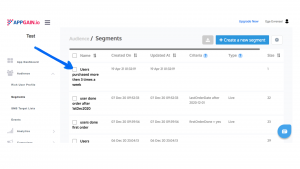
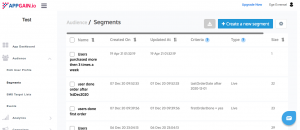
⭐️Live Segments: Segment users by their in App Actions and Events can have up to 10 Live segments.

⭐️Rich Push Notifications: Appgain offers unlimited Rich Push Notifications, send push with a gif, HTML content, and video push, combined with push localization, the ability to send push in multi-language.

⭐️Web Push Notifications: Browser push that works without an app for up to  50k subscribers.

⭐️SMS Campaigns: interactive SMSs, powered by Appgain smart deep link and landing pages, users are routed to pay, post a tweet, or a page in your app. , use your own SMS provider or buy an SMS package from us.

⭐️Email Campaigns: Deliver emails in Rich HTML or text, for both  Transactional or Campaign mode, the Startup plan has 50K emails/send credit.


Who is eligible?  


How does Appgain Startup Plan add Value to Your Startup?

It’s a great step for Appgain to work with startups and help them grow faster as we offer you a lifetime plan with only 49$  per month.

Also, our team will provide you with all guides and assistance through our Ebooks and webinars to help you get the benefits from the plan and back you up to prosper your startup.

In Appgain, it’s all about the value we add to our current and coming partners. Helping startups is one of the best decisions that we have taken lately watching them grow and successfully achieve their financial target makes us delighted and excited to partner up.  ??

Redeem startup plan now and have 2 months FREE for a limited time till 30 Nov ?

October Product Updates: Meet The new Appgain (V3.0)


Better UI, Customer-Oriented, and Easier Campaign Measurement

It was not easy, but yes, we made it! We finally achieved one of our main goals in this period.

A new website that’s faster, easier to navigate, and more user friendly

With our developers’ team, our goal with the new website is to provide our visitors with an easier way to learn about our services and solutions, also more speed and better UI 

In past years we have been limited by using WordPress, which is not geek-friendly and comes with many security bugs and maintenance hassle.

So, we decided to move to hybrid mode, UI build by Webflow, And Appgain Baas for website serving + WP as blogging CMS API!

we wrote our own web server using Appgain.io Cloud Backend (yes, we eat our dog food)


Customer engagement platform


We need to make information regarding our products, services, and trends easily accessible for our current and prospective users. We endeavor to provide our client partners with the most accurate, up-to-date information and share our knowledge and expertise as a Customer Engagement Platform.


Meet Our new Dashboard

As you may have noticed, our Web /App Marketing Dashboard also got a makeover! We redesigned to give you more critical information, stability, and more functionality to follow up with your campaign at a glance. 

The new Dashboard is cleaner, easier to interpret, and will help you assess your campaign’s performance, now you can create your first Appgain project in 1 screen rather than the old flow of 3-4 screens, and without a credit card even!


All your project settings are in one place! Before, the project settings were scattered among many screens, now it’s gathered under one screen to make it easier and mission-focused.

At Appgain, we’re always striving to make our product better by introducing additional features and refreshing older parts of the platform. We recently decided to make a big improvement to our product by completely redesigning it from the ground up. 

We tried to update the user interface and UX to make it easier to interact with the dashboard.

As a customer-oriented version, we included these updates:

  • Google Signup: Sign up and log in with one click of a button using your google account.
  • Start Completely Free: Use Appgain for live time, free. Check this for more info.
  • User onboarding flow: New information structure, Flexible Customers Segmentation, and Revenue Analytics.


We started working on some awesome new features that we would like to share with you in the coming months.

We can’t wait to release our next page. Stay tuned for more!

Customer engagement platform

Mobile Apps Advertising Future With iOS 14

October 2020 will be challenging for the entire mobile apps advertising, and you may ask what’s new with the IDFA after Apple announced the new iOS system ‘iOS 14‘ 

For marketers, it is IDFA (The Identifier for Advertisers) simply it is a device identifier in Apple’s system. Attribution platforms like Adjust, Singular, Kochava, or AppsFlyer use it for tracking and identifying a user (without revealing personal information), allowing advertisers to access aggregated data.

The data is used to discover information about the user’s activity like in-app events or the interaction with the mobile advertising Campaigns.

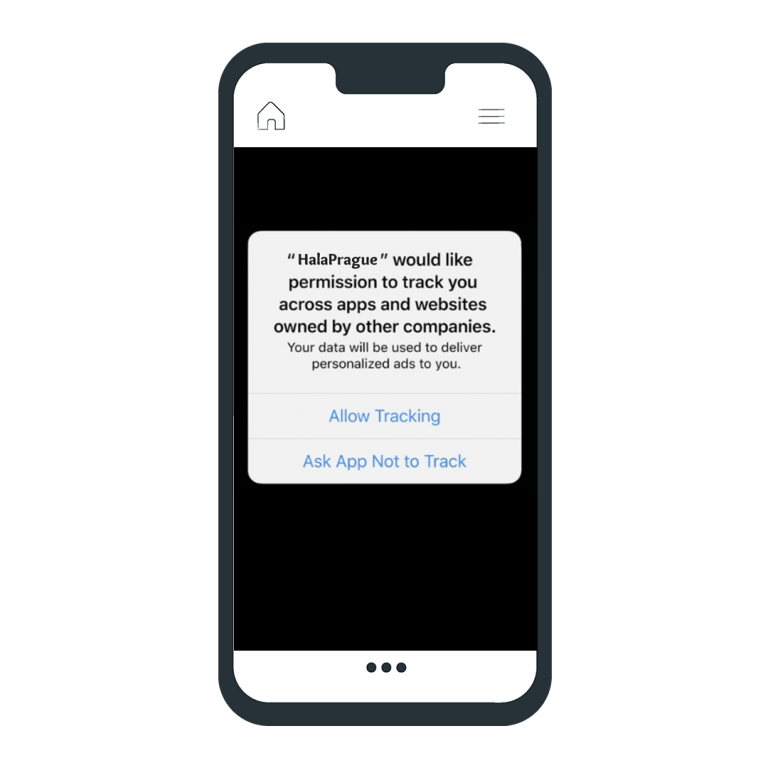
With iOS 14 all of that is going away and IDFA will be useless for mobile attribution unless the user decides whether to allow an app or brand to track his or her activity and interactions with other companies’ websites and apps or not.


IDFA is very important for marketers, but on the other hand, privacy for users is essential and this prompted Apple to take this step by allowing companies to use IDFA after the user’s permission.

There is no doubt that it is a secure step and will keep the user’s privacy. But a vast industry here like mobile app ads will experience a big change.

According to Apps-flyer estimate that $ 80 billion in 2019 and expected to grow to $ 120 billion in 2022. The major market share is the announcement of iOS apps. Hence with changes to IDFA accessibility, the industry may suffer a significant downturn.

Global App Install Ad Spend to Reach $118B in 2022 | AppsFlyer

In the previous, any iPhone user could switch off IDFA tracking in his or her privacy settings but only 15% of users do that based on Apps-flyer estimate.

This number can reach 70% with opt-in notification for every app in the new iOS 14. And as a result without accurate information, data will drop massively and ad campaigns will get affected.

Moreover, the equation will be changed in the ad ecosystem with various platforms especially Google and Facebook since they have the lion’s share.

But let us not forget that both can handle the situation and regain stability. Facebook and Google are the two biggest platforms for mobile users. The user’s data and information can play a big role and make a difference for them.

On the other side, the other apps and advertisers won’t stop advertising but will be a dilemma if they can’t measure the efficiency of their ads without accurate data.

Of course, Apple isn’t leaving the advertisers without a solution and a practical tool to use it. It recommends using its SKAdNetwork for attribution and is going to develop and update it.

SKAdNetwork will allow advertisers and brands to know the ads that led to the required actions without revealing which specific devices or people took those actions.

There’s no escaping the fact that we will experience a remarkable Transformation in Mobile apps advertising and we can expect to see several updates from both advertising and attribution platforms.

Will see how small and medium app companies will be a competitor to be reckoned with when using their effective advertising tools in mobile user acquisition.

The ability of adaptability and making smart decisions is what will work well in this situation.

October 2020 …stay tuned!


How could we help?

Finally, we offer you a 14-day Free trial, all-inclusive access to our platform to help you take the first steps along the way. Got any questions? Do not hesitate to reach out and Request a Demo.

Our customized free demo will help you to:
  • Measure the ROI of each running campaign.
  • Re-target users who didn’t convert from your campaigns.
  • Deliver campaigns across many channels such as Push, Web Push, Email, SMS.

RequestDemo

Apple’s Latest Changes Took Its Toll On The Mobile Advertising Ecosystem


At the end of June 2020, Apple shook the Mobile Industry to the ground. It was announced that the IOS  Identifier for Advertisers, aka IDFA, is no longer accessible for companies as it used to be before. They were putting a substantial constraint on the advertising businesses.  As a result of the recent decision, Apple device owners are untraceable unless they permit the accessibility of their data and be shared with third parties. Businesses are now eager to be given the green light for using audience profiles so that they do not fall short on effective marketing practices. 

First things first. What is IDFA?

IDFA is short for “Identifier for Advertisers.” It is mostly used by businesses to detect and track IOS users while observing the way they respond to their Mobile advertising efforts. Qualifying it to be a  key indicator by which campaigns’ performance is measured, and strategies are set. It is worth mentioning that all users’ data are fully protected and are only limited to their device IDs.

According to Forbes, it is believed that there will be a total loss of $80 Million in the field. It is undeniable that businesses in various industries have been tragically affected in a way or another.


Let us take a look at how knocking off IDFA would trouble the Mobile advertising ecosystem.

Understanding Users behavior

Successful advertising was built around tracking users’ past and live interactions with marketing campaigns for ages. Now that the key identifier that assigns audience devices and their activities with the campaign is gone to the wind, Marketers are prohibited from getting the required insights that analyze how users behave online as the businesses tailor their operations consequently.


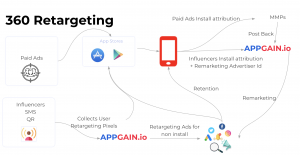
Retargeting Users

Remarketing is a big deal when it comes to widening your audience base. Different forms of Remarketing include Link and App retargeting whereby you could reach specific users who showed interest in your brand by clicking one of your Ads online or installing your App. Afterward, IDs are collected and used to retarget them across multiple distribution channels that they are active on. Hence, without being able to identify the origin of the profile, the tool could not re-engage with users and deliver their advertisements effectively. Throwing us another obstacle along the way.


Attributing Results To Specific Audiences

Conversions lead to revenue while revenue is turned into profit. Attributing your source of campaign revenue is extremely crucial. In other words, identifying which prospects brought you the highest monetary value and conversion rates is the foundation of your marketing strategy. That means that you could repeat the process to keep the loop of income going. Being unable to identify such essential resources will make the job harder for businesses to maintain the continuous cycle of ROI through categorizing users in and out of the golden segment that brings them the highest value.

A/B Testing

Running campaigns is vital for communicating with your customers. However, there are times when businesses have to launch A/B testing campaigns to examine which type of users are responding, which piece of the content version attracts the most traffic and what are the mediums that are bringing those users? Endless variables could be examined with this type of campaign. Without the IDFA, businesses could no longer link the behavior of a particular user with the campaign’s variables. Challenging them to properly measure and assess the collected data.


Assessing the current situation, makes us wonder how businesses are going to cope after IDFA limitation?  We have two options Apple   Ad network API and Legacy Attribution via digital fingerprinting SKAdNetwork 

As per  Apple, The ad network API helps advertisers measure the success of ad campaigns while maintaining user privacy

So SKAdNetwork is a privacy-safe framework developed by Apple. It was worked on for over 2 years now in order to ensure that the updated version of the framework assists marketers to point out which campaigns get the results without revealing users’ IDs. It is safe to say that this option is not much of an option. We are mostly stuck with it It can not produce a detailed analysis of Mobile Attribution.

Digital Fingerprinting

Attribution Analytics uses device fingerprint matching as the fall-back method for attribution if none of the supported unique device identifiers are available. 

Fingerprint matching is particularly useful for installs via a mobile web browser because these browsers are unable to collect unique device identifiers (so other attribution methods are not possible) and therefore, we rely on device fingerprint matching to attribute app installs to user clicks.

Attribution Analytics prefers device fingerprint matching over cookie-based measurement because fingerprint matching occurs asynchronously in the background of the mobile app. Therefore, it does not interfere with the user experience by forcing a browser to open (as in the case of browser-based cookies). Not surprisingly, fingerprint matching is also the preferred user experience by all of our clients. Apple also adopts a policy of rejecting apps that use cookie-based measurement, making fingerprint matching the new standard when a device ID is unavailable.


How Device Fingerprint Matching Works

Device fingerprint matching works by redirecting users through a measurement URL and collecting the publicly available HTTP headers about the device, which Attribution Analytics uses to create a unique fingerprint for the click of the measurement URL.

When a user installs the mobile app, the TUNE SDK collects the same data points from within the mobile app and sends them to the Attribution Analytics platform, which generates a device fingerprint and subsequently searches for clicks with the matching fingerprint. Attribution Analytics attributes the install to the last click with a matching fingerprint.

By default, the look-back window (or attribution window) for matching device fingerprints is 24 hours. So to find a match, Attribution Analytics only considers the clicks that occur within 24 hours from the install.

While other ad networks and advertising partners (publishers) claim accuracy beyond 24 hours and apply look-back windows of 48 and 72 hours, we find that device fingerprint matching is not statistically accurate beyond 24 hours.

How will Appgain react? 

At Appgain, we are already working to implement the Apple new IDFA permission-based tracking, Ad Network API, besides our current support for Digital Fingerprinting.

Although retargeting by IDFA over ad networks used to be bulletproof, however, our ad network integration enables retargeting by other various identifiers like FB ID, email, and mobile number.

Although Apple has moved the IDFA to be permission-based like Push Notifications, the impact will vary from market to another, with already advanced markets like the US, more than 30% of users have turned on limit Ad tracking, we don’t think the impact is that much critical in less developed markets.


How could we help?

Finally, we offer you a 14-day Free trial, all-inclusive access to our platform to help you take the first steps along the way. Got any questions? Do not hesitate to reach out and Request a Demo.

Our customized free demo will help you to:
  • Measure the ROI of each running campaign.
  • Retarget users who didn’t convert from your campaigns.
  • Deliver campaigns across many channels such as Push, Web Push, Email, SMS.

Businesses survival guide during and after COVID-19


COVID-19. A name we have been excessively hearing in the past few months. An expected pandemic that did not only threaten our well-being but also affected a countless number of businesses all over the world. Businesses from all industries no matter how large or small it is, this crisis could still diminish even the strongest in the market. Of course due to the fact that these companies hire a large number of employees who rely on a steady monthly income to be able to live and fulfill their everyday needs. 

One of the most common actions that businesses took was laying off as many employees as possible and reducing expenses in order to survive in this cut-throat environment. Best of the best companies were trying to take every chance to avoid more losses and to sustain their name in the market. However, some sank at the bottom and officially declared their bankruptcy.

So, if you are reading this during the COVID-19 era. This will be your ultimate guide to survive the current situation. So let us spread some positive vibes and discuss how to adapt from a business perspective.


Digital Presence

If you did not have an online presence before the pandemic. This is your chance. Digital marketing is an advanced language for advertisements. It is considered one of the cheapest and most effective options you have to expand your reach online. Whether you are going after awareness, reach, or conversions. Digitizing your promotional activities is your first step to adaptation. Set your budget and launch your ads for customers to see in your area and you have just put your foot in the right direction.

Online Delivery 

Brands from various industries including the ones that did not even cover delivery options within their business operations, provided a free delivery facility just to boost sales. As we all know, we have been home quarantining for some time as our beloved daily routine. Which makes this add-on to your order a brilliant deal. Surely, no one was going nowhere and businesses were thriving for selling products. Therefore, it was considered a win-win situation for both ends.

Discounts and Offers

Consumers love Discounts and Offers. Does not matter if we need it or not, we are taking two of each. Promoting a discount or an offer triggers the urge of conversion in customers. Qualifying it as an incredible way to motivate your target segment to take action.

New Direction

It is definitely very important for businesses to plan for the future. Will the pandemic be over soon? Would we be able to encourage customers to convert? Will there be permanent changes in the dynamic of consumer flow?. Lots of questions and a few answers found to settle us down. Thus, you have to be proactive and strategize while considering all of these different variables. While having a backup plan just in case things go well as planned.


How could we help?

Finally, we offer you a 14-day Free trial, all-inclusive access to our platform to help you take the first steps along the way. Got any questions? Do not hesitate to reach out and Request a Demo.

Our customized free demo will help you to:
  • Measure the ROI of each running campaign.
  • Retarget users who didn’t convert from your campaigns.
  • Deliver campaigns across many channels such as Push, Web Push, Email, SMS.

Appgain gets seed funding from 500 Startups

We started our company in 2018 on a mission to empower mobile app marketers & entrepreneurs with all the tools they need to achieve app growth.

We invested a lot of time, money, & effort with lots of experimentation to reach a product/market fit and an increasingly growing user base.

In 2020, it was time to go bigger. We needed a partner to push our growth journey. We couldn’t find a better partner than 500 Startups to help us in this stage.

We joined 500 startups Misk Accelerator in March 2020. We got mentored, coached & of course funded. We graduated in May 2020 and received $50,000 seed funding. 

With this investment, we will take our product development to the next level. By hiring more engineering talents and developing new tools to be the single platform that every app marketer needs in his growth journey.

Finally, we would like to thank all the 500 startups team for their mentorship & support. We also thank the Misk 2020 batch for the fruitful conversations & discussions we had.

Mobile App Marketing Strategies – How To Acquire, Engage and Retain Users? – Part 2


To acquire, engage and retain users, you need to know the rules of the game. And to win the triumph of this game, you will need to take each phase of it by storm! What we are tackling here is the steps you need to follow. Previously in part 1, we addressed step no.1 “Know more about the game” where we enlighten your path with some real-time statistics about mobile consumer behaviors, mobile experience and install attribution. Then we tackled step No.2 “Understand your user journey” where we introduced the AARRR model and its benefits for your mobile marketing process. Now moving to step no.3

Step 3: Utilizing the AARRR Model in your mobile app marketing plan

I- Acquisition

– How do users find your app? (your app discovery)

Having more than 1.2 million apps in app stores, your mobile app acquisition process is not such an easy task to accomplish. After double-checking on your users’ persona and segmentation, and making sure that you are targeting the exact right audience to your app, you need to start researching where exactly to hunt these audiences. And the question here is “From where can you start?” The answer is right in this insight 

These are the most active mobile users’ acquisition strategies and channels. After thoroughly checking it, you need to do the following:

  • Determine which channels of these you are using the most
  • Determine how common/successful it is according to the graph
  • Check out your app acquisition insights (aka mobile attribution) from each channel and document all the findings
  • Compare between the insights of each channel you analyze and determine which ones work for you the most

    After doing this exercise, you will definitely find out that the most effective channels/strategies on your list is one of these: social media, video ads and ASO. These three are the top channels to acquire audience, but do we know how to approach them correctly? Let’s see…

– Social Media

Social Media is ranked as No.1 channel on the “most effective channels” list for a reason; it’s a magical channel if you just used it right! Evolution of social media throughout the years is impressing. Nowadays it is marketers’ no.1 channel to reach and acquire the broadest possible base of audiences, and to network with them as well!

So here are you some Do and Don’ts when you start setting your social media strategies:

The Dos
  • Create a worth spreading app content: Wants your mobile app go viral? Then listen to this. The fastest and most effective way to spread your latest news/updates about your app is to get people to share it. The easiest way for people to share these news/updates is to find them right there on their timeline. So create that shareable and engaging app content and let your audiences do the rest! It can be a written post, a GIF or a video
  • Interact: think of social media platforms as your online PR. Reply to your audience’s’ comment or engage them through a game that is related to your app, and most importantly, act like a human being, not like a robot! Collaborate with influencers: Social media influencers are talking marketing by storm, forget the old school strategy of focusing all of your budgets on paid ads, save some to the right influencer who is in the same field of your app and collaborate to advertise for your mobile app.
  • Hashtags: watch the most used hashtags closely on each platform you are using post regularly on those platforms. Choose what is suitable for you and use them wisely.

As for the Don’ts, this chart says it all:

Here are you some tools that can assist you:

Socedo: “Automate Social Media Lead Generation Machine”

Hashtagify: “Find and Analyze Top hashtags.”

Hootsuite: “Manage Multiple Networks and Measure your campaign results.”

Edgar: “Social Media Scheduling Tool That Manages Itself”

Crowdfire: “Grows your audience and build up the brand

That’s where can you start from regarding social media mobile marketing. Follow appgain.io step-by-step guide to acquiring. Engage and retain users – part 3 to explore the rest of the channels.

want help in mastering the phases? use our platform to ease things up for you and help you get more customers! start your 45 days of free trial now! 

Get started

Mobile App Marketing Guide – How To Acquire, Engage and Retain Users? – Part 1

Mobile apps are not a “set-and-forget” thing, you don’t just create it, and that’s it! Building the app is your start line; it’s when you start the game.

The real case here is to go through all the challenges you face until you reach the finish line successfully, and then go to the next level and so on. 
Accordingly, we are providing you with what you need to win this mobile app marketing challenging game;

“Appgain.io step-by-step guidelines in  Mobile App Marketing and how to acquire, engage and retain app users.”

Throughout this guide you are going to learn more about mobile app user journey, how you can trigger them in each phase of this journey, and how to successfully pass each phase till you reach the triumph!

To see how you can boost your acquisition with Appgain, visit our acquisition for mobile apps page.

Step 1: Know more about the game

Before taking any step forward in the game, you need to study its related facts and figures first. So here we go. Researchers found that “Four out of five smartphone users check their phones within 15 minutes of waking up, and 44% admit to sleeping with their phones beside their bed.” Huge huh? And the ugly truth is that users don’t even spend this time equally between different apps. A mobile app user has an average of 26 apps, but s/he uses only 5 of them for 80% of the time!

These insights will tell you more about that:

  • an insight on app categories share and average time spent in each

  • While you have a dominant top 10 apps of all times

  • When you try to introduce a new app, these are your chances


  • But knowing what your users expected will help in a million

using these facts and figures, you can now map most of the challenges you may face and get prepared.

Time to learn how to win them all! 
Moving to step No.2

Step 2: Understand your user journey

To win users’ attention and to stand out despite all of the above challenges, you need to know your users’ lifecycle starting from the minute they hold their digital device and start navigation.
Growth framework “AARRR” is your best enlightenment model for that aspect. Invented by Dave McClure back in 2007, AARRR was and still that simple and clear way which well-illustrated how exactly your users move from a phase to another and get you one step closer to the understanding of their behavior. AARRR states that mobile app users go through 5 stages; acquisition, activation, retention, revenue, and referral, as shown in the diagram:

Your task now is to master every single phase of these; to understand how to encounter each one, to know the best strategies to be used, and to discover the suitable tools to analyze and manage your strategy… Let’s dig deeper! 

want help in mastering the phases? use our platform to ease things up for you and help you get more customers! start your free trial now! 

Get started