Appgain vs CleverTap

Boost your conversion rate curve upwards and lock up all of your data, including untouched Raw data, with Appgain’s Marketing Solutions Cloud. Here is what we offer your business, while CleverTap does not with a fraction of the price.
Raw Data Access

  • Secure all of your data in-house for higher accessibility and tracing.
  • Back-Up your work by storing your Raw Data on our Cloud.
  • Refer back to where your business has started and compared it to your current results for performance assessment.

Mobile Landing Pages

  • Engage users with our high-performance responsive landing pages.
  • Attract traffic to your channel by reaching more Mobile users.
  • Alternate from our pre-designed templates or build your own using our HTML code space on the platform.

Deep View

  • Give your audience a taste of your Mobile App before installation.
  • Let users learn about your App via the Web.
  • Optimize your Application’s organic search discoverability.

Now that you have known what you were missing, Appgain offers you an All-Inclusive package with the most affordable price in the market.

Feature

Appgain

Clever Tap

Mobile Deep Linking
Mobile Attribution
Mobile Landing Pages
Deep View
Raw Data Accessibility


Still, got questions? Do not hesitate to reach out and Contact Us!
Request Demo Now

RequestDemo

How to use Omnichannel marketing to maximize your revenue?


[perfectpullquote align=”full” bordertop=”false” cite=”” link=”” color=”” class=”” size=””]Every business’s goal in the world is to make more revenue, that’s just a fact, I mean even normal people would like to get more income.[/perfectpullquote]


So to compact this issue businesses develop new ways to make sure that they’re getting more revenue and trying to decrease their costs.

Every once and a while some new term or marketing strategy pops up, like digital ads and etc, and digital ads aren’t a new thing, right? But a couple of decades ago they’re a revolution. 

So now we’re looking at a new marketing strategy which is omnichannel marketing

money

What Is Omni Channel Marketing, And Why Does It Matter?

Omnichannel marketing is the way of which you could reach your customers on multiple platforms

Whether to sell them goods or to announce anything, you could use it to fulfill any marketing purposes it’s assigned to.

Omnichannel marketing is a combination of social media remarketing, SMS, Paid Ads, Notifications, and Email.

Visualize omnichannel marketing.
If you’re made a purchase before from a store and you’ve entered your information like email address and mobile number, you get a promotional SMS message with an offer, you open the offer website and check it out, but you don’t purchase…

After a while you get an email with some of our latest offers, after a while you get a notification of a flash sale!  

Then when you’re browsing posts on your favorite social media you get Ads from our store with some of our best sellers! Then you decide that you’re going to purchase it.

 Of course, that’s a fictional funnel that we created just to show you how omnichannel marketing works, and you won’t be getting all the marketing messages at the same time, that’ll be spam.

But more of an ongoing digital marketing campaign that you decide how much does it last

How to use omnichannel marketing? 

Now you might be wondering, okay I’m now familiar with omnichannel marketing, how do I use it in my marketing campaigns? 

That’s actually pretty easy,  all you need is to have your customers’ data, like phone number, email, a name for customization, etc.

But the only issue that for you to do an omnichannel marketing campaign you’ll need

To make an account on an SMS marketing site like infopip

And make an account on an email marketing platform MailChimp

Also, you need an account at a notifications service provider like OneSignal 

You also need to set up a tracking pixel for all of the social media platforms that you target which is not an issue.

But you’ll need to implement their tracking code into your website which could be a headache if you’re not a developer

Or could take days depending on your developer’s capacity!

Then you’ll have to set up an analytics tracker to keep up with your sales and growth statistics

Not only that but you also have to keep up with all of the other marketing platforms.

And then compose all of them into one sheet to keep track of your campaigns and determine what works and whatnot.

It sounds like a nightmare, right? I mean omnichannel marketing shouldn’t be that hard, it’s designed to make marketing much easier! 

Omnichannel at Appgain

And that’s why we in AppGain have developed our solutions with omnichannel marketing as one of its pillars, whether you have an App, or an eCommerce store, or a mobile marketer for a business.

We acknowledge how challenging digital marketing could be, so we made the All-In-One marketing platform.

Let me tell you how our customers double and even triple their revenue by omnichannel marketing.
marketing

They share their offers through our inhouse mobile landing pages

What’s special about those that you could share your content

Retarget your customers on social media because they have pixel tracking implemented into them.

Also, they have notifications built into them so you’ll be able to retarget your customers with notifications and social media, and not only that…

You could also send your customers SMS campaigns, and email campaigns as a part of the full omnichannel marketing. 

You could also track all of your marketing campaign’s data from notification stats to how many sales did you achieve

Also, you can use digital invoices to stay in touch with your current customers anytime you want! To learn more about digital invoices, you can check our digital invoices page.

How much are your growth rate and much more useful data that would help you get more sales?

Conclusion

Now let us wrap this up, I don’t want to hold you back from doubling your revenue.

Now that we’ve talked about omnichannel marketing, what is it and how challenging it could be.

We also talked about the different aspects of omnichannel marketing and how we in Appgain do omnichannel marketing differently!

Boost Your Revenue Now 

We would like to invite you to try our omnichannel marketing! Whether you have an app or if you have an eCommerce site or a brick-and-mortar store, you could utilize omnichannel marketing and get more revenue.

Still, got questions? Do not hesitate to reach out and Contact Us! Request Demo now.

Understanding The User Journey Map for Mobile Apps

Apps nowadays became a part of our life it can help us in shopping, playing, watching videos and purchasing, etc, in another meaning, it’s a journey for users that they spend time and money with it and sometimes they end up leaving the app or removing it, So when we notice that some users prefer an app than another we realize that behind this app or brand a marketer who understood very well the users’ journey to keep his/her brand on the track, and that takes us to go in details to know more about users’ journey.

What is the user journey?

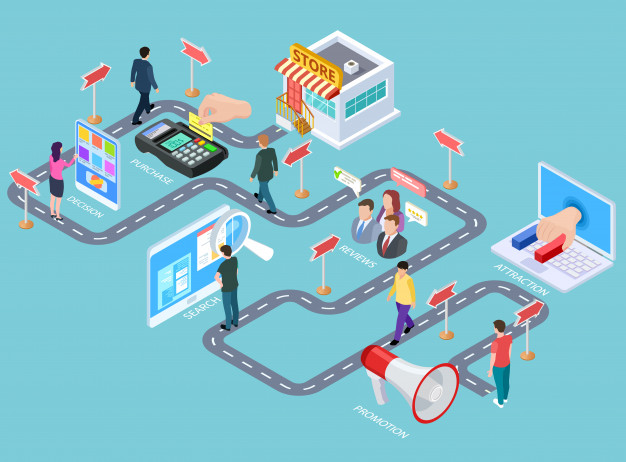
A user journey is a map that shows the ways in which users complete the desired action, in another meaning, purchasing, typically a timeline of user actions that show how a user will go from download to conversion, including every action and interaction with an app.

Why is the user journey important?

In the marketing world showing consumers why a product is valuable and worth purchasing will be the same thing in mobile apps, marketers will try to highlight the functionality of an app and what added value will gain the user, if he/she installed the app.

Then it’s important for every app to know why a user has installed their app in order to better improve it and ease users’ needs. By following the users’ steps journey you can know the user experience and how it can be optimized.

For example, knowing what caused the user to install your app or what prompted him/her to make the purchasing decision and what are the reasons caused the user to uninstall your app.


Mapping your customer journey 

When mapping out your mobile customer journey, it is recommended to follow these main steps:

– Identify Customer Behaviors

In another meaning creating a customer persona, By learning common user behaviors you can create several user personas to understand how different types of users interact with your app, then It will help you to know what users want from your app and how can you improve the app features, Consider looking closely at recently new customers and trace each of their journeys step-by-step in order to fully understand their experience, you can learn about your users by taking surveys or asking them for feedback, or more advanced, can be made in a marketing research plan.


– Understand customer goals

Defining the goal of your customers is part of understanding the behavior of the users. From the second you can define the goals that the users want and that goal can be known by the actions that the user takes in your application.


– Identify touch-points 

A touch-point is any point at which a user interacts with your app, From the step the user installs the app and interactions taking place after a purchase event. Without identifying every touch-point, you’re missing out on ways to optimize the mobile app user journey and identify areas for improvement.


– Gathering data 

In gathering data, your main focus must be on covering the pain points, A user’s main reason for installing the app. to your app features, and your unique selling points by having these data you easily create a practical user persona and begin mapping the user journey.

This will allow you to associate the customer data with their behavior and actions, ultimately improving your app strategy in the future.


How could we help?

Finally, we offer you a 14-day Free trial, all-inclusive access to our platform to help you take the first steps along the way. Got any questions? Do not hesitate to reach out and Request a Demo.

Our customized free demo will help you to:
  • Measure the ROI of each running campaign.
  • Re-target users who didn’t convert from your campaigns.
  • Deliver campaigns across many channels such as Push, Web Push, Email, SMS.

Important Types and Use Cases of Deep Links Marketers Should Know About

First thing: What are deep links?


Simply. Deep links are a URL you can click to send you directly to a specific product or content to your mobile application.

For example: if you build deep links for your mobile application for a specific product or content so consumers can go to this content directly into the app from somewhere outside of your application.

There are 3 different types of deep links. 

1- Traditional deep links:

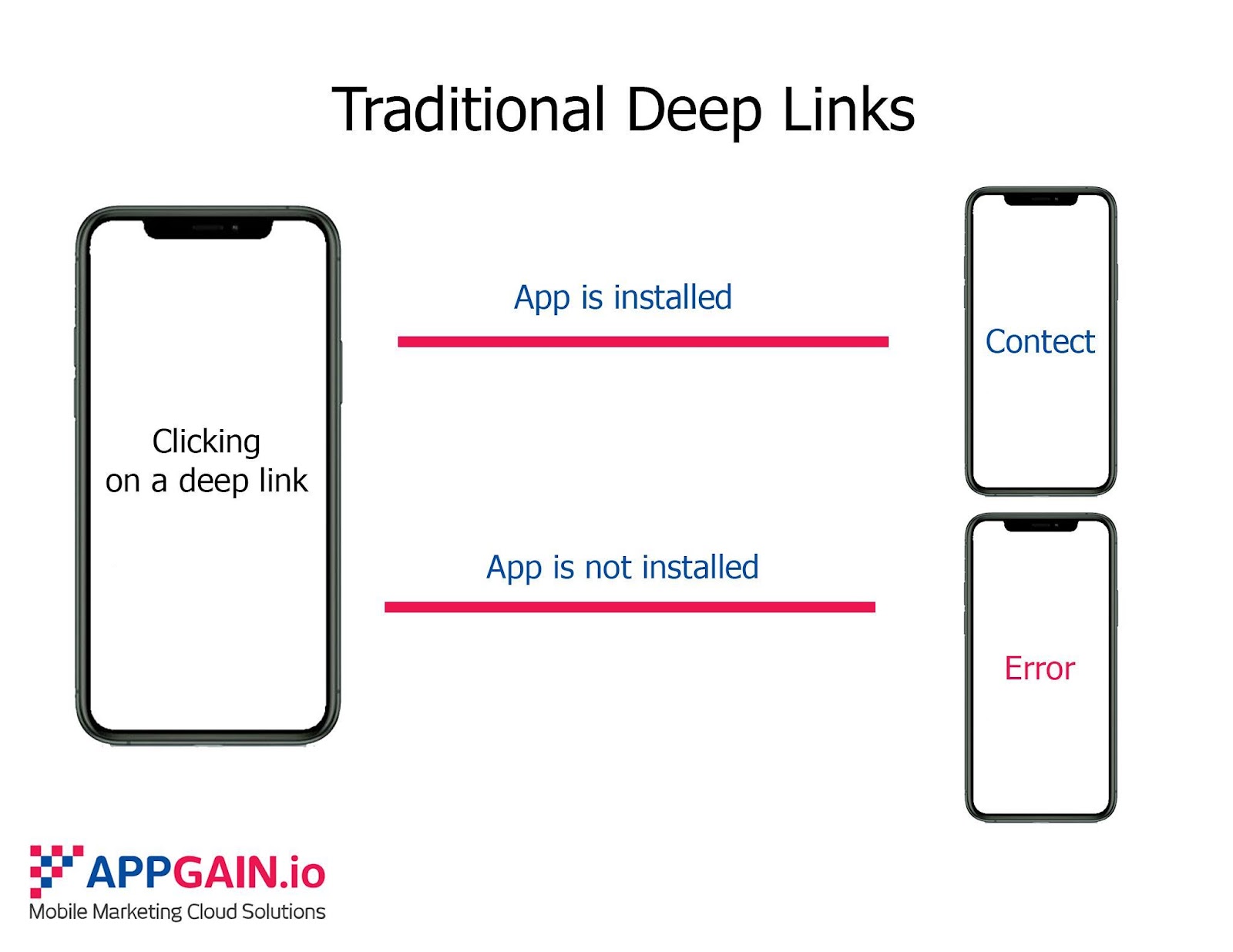
Traditional deep links only work when the mobile application is already installed and opened a specific content immediately, but if it is not installed a pop-up error page will appear. 

2- Deferred deep links:

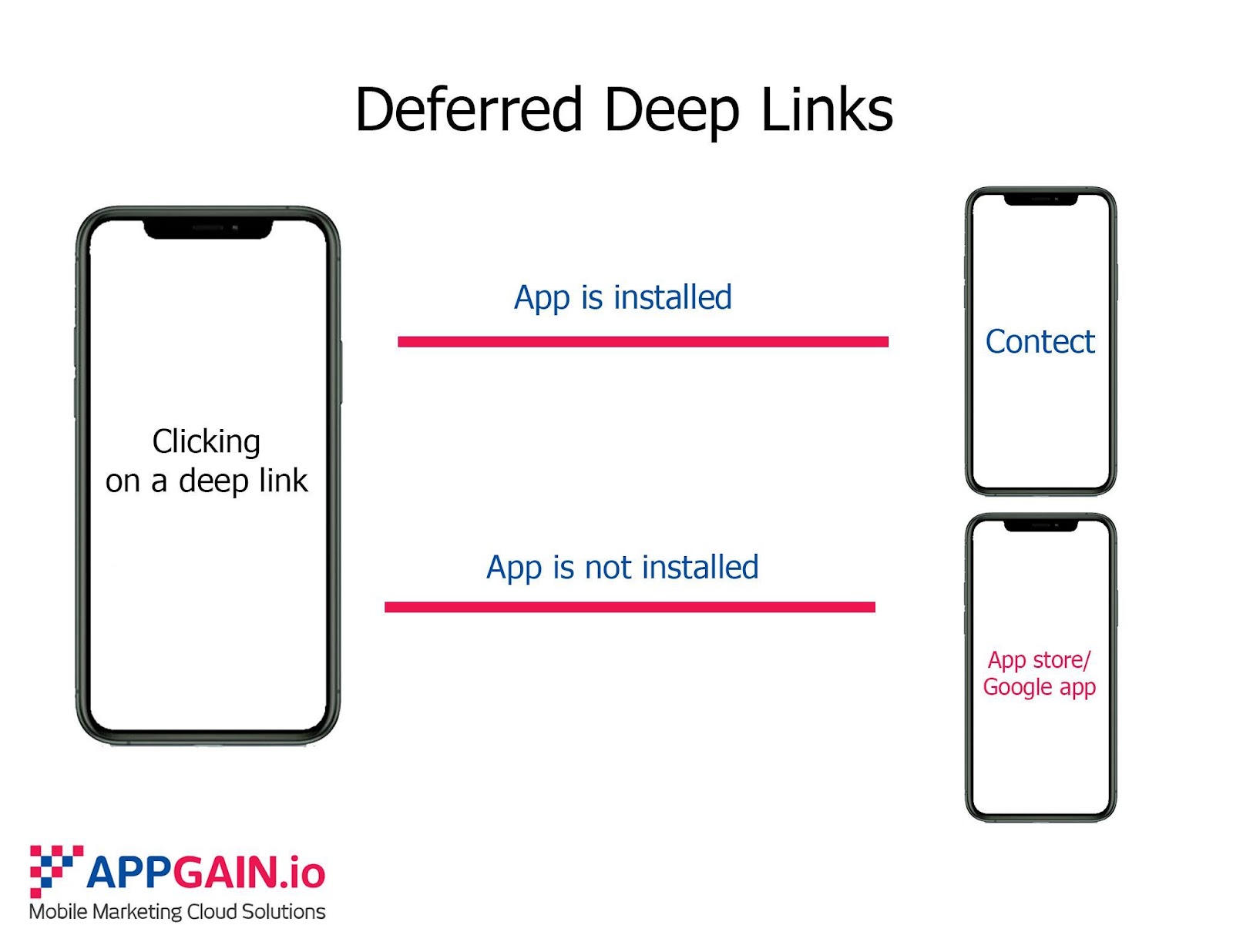
Deferred deep links are different so if you clicked on the link it will show the installation page to download the app on Google Play or App store then directly send you to a specific content.

3- Contextual deep links:

Contextual deep links have all the functionality of deferred deep links and provide additional benefit, They are able to store information where a user wants to go and where the link was clicked and who shared the link and unlimited amount of custom data that will help developers and users.   

So, Why are deep links important to your business and projects?

  • Deep links are a great way to get other people to use your app 
  • Increase traffic to your app and conversions, engagement
  • Build seamless user experiences. 
  • Give your customer the best experience and get them the information they need

Let’s dive in and give you some use cases.


  • Inviting Friends 


You can create deep links to make users send invitations to new friends and convert them to download the app directly and increase traffic.

  • Launching an Ad


You can use your deep link in ads to convert customers to a specific content in your app

Deep links are very valuable and you should keep in mind to use them in your strategy for mobile application. 

Subscribe to my blog now to know advanced use cases for deep links.

Thanks for subscribing to my blog, [Name]

I recognize that your time is valuable and I’m seriously flattered that you chose to join us.


Finally, as we promised, here are your Top 5 Advanced use cases about deep links for Digital Marketers.

1- Social Media to App

one of the best methods that, you can use deep links when you share a post on social media 

For Example, you have a channel on YouTube and you want to share your latest video on Facebook or Linked-in, etc you can build deep links to send your new users directly to the video instead of going to YouTube home screen and searching for your video manually.

2- ِApp to App

Deep linking allows users to go from an app to another, creating seamless user experiences between apps and If you have more than an app this is great to ensure users who have access to relevant content.

3- SMS to App

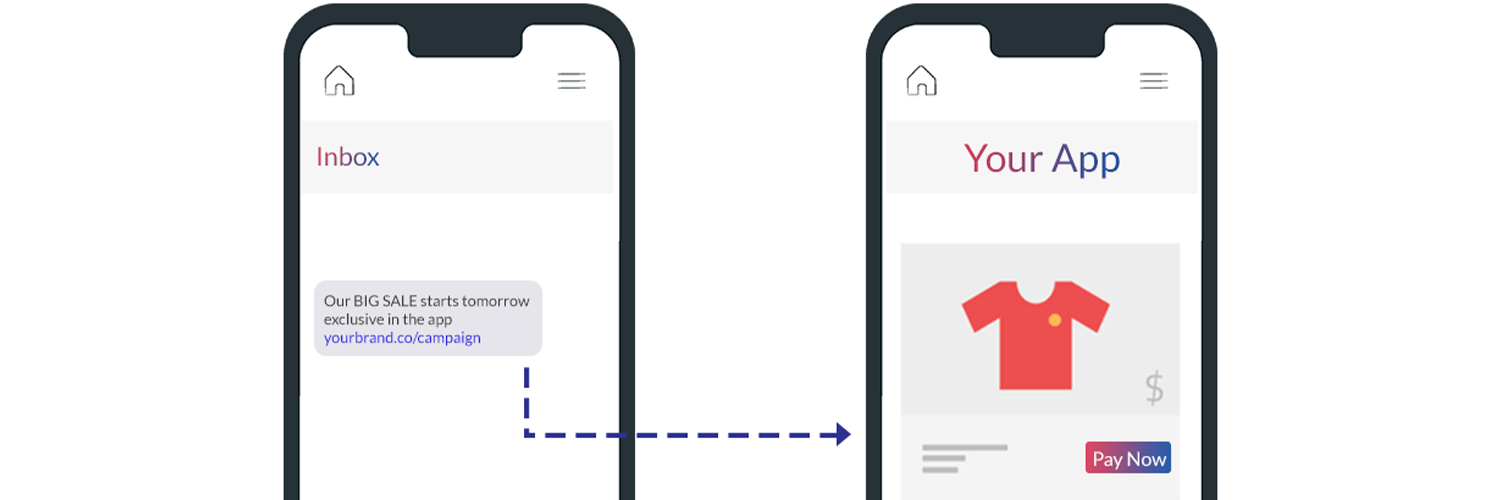
You can use deep links in SMS marketing to convert your customer to your mobile app It is an effective way to motivate users to install the application.

4- Email marketing to App

you can use deep links in your email marketing campaign to bring content closer to consumers and easily, enable people to take the actions they intend to take.

5- Campaign tracking

When you index your app page with deep links you will be able to include UTM parameters which offer great value to marketers to improve the app.

No doubt that deep links are very useful and important for your mobile application as we have explained so you should test your deep link before using it to make sure it works effectively to deliver the best user experience.


How could we help?

Finally, we offer you a 14-day Free trial, all-inclusive access to our platform to help you take the first steps along the way. Got any questions? Do not hesitate to reach out and Request a Demo.

Our customized free demo will help you to:
  • Measure the ROI of each running campaign.
  • Re-target users who didn’t convert from your campaigns.
  • Deliver campaigns across many channels such as Push, Web Push, Email, SMS.

Announcement: Salla became one of our valuable Partners! ?


We’re excited to announce that Salla became one of our valuable Partners! ?

Salla is the easiest platform for e-commerce, enables merchants to link their different trading accounts, and use them for direct sales to customers in the fastest time and easiest way.

With Salla and Appgain.io partnership, every e-commerce store will be able to boost its revenue with Appgain.io mobile marketing and re-marketing platform.

Want to become one of our many successful customers and help your business flourish? Send us an email or request a demo!

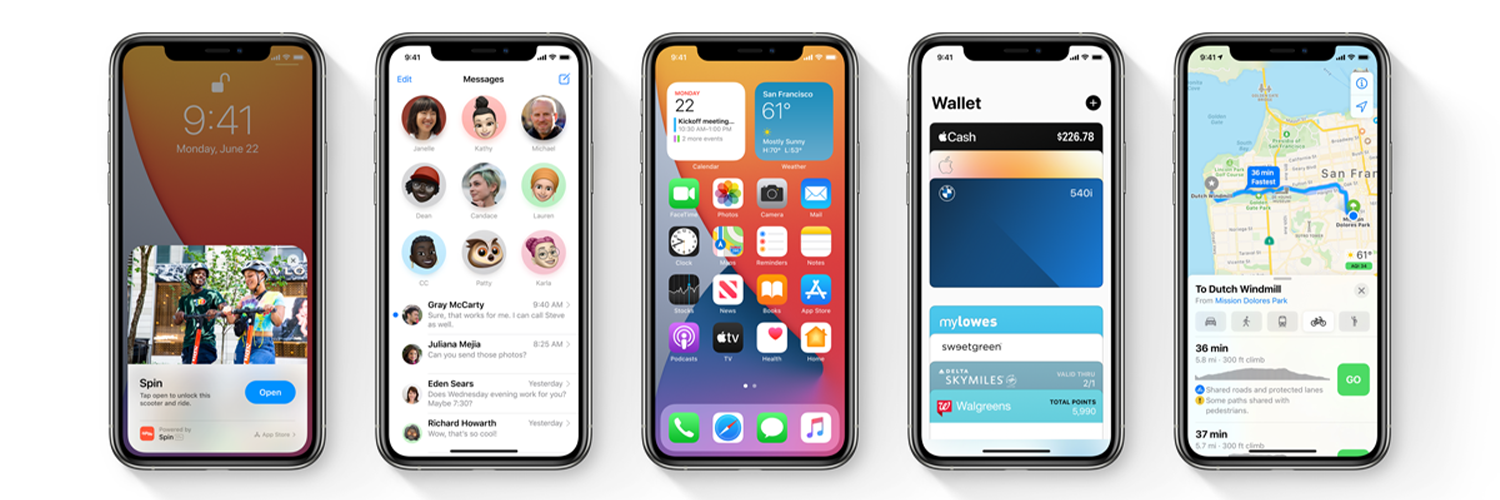
Mobile Apps Advertising Future With iOS 14

October 2020 will be challenging for the entire mobile apps advertising, and you may ask what’s new with the IDFA after Apple announced the new iOS system ‘iOS 14‘ 

For marketers, it is IDFA (The Identifier for Advertisers) simply it is a device identifier in Apple’s system. Attribution platforms like Adjust, Singular, Kochava, or AppsFlyer use it for tracking and identifying a user (without revealing personal information), allowing advertisers to access aggregated data.

The data is used to discover information about the user’s activity like in-app events or the interaction with the mobile advertising Campaigns.

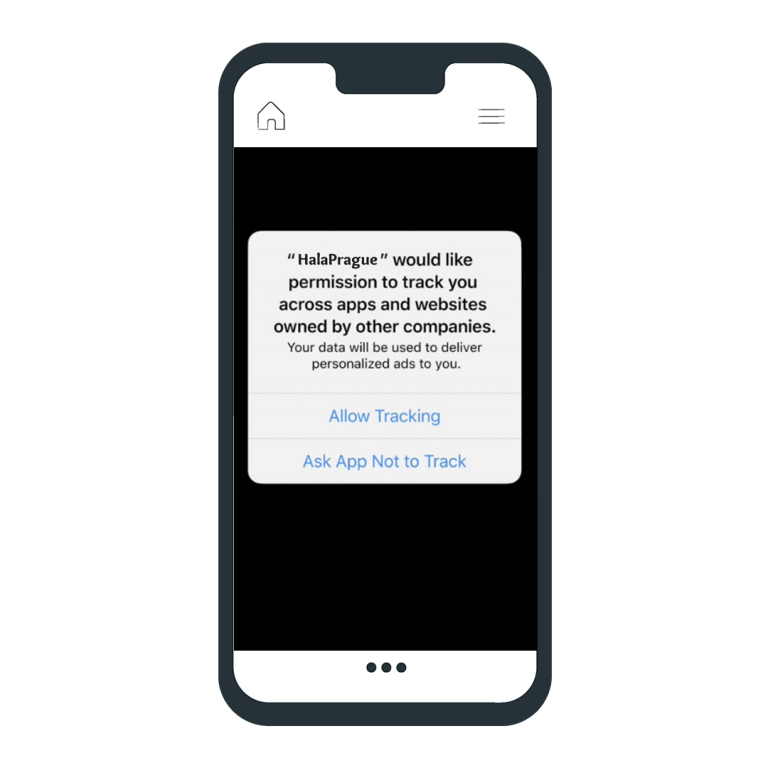
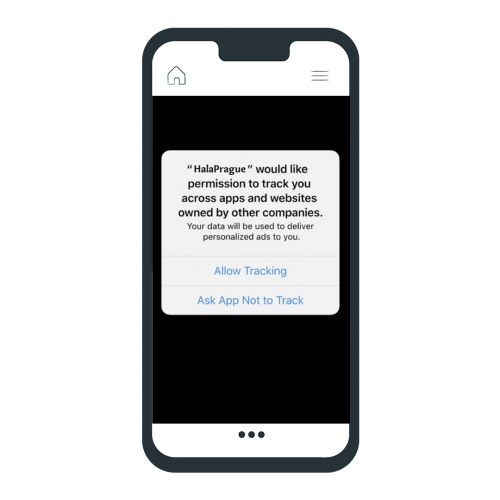
With iOS 14 all of that is going away and IDFA will be useless for mobile attribution unless the user decides whether to allow an app or brand to track his or her activity and interactions with other companies’ websites and apps or not.


IDFA is very important for marketers, but on the other hand, privacy for users is essential and this prompted Apple to take this step by allowing companies to use IDFA after the user’s permission.

There is no doubt that it is a secure step and will keep the user’s privacy. But a vast industry here like mobile app ads will experience a big change.

According to Apps-flyer estimate that $ 80 billion in 2019 and expected to grow to $ 120 billion in 2022. The major market share is the announcement of iOS apps. Hence with changes to IDFA accessibility, the industry may suffer a significant downturn.

Global App Install Ad Spend to Reach $118B in 2022 | AppsFlyer

In the previous, any iPhone user could switch off IDFA tracking in his or her privacy settings but only 15% of users do that based on Apps-flyer estimate.

This number can reach 70% with opt-in notification for every app in the new iOS 14. And as a result without accurate information, data will drop massively and ad campaigns will get affected.

Moreover, the equation will be changed in the ad ecosystem with various platforms especially Google and Facebook since they have the lion’s share.

But let us not forget that both can handle the situation and regain stability. Facebook and Google are the two biggest platforms for mobile users. The user’s data and information can play a big role and make a difference for them.

On the other side, the other apps and advertisers won’t stop advertising but will be a dilemma if they can’t measure the efficiency of their ads without accurate data.

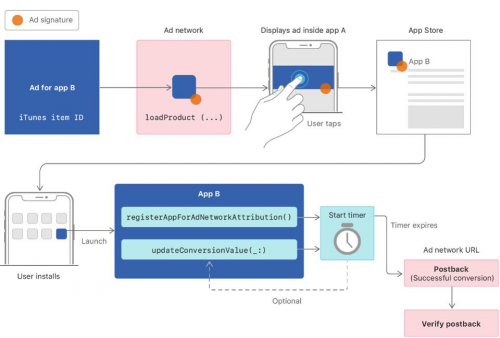
Of course, Apple isn’t leaving the advertisers without a solution and a practical tool to use it. It recommends using its SKAdNetwork for attribution and is going to develop and update it.

SKAdNetwork will allow advertisers and brands to know the ads that led to the required actions without revealing which specific devices or people took those actions.

There’s no escaping the fact that we will experience a remarkable Transformation in Mobile apps advertising and we can expect to see several updates from both advertising and attribution platforms.

Will see how small and medium app companies will be a competitor to be reckoned with when using their effective advertising tools in mobile user acquisition.

The ability of adaptability and making smart decisions is what will work well in this situation.

October 2020 …stay tuned!


How could we help?

Finally, we offer you a 14-day Free trial, all-inclusive access to our platform to help you take the first steps along the way. Got any questions? Do not hesitate to reach out and Request a Demo.

Our customized free demo will help you to:
  • Measure the ROI of each running campaign.
  • Re-target users who didn’t convert from your campaigns.
  • Deliver campaigns across many channels such as Push, Web Push, Email, SMS.

RequestDemo

HowT o Use The Advertiser ID For An Effective Re-marketing Campaign

Apps became essential for users and brands and no doubt that every one of us uses it regularly and sometimes we stop using it for many reasons, On the other hand, Mobile app re-targeting became a very important method for marketers to retain users and re-target them to keep the steady and continuous flow in their apps, But ironically, most companies pay more attention to acquiring new users rather than retaining the current ones or re-targeting who uninstalled the app.

While 21% of users abandon the app after one use, Marketers then have to consider that re-targeting should be prioritized before getting more installs, and with a smart Re-marketing campaign, they can hit the nail on the head then. 

So what is Re-marketing? (re-targeting)

It’s a marketing strategy when brands try to re-engage users who already have the app installed on mobile devices or who uninstalled the app.

so marketers will try whether to bring them back or continually keep them using the app with specific offers.

Example Of a Re-marketing Campaign

Here’s an effective way of applying a Re-marketing campaign by using the Advertiser ID which lets you use the activity of your users within your app to reach and re-engage with those users across Search, Shopping, and YouTube, etc

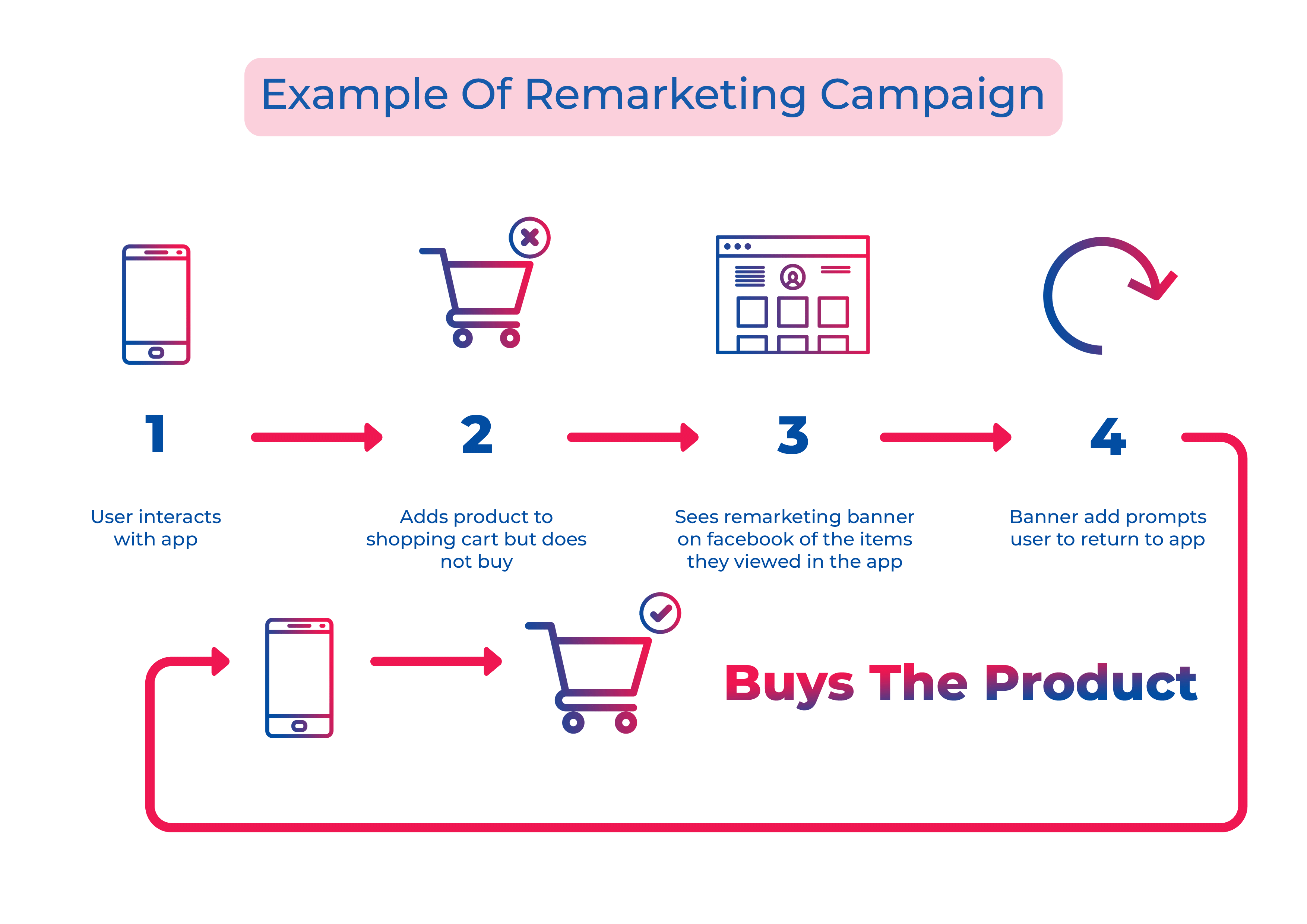
So when a user installs an app let’s say it’s for online shopping the user will begin to search for some items as shopping activity and keep them in the cart without making any decision.

Now user stopped using the app although he/she was interested in some items, so as we mentioned with the Advertiser ID you can use the user’s activity across search and shopping to show the user some ads of the items and products that the user was interested in then the user will need to return to your app.

By applying this campaign effectively it will prompt the user to return to the app and continue his/her shopping and purchase the wanted items.

So acquiring new users is important but retaining and re-targeting them is necessary because users who’ve already installed an app have a greater opportunity to engage and purchase than new users if they’ve already converted in the first place. Our benchmarks might indicate that user acquisition without continued re-engagement might be a waste of time and effort. After all, if nearly 90 percent of users disappear, why try and get them in the first place.

How could we help?

Finally, we offer you a 14-day Free trial, all-inclusive access to our platform to help you take the first steps along the way. Got any questions? Do not hesitate to reach out and Request a Demo.

Our customized free demo will help you to:
  • Measure the ROI of each running campaign.
  • Retarget users who didn’t convert from your campaigns.
  • Deliver campaigns across many channels such as Push, Web Push, Email, SMS.


Product Updates – August: New Features That You Should Not Miss


Humans are unpredictable. You could never anticipate how someone will act next. That is the main reason why businesses should grasp as much information as possible with regard to their audience. 

At Appgain.io we always work on our R&D in order to enhance your experience and provide you with the most advanced features that benefit your business and facilitate your marketing efforts. 

 Here we will get you prepared with our latest campaign analysis tool to make sure that you get the best informative statistics possible and build your way up from there.

We’ve added new Ionic SDK, Multi-users roles, Push notifications localization, and more! 


Ionic SDK

Now we have released the Ionic SDK, in addition to : 

  • Android Native SDK
  • ReactNative SDK
  • ionic SDK
  • iOs SDK

Advanced segmentation

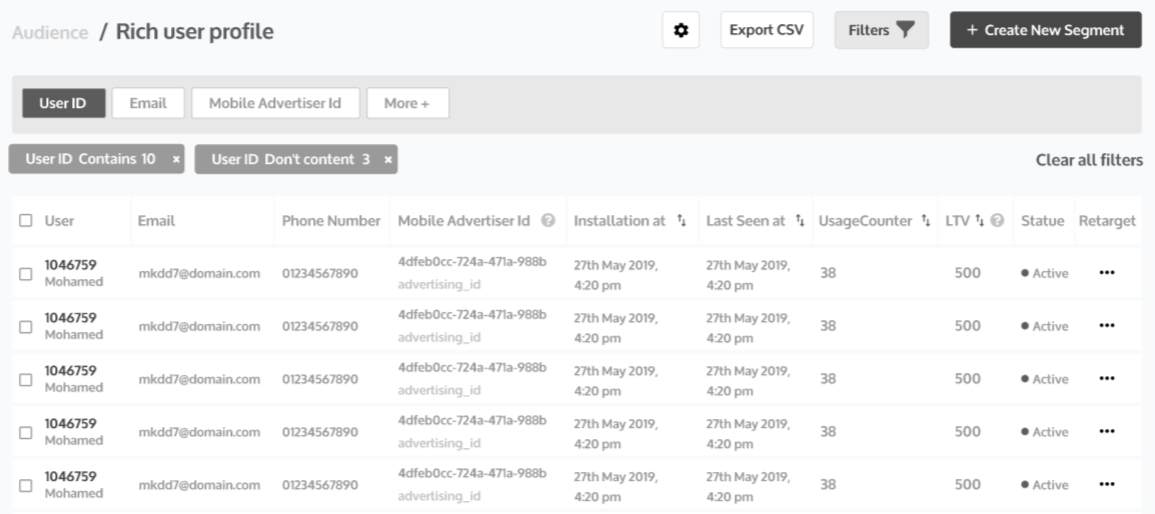
Now the user properties are now listed dynamically in the filters, instead of limiting the marketers to create segments only with a fixed list of user properties, now they can add whatever user property they want to track and segment the users based on it, in other words, if added user property (age), then you can see it immediately in the dashboard and filter based on its values.

the ability to select custom events in filters from the filters list, unlike in the previous release when you can to enter the custom event name, action and values keys manually, now you can add them (via API for this release) and also see them in the list of events in the filter

Advanced user segmentation:

  • segment for users installed the app from a certain campaign
  • segment for users who opened a push campaign or purchased from it
  • segment for users who received automation message
  • segment for users who canceled luxury car that was booked in pairs
  • segment for users who purchased from push campaign
  • user funnel building and more


Multi-users Roles

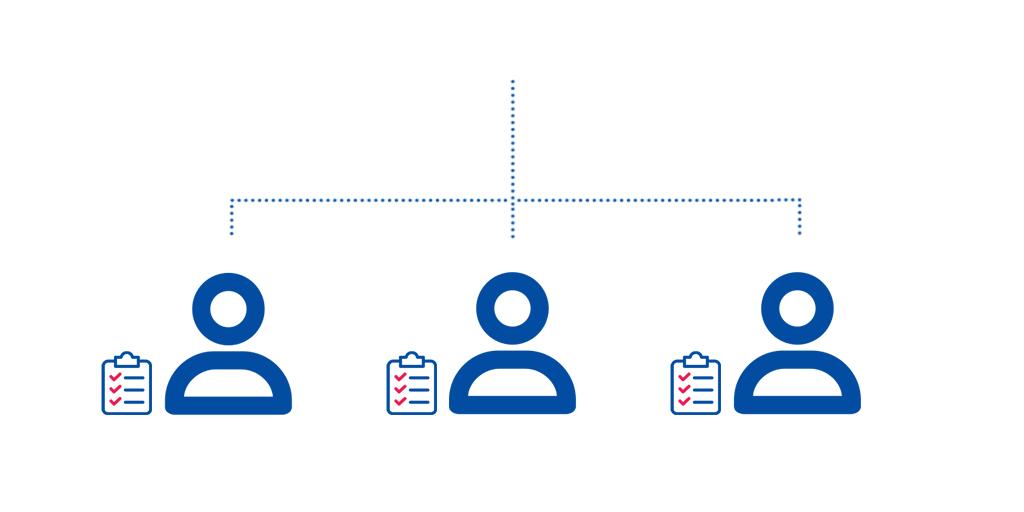
You can add your team members to your app with a custom role for each one. User rights are admin and custom roles.

Custom roles will enable you to create sub-users that can:

  • Have access to certain products only
  • Have a  privilege to access certain products,  as read-only or read/write per product

Sub users cannot:

  • Change/view payment info
  • Delete the project or his account

Web SDK

Now you can use appgain automation tools on your website, even if you don’t have an app.

Features

  • Abandon cart notification over SMS, email, and web push
  • initialized with projected and API Key
  • init SDK: to retrieve App backend info
  • add a user: via rest API
  • update user: via rest API
  • delete a user: via rest API
  • subscribe /unsubscribe in web push
  • Log Purchase transaction
  • Events Logging
  • Fire Marketing Automation


Push Notifications Localization

Now you can send the same push campaign in multi-languages.


Rich Push With MP4 Video

Now you can upload your own MP4 files in the rich push notification.

Coming Soon

  • Now you can use appgain automation tools on your website, even if you don’t have an app.
  • Free plan!
  • new dashboard UI
  • New website
  • Apple ioS14 IDFA
  • First ad network integration – Apple search ads partnership


Still, got questions? Do not hesitate to reach out for assistance and Contact Us!


Apple’s Latest Changes Took Its Toll On The Mobile Advertising Ecosystem


At the end of June 2020, Apple shook the Mobile Industry to the ground. It was announced that the IOS  Identifier for Advertisers, aka IDFA, is no longer accessible for companies as it used to be before. They were putting a substantial constraint on the advertising businesses.  As a result of the recent decision, Apple device owners are untraceable unless they permit the accessibility of their data and be shared with third parties. Businesses are now eager to be given the green light for using audience profiles so that they do not fall short on effective marketing practices. 

First things first. What is IDFA?

IDFA is short for “Identifier for Advertisers.” It is mostly used by businesses to detect and track IOS users while observing the way they respond to their Mobile advertising efforts. Qualifying it to be a  key indicator by which campaigns’ performance is measured, and strategies are set. It is worth mentioning that all users’ data are fully protected and are only limited to their device IDs.

According to Forbes, it is believed that there will be a total loss of $80 Million in the field. It is undeniable that businesses in various industries have been tragically affected in a way or another.


Let us take a look at how knocking off IDFA would trouble the Mobile advertising ecosystem.

Understanding Users behavior

Successful advertising was built around tracking users’ past and live interactions with marketing campaigns for ages. Now that the key identifier that assigns audience devices and their activities with the campaign is gone to the wind, Marketers are prohibited from getting the required insights that analyze how users behave online as the businesses tailor their operations consequently.


Retargeting Users

Remarketing is a big deal when it comes to widening your audience base. Different forms of Remarketing include Link and App retargeting whereby you could reach specific users who showed interest in your brand by clicking one of your Ads online or installing your App. Afterward, IDs are collected and used to retarget them across multiple distribution channels that they are active on. Hence, without being able to identify the origin of the profile, the tool could not re-engage with users and deliver their advertisements effectively. Throwing us another obstacle along the way.


Attributing Results To Specific Audiences

Conversions lead to revenue while revenue is turned into profit. Attributing your source of campaign revenue is extremely crucial. In other words, identifying which prospects brought you the highest monetary value and conversion rates is the foundation of your marketing strategy. That means that you could repeat the process to keep the loop of income going. Being unable to identify such essential resources will make the job harder for businesses to maintain the continuous cycle of ROI through categorizing users in and out of the golden segment that brings them the highest value.

A/B Testing

Running campaigns is vital for communicating with your customers. However, there are times when businesses have to launch A/B testing campaigns to examine which type of users are responding, which piece of the content version attracts the most traffic and what are the mediums that are bringing those users? Endless variables could be examined with this type of campaign. Without the IDFA, businesses could no longer link the behavior of a particular user with the campaign’s variables. Challenging them to properly measure and assess the collected data.


Assessing the current situation, makes us wonder how businesses are going to cope after IDFA limitation?  We have two options Apple   Ad network API and Legacy Attribution via digital fingerprinting SKAdNetwork 

As per  Apple, The ad network API helps advertisers measure the success of ad campaigns while maintaining user privacy

So SKAdNetwork is a privacy-safe framework developed by Apple. It was worked on for over 2 years now in order to ensure that the updated version of the framework assists marketers to point out which campaigns get the results without revealing users’ IDs. It is safe to say that this option is not much of an option. We are mostly stuck with it It can not produce a detailed analysis of Mobile Attribution.

Digital Fingerprinting

Attribution Analytics uses device fingerprint matching as the fall-back method for attribution if none of the supported unique device identifiers are available. 

Fingerprint matching is particularly useful for installs via a mobile web browser because these browsers are unable to collect unique device identifiers (so other attribution methods are not possible) and therefore, we rely on device fingerprint matching to attribute app installs to user clicks.

Attribution Analytics prefers device fingerprint matching over cookie-based measurement because fingerprint matching occurs asynchronously in the background of the mobile app. Therefore, it does not interfere with the user experience by forcing a browser to open (as in the case of browser-based cookies). Not surprisingly, fingerprint matching is also the preferred user experience by all of our clients. Apple also adopts a policy of rejecting apps that use cookie-based measurement, making fingerprint matching the new standard when a device ID is unavailable.


How Device Fingerprint Matching Works

Device fingerprint matching works by redirecting users through a measurement URL and collecting the publicly available HTTP headers about the device, which Attribution Analytics uses to create a unique fingerprint for the click of the measurement URL.

When a user installs the mobile app, the TUNE SDK collects the same data points from within the mobile app and sends them to the Attribution Analytics platform, which generates a device fingerprint and subsequently searches for clicks with the matching fingerprint. Attribution Analytics attributes the install to the last click with a matching fingerprint.

By default, the look-back window (or attribution window) for matching device fingerprints is 24 hours. So to find a match, Attribution Analytics only considers the clicks that occur within 24 hours from the install.

While other ad networks and advertising partners (publishers) claim accuracy beyond 24 hours and apply look-back windows of 48 and 72 hours, we find that device fingerprint matching is not statistically accurate beyond 24 hours.

How will Appgain react? 

At Appgain, we are already working to implement the Apple new IDFA permission-based tracking, Ad Network API, besides our current support for Digital Fingerprinting.

Although retargeting by IDFA over ad networks used to be bulletproof, however, our ad network integration enables retargeting by other various identifiers like FB ID, email, and mobile number.

Although Apple has moved the IDFA to be permission-based like Push Notifications, the impact will vary from market to another, with already advanced markets like the US, more than 30% of users have turned on limit Ad tracking, we don’t think the impact is that much critical in less developed markets.


How could we help?

Finally, we offer you a 14-day Free trial, all-inclusive access to our platform to help you take the first steps along the way. Got any questions? Do not hesitate to reach out and Request a Demo.

Our customized free demo will help you to:
  • Measure the ROI of each running campaign.
  • Retarget users who didn’t convert from your campaigns.
  • Deliver campaigns across many channels such as Push, Web Push, Email, SMS.

Businesses survival guide during and after COVID-19


COVID-19. A name we have been excessively hearing in the past few months. An expected pandemic that did not only threaten our well-being but also affected a countless number of businesses all over the world. Businesses from all industries no matter how large or small it is, this crisis could still diminish even the strongest in the market. Of course due to the fact that these companies hire a large number of employees who rely on a steady monthly income to be able to live and fulfill their everyday needs. 

One of the most common actions that businesses took was laying off as many employees as possible and reducing expenses in order to survive in this cut-throat environment. Best of the best companies were trying to take every chance to avoid more losses and to sustain their name in the market. However, some sank at the bottom and officially declared their bankruptcy.

So, if you are reading this during the COVID-19 era. This will be your ultimate guide to survive the current situation. So let us spread some positive vibes and discuss how to adapt from a business perspective.


Digital Presence

If you did not have an online presence before the pandemic. This is your chance. Digital marketing is an advanced language for advertisements. It is considered one of the cheapest and most effective options you have to expand your reach online. Whether you are going after awareness, reach, or conversions. Digitizing your promotional activities is your first step to adaptation. Set your budget and launch your ads for customers to see in your area and you have just put your foot in the right direction.

Online Delivery 

Brands from various industries including the ones that did not even cover delivery options within their business operations, provided a free delivery facility just to boost sales. As we all know, we have been home quarantining for some time as our beloved daily routine. Which makes this add-on to your order a brilliant deal. Surely, no one was going nowhere and businesses were thriving for selling products. Therefore, it was considered a win-win situation for both ends.

Discounts and Offers

Consumers love Discounts and Offers. Does not matter if we need it or not, we are taking two of each. Promoting a discount or an offer triggers the urge of conversion in customers. Qualifying it as an incredible way to motivate your target segment to take action.

New Direction

It is definitely very important for businesses to plan for the future. Will the pandemic be over soon? Would we be able to encourage customers to convert? Will there be permanent changes in the dynamic of consumer flow?. Lots of questions and a few answers found to settle us down. Thus, you have to be proactive and strategize while considering all of these different variables. While having a backup plan just in case things go well as planned.


How could we help?

Finally, we offer you a 14-day Free trial, all-inclusive access to our platform to help you take the first steps along the way. Got any questions? Do not hesitate to reach out and Request a Demo.

Our customized free demo will help you to:
  • Measure the ROI of each running campaign.
  • Retarget users who didn’t convert from your campaigns.
  • Deliver campaigns across many channels such as Push, Web Push, Email, SMS.