Finding the Right Notification Frequency for Your eCommerce Store

Understanding Web Push Notification Frequency

Sending web push notifications is a balancing act. The right frequency is crucial; too many notifications can irritate subscribers, while too few can lead to disinterest. Finding the optimal number of campaigns to send isn’t a one-size-fits-all answer. It depends on various factors related to your store and offerings.

Why Frequency Matters?

The frequency of your web push notifications can significantly impact your engagement metrics. Sending too many notifications can lead to:

  • Low Click-Through Rates (CTR): Subscribers may become frustrated and ignore your messages.
  • High Unsubscribe Rates: If users feel overwhelmed, they might opt out entirely.

On the flip side, sending notifications too infrequently can result in:

  • Low Engagement: Subscribers may forget about your brand and lose interest when they finally receive a notification.
  • Low Conversion Rates: Fewer campaigns mean fewer opportunities to engage and convert subscribers into paying customers.

Finding the Right Frequency

Determining your ideal web push notification frequency requires careful consideration and a bit of experimentation. Here are some factors to keep in mind:

  • Industry Benchmarks: Different industries have varying norms for notification frequency. For example:
    • Fashion: 2 to 5 notifications per week
    • Electronics: 1 to 2 notifications per week
    • Furniture: 1 notification per week
    • Cosmetics: 2 to 5 notifications per week
    • Fitness: 2 to 3 notifications per week
    • Art: 1 to 2 notifications per week
    • Dropshipping: 3 to 7 notifications per week
  • Product Price: If your store primarily sells high-ticket items, consider limiting the number of notifications sent. Conversely, lower-priced items may warrant more frequent reminders to encourage purchases.
  • Product Type: Specialty items, which might have higher demand despite being niche, often require more regular notification campaigns.
  • Shelf Life: Products with shorter shelf lives, such as food and cosmetics, necessitate a higher frequency of notifications to boost immediate sales.
  • Product Purchase Frequency: Goods that customers tend to repurchase—like cosmetics or food—can justify a greater frequency of notifications. Use these messages as reminders for repurchase opportunities.
  • Sale Periods: During sales, consider doubling your campaign frequency to drive more traffic to your store.
  • Holiday Seasons: Take advantage of the shopping frenzy during holidays by increasing your notification frequency to maximize sales opportunities.
  • Product Launches: When introducing new products, it’s typical to ramp up notifications. Sending several alerts in the lead-up to the launch can help build excitement.
  • Sellout Frequency: For items that frequently sell out, a higher number of notifications can create urgency and remind subscribers to act quickly.
  • Campaign Performance: If past campaign performance has shown low CTR or conversions, consider sending fewer, more targeted campaigns. Analyze the underlying reasons for poor performance.

Conclusion

Understanding the right frequency for your web push notifications is essential for a successful marketing strategy. By considering the various factors specific to your business, you can refine your approach and enhance subscriber engagement and conversions. Experimenting, analyzing, and adjusting are key to mastering web push notifications for your eCommerce store.

For more tips and resources on optimizing your marketing strategies, visit us at Appgain. Empower your marketing strategy today!


Marketing CRM: A Game Changer for Businesses – APPGAIN

Introduction to Marketing CRM

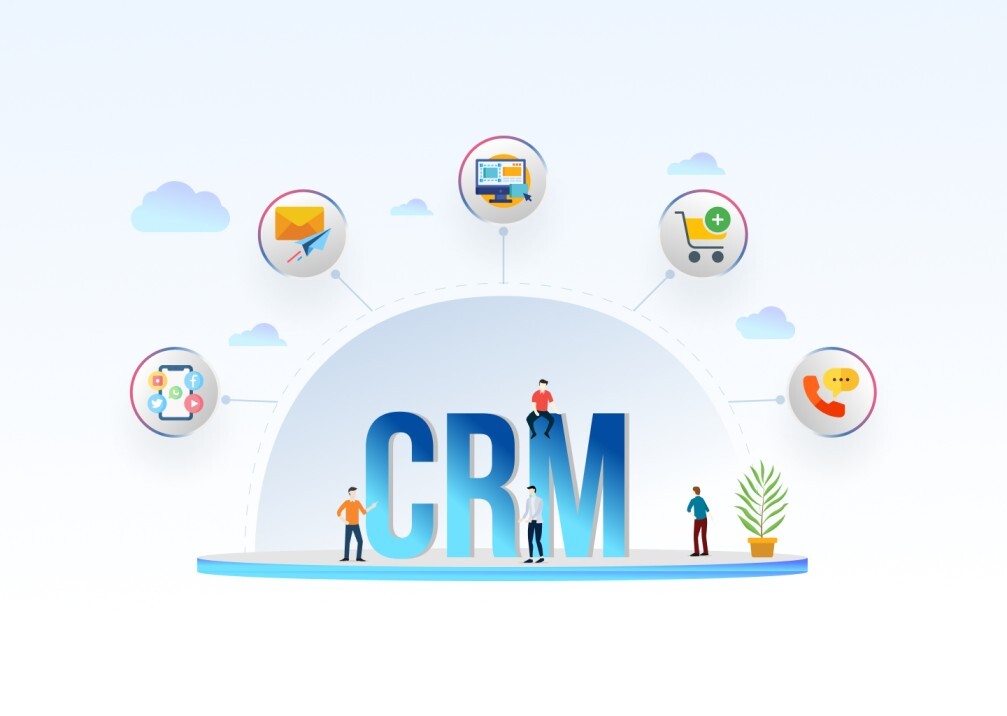
In an era where customer engagement defines business success, Marketing Customer Relationship Management (CRM) emerges as a pivotal tool for companies aiming to foster stronger connections with their clientele. Marketing CRM goes beyond traditional customer management; it integrates sales, marketing, and customer support activities, and gathers customers information from multiple touch points, providing a holistic view of each customer’s journey. This comprehensive approach enables businesses to tailor their strategies, ensuring a personalized experience for every customer.

What is Marketing CRM?

Marketing CRM refers to the strategic use of customer data and interaction history to drive marketing campaigns, enhance customer service, and ultimately, boost sales. It leverages technology to gather, analyze, and apply information about customer behaviors, preferences, and engagement with the brand, facilitating targeted and efficient marketing efforts.

Importance of CRM in Modern Marketing

The significance of CRM in today’s business landscape cannot be overstated. It allows companies to streamline their marketing efforts, automate tasks, and deliver personalized content, which is crucial for building long-lasting customer relationships and improving conversion rates.

Benefits of Using a Marketing CRM

Enhanced Customer Relationships

By providing a unified view of the customer, Marketing CRM enables businesses to understand their needs and preferences better, leading to stronger, more personalized relationships. This personalized approach not only increases customer satisfaction but also loyalty and lifetime value.

Boosted Sales and Marketing Efficiency

Integrating sales and marketing activities, Marketing CRM ensures that both departments work towards a common goal. It helps in identifying potential leads, nurturing them through the sales funnel, and converting them into loyal customers, thereby increasing efficiency and reducing the cost of acquisition.

Comprehensive Insights and Analytics

With features like funnel and event analytics, Marketing CRM offers in-depth insights into customer behaviors and campaign performance. This data-driven approach aids in fine-tuning marketing strategies and making informed decisions to optimize ROI.

Key Features of Marketing CRM

Unified Customer View

Marketing CRM provides a holistic view of each customer by consolidating data from various touchpoints. This centralized information helps in crafting tailored marketing strategies that resonate with individual preferences.

Omni-Channel Campaign Management

The ability to manage campaigns across multiple channels from a single platform is a standout feature of Marketing CRM. It ensures consistent messaging and enhances the customer experience across all platforms.

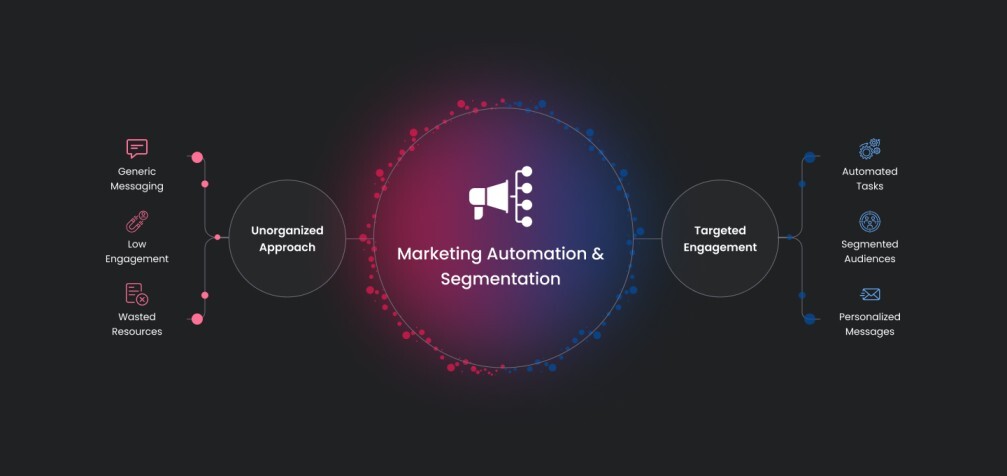
Marketing Automation and Segmentation

customer relationship management (CRM)

Automation tools within Marketing CRM streamline marketing tasks, from email campaigns to social media postings. Moreover, segmentation capabilities allow for more targeted marketing efforts, increasing the relevance and effectiveness of campaigns.

The Unique Advantages of Appgain CRM

Appgain’s Marketing CRM stands out by offering unparalleled features that cater specifically to the needs of business owners and marketing decision-makers.


Rich User Profiles: Gain a deep understanding of your customers with comprehensive profiles that go beyond basic contact information.

Funnel Analytics: Visualize your customer journey and identify any bottlenecks that might be hindering conversions.

Segmentation: Create targeted marketing campaigns by segmenting your audience based on specific criteria.

Ad Audiences Sync: Easily sync your customer data with ad platforms for more effective targeting.

Event Analytics: Track and analyze user behavior to gain insights into what’s working and what’s not with your marketing efforts.

Why Choose Appgain for Your Marketing CRM?

Choosing Appgain means access to advanced marketing tools designed to enhance customer engagement, drive sales, and streamline marketing efforts. With Appgain, businesses benefit from personalized marketing automation, rich analytics, and an unmatched ability to segment and target customers effectively. Learn how To Acquire, Engage And Retain Users!


Implementing Marketing CRM with Appgain

Getting started with Appgain’s Marketing CRM is a breeze. It provides several integration options to seamlessly connect with your existing marketing tools and platforms. You can choose from:

  • Server API: Integrate directly with your server using Appgain’s API for a high level of control.
  • Ecommerce Platforms: Connect with popular platforms like Salla.sa, Zid.Sa, and Shopify through their app stores for a simplified integration experience.
  • Appgain SDKs for Mobile Apps: If you have a mobile app, leverage Appgain’s SDKs to capture customer data and personalize their experience within the app.

This flexibility ensures you can leverage the full potential of CRM to drive your business growth, regardless of your existing tech stack.

FAQs

What makes Marketing CRM essential for modern businesses?

Marketing CRM is essential for modern businesses because it allows them to harness the power of data to foster stronger relationships with their customers. By integrating sales, marketing, and customer service activities, businesses can provide a personalized experience to each customer, leading to increased loyalty, higher conversion rates, and ultimately, greater revenue growth. Additionally, Marketing CRM streamlines operations, making marketing efforts more efficient and data-driven.

How Appgain Boosts Your CRM Effectiveness:

  • Unified Customer View:CRM Marketing


    Gain a complete picture of your customers, including their interactions across all touchpoints.
     

  • Multi-Channel Campaign Management: Manage and execute marketing campaigns seamlessly across different channels. 
  • Personalized Marketing Automation: Automate personalized marketing messages for a more relevant customer experience. Here’s 6 Reasons Why You MUST Consider Marketing Automation
  • Detailed Analytics: Track and analyze key metrics to measure campaign performance and customer behavior. 
  • Intuitive Interface: Easily integrate and use Appgain’s CRM to leverage its benefits quickly.

What are the key benefits of integrating Marketing CRM into your business?

Integrating Marketing CRM into your business offers several key benefits:

  • Personalized Customer Experiences: By understanding each customer’s preferences and behaviors, businesses can tailor their interactions and offers, enhancing customer satisfaction and loyalty. 
  • Increased Efficiency: Automation of marketing tasks reduces manual effort and ensures that marketing and sales efforts are aligned, leading to better use of resources. 
  • Data-Driven Decisions: Access to detailed analytics and insights enables businesses to make informed decisions, optimizing marketing strategies for better results. 
  • Enhanced Customer Engagement: With multi-channel campaign management, businesses can engage customers where they are most active, ensuring consistent and effective communication.

Can Appgain’s Marketing CRM be customized for specific business needs?

Yes, Appgain’s Marketing CRM is highly customizable.  Its built-in flexibility, powered by a MongoDB database, allows you to adapt customer journey maps, create custom segments, and integrate with existing tools. This ensures a tailored solution that meets your specific business needs and maximizes the benefits of CRM.

What support does Appgain offer for businesses new to Marketing CRM?

For businesses new to Marketing CRM, Appgain offers comprehensive support to ensure a smooth transition and successful implementation. This includes detailed documentation, training sessions, and customer support to help businesses understand and utilize the full range of CRM features. Appgain’s team is dedicated to assisting businesses in leveraging CRM to its full potential, ensuring that they can achieve their marketing and sales objectives effectively.

Conclusion: The Future of CRM with Appgain

As we look towards the future, the role of Marketing CRM in shaping customer experiences and driving business growth becomes increasingly apparent. With Appgain, businesses have access to an innovative CRM solution that not only meets the current needs but is also equipped to adapt to future challenges, ensuring sustained success in an ever-evolving market landscape.

RequestDemo

The Customer Retention: Keeping Your Customers Coming Back for More

In the ever-competitive world of business, acquiring new customers is crucial. But what about the ones you already have? Customer retention, the art of keeping your existing customers engaged and loyal, is just as important, if not more. Loyal customers are the backbone of any successful business. They spend more, refer their friends, and provide valuable feedback for growth. So, how do you measure and improve your customer retention?

What is Customer Retention Rate (CRR)?

Your CRR is a key metric that tells you what percentage of customers you retain over a specific period. It essentially measures your business’s ability to build long-lasting customer relationships. A high CRR signifies a healthy customer base and sustainable growth.

Calculating Your CRR

The formula for CRR is:

CRR = ((Ending Customers – New Customers) / Starting Customers) x 100

Here’s a breakdown of the terms:

  • Ending Customers: The number of customers you have at the end of the chosen period (month, quarter, year).
  • New Customers: The number of customers you acquired during the period.
  • Starting Customers: The number of customers you had at the beginning of the period.

For example, if you started a month with 100 customers, acquired 20 new ones, and ended the month with 115 customers, your CRR would be:

CRR = ((115 – 20) / 100) x 100 = 95%

This means you retained 95% of your customers during that month.

The ROI of Customer Retention

While customer acquisition is undeniably important, focusing solely on acquiring new customers can be a costly endeavor. Consider these statistics:

  • It can cost five times more to acquire a new customer than retain an existing one.
  • Increasing customer retention by just 5% can boost your profits by up to 95%.

Understanding Customer Churn

Customer churn, the opposite of retention, refers to the rate at which customers stop doing business with you. While some churn is inevitable, excessive churn can significantly hinder your business growth. Here are some common reasons for customer churn:

  • Poor customer service: Frustrating experiences with customer service can lead to customer dissatisfaction and churn.
  • Lack of value: If customers don’t perceive your product or service as valuable enough, they’re more likely to churn.
  • Competition: If competitors offer a better product, service, or price point, you may lose customers.
  • Product neglect: Failing to update or improve your product can make it seem outdated and unappealing to customers.
  • Neglecting customer feedback: Ignoring customer feedback sends the message that you don’t care about their needs.

By understanding the reasons for churn, you can develop strategies to address them and prevent customers from leaving.

Boosting Your Customer Retention Rate

Here are some effective strategies to keep your customers happy and coming back for more:

Deliver exceptional customer service: Prompt and efficient customer service builds trust and fosters positive brand experiences. Train your customer service representatives to be knowledgeable, empathetic, and solution-oriented.

Invest in customer success: Go beyond basic transactions and proactively help customers achieve their goals. Offer resources, tutorials, personalized support, and educational content to empower your customers.

Gather customer feedback: Regularly ask for customer feedback through surveys, emails, social media polls, or one-on-one conversations. Use this feedback to identify areas for improvement and tailor your offerings accordingly.

Implement a loyalty program: Reward loyal customers with exclusive discounts, points systems, early access to new products, or special events. A well-designed loyalty program can incentivize repeat purchases and strengthen customer relationships.

Personalize the customer journey: Use data and analytics to understand individual customer needs and preferences. Segment your audience and tailor your marketing messages, communications, and product recommendations accordingly.

Build a community: Create a space where customers can connect with each other and your brand. This fosters a sense of belonging, strengthens brand loyalty,

Embrace the power of social media: Utilize social media platforms to engage with your customers, answer questions, address concerns, and build brand loyalty. Host interactive sessions, contests, or polls to keep your audience engaged.

Focus on building relationships: Don’t just sell products or services, focus on building genuine relationships with your customers. Show them you care about their success and well-being.

Proactive communication: Keep your customers informed about product updates, new features, upcoming promotions, or industry changes. Regular communication demonstrates transparency and builds trust.

Address customer churn: While some churn is inevitable, it’s important to understand why customers are leaving. Conduct exit surveys or analyze customer support interactions to identify common pain points. Develop strategies to address these issues and win back lost customers.

The Power of Customer Advocacy

Loyal customers who become advocates for your brand are invaluable assets. They not only make repeat purchases but also spread positive word-of-mouth recommendations, attracting new customers at a lower cost. Here’s how to cultivate customer advocates:

Deliver an exceptional customer experience: By consistently exceeding customer expectations, you create a foundation for advocacy.

Empower your customers: Provide your customers with the tools and resources they need to succeed with your product or service. This could include educational content, user guides, or training materials.

Recognize and reward advocates: Publicly acknowledge and appreciate your customer advocates. Share their positive testimonials or success stories on your website or social media platforms.

Create a referral program: Incentivize existing customers to refer new customers through a referral program. This can be a win-win situation, attracting new customers while rewarding your loyal ones.

Building a Customer-Centric Culture

Customer retention isn’t just about implementing tactics; it’s about fostering a customer-centric culture within your organization. Here’s how:

Hire customer-centric employees: When building your team, prioritize candidates who demonstrate empathy, strong communication skills, and a passion for serving customers.

Empower your employees: Empower your customer service representatives and frontline staff to make decisions and resolve customer issues efficiently.

Align your departments: Break down silos between departments and ensure everyone in your organization is working towards the same goal – customer satisfaction and retention.

Track and measure customer success: Don’t just track sales figures. Regularly monitor customer satisfaction metrics, churn rates, and Net Promoter Scores (NPS) to gauge the effectiveness of your customer retention efforts.

By prioritizing customer retention and building a customer-centric culture, you can create a sustainable competitive advantage. Loyal customers are the lifeblood of any successful business. Invest in building strong relationships with your customers, and watch your business flourish!

FAQs

  1. Why is customer retention important for businesses?
    • Customer retention is crucial as it helps in increasing profits, reducing marketing costs, and building a loyal customer base.
  2. How can businesses measure their customer retention rate?
    • Customer retention rate can be measured by using the formula: ((Ending Customers – New Customers) / Starting Customers) x 100.
  3. What are some common reasons for customer churn?
    • Common reasons for customer churn include poor customer service, perceived lack of value, competition, and product neglect.
  4. How can businesses prevent customer churn?
    • Businesses can prevent customer churn by delivering exceptional customer service, offering value through products/services, and actively listening to customer feedback.
  5. What role does customer advocacy play in customer retention?
    • Customer advocacy helps in retaining customers by turning them into brand advocates who promote the business through positive word-of-mouth recommendations.
APPGAIN in 2023


APPGAIN.io in 2023: A Year of Innovation and Growth – Empowering E-commerce Businesses


The e-commerce landscape is constantly evolving, and staying ahead of the curve is crucial for sustained success. At APPGAIN, we’re dedicated to providing you with the tools and solutions you need to thrive in the ever-changing digital marketplace.

Unlocking Deeper Customer Insights and Real-Time Optimization


In 2023, we were proud to join the prestigious NVIDIA Inception Program. This collaboration unlocks the potential of NVIDIA’s AI capabilities, allowing us to offer deeper insights into your target audience and real-time ad optimization. Imagine creating highly personalized mobile ad campaigns that resonate with your customers and drive maximum engagement and conversions.

Introducing Powerful New Products for Streamlined Operations


We’ve expanded our offerings with two powerful new products designed to streamline your e-commerce operations:

  • Shrinkit.me: This all-in-one solution empowers you to retarget website visitors, create short links, engage customers via SMS, design landing pages, reach customers with push notifications, and seamlessly integrate with leading platforms.
  • Retail Gain: This comprehensive solution simplifies retail operations and fosters customer loyalty by offering a soft POS system, marketing CRM with SMS, WhatsApp, and web push notifications, and loyalty program management.


Enhanced User Experience and Performance

We’re constantly refining our existing products to ensure exceptional performance and user experience. In 2023, we implemented:

  • WhatsApp marketing: Initiate and manage campaigns directly within AppGain.io.
  • Multilingual support: Expand your reach with Arabic and Turkish language options.
  • Retail Gain enhancements: Deliver personalized SMS marketing to non-app users and leverage a loyalty program under development.
  • High-performance infrastructure: Our platform now supports over 5 million active users per app.
  • Improved push notification delivery: Our revamped system guarantees optimal performance.
  • Infrastructure upgrade: We’ve migrated to IBM servers for greater stability and cost efficiency.
  • Drag-and-drop email builder: Design customized email templates with ease.
  • Onboarding flow: We’ve simplified the integration process for new customers.

Conclusion

AppGain.io is committed to empowering your e-commerce success in 2024 and beyond. With our powerful tools, innovative solutions, and dedication to continuous improvement, you can gain a competitive edge, optimize your marketing ROI, simplify operations, build stronger customer relationships, and confidently scale your business.

Contact us today to learn more about how AAPPGAIN can help you achieve your e-commerce goals in 2024!

RequestDemo

App Segment to FB audinace – how it works and benefits

?? Boost Your Facebook Advertising with App Segments and Custom Audience Syncing! ?✨

Did you know that you can take your Facebook advertising strategy to new heights by harnessing
the power of App Segment and custom audience syncing? Let’s dive into how it works and the benefits it brings!

? How It Works:

1️⃣ Define App Segments:

Identify specific user behaviors or actions within your mobile app
that hold significance for your marketing goals.
For instance, you can segment users based on their in-app purchases, engagement levels, or completed actions.

2️⃣ Sync App Segments with Facebook:

Utilize Facebook’s developer tools or app partner platforms to sync your app segments with Facebook’s Custom Audience feature.
 This allows you to seamlessly integrate your app data with Facebook’s advertising ecosystem.


3️⃣ Create Custom Audiences:

Once your app segments are synced, you can create custom audiences on Facebook based on these segments. This means you can specifically target users who have exhibited certain behaviors or actions within your app.

4️⃣ Personalized Ad Campaigns:

Craft tailored ad creatives, messages, and offers that resonate with each app segment’s characteristics
and behaviors With custom audience syncing,
you can deliver highly relevant and personalized ads to specific user groups.

5️⃣ Amplify Remarketing Efforts:

Retarget users who have previously engaged with your app but haven’t taken further action.
By syncing your app segments with Facebook, you can effectively reach these users with reminders, incentives,
or recommendations, maximizing your chances of re-engagement.

? Key Benefits:

? Increased Relevance:

By leveraging app segments and custom audience syncing,
you can deliver highly targeted ads to users who have already shown interest or engagement with your app.
This increases the relevance of your ads and improves overall campaign performance.

? Enhanced Conversion Rates:

Targeting users based on their app behavior allows you to deliver personalized messages
and offers that align with their interests and preferences.
This personalization leads to higher conversion rates and valuable actions.


Read more about Sync App Segments With Facebook Custom Audience

? Seamless User Journey:

Syncing app segments with Facebook creates a seamless experience for users.
You can retarget them on Facebook with relevant ads that continue their app journey, such as completing a purchase or exploring specific features.

? In-Depth Analytics:

Connecting app segments with Facebook’s advertising tools provides you with
detailed insights into the performance of your campaigns.


You can analyze the impact of your ads on specific app segments and measure their contribution to conversions,
enabling data-driven optimizations.


By leveraging app segments and custom audience syncing on Facebook, you can amplify the effectiveness of your advertising campaigns, enhance user engagement, and drive valuable actions.


if you’re interested in implementing app segments and need guidance, feel free to reach out! Let’s connect and discuss how we can optimize your Facebook


RequestDemo

Empower Your App’s Success with Uninstall Tracking

Introduction

Uninstall tracking refers to the process of monitoring and recording instances when users uninstall a mobile application from their devices. It is essential for mobile apps for several reasons:

  1. Track User Behavior:

    Our cutting-edge tracking tools reveal user behaviour patterns, helping you identify pain points and optimize your app for enhanced user satisfaction.

  2. Reduce Uninstall Rates:

    Pinpoint the reasons behind uninstalls, enabling you to take proactive measures and reduce churn, maximizing your app’s longevity.

  3. Data-Driven Decisions:

    Make informed decisions with precise uninstall data, allowing you to effectively tailor your marketing strategies and boost user engagement.

  4. Boost Retention Strategies:

     Armed with valuable insights, craft personalized retention strategies that keep users hooked, driving higher loyalty and repeat usage.

Read App Segment To Face Book Custom Audience

Why Choose  Appgain.io Uninstall Tracking?

  • IOS And Android Ready

    Works seamlessly on both Android and iOS.

  • Automatic Success Ration Optimization

    Appgain.io’s App Push Notification Campaigns come equipped with automated uninstall tracking, enhancing campaign delivery success rates.

  • Bring Back Lost Customers

    Bringing back lost customers who have uninstalled your app can be challenging, but it’s not impossible, using our Re-Engagement Campaigns over whats App, Social media retargeting, email marketing, or SMS to send personalized messages to users who uninstalled. Highlight new features, improvements, or exclusive offers to encourage them to reinstall.

Get Started Today: Don’t let uninstalls hinder your app’s growth. Join Uninstall Tracking Hub now and unlock the power of data to propel your app’s success to new heights. Let’s keep your users engaged and coming back for more!


Optimize Your Marketing: Sync App Segments with Facebook Custom Audience

?? Maximize Your Advertising Impact with App Segments for Facebook Custom Audience Syncing! ?✨

Did you know that you can supercharge your Facebook advertising strategy by leveraging app segments for custom audience syncing? Let’s explore the benefits!

? Increased Relevance:

App segments allow you to create highly targeted custom audiences based on user behavior within your app. By syncing these segments with Facebook, you can deliver hyper-relevant ads to users who have already engaged with your app, increasing the chances of conversion and engagement.

? Enhanced Conversion Rates:

By reaching out to users who have interacted with your app, you can deliver personalized messages or offers that align with their previous actions. This personalized approach can significantly improve conversion rates and drive valuable actions, such as purchases or app usage.

Read here :Unleashing The Power of Mobile Deep Linking

? Seamless User Journey

With app segment syncing, you can create a seamless experience for your users.
   For example, if a user adds items to their cart within your app but doesn’t complete the purchase,
you can retarget them on Facebook with a reminder
or special discount to encourage them to come back and complete their transaction.

? Amplify Retargeting Efforts

Retargeting is a powerful strategy, and by syncing your app segments with Facebook, you can amplify your retargeting efforts. Remind users of products they viewed, offer personalized recommendations, or showcase exclusive promotions to drive re-engagement and increase customer loyalty.

? Enhanced Analytics

By connecting your app segments with Facebook,
you gain deeper insights into the performance of your  Facebook campaigns. You can analyze the impact of your ads on specific app segments and measure their contribution to conversions, allowing you to optimize your advertising strategy and allocate resources more effectively.

? How to Get Started:

1️⃣ Define App Segments: Identify specific user behaviors or actions within your app that are valuable for your marketing objectives. For example, segment users based on their in-app purchases, time spent, or specific features used.

2️⃣ Sync with Facebook: Utilize Facebook’s developer tools or app partner platforms to sync your app segments with Facebook’s Custom Audience feature. This ensures seamless data integration and enables you to leverage your app segments for targeted ad campaigns.

3️⃣ Tailor Ads to App Segments: Craft compelling ad creatives, messages, and offers that align with the characteristics and behaviors of each app segment. Leverage Facebook’s ad targeting options to reach your custom audiences effectively.

If you’re interested in exploring app segment syncing or need guidance in implementing this powerful strategy,
feel free to reach out! Let’s connect and discuss how we can optimize your Facebook advertising efforts.


Cross-Channel Remarketing For Retail

 Boost Your Retail Business with Cross-Channel Remarketing! ?️✨

Are you looking to drive more sales and maximize your marketing efforts? ?? Look no further! Cross-channel remarketing is here to revolutionize your retail business. ??

 What is Cross-Channel Remarketing?

Cross-channel remarketing is a powerful marketing strategy that allows you to re-engage with potential customers who have already shown interest in your products or services across multiple channels.
It involves strategically targeting users with personalized ads, offers, and messages as they navigate different online platforms and devices. By reaching out to your audience wherever they are, you can increase brand recall, conversions, and customer loyalty.

 Key Benefits of Cross-Channel Remarketing for Retail:

1️⃣ Amplify Reach

Expand your reach and impact by connecting with your target audience across various digital touchpoints such    as websites, social media platforms, email, and mobile apps.

2️⃣ Personalized Approach

Tailor your marketing messages and offers based on each user’s browsing history, preferences, and           previous interactions, delivering a more personalized and relevant experience.

3️⃣ Increased Conversions

Engage potential customers at different stages of their buying journey,
providing gentle reminders, exclusive incentives,and relevant product
recommendationsto nudge them towards making a purchase.

4️⃣ Omnipresence

Maintain a strong brand presence by being visible to your audience across different channels, reinforcing brand     recognition and trust.

5️⃣ Improved ROI

With targeted remarketing efforts, you can optimize your advertising spend by focusing on users
who have already expressed interest in your products or services, increasing the chances of conversion


If you’re interested in learning more about cross-channel remarketing or need assistance in implementing this powerful strategy, feel free to reach out! ?✉️ Let’s connect and discuss how we can tailor a remarketing plan that fits your business objectives.


RequestDemo


Exploring Techniques for Implementing Mobile Deep Linking: Comparing Firebase Dynamic Links, Apple Universal Links, and Custom URL Schemes

Exploring Techniques for Implementing Mobile Deep Linking: Comparing Firebase Dynamic Links, Apple Universal Links, and Custom URL Schemes

Introduction

Mobile deep linking has become a crucial aspect of app development, enabling seamless navigation and personalized experiences for users.
Implementing deep linking requires selecting the most suitable technique to create links that direct users to specific content within mobile apps.
In this article, we will compare three popular methods Firebase Dynamic Links, Apple Universal Links, and Custom URL Schemes.
We will specifically explore the advantages and considerations of each technique and explain why the URI scheme method,
which includes Custom URL Schemes

       1.Custom URL Schemes: The Foundation of Deep Linking

Custom URL Schemes were one of the earliest methods used for implementing deep linking. With this approach, developers define a custom URL scheme specific to their app. When a user clicks on a deep link, the operating system recognizes the URL scheme and opens the corresponding app, directing the user to the desired content. Custom URL Schemes offer flexibility and customization options, allowing developers to create unique deep links that align with their app’s navigation structure

Advantages of Custom URL Schemes:

a. Compatibility:

Custom URL Schemes have broad compatibility and work across various platforms, including iOS and Android. They provide a reliable deep linking solution that ensures consistent user experiences.

b. Customization:

Developers have complete control over the deep link structure and can tailor it to match their app’s specific functionalities. This customization enables a seamless and intuitive user experience.

Considerations:

a. Fragmented Implementation:

Custom URL Schemes require separate implementation for iOS and Android platforms, which can lead to fragmentation and increased development effort.

      2.Firebase Dynamic Links: Cross-Platform Deep Linking(Google shutting it down !!)

Firebase Dynamic Links, a service provided by Google, offers a cross-platform solution for deep linking. It simplifies the process by providing a single link that directs users to the appropriate content, regardless of the device or platform they are using. Firebase Dynamic Links automatically detect the user’s device and handle the deep link routing accordingly.

Advantages of Firebase Dynamic Links:


a. Cross-Platform Support:

Firebase Dynamic Links work seamlessly across iOS, Android, and the web. This simplifies the deep linking implementation process and ensures consistent experiences for users across different platforms.

b. Fallback Mechanism

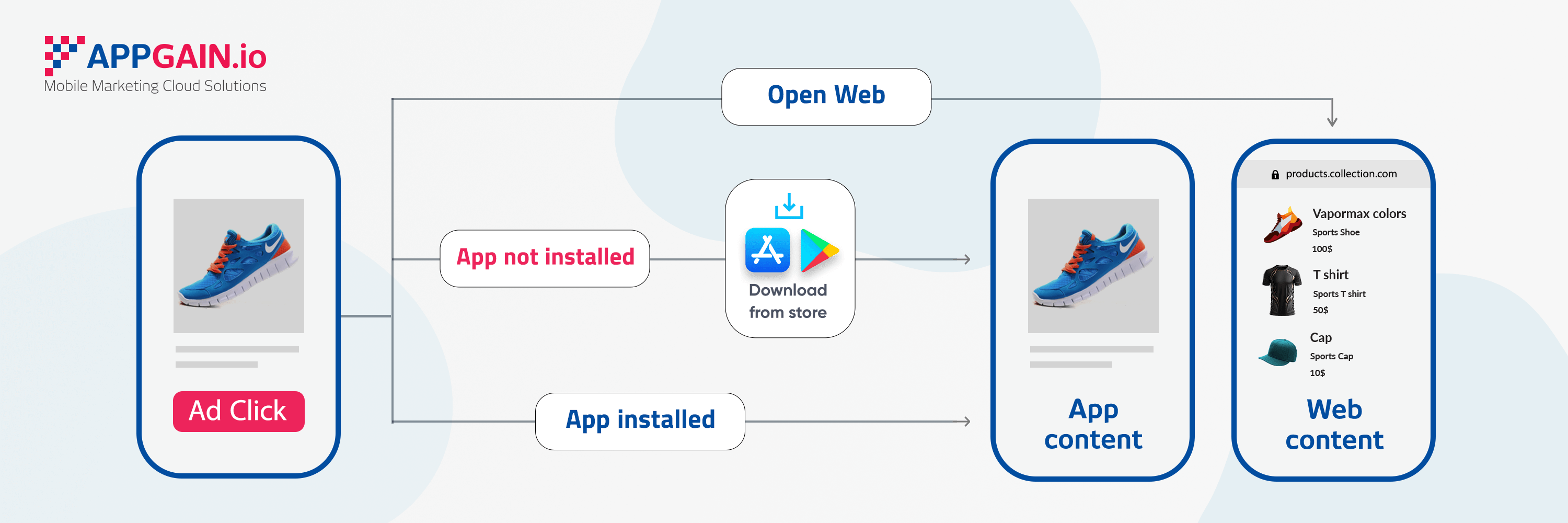
 In cases where the user does not have the app installed, Firebase Dynamic Links can redirect them to the appropriate website or redirect them to the app store for installation. This flexibility increases the reach of deep linking campaigns.

Considerations:

a. Dependency on Firebase:

Implementing Firebase Dynamic Links requires integration with the Firebase platform, which might not be suitable for apps that do not utilize other Firebase services

     3.Apple Universal Links: Deep Linking for iOS

Apple Universal Links are specifically designed for iOS devices. They associate specific domains with an app, allowing for seamless navigation from web content to the corresponding app content. Universal Links leverage the App Search API, enabling deep linking even when the app is not installed on the user’s device.

Advantages of Apple Universal Links:

a. Seamless Web-to-App Transition: Universal Links provide a seamless transition from web content to the corresponding app, enhancing the user experience and driving engagement.

b. System Integration: Universal Links are deeply integrated into iOS, enabling a smooth user experience and consistent deep linking behavior across apps.

Considerations:

a. iOS Exclusive: Apple Universal Links are specific to iOS devices and do not offer cross-platform support. Separate deep linking solutions need to be implemented for Android and other platforms.

consistent deep linking experience for users across different devices.

  1. Customization: Custom URL Schemes allow developers to have complete control over the deep link structure and customize it based on their app’s specific requirements. This customization enables tailored and intuitive navigation within the app.
  2. Simplicity and Flexibility: Implementing the URI scheme method is relatively straightforward, requiring minimal development effort.It offers a flexible solution that can be integrated. into apps without dependencies on external services

Conclusion:

When it comes to implementing mobile deep linking, various techniques are available, each with its own advantages and considerations. While Firebase Dynamic Links and Apple Universal Links offer cross-platform and iOS-specific solutions, respectively, the URI scheme method, which includes Custom URL Schemes, stands out as the best choice for its compatibility, customization options, and simplicity. By utilizing the URI scheme method, app developers can create powerful deep linking experiences that enhance usability and drive higher conversion rates across platforms.

Looking for CrossPlatform and stable deeplinking ?check Appgain Smart Links

RequestDemo

Unleashing the Power of Mobile Deep Linking: Enhancing Usability and Conversion Rate Optimization

Unleashing The Power of Mobile Deep Linking : Enhancing Usability and Conversion Rate Optimization


  1. Introduction
  2. Understanding Mobile Deep Linking
  3. Importance of Mobile Deep Linking for Usability
  4. Enhancing Conversion Rate Optimization with Mobile Deep Linking
  5. Inspiring Examples of Successful Mobile Deep Linking Implementation
  6. Conclusion


1. Introduction

In the mobile app ecosystem, deep linking has emerged as a powerful tool for improving usability and driving higher conversion rates. Mobile deep linking enables seamless and contextually relevant user experiences by directing users to specific content or features within an app,
even if the app is not currently installed on their device. In this e-book, we will explore the concept of mobile deep linking, its importance for usability, and how it can significantly enhance conversion rate optimization.

2. Understanding Mobile Deep Linking

Mobile deep linking is the practice of embedding links that direct users to specific locations or content within a mobile app. Unlike traditional web links, deep links can open a particular screen or perform a specific action within an app,

providing a frictionless user experience. Deep links are typically implemented using Uniform Resource Identifiers (URIs) or Application Links, which can be triggered from various sources such as websites, emails, SMS, push notifications, and other apps.

3. Importance of Mobile Deep Linking for Usability

  •  Seamlessness Across Platforms

Mobile deep linking allows users to seamlessly transition from web to app or from one app to another. It eliminates the need for users to manually search for content or perform repetitive actions, enhancing usability and overall user satisfaction.

  •  Personalized User Journeys

Deep links enable personalized and contextual user experiences. By directing users to specific content or features based on their previous interactions, preferences, or marketing campaigns, deep linking enhances engagement and relevance.

  • Simplified Onboarding and User Acquisition

Deep links can be used to guide new users through the onboarding process, ensuring they land on the appropriate screens to create accounts, set preferences, or complete initial interactions. This streamlined onboarding experience improves user acquisition and conversion rates.

4. Enhancing Conversion Rate Optimization with Mobile Deep Linking

  • Re-Engagement and Retargeting

Deep links can be used to re-engage dormant users or retarget users who have shown interest but have not completed a desired action.
By directing them to specific screens or offering personalized incentives, deep linking can significantly boost conversion rates.

  •  Abandoned Cart Recovery

Deep links can help recover abandoned carts by redirecting users directly to their cart or specific product pages with pre-populated information. This simplifies the checkout process, reduces friction, and increases the likelihood of conversions.

  •  Promotional Campaigns

Deep links enable precise tracking and measurement of marketing campaign performance. By creating deep links associated with specific campaigns, businesses can analyze the effectiveness of their marketing efforts, optimize targeting, and drive higher conversion rates.

Read here, Firing To AppGain For Seamless Deep Linkingebase Dynamic

5. Inspiring Examples of Successful Mobile Deep Linking Implementation

  •  Airbnb

Airbnb utilizes mobile deep linking to provide a seamless transition for users from their website to the app when booking accommodations.
This ensures a consistent and frictionless user experience, resulting in increased conversion rates and improved usability.

  • Starbucks

The Starbucks mobile app employs deep links to guide users to personalized offers, rewards, and in-app ordering. By leveraging deep links within the email and push notifications, Starbucks enhances engagement and encourages conversions.

  • Spotify

Spotify uses deep linking to smoothly transition from external links to its app. Whether it’s a link shared on social media or embedded in an email, users are seamlessly directed to the relevant artist, playlist, or song within the app, maximizing usability and conversion opportunities.

6. Conclusion

Mobile deep linking plays a vital role in improving usability and conversion rate optimization for mobile apps. By implementing deep linking strategies, businesses can provide seamless experiences, personalize user journeys, and enhance conversion opportunities. Drawing inspiration from successful examples like Airbnb, Starbucks, and Spotify, you can harness the power of mobile deep linking to optimize your app’s usability and drive higher conversion rates.

Get all these features and more with Appgain Marketing Automation.

RequestDemo